

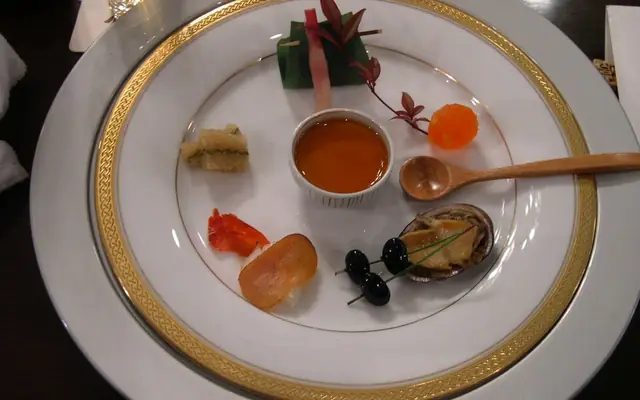
A tasting menu is the chef's-choice multi-course meal that has, since the 1980s, become the dominant format of fine dining worldwide. The format has Japanese (kaiseki), French (menu degustation), and Italian (menu della tradizione) precedents, but its contemporary global form was built by a generation of chefs starting in the late 1980s: Ferran Adria at El Bulli (Spain), Heston Blumenthal at The Fat Duck (UK), Thomas Keller at The French Laundry (US), Massimo Bottura at Osteria Francescana (Italy), and Rene Redzepi at Noma (Denmark). Each took the multi-course form, stripped out the rigid French progression, and rebuilt it around a single chef's voice, often 12 to 20 small courses, served at a defined pace, in a single dining room with a single seating time.
The format's strengths are well-known. It allows the chef to design the meal as a complete narrative arc, control pacing precisely, source rarely (single fish, single farm, single producer per course), and present ideas that would not work as a la carte items. The format's weaknesses are equally clear: it has flattened restaurant variety in the upper tier, made dining at the top end inflexible and expensive (tasting-only menus now routinely run 250 to 800 USD per person before drinks), and produced a global format that can feel interchangeable from Copenhagen to Mexico City to Sydney.
The contemporary tasting-menu landscape is regionally diverse. Japan retains the deepest tasting tradition through kaiseki (Kyoto's Kikunoi, Mibu, Kohro) and the omakase sushi counter (Sukiyabashi Jiro, Saito). Spain runs from Quique Dacosta and Disfrutar through the post-El Bulli network. Italy holds Osteria Francescana, Le Calandre, Reale, and the modern Roman scene. France retains Arpege, Mirazur (a French-Italian Mediterranean room), Pic, and the modern Lyon and Paris cohort. The Nordic tradition runs through Noma, Geranium, Frantzen, and a wide network of New Nordic alumni. Mexico City built Pujol, Quintonil, Rosetta as the global flagship Latin American tasting destination. Lima holds Central, Maido, Kjolle. New York, San Francisco, Tokyo, Hong Kong, Singapore, Bangkok, and Sydney all hold serious tasting menus competing at the global top tier. Reservations open 30 to 90 days ahead at most; the most-coveted rooms (Sukiyabashi Jiro, Central, Atelier Crenn) require months.
Book a food experience
Tours, tastings and classes that match this page, bookable on GetYourGuide.

Top picks
The best-scored Tasting Menu place in each of 12 cities.
Disfrutar Tasting Room 3 ★ ★ 4.9
Disfrutar in Barcelona's Eixample is the three-star Castro-Xatruch-Casanas tasting room that elBulli alumni opened in 2014, World's 50 Best No. 1 in 2024.
Book8 weeks ahead
FYN ★ 4.9
FYN in the Cape Town City Bowl pairs Japanese technique with Cape ingredients, crowned the 2026 Eat Out Restaurant of the Year for a second time.
OrderThe eight course FYN Experience menu, with kelp and abalone, Cape Point tuna and Karoo lamb
TipBe seated by 13:00 at lunch for the full eight course menu, as a shorter menu runs after that; solo diners and groups over six book by phone.
Alinea 2 ★ ★ 4.9
In Lincoln Park, Alinea serves a multi-course tasting menu, with chef Grant Achatz and his team offering the Kitchen Table, The Gallery and The Salon.
OrderThe Gallery, a multi-sensory journey with theater and surprise that generally lasts three and a half hours.
TipBookings are typically released on the 15th of each month at 11:00 AM Central Time, about two months in advance.
Frederikshøj 2 ★ ★ 4.9
Frederikshøj in Aarhus holds two Michelin stars under Wassim Hallal, who has run the restaurant since 2009 in a former royal staff lodge overlooking the sea.
OrderThe full tasting menu is the only option; expect French-inflected technique applied to Jutland produce.
Book4 to 6 weeks ahead
TipBook four to six weeks ahead online. Thursday to Saturday only, dinner service from 17:30.
Hoze 1 ★ ★ 4.9
Six oak counter seats, one Michelin star and a single daily omakase seating at 18:00 in Centrum, led by chef Jose Cerda. Tasting menu SEK 1,800-2,200.
Book4-8 weeks ahead
Chapter One by Mickael Viljanen 2 ★ ★ 4.9
Mickael Viljanen's two-Michelin-star basement on Parnell Square in Dublin, the city's most polished tasting room, French technique on luxury Irish produce.
OrderWhatever Viljanen is building on the surprise tasting menu, paired with the by-the-glass wine flight.
Book4-6 weeks ahead
TipReservations open in monthly windows; book the morning windows open. Lunch Thursday to Saturday is the same kitchen at lower commitment.
Demi ★ 4.9
Gavin Kaysen's Demi in the North Loop runs a 20-seat tasting-counter dining room in Minneapolis since 2017. James Beard Outstanding Restaurateur 2023.
Book3 months ahead
Levadura de Olla 1 ★ ★ 4.9
Levadura de Olla in Oaxaca is Thalia Barrios Garcia's Garcia Vigil room, Mexico's first regional Michelin star (2024, retained 2025) on the Andador.
Book3 to 6 weeks ahead
TipReservations open one month out on the website and disappear within hours; the Sierra Sur tasting menu (six courses) lands around $1,800 pesos.
Tatsu Dallas 1 ★ ★ 4.9
Dallas's original Michelin-starred restaurant, retained its one star for the second consecutive year in 2025. Tasting menu $170 per person. At 3309 Elm St.
BookReleases 1st and 15th of each month at 8am CST ahead
TipReservations open on the 1st and 15th of each month at 8am CST on Tock and sell out within minutes. Set a calendar reminder.
Skof 1 ★ ★ 4.9
Tom Barnes, formerly executive chef at Simon Rogan's L'Enclume, opened Skof in May 2024 on Federation Street. Michelin star inside ten months.
Book6 weeks ahead
Sanford ★ 4.9
Sanford on North Jackson is Milwaukee's fine-dining anchor since 1989; Justin Aprahamian, a James Beard Best Chef Midwest winner, leads the Surprise menu now.
Book3 weeks ahead
JAN 3 ★ ★ 4.9
Jan Hartwig's eponymous JAN in Munich's Maxvorstadt holds three Michelin stars; the chef-led tasting reworks German classics into precision plates.
Book8 weeks ahead
Find a place
Disfrutar Tasting Room 3 ★ ★ 4.9
Disfrutar in Barcelona's Eixample is the three-star Castro-Xatruch-Casanas tasting room that elBulli alumni opened in 2014, World's 50 Best No. 1 in 2024.
Book8 weeks ahead
FYN ★ 4.9
FYN in the Cape Town City Bowl pairs Japanese technique with Cape ingredients, crowned the 2026 Eat Out Restaurant of the Year for a second time.
OrderThe eight course FYN Experience menu, with kelp and abalone, Cape Point tuna and Karoo lamb
TipBe seated by 13:00 at lunch for the full eight course menu, as a shorter menu runs after that; solo diners and groups over six book by phone.
Alinea 2 ★ ★ 4.9
In Lincoln Park, Alinea serves a multi-course tasting menu, with chef Grant Achatz and his team offering the Kitchen Table, The Gallery and The Salon.
OrderThe Gallery, a multi-sensory journey with theater and surprise that generally lasts three and a half hours.
TipBookings are typically released on the 15th of each month at 11:00 AM Central Time, about two months in advance.
Frederikshøj 2 ★ ★ 4.9
Frederikshøj in Aarhus holds two Michelin stars under Wassim Hallal, who has run the restaurant since 2009 in a former royal staff lodge overlooking the sea.
OrderThe full tasting menu is the only option; expect French-inflected technique applied to Jutland produce.
Book4 to 6 weeks ahead
TipBook four to six weeks ahead online. Thursday to Saturday only, dinner service from 17:30.
Hoze 1 ★ ★ 4.9
Six oak counter seats, one Michelin star and a single daily omakase seating at 18:00 in Centrum, led by chef Jose Cerda. Tasting menu SEK 1,800-2,200.
Book4-8 weeks ahead
Signum 2 ★ ★ 4.9
Signum in Molnlycke holds two Michelin stars and a Green Star for a tasting menu built around four elements: earth, fire, air and water. Book 4-8 weeks ahead.
Book4-8 weeks ahead
Chapter One by Mickael Viljanen 2 ★ ★ 4.9
Mickael Viljanen's two-Michelin-star basement on Parnell Square in Dublin, the city's most polished tasting room, French technique on luxury Irish produce.
OrderWhatever Viljanen is building on the surprise tasting menu, paired with the by-the-glass wine flight.
Book4-6 weeks ahead
TipReservations open in monthly windows; book the morning windows open. Lunch Thursday to Saturday is the same kitchen at lower commitment.
Demi ★ 4.9
Gavin Kaysen's Demi in the North Loop runs a 20-seat tasting-counter dining room in Minneapolis since 2017. James Beard Outstanding Restaurateur 2023.
Book3 months ahead
Levadura de Olla 1 ★ ★ 4.9
Levadura de Olla in Oaxaca is Thalia Barrios Garcia's Garcia Vigil room, Mexico's first regional Michelin star (2024, retained 2025) on the Andador.
Book3 to 6 weeks ahead
TipReservations open one month out on the website and disappear within hours; the Sierra Sur tasting menu (six courses) lands around $1,800 pesos.
Tatsu Dallas 1 ★ ★ 4.9
Dallas's original Michelin-starred restaurant, retained its one star for the second consecutive year in 2025. Tasting menu $170 per person. At 3309 Elm St.
BookReleases 1st and 15th of each month at 8am CST ahead
TipReservations open on the 1st and 15th of each month at 8am CST on Tock and sell out within minutes. Set a calendar reminder.
Skof 1 ★ ★ 4.9
Tom Barnes, formerly executive chef at Simon Rogan's L'Enclume, opened Skof in May 2024 on Federation Street. Michelin star inside ten months.
Book6 weeks ahead
Sanford ★ 4.9
Sanford on North Jackson is Milwaukee's fine-dining anchor since 1989; Justin Aprahamian, a James Beard Best Chef Midwest winner, leads the Surprise menu now.
Book3 weeks ahead
JAN 3 ★ ★ 4.9
Jan Hartwig's eponymous JAN in Munich's Maxvorstadt holds three Michelin stars; the chef-led tasting reworks German classics into precision plates.
Book8 weeks ahead
PRU ★ 4.9
PRU at Trisara holds One Michelin Star and a Green Star, serving a seasonal tasting menu of Thai produce at a kappo-style counter by the open kitchen.
Parkheuvel 2 ★ ★ 4.9
Two Michelin stars since 1992 under chef Erik van Loo in Heuvellaan park. The lobster bisque and North Sea fish tasting menu define Rotterdam fine dining.
Book3-4 weeks ahead
180° by Matthias Diether 2 ★ ★ 4.9
180 by Matthias Diether in Noblessner holds two Michelin stars in 2026, run by German chef Diether with a single set tasting menu in a small waterfront room.
OrderThe full tasting menu; the kitchen runs a single set menu with no a la carte.
Book4 weeks ahead
TipAllergies and dietary needs must be communicated 72 hours ahead. Kitchen does not run a kids menu; children over 8 follow the full menu.
Counter- ★ 4.9
Sam Hart's Counter- earned North Carolina's first Michelin star and a Green Star in 2025, with rotating tasting-menu themes on West Morehead in Charlotte.
OrderThe full tasting menu. Themes rotate every three months around a single concept.
TipReserve on Tock as early as you can. Counter- holds the only Michelin star in the Carolinas, and demand jumped after the November 2025 awards.
Campagne 1 ★ ★ 4.9
Campagne in Kilkenny holds one Michelin star in the 2026 guide, Garrett Byrne earning the recognition every year since 2014 with exemplary French technique.
OrderTasting menu showcasing seasonal Irish produce with French technique and precise saucing.
Book2-4 weeks ahead
TipBook the Friday or Saturday dinner sitting at least three weeks ahead; the midweek early-bird lunch offers the same kitchen at a gentler price.
Osteria Francescana 3 ★ ★ 4.9
Osteria Francescana in Modena is Massimo Bottura's three Michelin star dining room on Via Stella, built on a tasting menu of reworked Emilian classics.
OrderThe tortellini in 36 month Parmigiano Reggiano sauce and the Jazz Duck.
TipReservation requests go only to the reservation inquiries email on the restaurant's contact page; requests sent to its other addresses are not considered.
Sorekara 2 ★ ★ 4.9
Sorekara on New Broad Street in Baldwin Park holds two Michelin stars in the 2026 Florida guide, with a tasting menu rooted in Japanese technique.
Book4 weeks ahead
The Kitchen 1 ★ ★ 4.9
The Kitchen is Michelin-starred fine dining on Broadway, centered on a six-course prix fixe menu of seasonal ingredients presented as live culinary theater.
OrderThe six-course prix fixe, with the limited reserve wine pairing or a seasonal cocktail or mocktail pairing.
TipReservations are taken by phone, and the entire dining room can be reserved for the evening for you and your guests.
Mixtli 1 ★ ★ 4.9
Mixtli is San Antonio's first Michelin-starred restaurant, where chefs Diego Galicia and Rico Torres build a rotating tasting menu around one Mexican region.
BookBook weeks ahead on Tock ahead
TipThe menu changes every several weeks around a single region of Mexico. Seats are limited; book on Tock well ahead.
Taian Table 3 ★ ★ 4.9
Taian Table at 161 Lane 465, Zhenning Road is centred on an open kitchen and a tasting menu that chef Stefan Stiller and his team make new every three months.
OrderOrder the seasonal tasting menu, an entirely new one every three months.
TipEvery dish is prepared in front of guests and introduced personally by the chefs and staff.
Aubergine 2 ★ ★ 4.9
Aubergine holds two Michelin stars inside L'Auberge Carmel at Monte Verde and 7th, where Justin Cogley cooks an eight-course coastal tasting menu.
OrderThe $285 tasting is the only menu; add the wine pairing when you book.
TipThe room seats a hotel's worth of diners at most; book on Tock well ahead, and budget for the 22% service charge on top.
Aniar 1 ★ ★ 4.9
Aniar in Galway has held one Michelin star since 2012; JP McMahon serves tasting menus on foraged herbs, cured west-coast fish and Connacht smoked meats.
OrderThe tasting menu, which changes with each day's wild and local produce from Connacht
Book3-4 weeks ahead
TipBook Tuesday to Saturday; the kitchen is closed Sunday and Monday.
Canlis ★ 4.9
Canlis in Seattle is the city's enduring fine-dining room: Aisha Ibrahim's five-course menu, a 1950 cedar lodge above Lake Union, and Food and Wine's number.
OrderThe five-course chef's menu with Aisha Ibrahim's Filipino-tinged Walla Walla onion course.
TipTuesday and Wednesday open with quieter dining rooms and the same kitchen; the bar pours the same wine list at half the formality.
ABaC 3 ★ ★ 4.8
ABaC in Barcelona's uptown Tibidabo is Jordi Cruz's three-star tasting room with a tree-shaded garden terrace and the longest menu of the city's top tier.
Book4 weeks ahead
La Colombe ★ 4.8
La Colombe sits above Constantia at Silvermist Estate, one of Cape Town's most decorated fine dining rooms on the current Eat Out three star list.
OrderThe Chef's Menu, from the signature Tuna 'La Colombe' to coal fired lamb
TipA deposit is taken at booking and refunded in full on cancellations 48 hours ahead; children under eight are not admitted and there is no BYO.
Locavore NXT ★ 4.8
Locavore NXT is the Lodtunduh tasting room near Ubud, Bali, run by Eelke Plasmeijer and Ray Adriansyah, and the one Bali name on the Asia's 50 Best 2026 list.
Liath 2 ★ ★ 4.8
Damien Grey's two-Michelin-star fourteen-seat counter inside Blackrock Market, Co Dublin, fifteen minutes by DART from the city, Ireland's hardest.
OrderThe tasting menu only; Grey serves no choice and the kitchen runs a fixed twelve courses.
Book8-12 weeks ahead
TipReservations open three months ahead and disappear in minutes. Take the DART to Blackrock and walk five minutes to the market.
OCD ★ 4.8
OCD in Jaffa seats 19 around an open kitchen for Raz Rahav's tasting menu of 16 to 20 plates, blending Israeli and Jewish flavours with haute cuisine.
TipThe price rises to ₪760 per person from 1 October 2026. Book well ahead; the room is 19 seats.
Minibar by Jose Andres ★ 4.8
Minibar by Jose Andres in Washington DC is the chef's two-Michelin-star, 12-seat counter on E Street, a 20-course modernist tasting menu pulled.
OrderWhatever course requires both hands; the kitchen is unsentimental about it.
TipBook at midnight three months out via Tock. The wine pairing leans Old World Spanish; ask for the deep-dive option.
Pineapple and Pearls ★ 4.8
Pineapple and Pearls in Washington DC is Aaron Silverman's Michelin two-star tasting-menu room on Barracks Row, the formal sister of Rose's Luxury next door.
OrderWhichever caviar course leads the menu; it is the kitchen's editorial opener.
TipTickets include wine, food and tip; the lounge tickets are $50 cheaper than the dining room and run the same menu.
Elle ★ 4.8
Mount Pleasant bakery-cafe by day, contemporary-American chef Brad Deboy by night; fermentation-driven plates, Michelin Bib Gourmand, retro-chic dining room.
Why locals goHalf a mile north of the busy 14th Street strip, this Mount Pleasant bakery and dining room runs the city's quietest tasting menu after 19:00 most weeknights.
TipWalk in before 19:30 for a counter seat; the wood-fired bread plate alone is worth the trip.
Rutz 3 ★ ★ 4.8
Marco Mueller's Rutz in Berlin Mitte holds three Michelin stars on a Brandenburg-led tasting; the wine cellar runs to 1,200 references with a Riesling focus.
Book8 weeks ahead
Py-R 2 ★ ★ 4.8
Py-R below Rue de Metz near Pont Neuf is chef Pierre Lambinon's two Michelin star dining room with brick-vaulted ceilings and a daily tasting menu.
Book3 weeks ahead
TipThe €158 menu PY-R is the canonical course; the €188 Degustation is the full tour. Book three weeks ahead for weekend service.
Pecan Lodge ★ 4.8
The Deep Ellum BBQ institution that put Dallas on every national food map. Tasting menu $30-$60 per person. Book walk-in only ahead. At 2702 Main St.
BookWalk-in only ahead
TipArrive at 11am to beat the queue. The beef rib is a Saturday and Sunday special; arrive by noon or it will be gone.
Beckon ★ 4.8
Beckon in Denver is Duncan Holmes's 18-seat chef's counter on Larimer in RiNo since 2018, a Michelin-recognised tasting room behind sister bistro Call.
OrderThe tasting menu only; one seating per night.
TipTickets release one month out at 12 noon on a Wednesday via Tock; sell out in minutes. Try the bar at Call next door for walk-ins.
Where The Light Gets In ★ 4.8
Sam Buckley's Stockport tasting-menu room holds a Michelin Green Star for sustainability. Five-course set from the kitchen's own Cheshire farm.
Book8 weeks ahead
Tantris 2 ★ ★ 4.8
Tantris has anchored Munich fine dining in Schwabing since 1971; Benjamin Chmura now cooks the two-star tasting menu in the original room, only at dinner.
Book4 weeks ahead
Fred 2 ★ ★ 4.8
Two Michelin stars for Fred Mustert's Boompjes restaurant with sweeping Maas views. Open dinner only; closed sun-mon. Tasting menu on request.
Book2-3 weeks ahead
Lazy Betty ★ 4.8
Chefs Ron Hsu and Aaron Phillips' Candler Park tasting room in Atlanta opened 2019, earned a Michelin Star in 2023 and runs an inventive prix-fixe menu.
OrderChef's tasting menu, with wine pairing.
TipReservations open 60 days out on Tock; the chef's counter seats six and books fastest.
The Catbird Seat 1 ★ ★ 4.8
The Catbird Seat, open since 2011, is led by chefs Tiffani Ortiz and Andy Doubrava atop the Bill Voorhees Building, and won with a Michelin Star in 2025.
OrderA seat at the U-shaped counter for the ever-evolving menu, rooted in seasonality and storytelling.
TipPaid valet parking runs Wednesday through Saturday from 4:00 PM to 11:00 PM, and the entrance is on Paseo Place behind the Bill Voorhees Building.
Omo by Jont 1 ★ ★ 4.8
Omo by Jont on East Lyman Avenue in Winter Park is chef Ryan Ratino's sixteen-seat tasting counter, with a Michelin star in the 2026 Florida guide.
Book8 weeks ahead
Localis 1 ★ ★ 4.8
Localis serves its tasting menu at the Chef's counter or in the dining room on S Street, where a wood fired oven enhances the flavors of many dishes.
OrderThe tasting menu, served at the Chef's counter or in the dining room.
TipReservations are taken through Tock, not the contact form, and the restaurant is open Wednesday to Saturday from 5:00 to 8:15 PM.
Veritas ★ 4.8
Veritas on West Gay Street downtown is Chef Josh Dalton's Columbus tasting-menu room, the city's reference fine-dining counter since the 2017 move.
Book3-4 weeks ahead
Paradiso ★ 4.8
Denis Cotter's vegetarian flagship on Lancaster Quay since 1993, with a six-course market-and-farm tasting menu and one of Ireland's best organic wine lists.
Book2 to 3 weeks ahead
610 Magnolia ★ 4.8
Edward Lee's 610 Magnolia in Louisville runs a weekly tasting menu in a converted Old Louisville Victorian, the chef's Southern-Korean flagship since 2003.
Book2 weeks ahead
Sun Moon Studio 1 ★ ★ 4.8
Sun Moon Studio in West Oakland earned a Michelin star in 2025. Alan Hsu and Sarah Cooper run a twelve-seat ingredient-driven tasting on Union Street.
Book2 to 3 weeks ahead
Enigma ★ 4.7
Enigma in Barcelona's Sant Antoni is Albert Adria's two-star elBulli heir: a 25-course tasting through six stations across four hours, currently 34th.
OrderThere is only the chef's tasting menu; trust the kitchen.
TipReservations open 60 days ahead through enigmaconcept.es; you receive a code, the door opens by keypad. Closed Sun-Mon.
Salsify at the Roundhouse ★ 4.7
Salsify occupies the historic Roundhouse above Camps Bay, Cape Town, named Eat Out Restaurant of the Year in 2025 under chef Ryan Cole's kitchen.
OrderThe seasonal tasting menu of local proteins, foraged herbs, ancient grains and preserves from earlier seasons
TipA R1,000 per guest deposit is due within 24 hours of the provisional booking, and children under 12 are not admitted.
Charoupi ★ 4.7
Charoupi opened in Ladadika in 2017 bringing Cretan modernism to Thessaloniki's kitchen. Led by chef Manolis Papoutsakis. Tasting menu €55-80.
Book1-2 weeks ahead
Ever 2 ★ ★ 4.7
Ever is Chef Curtis Duffy's two-Michelin-starred restaurant on Fulton Street, serving an 8- to 10-course tasting menu that lasts about two and a half hours.
OrderThe 8- to 10-course tasting menu, with common dietary restrictions accommodated on 72 hours' notice.
TipReservations are typically released at 9 a.m. Central Time on the first Tuesday of each month, two to three months in advance.
Smyth 3 ★ ★ 4.7
Smyth in the West Loop is run by chefs John Shields and Karen Urie Shields, whose 30 years of experience include Alinea, Tru and Charlie Trotter's.
TipIf you need help booking your experience, the team will gladly assist you with your reservation personally.
Domestic 1 ★ ★ 4.7
Domestic on Mejlgade in the Latin Quarter holds one Michelin star and a Michelin Green Star, serving 100 percent local produce from small Jutland suppliers.
OrderThe seasonal tasting menu; the kitchen's fermentation and preservation techniques are the clearest expression.
Book2 to 4 weeks ahead
TipGreen Star certified for sustainability. Book online; cancellation policy is strict.
Gastromé 1 ★ ★ 4.7
Gastromé sits in a 1911 villa in Risskov north of Aarhus with one Michelin star and a glass-walled kitchen; the full tasting menu is DKK 2,200.
OrderAny dish showcasing herbs and vegetables from the kitchen garden.
Book2 to 3 weeks ahead
TipDrive north ten minutes from the city centre. Private dining room available for groups. Book via superbexperience.
Forest Avenue 1 ★ ★ 4.7
John and Sandy Wyer's glass-front room on Sussex Terrace in Dublin 4, finally Michelin-starred in 2026 after twelve years, named for Sandy's Queens street.
OrderThe seasonal tasting menu, €75 at lunch and approaching subversive value for the kitchen behind it.
Book3 weeks ahead
TipThree-course lunch from €55 Thursday to Saturday is the same kitchen at half the dinner ticket. Book the lunch slot.
Tenant ★ 4.7
Mateo Mackbee and Erin Lucas's Tenant on Bryant Avenue runs a 14-seat Minneapolis tasting room since 2024. Beard-finalist chef pair; six-week menu rotations.
OrderThe full prix fixe; menu changes every six weeks. Beverage pairing recommended.
TipTickets release on the website the first of every month; book the same day. No walk-ins.
Eleven Madison Park 3 ★ ★ 4.7
Eleven Madison Park is Chef Daniel Humm's fine dining restaurant overlooking Madison Square Park; its tasting menu can be enjoyed fully plant-based.
OrderThe full tasting menu in the dining room, or the bar tasting menu.
TipEach month's tables open on the first of the month before, via Resy; the bar takes walk-ins for à la carte snacks, wine and cocktails.
Atera 2 ★ ★ 4.7
Atera is a Tribeca counter led by Executive Chef Ronny Emborg, serving only a seasonal and continuously evolving tasting menu, with no à la carte.
OrderThe tasting menu, with the wine pairing or the non-alcoholic Temperance Pairing.
TipChef Ronny Emborg stays through December; wine pairings are $218 per person, and changes are accepted up to 48 hours before.
Hiba ★ 4.7
Hiba is chef Yossi Shitrit's fine-dining room on Menachem Begin, serving a seasonal tasting menu of ten to fifteen courses in two seatings a night.
TipDinner runs Monday to Friday in two seatings, 18:00 and 21:00; wine pairings cost ₪240 classic or ₪420 for rarer regional bottles.
Nobelhart und Schmutzig 1 ★ ★ 4.7
Billy Wagner and Micha Schaefer's Berlin Kreuzberg counter tasting holds one Michelin star on radical-local sourcing inside Brandenburg's 200-kilometre ring.
Book12 weeks ahead
Blackitch Artisan Kitchen ★ 4.7
Chef Black's 16-seat Nimman counter builds a fermentation-led tasting menu from foraged and small-farm Thai produce, one of the north's most personal tables.
Acte 2 Yannick Delpech 1 ★ ★ 4.7
Acte 2 in a former Cote Pavee sawmill is Yannick Delpech's return after L'Amphitryon, a fifteen-cover one-Michelin-star room with an evening surprise menu.
Book4 weeks ahead
TipSingle 20:00 sitting Tuesday to Saturday; book four weeks out. Friday and Saturday lunch are the easier slots.
Trescha 1 ★ ★ 4.7
15-course counter tasting for 11 guests in a remodelled Villa Crespo casona. Michelin star within a year of opening (2023); Best Young Chef 2024.
BookThree months ahead
Tegui ★ 4.7
Martitegui's six-course tasting menu changes every week behind an unmarked Palermo Hollywood door. Long-running fixture on Latin America's 50 Best.
BookThree to four weeks ahead
Revolver Taco Lounge (Purepecha) ★ 4.7
The secret prix-fixe tasting room inside Revolver Taco Lounge in Deep Ellum. Tasting menu $150 per person. Book 1-2 weeks ahead. At 2701 Main St.
Book1-2 weeks ahead
TipThe entrance to Purepecha is separate from the taco counter. Book by emailing the restaurant directly. Thursday through Saturday only.
The Wolf's Tailor ★ 4.7
The Wolf's Tailor in Denver is Kelly Whitaker's tasting-menu room in Sunnyside since 2017, a James Beard Mountain finalist with East-meets-West live-fire.
Book4 weeks ahead
EsterEv ★ 4.7
EsterEv on South Kinnickinnic in Bay View, by chefs Dan Jacobs and Dan Van Rite, runs a four-course tasting menu since 2017 with optional beverage pairings.
Book2 weeks ahead
The Immigrant Room ★ 4.7
The Immigrant Restaurant at the American Club in Kohler runs six themed dining rooms with a tasting menu and a Wine Spectator Best of Award of Excellence.
Book4 weeks ahead
Komu 2 ★ ★ 4.7
Christoph Kunz's Komu in Munich's Altstadt opened November 2022 and took two Michelin stars in its first year; the eight-course tasting reads French.
Book6 weeks ahead
Fotografiska Restaurant ★ 4.7
Fotografiska Restaurant atop the photography museum holds a 2026 Michelin Green Star and Bib Gourmand, with the Young Chef Award given to head chef Gerli.
OrderThe seasonal tasting menu; the rooftop herb garden and beehives feed the kitchen and the bar.
Book2 weeks ahead
TipSunset window books out weeks ahead. The rooftop bar runs a tighter list and stays open later.
Hestia 1 ★ ★ 4.7
Hestia in Austin is Kevin Fink's Michelin-starred live-fire dining room downtown, built around a 20-foot custom hearth and a tasting menu of wood-grilled.
OrderThe whole roasted duck for two and the hearth-cooked vegetable course.
Book3 weeks ahead
TipSit at the hearth counter if you can land it at booking; the view of the live-fire kitchen is the point.
L'Erba del Re 1 ★ ★ 4.7
L'Erba del Re in Modena is Luca Marchini's one Michelin star dining room on Via Castelmaraldo, a nine table restaurant built on historic Emilian recipes.
OrderThe tortellini in capon broth and the Modena style tagliatelle ragu.
TipThe tasting menu leans on historic Emilian dishes while a second carte covers the chef's newer plates; book ahead for dinner.
Nicosi 1 ★ ★ 4.7
Nicosi is pastry chef Tavel Bristol-Joseph's dessert-only, phones-away tasting room behind Pullman Market, a multi-course menu that won a Michelin star.
BookReserve via OpenTable; 20 seats ahead
TipIt is desserts only, phones away, 20 seats. Book the alcohol pairing if you want the full arc of the tasting.
Wild Common ★ 4.7
Wild Common in Charleston runs Orlando Pagan's Tasting Menu No. 715 from a moody Spring Street room. Hamachi crudo, dry-aged strip with polenta.
OrderTasting Menu No. 715 in full; foie gras course is the signature
Why locals goOrlando Pagán's tasting-menu room on a quiet Spring Street block. One Michelin star in 2025, but most visitors still default to FIG or Husk.
TipReservations on Resy weeks ahead, but the bar takes walk-ins for the abbreviated counter menu. Closed Monday and Tuesday.
Condita 1 ★ ★ 4.7
Condita is at 15 Salisbury Place, just outside Edinburgh city centre, a smart, understated shop conversion with six large tables and a surprise tasting menu.
OrderThe surprise menu, with a hand-drawn bookmark picturing some of the ingredients.
TipBooking is by request form; read the Booking Terms first, and note that no more than 6 guests can sit at one table.
Navi ★ 4.7
Navi holds two Good Food Guide hats in a 25-seat Yarraville terrace without PR: Hills' tasting menus make Melbourne's west a serious dining destination.
Why locals goTwo-hat tasting menu restaurant in Yarraville, invisible to inner-city dining circuits
Twelve ★ 4.7
Twelve at Portland Foreside, opened 2022 by Prentice Hospitality and now led by Chef Hannah Ryder, runs a Maine tasting menu on Thames Street.
Book6 weeks via Resy ahead
Legume ★ 4.7
Legume is Asia's first Michelin-starred vegan restaurant, chef Sung Si-woo's one-star room in Gangnam delivering a plant-based tasting menu.
OrderSeasonal vegan tasting menu: the only fully vegan restaurant in Korea to receive a Michelin star.
TipBook 4 to 6 weeks ahead; the room is small and evening reservations fill within hours of opening.
Jola 1 ★ ★ 4.7
Jola on Salzgries is run by Jonathan Wittenbrink and Larissa Andres and serves a surprise menu of many small dishes with vegetables at the centre.
OrderThe raviolo stuffed with aubergine ragout, served with courgette and lightly toasted pine nuts.
TipChoose between wine and alcohol-free pairings, and take home the menu, which is printed on plantable seed paper.
IGNIV Zurich by Andreas Caminada ★ 4.7
Andreas Caminada's two-star Zurich outpost inside the Marktgasse Hotel. Daniel Zeindlhofer runs a fine-dining sharing format engineered for the table.
SignatureSharing tasting menu
Trizoni Exclusive ★ 4.6
Chef Asterios Sousouras runs a hook-to-fork seafood table in Ladadika with daily supply from a network of dedicated fishermen. Tasting menu €75-100.
Book1-2 weeks ahead
Olympos Naoussa ★ 4.6
The 1926 building on Nikis Avenue returned to fine dining in 2022 when chef Dimitris Tasioulas took over and earned an FNL star. Tasting menu €60-80.
Book1 week ahead
Syrco BASÈ ★ 4.6
Syrco BASÈ in Ubud, Bali is chef Syrco Bakker's tasting restaurant built on traceable Indonesian produce, with a botanical cocktail bar and a chef's counter.
Rumari ★ 4.6
Rumari, at the highest point of Raffles Bali in Jimbaran, is where chef Gaetan Biesuz cooks progressive Indonesian food on an 80/20 local sourcing rule.
Travail Kitchen and Amusements ★ 4.6
Travail in Robbinsdale has run a theatrical tasting room in the Twin Cities since 2010. The casual Pig Ate My Pizza sister-room sits next door.
OrderThe full tasting menu; let the kitchen pick. Pair with the bubbles flight.
TipTickets sell on Tock; release windows are tight. Pig Ate My Pizza next door is the walk-in alternative.
Pastel ★ 4.6
Pastel sits inside the Tel Aviv Museum of Art on Sha'ul HaMelech, where chef Teddy Kagan runs a seasonal kitchen with a terrace over the sculpture garden.
TipClosed Sundays. The Friday schedule splits into a lunch and a separate evening seating.
STÓŁ na Szwedzkiej ★ 4.6
Grzegorz Firkowski's STÓŁ na Szwedzkiej in Wrocław is a culinary studio more than a restaurant: no fixed menu, the chef cooks what arrived that morning.
OrderWhatever the chef plates for you. The format only works if you let him drive.
Book1-2 weeks ahead
TipTell the chef your protein preferences when booking. The day's plan is built around them.
IDA kuchnia i wino ★ 4.6
IDA kuchnia i wino in Wrocław's Hotel Jazz building cooks Lower Silesia onto the plate: short seasonal cards, deep regional wine list, a 2025 Michelin Bib.
OrderThe six-course tasting menu with wine pairings.
Book2 weeks ahead
TipIf the dinner room is booked, lunch midweek runs a four-course version at a much lower price.
Cookies Cream ★ 4.6
Cookies Cream behind a back-alley service door near Berlin's Hotel Adlon holds a Michelin star on a vegetarian tasting menu; the entrance is the dish-pit.
OrderThe six-course vegetarian tasting at €105; the Parmesan dumpling is the room's defining course.
TipEntrance is a service door off the alley behind the Westin Grand. Bookings open four weeks ahead online.
Cuisine de Garden ★ 4.6
A New Nordic-inspired garden restaurant in Hang Dong plating theatrical, foraged multi-course menus, one of Chiang Mai's true destination tasting rooms.
Criollo ★ 4.6
Criollo in Oaxaca is Enrique Olvera's Pujol-backed Madero room with Luis Arellano on the stoves, a courtyard-built tasting menu of Oaxacan recipes.
Book3 weeks ahead
TipOnly a tasting menu is served; the courtyard tables are limited, request one on booking. The cacao-on-cacao dessert is the closer.
Field & Vine ★ 4.6
Andrew Brady and Sara Markey run Field & Vine in Union Square Somerville since 2017. Tasting menu $95 (5 course). Book 3 weeks ahead. At 9 Sanborn Ct.
Book3 weeks ahead
Mamma Maria ★ 4.6
Mamma Maria on North Square is the North End's fine-dining anchor in Boston since 1973. Led by chef Adriana Trigiani. Tasting menu $120 (chef menu).
Book2 weeks ahead
Quiessence at The Farm ★ 4.6
Quiessence at The Farm at South Mountain is Dustin Christofolo's seasonal tasting room, plating produce picked hours earlier from the on-site garden.
OrderThe weekly tasting menu, built around whatever the garden cut that morning.
Book1 to 2 weeks ahead
TipSet on a working farm off 32nd Street; book the patio in the cool months.
La Salita 1 ★ ★ 4.6
La Salita on Carrer de Pere III el Gran in Valencia's Russafa is chef Begona Rodrigo's one-Michelin-star room with three Repsol Suns, built around vegetable.
Book4 weeks ahead
Amano ★ 4.6
Amano is Vincenzo Sorvillo's Cagliari dining room on Via Sonnino, where five or seven plates are chosen off the Gran Carta and served as a tasting menu.
OrderThe seven-plate tasting menu at 100 euro.
TipFive plates run 80 euro and seven run 100, drinks and service excluded; the Gambero Rosso 2026 guide gives it two forks at 80 points.
Novel ★ 4.6
Ryan Brazeal and Jessica Armstrong's East Crossroads tasting menu in Kansas City pairs chef-driven small plates with Jessica Armstrong's pastry.
Book2 to 3 weeks ahead
TipTock reservations open 30 days out at noon. The bar takes walk-ins for a short menu and the same wine list.
Bastion 1 ★ ★ 4.6
Chef Josh Habiger's Bastion has two sides in Wedgewood-Houston: a casual cocktail bar open to the public and a 24-seat restaurant requiring reservations.
OrderThe set multi-course dinner, ever-evolving and determined by the chefs each week from what is available.
Book1 month ahead
TipReservations open on the first of each month for the entire following month, for parties of 1 to 6, Wednesday thru Saturday.
Inkiostro 1 ★ ★ 4.6
Inkiostro holds Parma's Michelin star in 2026: Calabrian chef Salvatore Morello threads global technique through food-valley produce on Via San Leonardo.
OrderThe long tasting menu, with a serious cellar in support.
Book1-2 weeks ahead
TipIt sits out by the trade-fair district rather than the centre, a short taxi ride, which is why locals keep tables easier to get than the star suggests.
Cultivo ★ 4.6
Cultivo runs a seasonal tasting menu in a Barrio de Santiago house in Puebla, a 2026 Michelin Bib Gourmand built on zero-waste cooking and local growers.
OrderThe seasonal tasting menu, rewritten each season around local growers.
TipCultivo only opens Wednesday to Sunday and runs a single seating pattern, so book before you travel rather than on the day.
Fabula 1 ★ ★ 4.6
Fabula is a reservation-only restaurant in Jing'an District serving a tasting menu of innovative courses with distinctly local flavours on European cuisines.
OrderOrder the full tasting menu, the way a meal at fabula is built.
TipA meal at fabula always starts with a bite of rice, whatever the season.
Terra Olea ★ 4.6
Terra Olea is chef Paco Villar's tasting-menu room in northwest Córdoba, three seasonal menus, Flos to Terra Olea, reading the province through its larder.
OrderCibarium, the middle menu, is the sensible first visit before committing to the full Terra Olea.
TipSole Torres runs the dining room; dinner is Friday and Saturday only, so any other day means the 14:00 lunch seating.
Nicole 1 ★ ★ 4.6
Executive chef Serkan Aksoy's one-Michelin-star tasting room atop Tomtom Suites in Çukurcuma, holding the 2025 Michelin Service Award beside a tight.
Book2 to 3 weeks ahead
Restaurant Iris ★ 4.6
Chef Kelly English's Restaurant Iris in East Memphis moved to Laurelwood on Poplar Avenue in 2022 with a tighter menu of New Orleans Creole on Mississippi.
OrderCrawfish and grits; the four-course tasting menu at dinner.
Book2 weeks ahead
TipLunch service since the 2022 move; the four-course tasting at dinner is the steady bet.
Vetri Cucina ★ 4.6
Vetri Cucina in Philadelphia is Marc Vetri's 1998 Spruce Street Italian townhouse tasting menu, the city's defining hand-cut-pasta fine-dining room.
OrderSpinach gnocchi in brown butter; whole roasted baby goat for the table.
Book60 days ahead
TipEight-seat counter at the back is the room's quiet best. Specify when booking on the venue site.
One by Spork ★ 4.6
One by Spork on Penn Avenue serves a single tasting menu at an 18-seat chef's counter in Pittsburgh. Located in Bloomfield. Led by chef Christian Frangiadis.
OrderThere is one menu: the chef's tasting, with the optional beverage pairing.
BookWeeks ahead
TipDoors at 18:00, dinner at 18:30. Book the counter weeks out; the pairing is worth it.
Human ★ 4.5
Martin Moses, Sweden's Chef of the Year 2019, opened Human in Linne in 2021 as his first solo project. Tasting menu SEK 695-1,095. Book 1-2 weeks ahead.
Book1-2 weeks ahead
Lwia Brama² ★ 4.5
Lwia Brama² sits in a medieval cellar on Wrocław's Cathedral Island, the only restaurant inside Ostrów Tumski itself. Led by chef Damian Bildź.
OrderThe venison pierogi starter and the chef's seasonal tasting menu.
Book2 weeks ahead
TipReserve the garden in summer for the cathedral view; the medieval cellar is the move from October.
Pitiona Cocina de Autor ★ 4.5
Pitiona is Jose Manuel Banos's cocina de autor room on Allende, a tasting menu running seasonal Oaxacan ingredients through fine-dining technique.
Book2 weeks ahead
TipThe seven-course tasting menu with pairings is the recommended order; ask about the mole amarillo course.
Agapes 1 ★ ★ 4.5
Agapes on Rue de l'Industrie near Saint-Sernin is Arnaud Darbas and Virginie Beziaud's one-Michelin-star room, with a small daily-changing tasting menu.
Book2 weeks ahead
TipOpen dinner Tuesday to Saturday plus Saturday lunch only; book the small back room for quiet service.
Mooo Beacon Hill ★ 4.5
Jamie Mammano's Mooo inside the XV Beacon Hotel runs a luxury steakhouse in Boston since 2007. Located in Beacon Hill. Tasting menu $165 (5 course).
Book2 weeks ahead
Restaurant Orme ★ 4.5
Jack Fields runs the Urmston tasting-menu room, Michelin Guide listed and Good Food Guide listed. Booking recommended. Reservations advised.
Book3 weeks ahead
Joelia 1 ★ ★ 4.5
One Michelin star in the Hilton Rotterdam under Sofiane Bons, named Young Chef of the Year 2024. Located in Centrum. Tasting menu on request.
Book1-2 weeks ahead
Cafe Monarch ★ 4.5
Cafe Monarch on 1st Avenue in Old Town Scottsdale serves prix-fixe dinners and appears on Wine Spectator's 2025 Restaurant Award list for its wine program.
OrderThe four-course dinner menu or the eight-course tasting menu; the caviar menu is listed separately.
TipChildren must be 10 or older, every server is trained through the Court of Master Sommeliers program, and the caviar menu is listed separately.
Barley Swine ★ 4.5
Barley Swine in Austin is Bryce Gilmore's farm-driven Burnet Road tasting room, the chef's first kitchen since 2010, with a Texas-only sourcing rule.
OrderThe full chef's tasting menu; the kitchen builds it around what came in that morning.
TipOdd Duck and Sour Duck Market are Gilmore's sibling rooms; book Barley Swine for the most kitchen-led experience.
Encanto 1 ★ ★ 4.5
Encanto, at Largo de Sao Carlos 10, serves a 100% vegetarian tasting menu of about 12 moments and holds a Michelin Star, open for dinner Tuesday to Saturday.
Ourea ★ 4.5
Ourea in Marseille's 6e is Matthieu Roche's vegetable-led tasting room in the 2026 Michelin Guide, sommelier Camille Fromont pairing organic wines.
OrderThe full tasting; the kitchen builds the sequence around what came in that morning.
Book2 to 3 weeks ahead
TipClosed Sunday and Monday; the room seats 24, book early for Friday or Saturday.
Yellow ★ 4.5
Yellow is a fine dining restaurant at 57-59 Macleay Street in Potts Point, with plant-based botanical cuisine and a six-course tasting menu.
Unforgettable 1 ★ ★ 4.5
Memorable seats ten at one counter near the Consolata in Turin. Mancinelli and Stravato cook a blind tasting menu, one Michelin star in 2026.
Book3 to 6 weeks ahead
Etra ★ 4.4
Etra sits inside Palazzo Doria De Fornari on Piazza De Ferrari in Genoa, a dinner-only art gallery restaurant whose two tasting menus follow the exhibitions.
OrderOne of the two tasting menus, which change with the exhibition on the walls.
TipThe restaurant's page lists a menu of two dishes and dessert at €75 next to the tasting menus.
Isi Ivano Ricchebono Chef ★ 4.4
Isi Ivano Ricchebono Chef on Via Ilva in Genoa's Carignano moved chef Ricchebono here from The Cook in September 2025, with three tasting menus.
OrderOne of the three tasting menus: Tradizione e Innovazione, Classico or Vegetariano.
TipThe lunch page lists a business lunch of two courses and dessert at €38 per person.
Belen ★ 4.4
The InterContinental Mae Ping's Michelin-listed room from chef Paulo Airaudo, a European tasting menu on classical technique and local northern Thai produce.
Cafe Monarch ★ 4.4
Cafe Monarch in Old Town Scottsdale is a family-owned room serving four-course prix-fixe dinners and a chef's eight-course tasting, with a deep wine list.
OrderThe chef's eight-course tasting, the deepest version of the kitchen's seasonal cooking.
TipChildren must be 10 or older; the menu is prix fixe only, with the eight-course tasting and a four-course dinner.
The Smokaccia Laboratory ★ 4.4
The Smokaccia Laboratory in Cherngtalay, Phuket, is chef Luca Mascolo's nine or eighteen course tasting menu built around a signature Smokaccia dish.
Lienzo 1 ★ ★ 4.4
Lienzo on Placa de Tetuan in Valencia is chef Maria Jose Martinez's one-Michelin-star room, opened in 2014, with a tasting menu built around honey.
Book3 weeks ahead
Soul Kitchen ★ 4.4
Soul Kitchen opposite the Bijloke park serves plant-based fine dining in a sharing format: seasonal, organic, locally sourced produce treated with the same.
OrderThe full sharing menu, timed in waves so the table never feels overcrowded with plates.
TipThursday to Saturday evenings for the full menu; Sunday lunch is the shorter but equally well-sourced format.
Lidia's Kansas City ★ 4.4
Lidia Bastianich's Kansas City room opened in 1998 with son Joe, set in a converted railroad house. Located in Crossroads. Tasting menu $55 pasta tasting.
Book2 weeks ahead
TipThe pasta tasting trio is the move: three handmade pastas family-style with unlimited refills.
Blood and Sand ★ 4.4
Once members-only, Blood and Sand keeps an intimate downtown room built around culinary cocktails and seasonal tasting menus with a Wine Spectator list.
Book1 to 3 weeks ahead
TipRequest the 5- or 10-course tasting in your reservation at least 48 hours ahead; the cocktail program is a draw on its own.
Anhelo ★ 4.3
Anhelo in Old Town Scottsdale is chef Ivan Jacobo's prix-fixe restaurant in a converted home, with a four-course menu, an eight-course tasting and wine.
OrderThe eight-course Chef's Tasting; press mentions wild mushroom soup with whipped ricotta and truffle.
TipWithin each course you choose between options; Tuesday to Thursday has the four-course menu and the tasting runs Tuesday to Saturday.
Art Priori ★ 4.3
Art Priori in the Old Town is a small Michelin-listed room and art gallery hybrid, with a seasonal tasting menu and a White Guide listing for its cooking.
OrderThe tasting menu; the gallery rotates exhibitions every two months.
Book1 week ahead
TipClosed Sunday and Monday. The dining room seats around 30; Saturday lunch runs a shorter menu.
Lyla's ★ 4.3
Lyla's on William Street is the third venue from siblings Michael O'Neill and Bee O'Grady, sister restaurant to Petronella, with a 46-seat room and Table Six.
OrderCrispy duck salad to start, miso black cod or risotto with crabmeat and grilled king crab for mains.
Book1-2 weeks ahead
TipBook the six-seat Table Six counter for the chef-led tasting menu with paired drinks; standard service runs Wednesday to Saturday evenings only.
Le Champ De Fleurs ★ 4.3
The former Stone Soup Cottage in Cottleville reopened as Le Champ De Fleurs, a tiny destination serving a fixed monthly tasting menu by reservation only.
Book3 to 4 weeks ahead
TipSeatings are limited and book a month ahead; the menu is a set monthly tasting, so there are no a la carte options.
Saawaan ★ 4.3
Saawaan in Bangkok's Sathorn is Chef Aom Pongmorn's nine-course modern Thai tasting menu room, a former Michelin-starred fine-diner (one star 2019 to 2025).
Book3 weeks ahead
TipClosed Mondays. The room seats around 30 across an open-kitchen counter; book three weeks out via Chope.
Departure ★ 4.3
The pan-Asian rooftop at The Nines in downtown Portland, with two outdoor decks looking at Mount Hood and a tasting menu available on weekends.
Book1 week ahead
TipTasting menu is available Thursday to Saturday by request when booking. The view at sunset is the point.
George's at the Cove ★ 4.3
George's at the Cove in La Jolla is George Hauer's Prospect Street institution since 1984, with the Level2 fine-dining room upstairs and Ocean Terrace.
OrderTrey Foshee's smoked tomato soup with grilled cheese; the local fish crudo to start.
Book3 weeks ahead
TipBook Level2 for the tasting menu; Ocean Terrace is the casual upstairs option for sunset and a margarita.
Cucina di Sintesi ★ 4.2
Cucina di Sintesi, on the first floor of Hotel De Ville in Genoa, serves chef Federico Zerboni's tasting menus built on acidity and fermentation.
OrderChoose among the three tasting menus: Essenza, Identita or the nine-course Salto nel Buio.
TipMichelin lists the restaurant as new in its guide, and the site says the menu follows the day's produce.
Fraula 1 ★ ★ 4.2
Fraula on Carrer de Ciril Amoros near Mercat de Colon in Valencia is the one-Michelin-star room of chefs Roseta Felix and Daniel Malavia, a minimalist.
Book3 weeks ahead
Wierzynek ★ 4.2
Wierzynek on Kraków's Rynek Główny dates to 1364, when the namesake councilman hosted a coronation feast. Tasting menu 320 zl. Book 2 weeks ahead.
Book2 weeks ahead
Sushi Yoshitake ★ 4.2
Sushi Yoshitake in Tokyo's Ginza is Masahiro Yoshitake's eight-seat omakase counter, three Michelin stars 2012-2024. Tasting menu ¥60,000-79,000.
Book6-8 weeks via Tableall or concierge ahead
TipTwo seatings, six nights a week. Reserve through Tableall or Pocket Concierge eight weeks ahead.
Palazzo Utini ★ 4.1
Palazzo Utini fills a restored palazzo in Noceto, twenty minutes from Parma, with quiet luxury: a Michelin Guide dining room built around tasting menus.
OrderThe seasonal tasting menu with the sommelier's pairings.
Book1 week ahead
TipThe palazzo doubles as a small luxury hotel, so this is the one to book when the plan is dinner without driving back to Parma afterwards.
Saga 2 ★ ★ 4.0
Saga is a fine-dining restaurant with 2 Michelin stars, offering a seasonal tasting menu. It sits on the 63rd Floor of 70 Pine Street in New York.
TipSaga opens five days a week, Wednesday to Sunday from 5 pm to 9:30 pm, and is closed Monday and Tuesday.
Kartilho ★ 4.0
Braga's most serious meat-and-wine table without a formal tasting menu structure. Mature Minho beef, dry-aged cuts and a cellar of Minho, Douro and Alentejo.
Book3 to 5 days ahead
TipOrder the tabua de enchidos as a starter while the kitchen fires the main cuts over wood.
Tasting menu by city
 Barcelona9 places
Disfrutar Tasting Room, ABaC
Barcelona9 places
Disfrutar Tasting Room, ABaC
 Cape Town9 places
FYN, La Colombe
Cape Town9 places
FYN, La Colombe
 Thessaloniki9 places
Charoupi, Trizoni Exclusive
Thessaloniki9 places
Charoupi, Trizoni Exclusive
 Chicago8 places
Alinea, Ever
Chicago8 places
Alinea, Ever
 Bali7 places
Locavore NXT, Syrco BASÈ
Bali7 places
Locavore NXT, Syrco BASÈ
 Aarhus6 places
Frederikshøj, Domestic
Aarhus6 places
Frederikshøj, Domestic
 Gothenburg6 places
Hoze, Signum
Gothenburg6 places
Hoze, Signum
 Dublin5 places
Chapter One by Mickael Viljanen, Liath
Dublin5 places
Chapter One by Mickael Viljanen, Liath
 Genoa5 places
Etra, Isi Ivano Ricchebono Chef
Genoa5 places
Etra, Isi Ivano Ricchebono Chef
 Minneapolis5 places
Demi, Tenant
Minneapolis5 places
Demi, Tenant
 New York City5 places
Eleven Madison Park, Atera
New York City5 places
Eleven Madison Park, Atera
 Tel Aviv5 places
OCD, Hiba
Tel Aviv5 places
OCD, Hiba
 Washington DC5 places
Minibar by Jose Andres, Pineapple and Pearls
Washington DC5 places
Minibar by Jose Andres, Pineapple and Pearls
 Wrocław5 places
STÓŁ na Szwedzkiej, IDA kuchnia i wino
Wrocław5 places
STÓŁ na Szwedzkiej, IDA kuchnia i wino
 Berlin4 places
Rutz, Nobelhart und Schmutzig
Berlin4 places
Rutz, Nobelhart und Schmutzig
 Chiang Mai4 places
Blackitch Artisan Kitchen, Cuisine de Garden
Chiang Mai4 places
Blackitch Artisan Kitchen, Cuisine de Garden
 Oaxaca4 places
Levadura de Olla, Criollo
Oaxaca4 places
Levadura de Olla, Criollo
 Toulouse4 places
Py-R, Acte 2 Yannick Delpech
Toulouse4 places
Py-R, Acte 2 Yannick Delpech
 Boston3 places
Field & Vine, Mamma Maria
Boston3 places
Field & Vine, Mamma Maria
 Buenos Aires3 places
Trescha, Tegui
Buenos Aires3 places
Trescha, Tegui
 Dallas3 places
Tatsu Dallas, Pecan Lodge
Dallas3 places
Tatsu Dallas, Pecan Lodge
 Denver3 places
Beckon, The Wolf's Tailor
Denver3 places
Beckon, The Wolf's Tailor
 Manchester3 places
Skof, Where The Light Gets In
Manchester3 places
Skof, Where The Light Gets In
 Milwaukee3 places
Sanford, EsterEv
Milwaukee3 places
Sanford, EsterEv
 Munich3 places
JAN, Tantris
Munich3 places
JAN, Tantris
 Phoenix3 places
Quiessence at The Farm, Cafe Monarch
Phoenix3 places
Quiessence at The Farm, Cafe Monarch
 Phuket3 places
PRU, The Smokaccia Laboratory
Phuket3 places
PRU, The Smokaccia Laboratory
 Rotterdam3 places
Parkheuvel, Fred
Rotterdam3 places
Parkheuvel, Fred
 Scottsdale3 places
Cafe Monarch, Anhelo
Scottsdale3 places
Cafe Monarch, Anhelo
 Tallinn3 places
180° by Matthias Diether, Fotografiska Restaurant
Tallinn3 places
180° by Matthias Diether, Fotografiska Restaurant
 Valencia3 places
La Salita, Lienzo
Valencia3 places
La Salita, Lienzo
 Atlanta2 places
Lazy Betty
Atlanta2 places
Lazy Betty
 Austin2 places
Hestia, Barley Swine
Austin2 places
Hestia, Barley Swine
 Cagliari2 places
Amano
Cagliari2 places
Amano
 Charlotte2 places
Counter-
Charlotte2 places
Counter-
 Ghent2 places
Soul Kitchen
Ghent2 places
Soul Kitchen
 Kansas City2 places
Novel, Lidia's Kansas City
Kansas City2 places
Novel, Lidia's Kansas City
 Kilkenny2 places
Campagne, Lyla's
Kilkenny2 places
Campagne, Lyla's
 Modena2 places
Osteria Francescana, L'Erba del Re
Modena2 places
Osteria Francescana, L'Erba del Re
 Nashville2 places
The Catbird Seat, Bastion
Nashville2 places
The Catbird Seat, Bastion
 Orlando2 places
Sorekara, Omo by Jont
Orlando2 places
Sorekara, Omo by Jont
 Parma2 places
Inkiostro, Palazzo Utini
Parma2 places
Inkiostro, Palazzo Utini
 Puebla2 places
Cultivo
Puebla2 places
Cultivo
 Sacramento2 places
The Kitchen, Localis
Sacramento2 places
The Kitchen, Localis
 San Antonio2 places
Mixtli, Nicosi
San Antonio2 places
Mixtli, Nicosi
 Shanghai2 places
Taian Table, Fabula
Shanghai2 places
Taian Table, Fabula
 St. Louis2 places
Blood and Sand, Le Champ De Fleurs
St. Louis2 places
Blood and Sand, Le Champ De Fleurs
 Bangkok1 place
Saawaan
Bangkok1 place
Saawaan
 Braga1 place
Kartilho
Braga1 place
Kartilho
 Carmel-by-the-Sea1 place
Aubergine
Carmel-by-the-Sea1 place
Aubergine
 Charleston1 place
Wild Common
Charleston1 place
Wild Common
 Columbus1 place
Veritas
Columbus1 place
Veritas
 Cork1 place
Paradiso
Cork1 place
Paradiso
 Córdoba1 place
Terra Olea
Córdoba1 place
Terra Olea
 Edinburgh1 place
Condita
Edinburgh1 place
Condita
 Galway1 place
Aniar
Galway1 place
Aniar
 Istanbul1 place
Nicole
Istanbul1 place
Nicole
 Kraków1 place
Wierzynek
Kraków1 place
Wierzynek
 Lisbon1 place
Encanto
Lisbon1 place
Encanto
 Louisville1 place
610 Magnolia
Louisville1 place
610 Magnolia
 Marseille1 place
Ourea
Marseille1 place
Ourea
 Melbourne1 place
Navi
Melbourne1 place
Navi
 Memphis1 place
Restaurant Iris
Memphis1 place
Restaurant Iris
 Oakland1 place
Sun Moon Studio
Oakland1 place
Sun Moon Studio
 Philadelphia1 place
Vetri Cucina
Philadelphia1 place
Vetri Cucina
 Pittsburgh1 place
One by Spork
Pittsburgh1 place
One by Spork
 Portland1 place
Departure
Portland1 place
Departure
 Portland1 place
Twelve
Portland1 place
Twelve
 San Diego1 place
George's at the Cove
San Diego1 place
George's at the Cove
 Seattle1 place
Canlis
Seattle1 place
Canlis
 Seoul1 place
Legume
Seoul1 place
Legume
 Sydney1 place
Yellow
Sydney1 place
Yellow
 Tokyo1 place
Sushi Yoshitake
Tokyo1 place
Sushi Yoshitake
 Turin1 place
Unforgettable
Turin1 place
Unforgettable
 Vienna1 place
Jola
Vienna1 place
Jola
 Zurich1 place
IGNIV Zurich by Andreas Caminada
Zurich1 place
IGNIV Zurich by Andreas Caminada
Regional variations
Kaiseki (Japan)
The oldest formal multi-course tradition (originating from the Buddhist tea-ceremony cuisine of Kyoto, codified between the 16th and 18th centuries). 8 to 14 seasonal courses, each composed for season, color, technique, ceramic, and ingredient. Kyoto's Kikunoi, Hyotei, Mibu, Kohro, and Kichisen set the global standard.
Omakase sushi (Japan)
Chef's-choice sushi counter, typically 18 to 24 pieces of nigiri preceded by sashimi and otsumami. Sukiyabashi Jiro, Saito, Hashiguchi, Sushi Yoshizumi. The most-precise tasting tradition; meals run 90 to 120 minutes.
Modern European tasting (Copenhagen, Lisbon, London, Paris)
12 to 20 small courses, fermentation- and forage-led at the top tier. Geranium, Noma's projects, Frantzen, Mirazur, Disfrutar, The Ledbury, Belcanto.
Modern Latin American tasting
Pujol, Quintonil, Rosetta (Mexico City); Central, Maido, Kjolle (Lima); D.O.M., Mani, Tuju (Sao Paulo); Don Julio in its modern format (Buenos Aires). The newest fine-dining wave globally.
American tasting
The French Laundry, Per Se, Single Thread, SingleThread Farms, Atelier Crenn, Saison, Eleven Madison Park (now plant-based), Alinea, Smyth. Built between 1990 and 2010, mostly French-trained chefs working with American produce.
Defining Tasting Menu dishes
- Snack / amuse-bouche course
- The opening series of small bites, typically 3 to 7, eaten with the hands. Sets the chef's signature.
- Bread service course
- Often a course in its own right at top rooms: a single sourdough or country loaf with cultured butter or whipped lard, served as the appetite settles.
- Cold seafood / crudo course
- Raw or lightly cured fish, often single-ingredient (one species of scallop, one type of urchin), dressed with citrus and herbs. The 'palate-opening' course.
- Vegetable hero course
- A single vegetable elevated to centerpiece (Alain Passard's vegetable cooking at Arpege built this tradition). Increasingly the meal's most-discussed plate at modern Nordic and modern Mexican rooms.
- Pasta or rice course (intermezzo)
- A small starch course before the main protein. Often risotto, hand-cut pasta, or a grain composition (faro, barley, fonio).
- Fish course
- Whole, filleted, or in fillet portion, with a refined sauce and one or two garnishes. The hinge of most modern tasting menus.
- Meat course
- Often the largest plate of the menu by volume, but still 80-120g per person. Lamb, duck, beef, game, depending on chef and season.
- Cheese course
- Optional, regional. Three to five cheeses with bread and accompaniments. Common in French and modern European, rare in Japanese and Latin American.
- Pre-dessert
- Sorbet or a single bright fruit-and-herb composition between savory and sweet. Palate cleanser.
- Dessert
- Pastry-chef constructed, often two distinct dessert courses at the upper tier.
- Petits fours / mignardises
- Final small bites with coffee or tea: chocolates, fruit jellies, financiers, macarons. Often 4 to 7 pieces.
How to order
Book far in advance. Reservations at the top rooms open 30 to 90 days ahead and fill within minutes; the most-sought (Sukiyabashi Jiro, Frantzen, Central, Pujol counter) require months. Most rooms now sell tickets in advance (the Tock system, the SevenRooms system, the OpenTable-on-deposit) with a non-refundable deposit. Cancellation policies are strict; missing a booking can incur the full meal price.
Flag dietary restrictions at booking. Top rooms can accommodate most allergies and dietary preferences (vegetarian, pescatarian, no shellfish, gluten-free); some refuse to accommodate vegan unless the menu is explicitly plant-based (Eleven Madison Park, ONA). Wine pairings or non-alcoholic pairings are usually offered; at the upper tier, the non-alcoholic pairings (juice flights, ferment-driven drinks, herbal infusions) are often as interesting as the wines. Dress code varies: smart-casual at most rooms, jacket at the most-formal French and US rooms, no requirement at most Nordic and modern Latin American rooms. The meal will run 2.5 to 4 hours; don't book a flight or theater later the same evening.
What to drink with it
Wine pairings are usually the default and at top rooms are an art in themselves. Sommeliers will design the pairing to track the menu's pacing, with lower-alcohol pours at the start, fuller wines in the middle, and dessert wines or aperitifs at the close. The non-alcoholic pairing, increasingly serious since 2018, runs from juice flights (Noma's was field-defining) to ferment-driven drinks (kombucha, switchel, fermented vegetable broths) to herbal infusions and dealcoholized wines. Champagne or sparkling as a welcome pour. Coffee and tea programs at the end are usually as serious as the wine list at the upper tier.
Where to eat it
The Michelin Guide (especially 2- and 3-star), the World's 50 Best, the La Liste, and the Asia's 50 Best are the easiest external indexes. Global top-tier rooms include: Geranium (Copenhagen), Disfrutar (Barcelona), Frantzen (Stockholm), Mirazur (Menton), Quintonil and Pujol (Mexico City), Central and Maido (Lima), Osteria Francescana (Modena), Atelier Crenn (San Francisco), Eleven Madison Park (NY), Atomix (NY), Single Thread (Healdsburg), The Ledbury (London), Restaurant Story (London), Le Bernardin (NY), Le Calandre (Padua), Sukiyabashi Jiro (Tokyo), Saito (Tokyo), Den (Tokyo), Florilege (Tokyo), Odette (Singapore), Les Amis (Singapore), 8 1/2 Otto e Mezzo (HK), Lung King Heen (HK), Sezanne (Tokyo).
A short history
The tasting menu as a fine-dining staple traces to Japanese kaiseki (codified 16th-18th century) and French menu degustation (codified through the 19th-century French haute cuisine tradition). The contemporary global tasting menu was built between 1980 and 2010 by Ferran Adria (El Bulli, 1990-2011, 30-plus courses), Thomas Keller (French Laundry, 1994 onward), Rene Redzepi (Noma, 2003 onward, the 2009 manifesto), Heston Blumenthal (The Fat Duck, 1995-onward), and Massimo Bottura (Osteria Francescana, 1995 onward). The 2010s saw the format export globally; the 2020s pressure-tested its economic viability.
More cities are in research. Want Tasting Menu covered somewhere specific? Tell us where you want to eat.