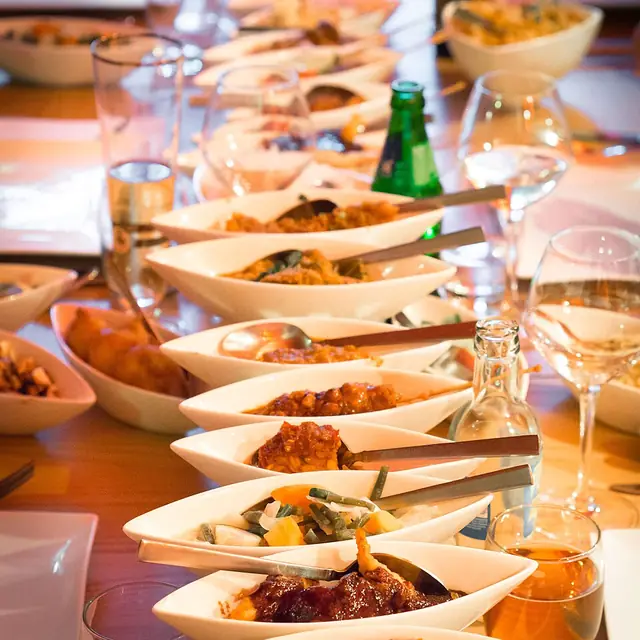
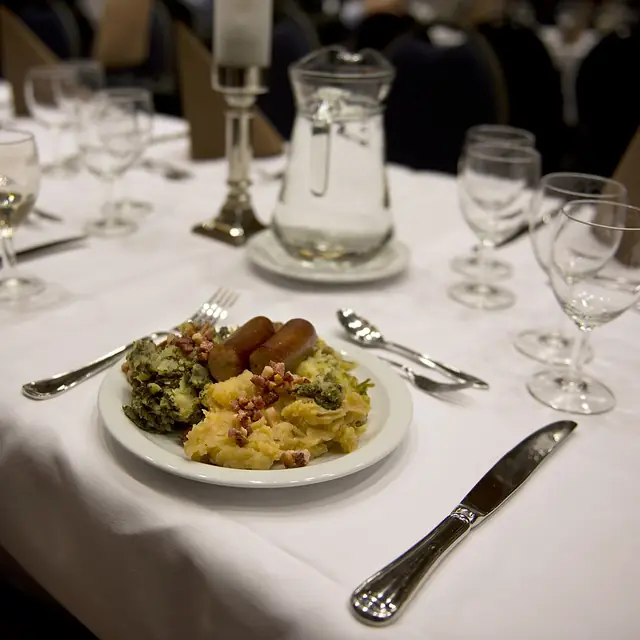
Amsterdam eats two cuisines on one plate. The Dutch table proper (the herring stalls, the brown cafes pouring jenever, the pancake houses, the stamppot and the bitterballen) is layered with the Indonesian-Dutch table that 350 years of colonial rule embedded into the national diet. Indonesia gained independence from the Netherlands in 1949, but the colonial-era rijsttafel (literally rice table, the elaborate 12 to 30-dish Indonesian meal that Dutch plantation owners invented in the 19th century to showcase the islands' regional cooking) is still the city's signature group meal, served at long-running Indonesian institutions like Restaurant Blauw, Indrapura, Tempo Doeloe, Sampurna and Sama Sebo. Eating one rijsttafel is the closest thing Amsterdam has to a culinary rite of passage; the same trip should hit at least one herring stall (Frens Haringhandel on Singel, Stubbe's Haring at Singel, or Volendammer Vishandel) for raw maatjes (the May-to-June young herring) served with chopped onion and pickles.
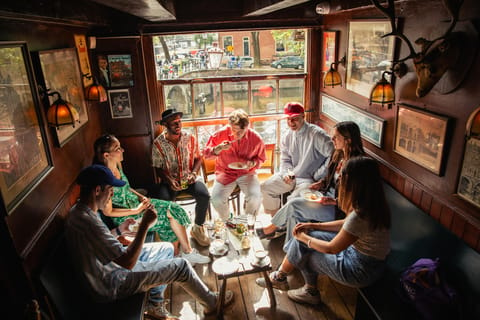
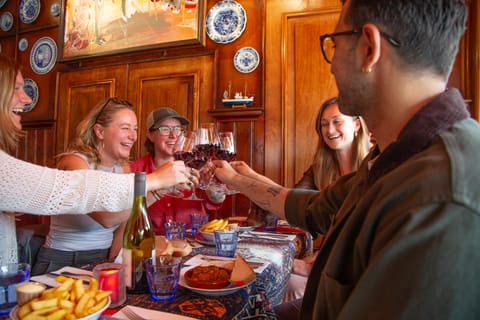
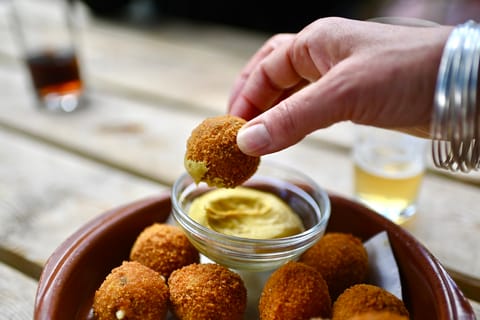
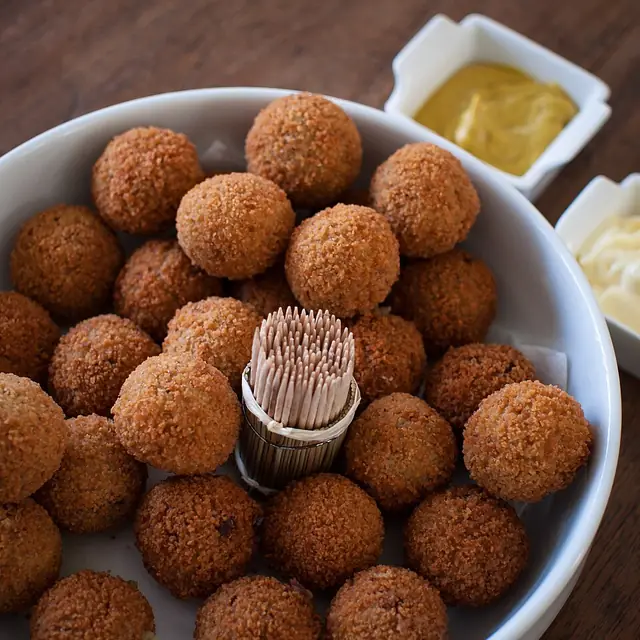
The second axis is the bruin cafe (brown cafe), the woody, tobacco-stained, 17th-century neighborhood pub that is to Amsterdam what the pub is to London or the cafe is to Paris. The reference brown cafes (Cafe Hoppe on Spui since 1670, Cafe 't Smalle on Egelantiersgracht since 1786, Cafe Chris in Jordaan since 1624, In de Wildeman with 17 Dutch tap beers, Cafe de Druif near the Maritime Museum since 1631) pour jenever (the original Dutch grain spirit, the etymological grandfather of gin), pilsner from Heineken or Brand, and serve simple bar food of bitterballen (the deep-fried crispy beef-ragu balls eaten with mustard) and a kaasplankje (cheese board) for borrel (the Dutch happy-hour ritual). A jenever-and-bitterballen evening at a brown cafe is the most authentic single Amsterdam food experience available.
The modern wave layers on top of both heritage strands. The Foodhallen in Oud-West (the city's first Markthalle Neun-style indoor food market, opened 2014 in a converted 1902 tram depot, with 20 vendors and three bars) is the gateway modern food experience. Albert Cuypmarkt in De Pijp (the open-air market since 1905, the city's most-attended daily market) anchors the south. The third-wave coffee scene (Scandinavian Embassy on Sarphatipark, Lot Sixty One on Kinkerstraat, White Label Coffee in Westerpark, Friedhats Fuku in Oud-West) is older than the New York or London versions. The Michelin scene is now serious: three-star Flore (Bas van Kranen, the city's only three-star, in De L'Europe hotel), two-star Ciel Bleu at the Hotel Okura, two-star Vinkeles in Keizersgracht, plus a deep one-star bench (RIJKS at the Rijksmuseum, Daalder, The White Room at Hotel Krasnapolsky, Mos in Houthavens). A serious food weekend covers Indonesian, brown-cafe, market, modern Dutch, plus one fine-dining seat.
Rijsttafel and the Indonesian-Dutch table
Rijsttafel (literally rice table) is the elaborate Indonesian feast that Dutch colonial plantation owners invented in the 19th century Dutch East Indies to showcase the regional cooking of the archipelago: 12 to 30 small dishes served around a central plate of rice, mixing Sumatran rendang (the slow-cooked dry-spice beef), Javanese satay (the grilled meat skewers with peanut sauce), Madurese soto (broth), gado-gado (the boiled-vegetable salad with peanut dressing), bami goreng (fried noodles), nasi goreng (fried rice), sambal goreng telor (spicy egg), serundeng (toasted spiced coconut), kroepoek (the prawn crackers). The format does not exist in Indonesia itself; it is a Dutch-Indonesian colonial-era invention that survived independence in 1949 and embedded into Dutch national cuisine. The reference Amsterdam addresses are Restaurant Blauw in Oud-Zuid (the modern-classic since 2008, often called the best in town), Indrapura on Rembrandtplein (since 1979, the institution), Tempo Doeloe on Utrechtsestraat (since 1986, the smaller intimate one), Sampurna on Singel (the budget reliable), Sama Sebo on Pieter Cornelisz Hooftstraat (the traditional one). A full rijsttafel runs 45 to 75 euros per head and feeds two to four. Book 1 to 2 weeks ahead.
Brown cafes, jenever and borrel
The bruin cafe (brown cafe) is the Amsterdam neighborhood pub format: a 17th to 19th-century woody room, walls stained brown from centuries of tobacco smoke (the name comes from the wall color, not the beer), sand on the floor in the older ones, a small selection of Dutch beers on tap and the full jenever range behind the bar, simple bar food. The reference brown cafes are Cafe Hoppe on Spui (since 1670, the most-photographed), Cafe 't Smalle on Egelantiersgracht (since 1786, in Jordaan, with a tiny canal-side terrace), Cafe Chris in Jordaan (since 1624, the oldest, claimed to be where the bricklayers of the nearby Westerkerk drank), In de Wildeman on Kolksteeg (the beer-focused version with 17 Dutch and 250 bottled beers since 1690), Cafe de Druif near the Maritime Museum (since 1631), Cafe Karpershoek on Martelaarsgracht (since 1606, the contender for oldest). Jenever, the original Dutch grain spirit flavored with juniper berries that became the etymological grandfather of gin, is served in a small tulip-shaped glass filled to the brim; the drinker bends down without lifting the glass to take the first sip. Borrel is the late-afternoon Dutch happy-hour ritual: jenever or beer plus bitterballen (the deep-fried beef-ragu balls eaten with mustard) plus a kaasplankje (cheese board) or a portion of vlammetjes (mini spring rolls).
Herring, frites and the street counters
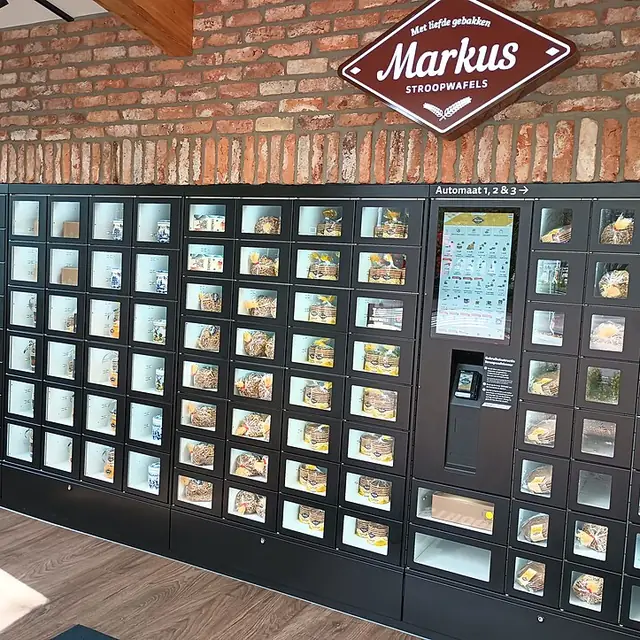
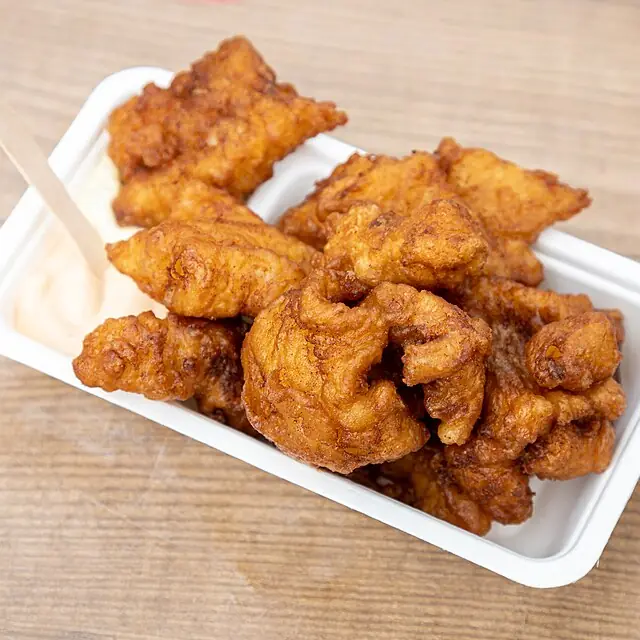
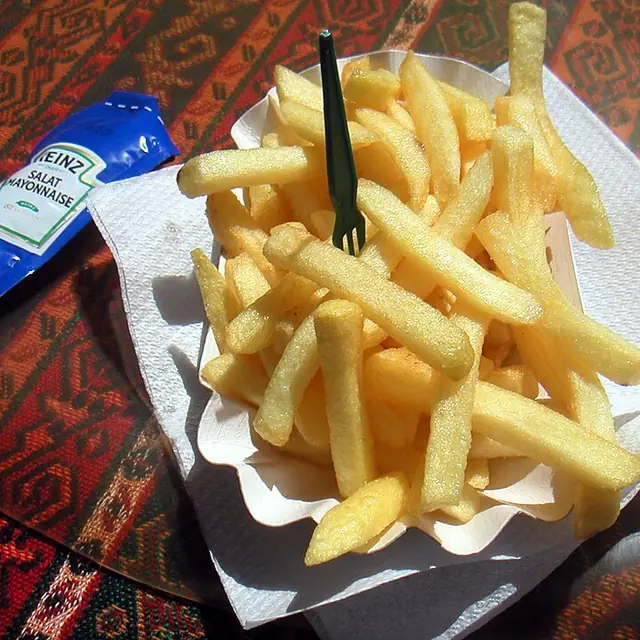
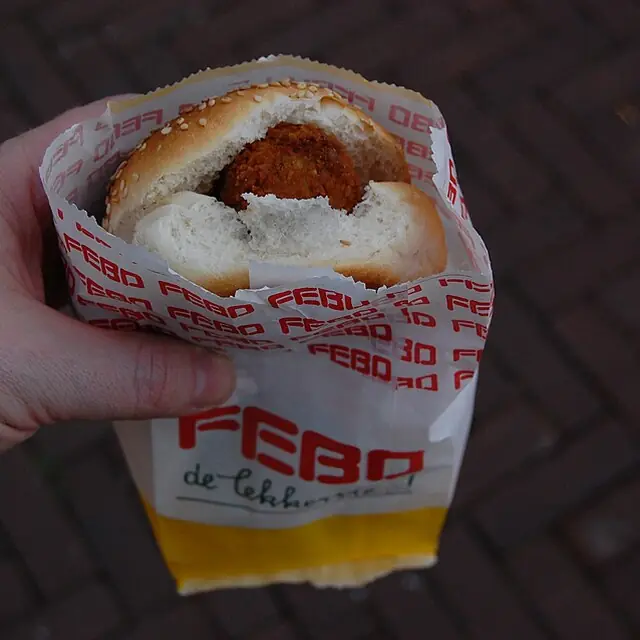
Amsterdam runs four classic street-food formats. Hollandse Nieuwe Haring (Dutch New Herring) is the raw maatjes (young herring) caught between mid-May and June, lightly salt-cured for 5 days, sold from a haring kiosk and traditionally eaten whole, head off, tail held in fingers, lowered into the mouth, with chopped onion and pickled cucumber on the side. The reference stalls are Frens Haringhandel on Koningsplein (the most-photographed), Stubbe's Haring at Singel by Centraal Station (since 1991, the institution), Volendammer Vishandel at the Albert Cuypmarkt. Cost: 4 to 6 euros for a herring served broodje (in a bun, the visitor format) or staartje (by the tail, the Dutch format). Frites (Belgian-style twice-fried potatoes served in a paper cone with mayonnaise, ketchup, satay sauce or oorlog (all three plus chopped onion) are the second classic; the reference addresses are Vleminckx De Sausmeester on Voetboogstraat (since 1957, the institution), Frites uit Zuyd on Reguliersbreestraat. Bitterballen (the deep-fried crispy meat-ragu balls served in batches of six with mustard) are the borrel snack; FEBO, the original automatiek chain (since 1941), is the late-night version where the bitterballen come out of small glass-fronted heated compartments. The fourth classic, the Surinamese broodje (a baguette stuffed with curried chicken, roti chicken or pom), is the South American colonial layer; Warung Mini in Jordaan and Tjin's in Oost are the references.
Foodhallen, Albert Cuyp and the markets
Amsterdam's market scene splits into open-air daily markets and indoor curated food halls. Albert Cuypmarkt in De Pijp, running since 1905 along Albert Cuypstraat, is the city's most-attended daily market (Monday to Saturday, 09:00-17:00, closed Sunday) with 260 stalls selling produce, cheese, fish, clothes, flowers, plus street food (Lou's Italian for hot focaccia, the Wonderpotato hot-potato stand, the original stroopwafel stall where the warm syrup waffle is sandwiched in front of you, the Volendammer Vishandel herring counter). Foodhallen, the indoor food hall opened 2014 in a converted 1902 tram depot in Oud-West, was the country's first Markthalle Neun-style space and remains the best (20 vendors including Bitterballenbar for the modern bitterballen, De Ballenbar by chef Peter Gast, Maido for Filipino food, plus three full bars). Noordermarkt in Jordaan runs Saturday morning as a farmers and organic market (since 1627). Dappermarkt in Oost is the multicultural neighborhood version (since 1910). Pekmarkt in Noord is the modern alternative-leaning Saturday market. The Foodhallen and Albert Cuyp are the two most worth a half-day; everything else is neighborhood-scale.