

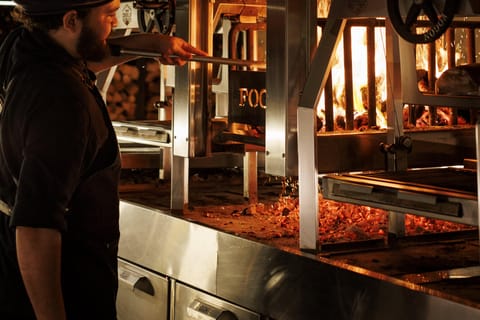
Buenos Aires eats like the steakhouse capital of South America, built on Italian-Argentine immigration and a parrilla tradition that crowned Don Julio #1 on Latin America's 50 Best in 2020 and 2024, then #3 in 2025. The city invented milanesa napolitana, baked pizza al molde at El Cuartito since 1934, and folds dulce de leche into alfajores, helado and panqueques. Lunch runs late, dinner runs later, and a parrillero will still have the grill lit at midnight.
Where to eat in Buenos Aires
All 21 restaurantsBook food experiences in Buenos Aires
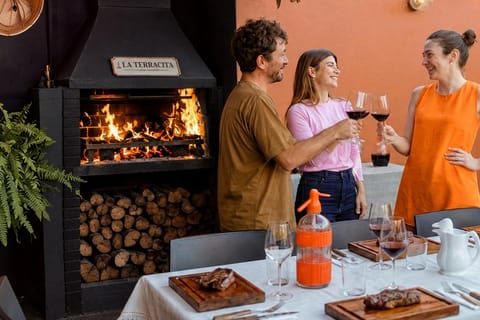

Food festivals coming up in Buenos Aires
All Buenos Aires food festivalsWhere to stay in Buenos Aires
All Buenos Aires hotels-
 Hotel Reina
Check prices
Hotel Reina
Check prices
-
 Santino Recoleta
Check prices
Santino Recoleta
Check prices
-
 Milhouse Avenue
Check prices
Milhouse Avenue
Check prices
-
 America del Sur Hostel Buenos Aires
Check prices
America del Sur Hostel Buenos Aires
Check prices
-
 O2 Hotel Buenos Aires
Check prices
O2 Hotel Buenos Aires
Check prices
-
 ibis Buenos Aires Congreso
Check prices
ibis Buenos Aires Congreso
Check prices
-
 Centuria Hotel Buenos Aires
Check prices
Centuria Hotel Buenos Aires
Check prices
-
 Apartur Buenos Aires
Check prices
Apartur Buenos Aires
Check prices
-
 Bagu Buenos Aires
Check prices
Bagu Buenos Aires
Check prices
-
 HR Luxor Buenos Aires
Check prices
HR Luxor Buenos Aires
Check prices
-
 Arribo Buenos Aires Hotel Boutique
Check prices
Arribo Buenos Aires Hotel Boutique
Check prices
-
 Le B Club Boutique & Terrasse
Check prices
Le B Club Boutique & Terrasse
Check prices
Also compare
Hotels are listed by our booking partners, not picked by our editors. We earn a commission if you book, at no cost to you.
Getting there and around Buenos Aires

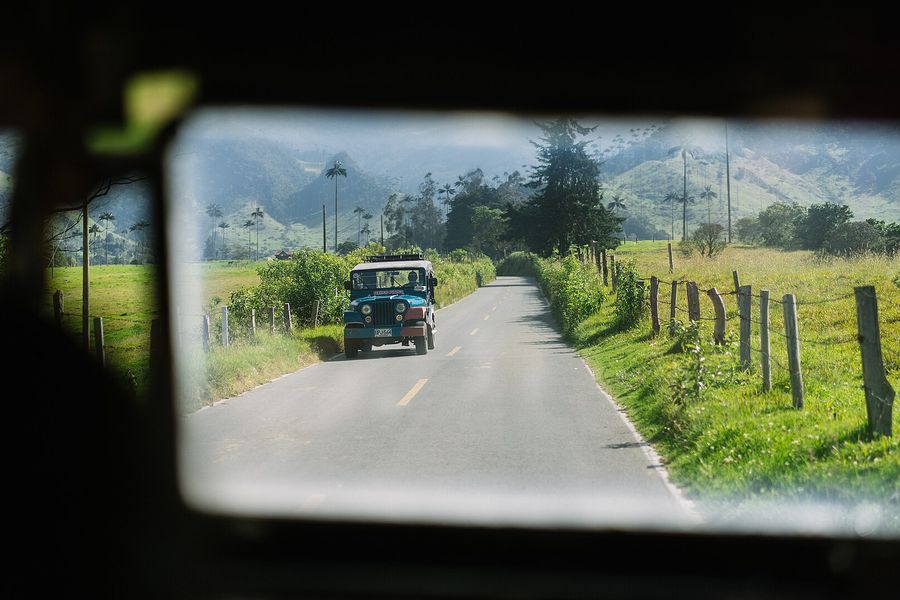

Sold by our booking partners. We earn a commission if you book, at no cost to you.
Signature dishes in Buenos Aires
All 18 dishes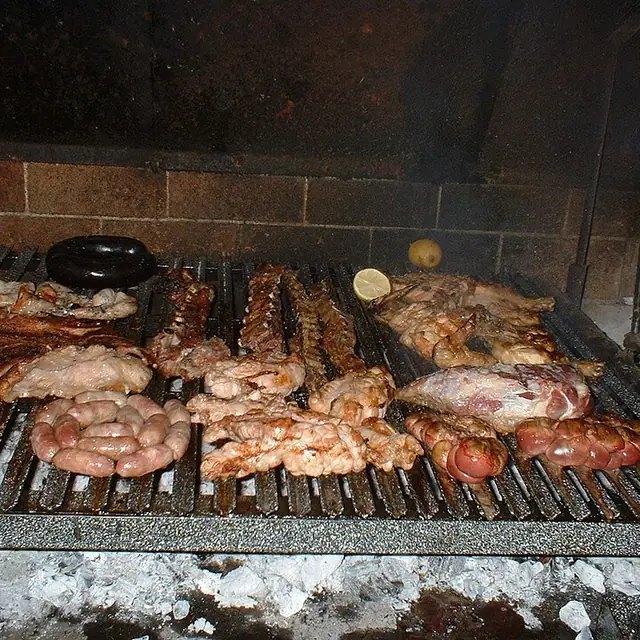
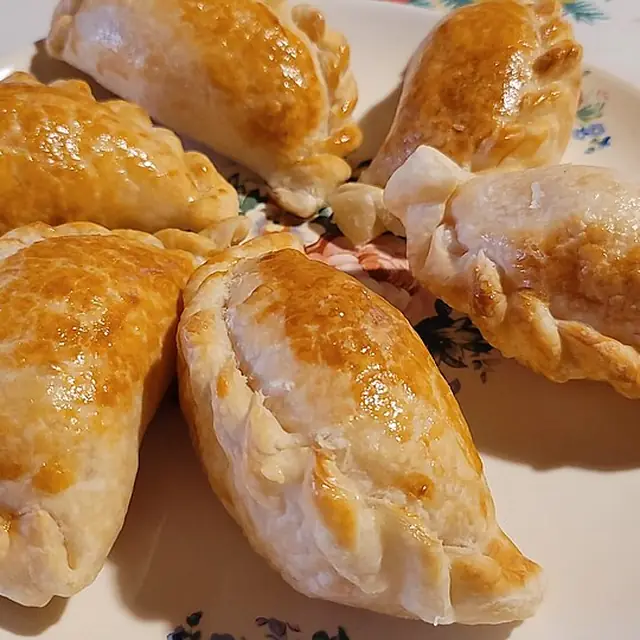
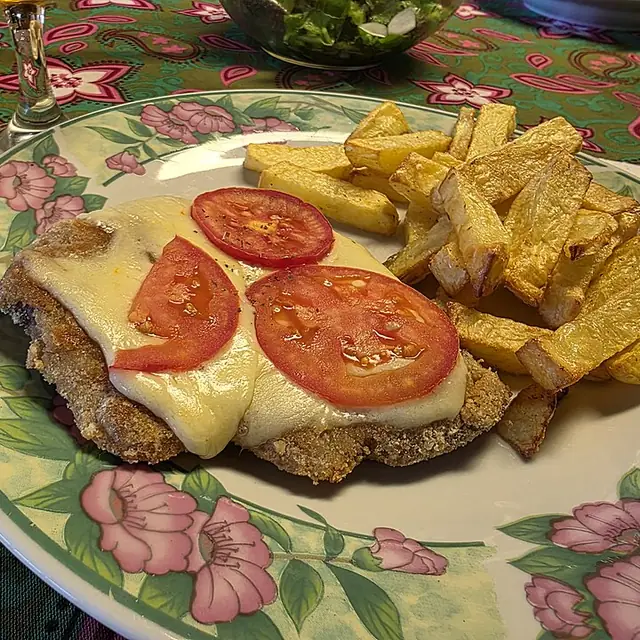
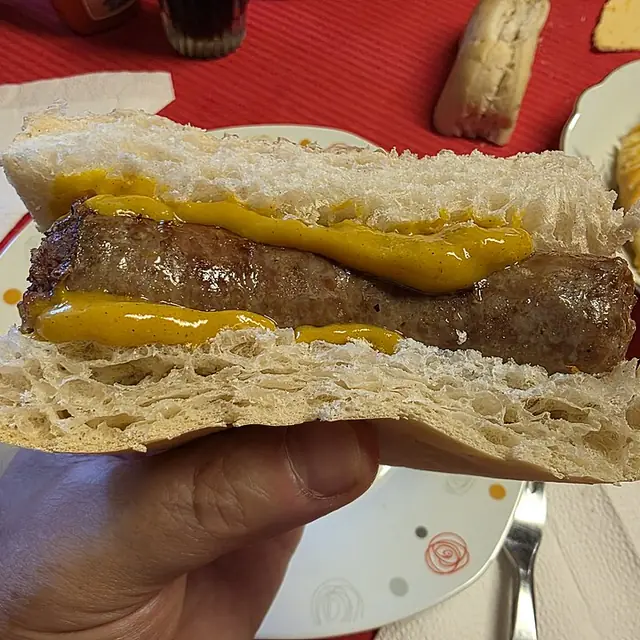
More dishes
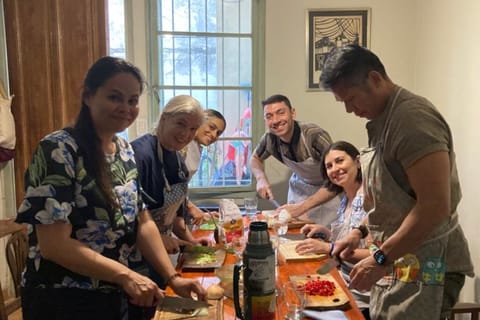
Where to eat by neighborhood
All neighbourhoods- Palermo Soho44 places Also palermo
- Palermo Hollywood7 places
- Recoleta9 places
- San Telmo8 places
- Villa Crespo3 places
- Belgrano9 places

Also in Buenos Aires: tickets for the sights



Tickets are sold by our booking partners. We earn a commission if you book, at no cost to you.
Map of Buenos Aires
Every restaurant, cafe, market and bar we cover in Buenos Aires, pinned. Click a pin for the page.
Everything in Buenos Aires
- Restaurants
- Fine Dining
- Casual Dining
- Cafés
- Bakeries
- Coffee Roasters
- Wine Bars
- Bars
- Street Food
- Breweries
- Markets
- Food Tours
- Festivals
- Cooking Classes
- Dietary
- Budget Eats
- Signature Dishes
- Hidden Gems
- Brunch
- Late Night
- Food History
- Seasonal
- Food Day Trips
- Itineraries
- Nightlife
Plan your eating trip
Browse Buenos Aires
When to come hungry in Buenos Aires
- Peak food season
- March to May (autumn) for vendimia harvest wines and locro week, plus September to November (spring) for picada season. December and January are hot, humid and quieter at top tables.
- Local dining hours
- Lunch 13:00-15:30, Dinner 21:00-24:00. Cafes from 08:00. Many parrillas only open the grill at 20:00.
- Tipping
- Service charge is not standard in Argentina. A 10 percent tip in cash on the table for good service is normal at restaurants; small change at bars and cafes.
Read the full Buenos Aires food guide
Buenos Aires eats more beef per capita than any other large city in the world (Argentina averaged roughly 50 kilograms per person per year in 2024, second only to Uruguay) and the parrilla (the wood-and-charcoal Argentine grill restaurant) is the city's defining institution. The classic parrilla menu runs the asado cuts in a strict order: chinchulines (the chitterlings), molleja (sweetbreads), provoleta (the grilled provolone disc with oregano), morcilla (blood sausage), chorizo, then the main beef cuts (bife de chorizo, the strip steak; bife de lomo, the tenderloin; ojo de bife, the ribeye; vacio, the flank; tira de asado, the short ribs; entrana, the skirt). Cooked over quebracho wood embers, never marinated, salted only at the grill, served with chimichurri and a glass of Mendoza Malbec. The reference parrillas, from cult to neighborhood, are Don Julio in Palermo Soho (the world-famous one, repeatedly number one on Latin America's 50 Best, currently number ten on the World's 50 Best 2024), La Cabrera (the four-course tapas-style version on Cabrera and Niceto Vega), La Brigada in San Telmo (the institution since 1990), El Pobre Luis in Belgrano, and the older neighborhood bodegones (Los Chanchitos, El Preferido de Palermo).
The second layer is the Italian-Argentine diet that the great immigration wave of 1880 to 1920 embedded into the national plate. Roughly 60 percent of Argentines have Italian ancestry, and Buenos Aires runs the densest pizza, pasta and ice-cream scene outside Italy. The city has its own pizza style (pizza al molde, the deep-pan rectangular thick-crust pizza baked in large oven trays, sliced into squares and sold from neighborhood pizzerias since the early 20th century) and a separate pizza a la piedra (the thinner stone-baked round). The institutions are El Cuartito on Talcahuano (since 1934, the still-functioning original muzzarella-and-fugazzeta address), Guerrin on Corrientes (since 1932, the most-photographed Avenida Corrientes pizzeria), Las Cuartetas (since 1932), and Banchero (since 1932 in La Boca). The pasta circuit, from sorrentinos (the round stuffed pasta the rest of the world misnames sorrentini) to noquis (the gnocchi traditionally eaten on the 29th of every month for luck), runs through bodegones like El Preferido de Palermo, Pippo, and Pepito.
The third layer is the cafe culture. Buenos Aires runs more cafes per capita than any city in Latin America, anchored by the Cafe Notable network: 75 historic cafes officially protected by the city government as cultural heritage, identified by a bronze plaque, including Cafe Tortoni on Avenida de Mayo (since 1858, the oldest), La Biela in Recoleta (since 1850 as a pulperia, the cafe since 1948, where the city's intellectual class still gathers), Las Violetas in Almagro (since 1884, the most beautiful interior), and Cafe de los Angelitos in Monserrat (since 1908, the tango-house version). The cafe ritual is older than any of the wine-bar trends: an espresso plus a medialuna (the Argentine croissant, smaller, sweeter and glazed with sugar syrup), at 10:00 or 17:00, with a newspaper or a friend. Layer in the Michelin scene that arrived in 2024 (the first guide covered Buenos Aires plus Mendoza, awarding stars to Don Julio, Aramburu, Trescha and others), the dulce de leche and alfajor canon, the choripan and bondiola street counters, plus the late-night culture (dinner from 21:00-23:00, drinks until 04:00), and the city runs as a 24-hour eating capital.
Parrilla and the asado ritual
The parrilla is the wood-and-charcoal Argentine grill restaurant, the city's defining food institution, and the asado (literally roast or grill) is the ritual order of the meal. The fire is built from quebracho hardwood embers in a brick parrilla grill behind the restaurant or visible from the dining room. Beef is never marinated, salted only at the moment of grilling with thick gruesa salt, cooked al punto (medium-rare). The classic parrilla order in sequence: a glass of Malbec while the fire reaches temperature, then the picada (the cured-meat-and-cheese board), then the achuras (the offal first round: chinchulines fried-chittering crisp, molleja sweetbreads, rinones kidneys), then the embutidos (chorizo, morcilla), then the provoleta (a grilled provolone disc with oregano and chili), then the main beef cuts (bife de chorizo, bife de lomo, ojo de bife, tira de asado, vacio, entrana), with chimichurri (the parsley-garlic-vinegar-chili sauce) and a side of ensalada mixta or papas fritas. The reference parrillas are Don Julio in Palermo Soho (number ten on the World's 50 Best 2024, one Michelin star 2024, book 3 to 6 months ahead through the website), La Cabrera on Cabrera and Niceto Vega (the four-course tapas-style version that revolutionized parrilla in 2008), La Brigada in San Telmo (since 1990, the meat cut at the table with a spoon), El Pobre Luis in Belgrano (the Uruguayan-style parrilla), Las Lilas in Puerto Madero (the upscale formal version).
The Italian-Argentine table: pizza, pasta, gelato
The 1880 to 1920 Italian immigration wave (roughly 2 million Italians arrived in Argentina in those four decades, mostly from Calabria, Sicily, Campania, Veneto and Genoa) embedded an Italian-Argentine cuisine into the national diet so deeply that pizza al molde, sorrentinos, fugazzeta and milanesa are now considered Argentine, not Italian. Pizza al molde is the city's own pizza style: deep-pan rectangular thick-crust pizza baked in large oven trays at 250 to 300 grams of dough per square foot, dense-crumbed, served by the square, traditionally topped with muzzarella (the local rubbery mozzarella) and fugazzeta (a layered onion variant unique to Buenos Aires). The reference pizzerias are El Cuartito on Talcahuano (since 1934, the institutional address), Guerrin on Avenida Corrientes (since 1932, the most-photographed, the line at midnight), Las Cuartetas on Corrientes (since 1932), Banchero in La Boca (since 1932, the origin claim for fugazzeta), El Imperio on Hipolito Yrigoyen (the cheap-and-late one), and Angelin on Cordoba (the natural-leavening modern version). The pasta circuit runs sorrentinos (round stuffed pasta), noquis (gnocchi, traditionally eaten on the 29th of every month for luck), agnolottis and ravioles. The gelato circuit runs Persicco, Rapanui, Cadore (the dulce de leche specialist since 1957), and Freddo, with a strong Italian-Argentine recipe DNA still visible.
Cafes notables and the cafe ritual
Buenos Aires runs the densest cafe culture in Latin America, with cafes anchoring the social fabric since the 19th century. The city government's Cafes Notables program, launched 1998 and codified by Law 35 in 1998, recognizes 75 historic cafes as cultural heritage, identified by a bronze plaque outside the door. The classic addresses are Cafe Tortoni on Avenida de Mayo (since 1858, the oldest, Art Nouveau interior, the cafe where Borges, Alfonsina Storni, Carlos Gardel and Federico Garcia Lorca all sat), La Biela in Recoleta (across from the Recoleta Cemetery, since 1850 as a pulperia, the cafe since 1948, the intellectual class's address), Las Violetas in Almagro (since 1884, stained-glass and marble interior the city government calls the most beautiful), Cafe de los Angelitos on Rivadavia (since 1908, the tango-house version, with live tango shows nightly), Confiteria del Molino opposite the Congreso (since 1916, reopened 2018 after a 21-year restoration), Florida Garden in San Nicolas. The cafe ritual: cortado (espresso with a splash of steamed milk) or cafe con leche (the larger morning version), plus a medialuna (the Argentine croissant, smaller, sweeter and glazed with sugar syrup) or three. Order at the counter or wait for table service; the bill includes the bread basket as a cover charge.
Dulce de leche, alfajores and the sweet canon
Dulce de leche, the slowly-caramelized milk-and-sugar spread, is the closest thing the Argentine pantry has to a national flavor, and the city runs it through every sweet course. The traditional addresses for the highest-grade artisanal dulce de leche are La Salamandra (the small-batch creamery, sold at gourmet stores), Cachafaz (the artisanal sandwich-cookie maker), and Havanna (the chain-scale industrial version). The alfajor (two soft round biscuits sandwiching dulce de leche, dipped in chocolate or rolled in coconut) is the country's most-consumed sweet, eaten as a 20:00 merienda snack. The institutional addresses are Havanna (the airport-and-shop chain), Cachafaz (the artisanal version), Balcarce (the founding Mar del Plata company since 1947), Capitan del Espacio (the Cordoba reference). Other classics: chocotorta (the no-bake cake of chocolate-cookie layers with dulce de leche and cream cheese, invented at Havanna in 1982), torta rogel (the multi-layer dulce-de-leche cake with Italian meringue), helado de dulce de leche granizado (the dulce de leche ice cream with chocolate chips, the most-ordered flavor at every gelateria), pasta frola (the quince-paste lattice tart), and the sticky panqueque con dulce de leche (the French-style crepe with dulce de leche).
Buenos Aires food, FAQ
What food is Buenos Aires known for?
Buenos Aires's signature dishes include Asado, Empanadas (porteñas, salteñas, tucumanas), Milanesa Napolitana, Choripan, Pizza al molde. See our signature dishes chapter for where to eat each.
What are the best food neighborhoods in Buenos Aires?
TableJourney editors map Buenos Aires by district. Palermo Soho, Palermo Hollywood, Recoleta, San Telmo are among the strongest for food, each with its own guide.
Where should I eat fine dining in Buenos Aires?
Editor picks in Buenos Aires include Trescha, Aramburu, Don Julio, plus the full fine dining chapter on TableJourney.
Are there food tours in Buenos Aires?
TableJourney covers 6 editor-picked food tours in Buenos Aires, with what each shows you and how much to budget.
Does Buenos Aires have good vegetarian or vegan food?
TableJourney's Buenos Aires dietary chapter covers vegan, vegetarian, gluten_free, halal, kosher venues, each editor-picked with what to order and how to ask.