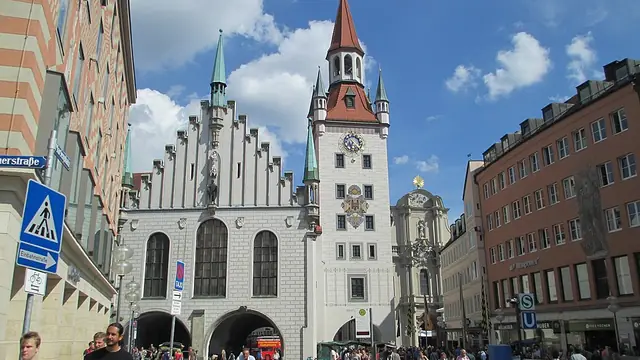
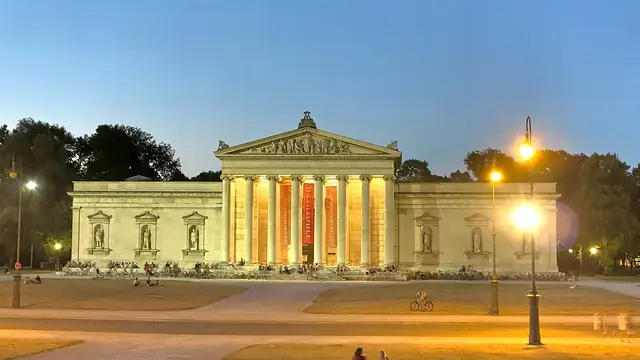
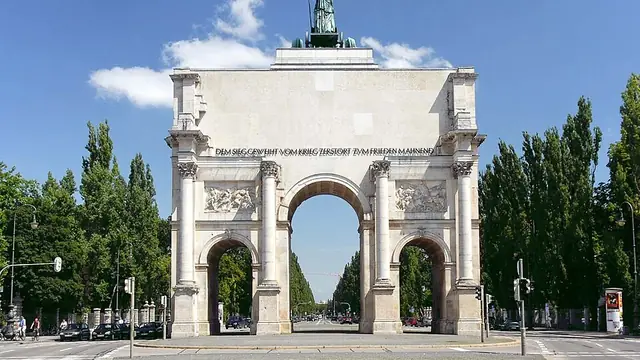
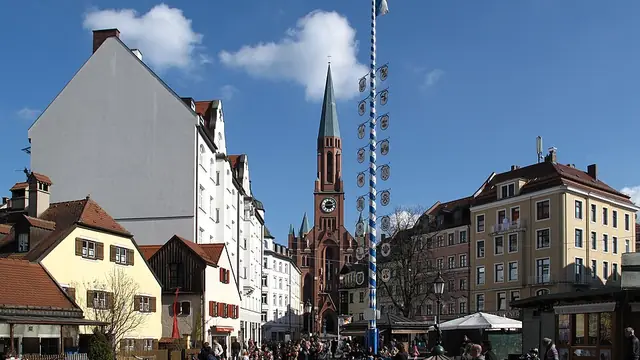
Munich eats traditionally, drinks loyally, and treats lunch as the central meal of the day. The city's defining institution is the beer hall, with Hofbraeuhaus at Platzl pouring since 1589 and Augustiner-Stammhaus on Neuhauser Strasse the city's oldest Augustiner room since 1829. Weisswurst, eaten before noon with sweet mustard and a pretzel, is the morning sacrament; Schweinshaxe and Leberkaes anchor the lunchtime tables; Brezn are sold on every corner. The serious dining room has caught up: Jan Hartwig's three-star JAN on Luisenstrasse and Tohru Nakamura's three-star Tohru in der Schreiberei now sit beside two-star Tantris in Schwabing and two-star Alois Dallmayr Fine Dining in the historic centre. The everyday city is steady. A Hofbraeuhaus half-litre runs about five euros, a Hofpfisterei loaf around six, and a Viktualienmarkt Brezn under two.

Eat your way through Munich

Browse by price

Map of Munich

Every restaurant, cafe, market and bar we cover in Munich, pinned. Click a pin for the page.

Where to eat in Munich: editor-picked starting points

5 institutional venues to anchor a Munich food trip

  • JAN (maxvorstadt) - Tasting menu, chef Jan Hartwig
  • Tohru in der Schreiberei (altstadt-lehel) - Japanese, chef Tohru Nakamura
  • Tantris (schwabing) - Tasting menu, chef Benjamin Chmura
  • Alois Dallmayr Fine Dining (altstadt-lehel) - Modern European, chef Rosina Ostler
  • Komu (altstadt-lehel) - Tasting menu, chef Christoph Kunz

Must-try Munich dishes

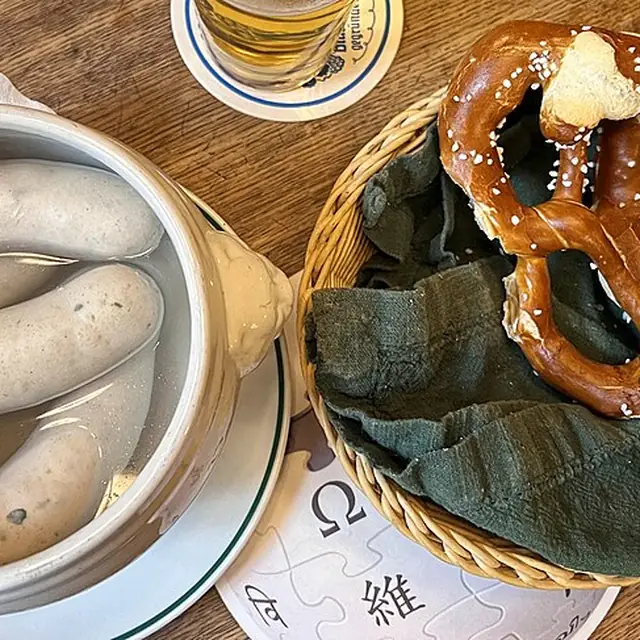
  • Weisswurst - Veal and pork sausage poached in water, served with sweet mustard, a Brezn and a Weissbier
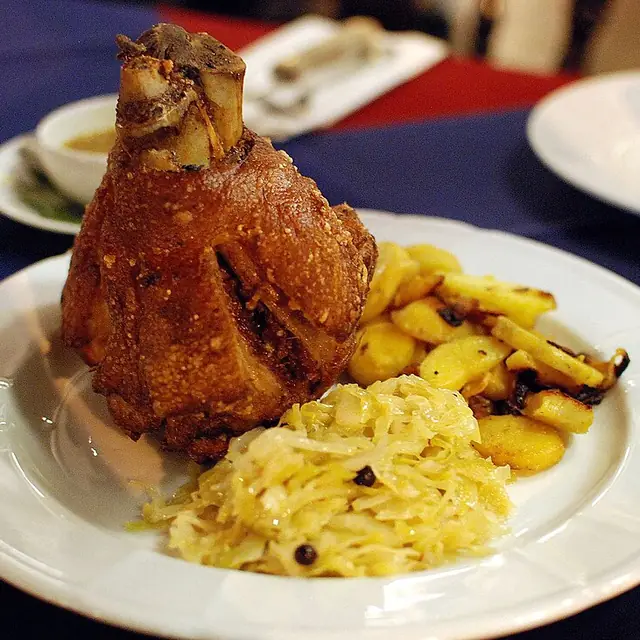
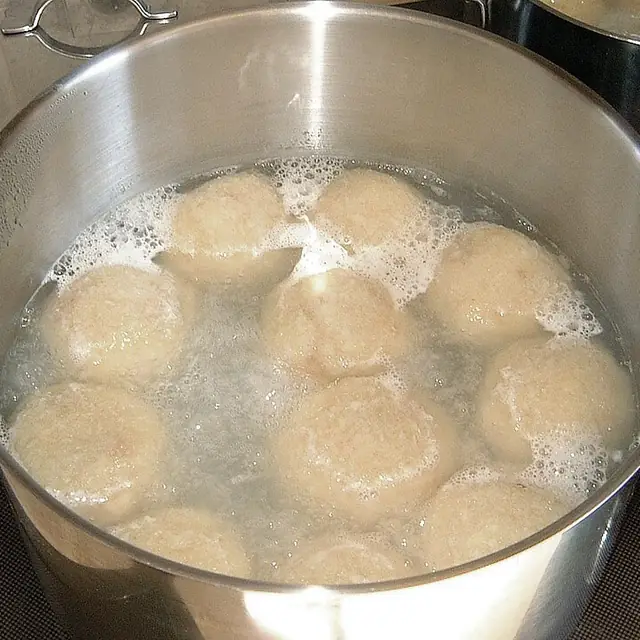
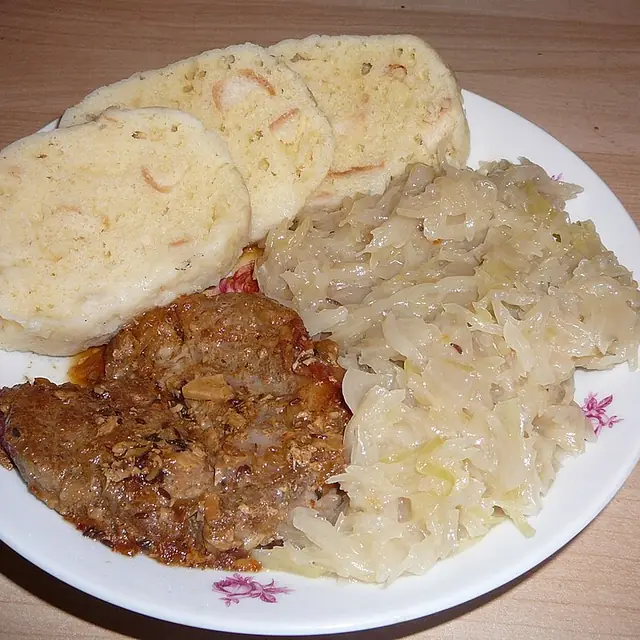
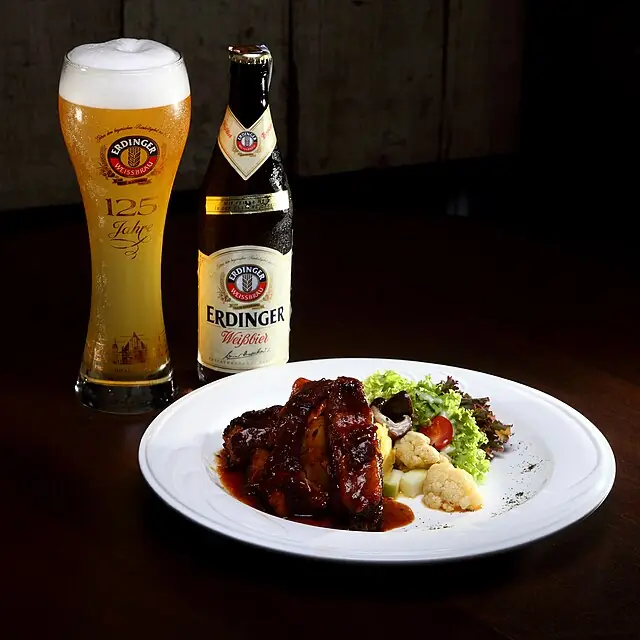
  • Schweinshaxe - Roast pork knuckle with crackling skin and tender meat, served with potato dumplings, red cabbage and dark gravy
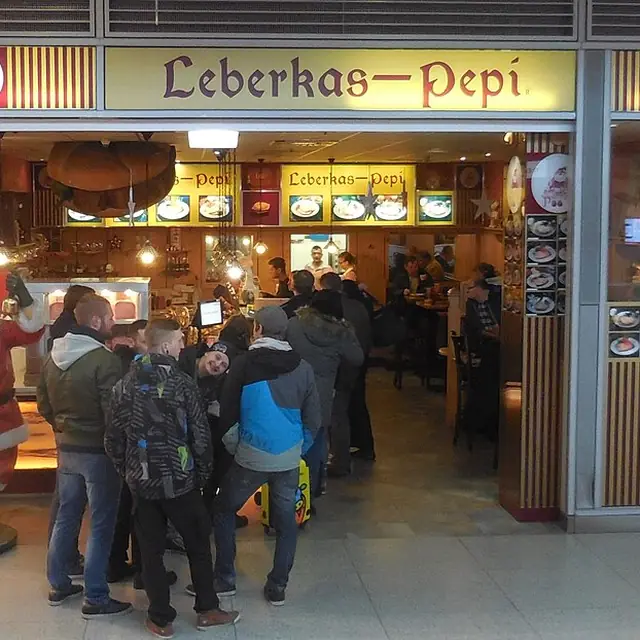
  • Leberkäs - Finely minced beef and pork loaf, baked in a tin, served sliced hot or cold in a soft roll (Leberkäsweckl)
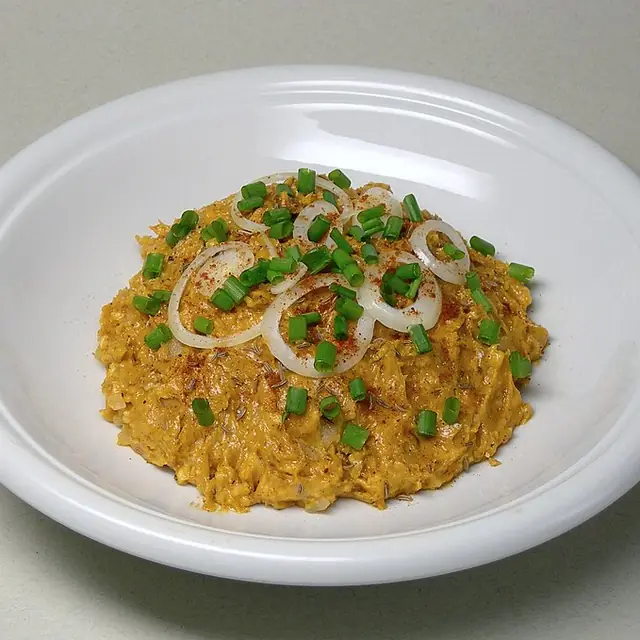
  • Obatzda - Bavarian beer-garden cheese spread: ripe Camembert mashed with butter, paprika, onion and caraway
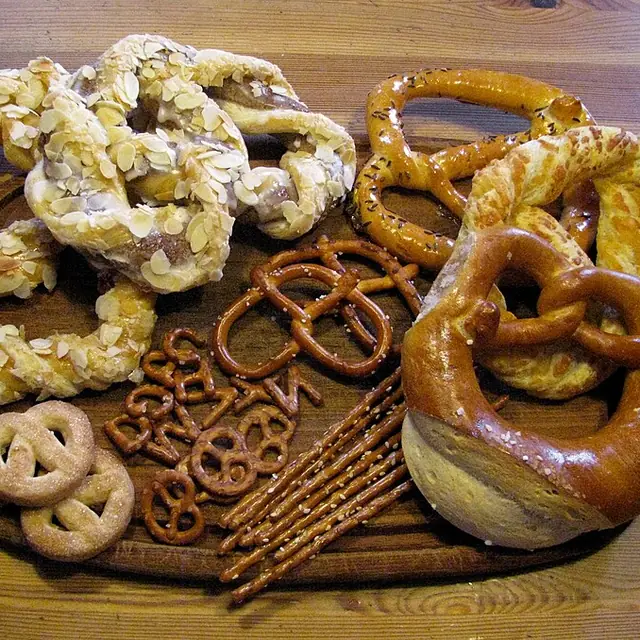
  • Brezn (Bavarian pretzel) - Lye-dipped pretzel with a dark mahogany crust and a soft, salty interior

Best Munich neighborhoods for food

  • Altstadt-Lehel - The historic centre around Marienplatz and Viktualienmarkt: Hofbraeuhaus at Platzl, Augustiner-Stammhaus on Neuhauser Strasse, Alois Dallmayr on Dienerstrasse and Tohru in der Schreiberei's three-star kitchen on Burgstrasse
  • Maxvorstadt - The university quarter around Koenigsplatz: Jan Hartwig's three-star JAN on Luisenstrasse, Sparkling Bistro in a townhouse, plus a long run of student cafes and bakeries
  • Schwabing - The old bohemian quarter north of the centre, now a steady food borough: Tantris on Johann-Fichte-Strasse, Brothers and the English Garden beer gardens at the Chinesischer Turm
  • Haidhausen - The French quarter east of the Isar: Wirtshaus in der Au for Knoedel, the Wiener Markt for Saturday produce, a cluster of natural-wine rooms and Vietnamese counters
Read the full Munich food guide

Munich is the capital of Bavaria, and the Bavarian table is the only regional cuisine in Germany that has built a global brand strong enough to overshadow the country's general food reputation. The classic Munich plate runs heavy: weisswurst eaten before noon, schweinshaxe (the slow-roasted pork knuckle), schweinsbraten with dunkel-gravy and a dumpling, leberkas slabs from a butcher counter, weissbier in a half-liter mass glass, obatzda cheese spread on a brezn pretzel. Six Munich breweries (Augustiner, Hofbrau, Lowenbrau, Paulaner, Spaten, Hacker-Pschorr) hold the legal right to pour beer at Oktoberfest under the 1487 Reinheitsgebot purity law, which is the same six breweries that anchor the beer hall and beer garden map. The Hofbrauhaus on Platzl (the state-owned brewery hall since 1589) is the tourist gateway; the Augustiner-Brau on Neuhauser Strasse (the locals' version since 1328) and the chestnut-shaded beer gardens at Hirschgarten (the largest in the world, 8,000 seats), Englischer Garten Chinesischer Turm and Augustiner-Keller are the real article.

The second axis is the working markets and the daily food rhythm. Viktualienmarkt, the open-air market on Heiliggeistkirche square in the city center, has run continuously since 1807 and remains the working pantry for central Munich: 140 stalls selling produce, cheese, sausages, fish, flowers and the famous Viktualienmarkt beer garden in the middle. The Schrannenhalle on the south side of Viktualienmarkt was reborn 2015 as Eataly's flagship German store (the only Eataly in Germany). The smaller neighborhood markets (Elisabethmarkt in Schwabing, Markt am Wiener Platz in Haidhausen, Pasinger Markt) carry the same format at half the scale. The daily food clock: weisswurst breakfast 09:00 to noon (and never after noon, by tradition), light lunch 12:30-14:00, the Brotzeit (the cold-plate afternoon snack with cured meats, cheese, brezn and a beer) from 15:00, dinner from 18:30-21:30.

The modern axis catches a lot of visitors by surprise. Munich now holds the most Michelin stars per capita in Germany: three-star Tantris DNA (the new Tantris next door, opened 2022, reverse Michelin journey) and three-star Atelier at Bayerischer Hof, plus three-star JAN in Maxvorstadt (since 2024), plus two-stars Tohru, Komu, Mural Farmhouse, plus the broader Tantris (still two-star), Schwarzreiter at Vier Jahreszeiten, Werneckhof Sigi Schelling and a dozen one-stars. The fine-dining axis is mostly modern-European with a Bavarian-product emphasis, very different from the beer-hall heritage. The two Munichs (the lederhosen heritage and the modern luxury) exist 5 minutes apart on the same map; both belong on a serious food itinerary.

Beer hall, beer garden, beer culture

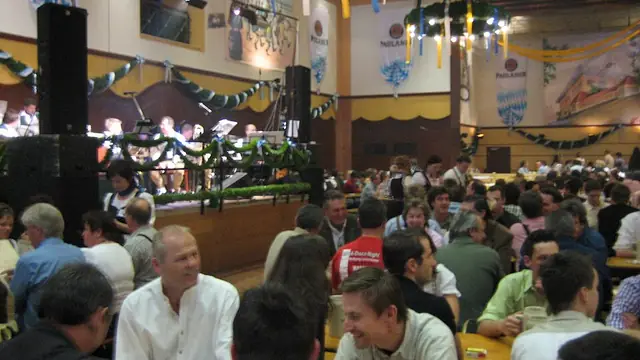
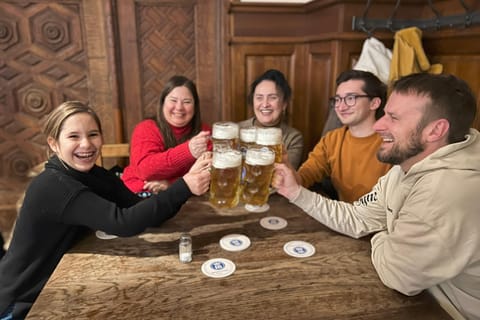
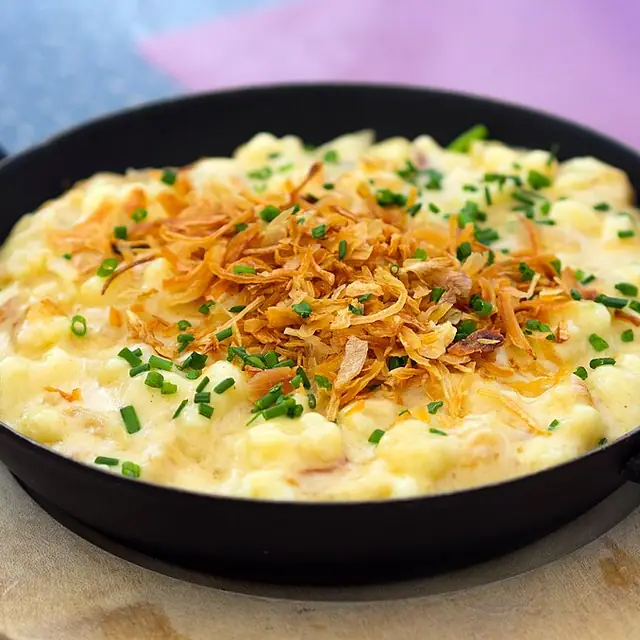
The Bavarian beer hall (Brauhaus) and the beer garden (Biergarten) are two related but different formats. A beer hall is an indoor brewery-attached drinking and eating hall with long shared tables, brass bands on weekends, waitresses in dirndls carrying eight steins at once, and a full menu of Bavarian plates: schweinshaxe, schweinsbraten, schnitzel, weisswurst with sweet mustard, kasespatzle. The reference beer halls are Hofbrauhaus on Platzl (since 1589, state-owned, the most touristy, still worth one visit for the room), Augustiner-Brau on Neuhauser Strasse (since 1328, the oldest Munich brewery, the locals' favorite), Schneider Brauhaus on Tal (the weissbier specialist), Augustiner-Keller on Arnulfstrasse (the brewery's own keller). The beer garden is the summer format: outdoor under chestnut trees, self-service, you bring your own food (a Bavarian legal right enshrined in tradition since the 1812 royal decree, beer must be bought from the garden). The reference beer gardens are Hirschgarten (the world's largest at 8,000 seats), the Chinesischer Turm in Englischer Garten, Augustiner-Keller, Hofbrau-Keller and Park-Cafe at the Alter Botanischer Garten. The classic order: a half-liter dunkel beer plus a half-meter brezn pretzel plus a portion of obatzda.

Weisswurst, the noon rule

Weisswurst is the white veal-and-pork sausage flavored with parsley, lemon zest, mace and cardamom, traditionally eaten between breakfast and noon and never after noon (the original sausage was made without preservatives and would not survive the afternoon in the days before refrigeration; the rule persists as a tradition). The Munich weisswurst was invented in 1857 by Sepp Moser at the Zum ewigen Licht inn on Marienplatz, who claimed he ran out of casings for the morning sausages and improvised with stuffing them into thinner casings, then poaching rather than grilling them. The dish is eaten in a precise ritual: served two sausages per portion in a bowl of hot (not boiling) water, slit open with a knife, the meat scraped out with the side of the fork (the casing is never eaten), dipped in sweet Bavarian mustard (sussersenf), eaten with a brezn and a weissbier. The classic addresses are Wirtshaus in der Au in Au, Weisses Brauhaus (Schneider Brauhaus) on Tal, Augustiner-Grossgaststatte for the breakfast, Cafe Frischhut (the Schmalznudel cafe) on Prazlmarkt for the morning fortification. Most halls stop serving weisswurst at 12:00 sharp.

Viktualienmarkt and the market crawl

Viktualienmarkt has run continuously since 1807 on the Heiliggeistkirche square in the city center, and remains the working pantry for central Munich. Over 140 stalls sell produce, cheese, sausages, fish, flowers, spirits, and the famous beer garden (Viktualienmarkt Biergarten, 600 seats) in the middle rotates between the six Munich breweries through the year. The morning rhythm: opens at 06:00 Monday to Saturday, fullest from 08:00-12:00, with most stalls closing by 18:00 (Saturdays close at 15:00). The classic stops are Honigladen Spaeth (the honey specialist), Caspar Plautz (potato salads), Kustermann (kitchen tools), Wallner (cheese), Frischeparadies. Schrannenhalle on the south edge of Viktualienmarkt was renovated 2015 into the only Eataly in Germany, with a butcher, a pasta counter, a pizza oven, plus 30 specialty Italian retailers under one roof. Markt am Wiener Platz in Haidhausen (the smaller Eastern equivalent, since 1889) and Elisabethmarkt in Schwabing (the Bohemian student-quarter version) are the secondary markets worth visiting. All three remain working markets where locals do their actual weekly shopping, not museum pieces.

Oktoberfest, Starkbierzeit and the beer calendar

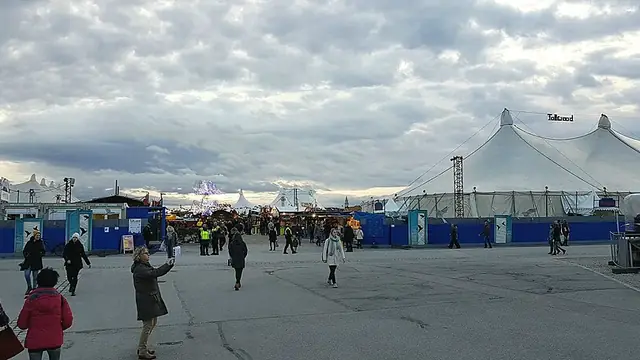
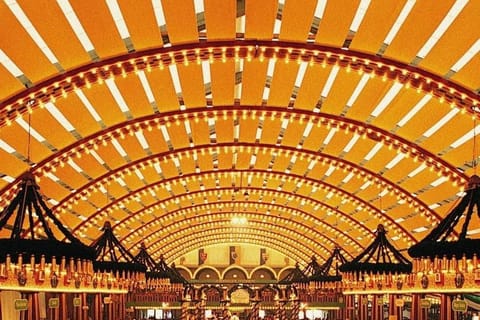
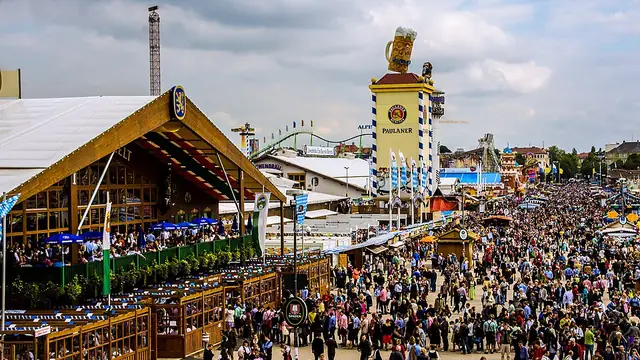
The Bavarian beer year runs on a calendar of seasonal festivals tied to the brewing cycle. Oktoberfest is the famous one: the 16-day folk festival on Theresienwiese starting the third Saturday of September and running through the first Sunday of October, attended by roughly 6 million visitors and pouring roughly 7 million liters of beer in 14 large brewery tents (each Munich brewery runs its own tent: Augustiner-Festhalle, Hofbrau-Festzelt, Paulaner Bier- und Weinzelt, Hacker-Festzelt, Schottenhamel, Marstall, Lowenbrau-Festzelt, Spaten). The Oktoberfestbier is brewed specially each year by the six Munich breweries and is poured only during the festival. Starkbierzeit (Strong Beer Season) runs March (5 weeks around Lent) and pours the heavier 7 to 8 percent doppelbocks (Salvator, Triumphator, Maximator) at the brewery kellers, technically a religious-derived festival originating with the 17th-century Paulaner monks brewing liquid bread for Lent. Frulingsfest in late April is the smaller-spring version of Oktoberfest. Tollwood in winter (in front of the Bayerischer Hof) is the alternative-leaning food and culture festival. Book Oktoberfest tent tables 6 to 9 months ahead through each brewery directly; standing-room benches are first-come, queue by 09:00 for a popular tent.

Compare Munich to other food cities

Must-try dishes in Munich

The plates that define eating in Munich.

Weisswurst

Veal and pork sausage poached in water, served with sweet mustard, a Brezn and a Weissbier. Eaten before noon by tradition. Munich's pre-noon ritual since 1857.

Where: Schneider Bräuhaus, Wurststandl Teltschik, Hofbräuhaus am Platzl, Augustiner-Stammhaus

Where to eat Weisswurst in Munich →

Schweinshaxe

Roast pork knuckle with crackling skin and tender meat, served with potato dumplings, red cabbage and dark gravy. The defining Bavarian beer-hall plate.

Where: Hofbräuhaus am Platzl, Augustiner Klosterwirt, Andechser am Dom, Paulaner am Nockherberg, Hofbräukeller

Where to eat Schweinshaxe in Munich →

Leberkäs

Finely minced beef and pork loaf, baked in a tin, served sliced hot or cold in a soft roll (Leberkäsweckl). Munich's classic mid-morning street snack.

Where: Vinzenzmurr Marienplatz, Wurststandl Teltschik, Hofbräuhaus am Platzl

Where to eat Leberkäs in Munich →

Obatzda

Bavarian beer-garden cheese spread: ripe Camembert mashed with butter, paprika, onion and caraway. Served with radishes, pretzels and Brezn.

Where: Hofbräuhaus am Platzl, Augustiner Klosterwirt, Augustiner-Stammhaus, Hofbräukeller

Where to eat Obatzda in Munich →

All Munich signature dishes →

Restaurants to know in Munich

A handful of the places we send friends to when they are in Munich.

Tantris

French€€€€Johann-Fichte-Strasse 7, 80805 München

Tantris has anchored Munich fine dining in Schwabing since 1971; Benjamin Chmura now cooks the two-star tasting menu in the original orange-and-brown 1970s.

Signature: Tasting menu, Seasonal game course

More about Tantris →

Brothers

Modern European€€€Kurfürstenstrasse 31, 80801 München

Brothers in Munich's Schwabing took a Michelin star in 2023, three months after opening; Daniel Bodamer cooks a modern carte on classical foundations.

Signature: Tasting menu, Seasonal vegetable course

More about Brothers →

Mural

Modern European€€€Hotterstrasse 12, 80331 München

Mural in Munich's Altstadt holds a Michelin star inside a former transformer station; Bastian Falkenroth runs a sustainable, regional carte over six courses.

Signature: Tasting menu, Sustainable regional course

More about Mural →

Pageou

Modern European€€€Kardinal-Faulhaber-Strasse 10, 80333 München

Ali Güngörmüs's Pageou in Munich's Fünf Höfe arcade cooks Middle Eastern plates on French foundations; the four-course Levante is the easiest entry.

Signature: Levante tasting menu, Chef menu

More about Pageou →

Acquarello

Italian€€€Mühlbaurstrasse 36, 81677 München

Mario Gamba's Acquarello in Munich Bogenhausen has held a Michelin star since 2000 on cucina del sole; the Italian list runs over 1,000 labels in the cellar.

Signature: Tasting menu, Risotto course

More about Acquarello →

Broeding

Modern German€€€Schulstrasse 9, 80634 München

Broeding in Munich Neuhausen runs a Michelin Plate kitchen on a quiet residential street; the menu rotates daily and the cellar is a working wine shop.

Signature: Demeter tasting, Alpine cheese course

More about Broeding →

See every restaurant in Munich →

Where to eat by neighborhood

Altstadt-Lehel (altstadt-lehel/altstadt)

The historic centre around Marienplatz and Viktualienmarkt: Hofbraeuhaus at Platzl, Augustiner-Stammhaus on Neuhauser Strasse, Alois Dallmayr on Dienerstrasse and Tohru in der Schreiberei's three-star kitchen on Burgstrasse.

Best for: Beer halls, Fine dining, Markets, Bavarian

Maxvorstadt (maxvorstadt)

The university quarter around Koenigsplatz: Jan Hartwig's three-star JAN on Luisenstrasse, Sparkling Bistro in a townhouse, plus a long run of student cafes and bakeries.

Best for: Fine dining, Cafes, Bistros

Schwabing (schwabing)

The old bohemian quarter north of the centre, now a steady food borough: Tantris on Johann-Fichte-Strasse, Brothers and the English Garden beer gardens at the Chinesischer Turm.

Best for: Fine dining, Beer gardens, Cafes

Haidhausen (haidhausen)

The French quarter east of the Isar: Wirtshaus in der Au for Knoedel, the Wiener Markt for Saturday produce, a cluster of natural-wine rooms and Vietnamese counters.

Best for: Bavarian, Wine bars, Vietnamese, Markets

Glockenbachviertel (glockenbachviertel/glockenbach)

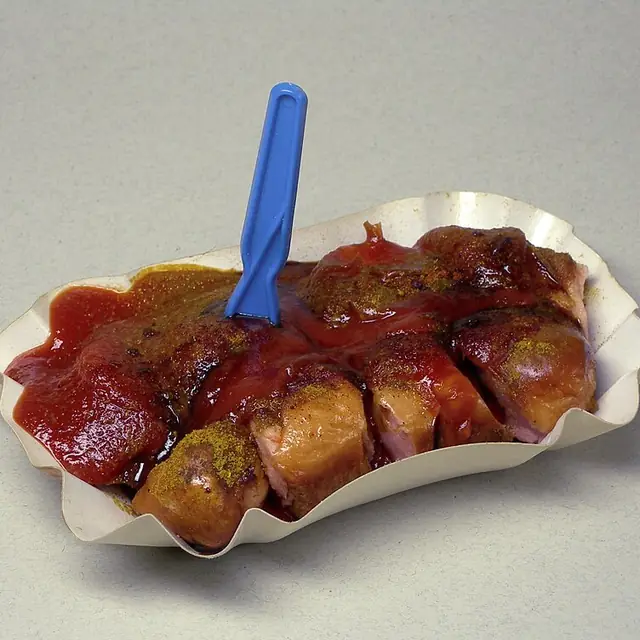
Munich's queer and creative borough south of Sendlinger Tor, with Zephyr Bar on Baaderstrasse, Bergwolf for late-night currywurst, and the cafes around Gaertnerplatz.

Best for: Cocktail bars, Late night, Cafes, Brunch

Westend (westend/schwanthalerhoehe)

The Turkish quarter west of the Hauptbahnhof: a long stretch of doener counters and Anatolian bakeries on Landsberger Strasse, plus Augustiner-Brewery and its 100-year-old Keller on Arnulfstrasse.

Best for: Turkish, Doener, Beer gardens

When to come hungry in Munich

Peak food season: Mid-September to early October (Oktoberfest), plus April to June for Spargel, Bavarian asparagus, and June for the strawberries. Beer gardens run May to October; many close for winter. Christmas markets fill late November to 24 December.

Local dining hours: Weisswurst is eaten before noon, never after. Lunch 12:00-14:00, dinner 18:00-22:00. Beer gardens run from 10:00-23:00 in summer; kitchens at most beer halls stop at 22:00. Sunday is a normal restaurant day in Munich, but most shops close.

Tipping: Service is not included; round up by 5 to 10 percent for table service and tell the server the total before they ring it on the card terminal. At Imbiss counters a euro or two is welcome but not expected.

Munich food, FAQ

What food is Munich known for?

Munich's signature dishes include Weisswurst, Schweinshaxe, Leberkäs, Obatzda, Brezn (Bavarian pretzel). See our signature dishes chapter for where to eat each.

What are the best food neighborhoods in Munich?

TableJourney editors map Munich by district. Altstadt-Lehel, Maxvorstadt, Schwabing, Haidhausen are among the strongest for food, each with its own guide.

Where should I eat fine dining in Munich?

Editor picks in Munich include JAN, Tohru in der Schreiberei, Tantris, plus the full fine dining chapter on TableJourney.

Are there food tours in Munich?

TableJourney covers 5 editor-picked food tours in Munich, with what each shows you and how much to budget.

Does Munich have good vegetarian or vegan food?

TableJourney's Munich dietary chapter covers vegan, vegetarian, gluten_free, halal, kosher venues, each editor-picked with what to order and how to ask.