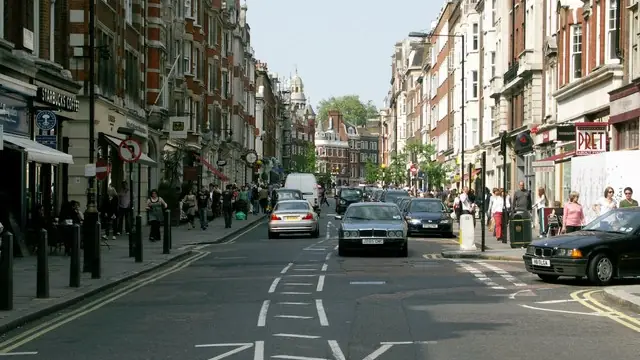
London eats like a city that grew up at the crossroads of empire and now hosts the rest of the world at table. Nine million people across thirty-two boroughs turn a Sunday roast at a Marylebone pub, a Bengali curry on Brick Lane and a Cantonese roast goose plate in Chinatown into the same week of normal eating. The capital invented the modern restaurant scene twice: first in the Victorian dining rooms of Soho and Mayfair, then again in the 1990s when Fergus Henderson at St John told the city to remember its own offal. Today the orbit runs from Mayfair tasting counters where Clare Smyth and Ollie Dabbous book months ahead, to Peckham wine rooms pouring orange Georgian rkatsiteli, to Tooting's Tamil chai stalls open at 06:00. Borough Market, Maltby Street, Brockley Saturday, Broadway in Hackney: the city eats best on its feet. Lunch is sandwiches at noon. Dinner is from 19:00-22:30. The pub still pours a pint at half-eleven on a Tuesday.

Eat your way through London

Browse by price

Map of London

Every restaurant, cafe, market and bar we cover in London, pinned. Click a pin for the page.

Where to eat in London: editor-picked starting points

5 institutional venues to anchor a London food trip

  • Core by Clare Smyth (notting-hill-bayswater) - British gastropub, chef Clare Smyth
  • The Ledbury (notting-hill-bayswater) - British gastropub, chef Brett Graham
  • Sketch (mayfair) - French bistro, chef Pierre Gagnaire
  • Kitchen Table (fitzrovia) - Tasting menu, chef James Knappett
  • Ikoyi (covent-garden) - West African, chef Jeremy Chan

Must-try London dishes

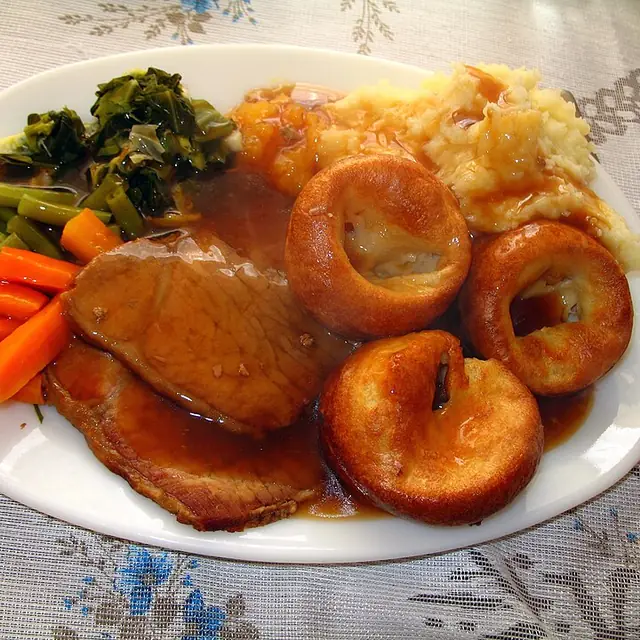
  • Sunday roast - The Sunday roast is a plate of roasted joint, Yorkshire pudding, roast potatoes, seasonal greens and gravy, eaten in London pubs on Sunday lunch
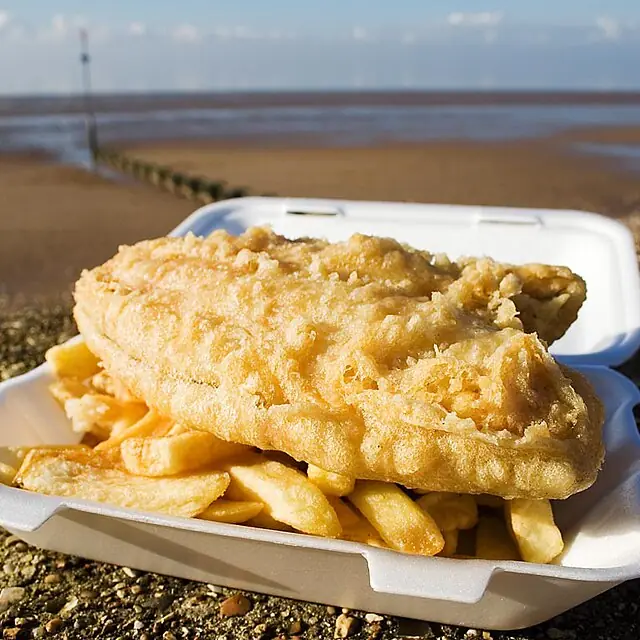
  • Fish and chips - Battered white fish (cod or haddock) deep-fried with thick-cut chips, salt, malt vinegar and mushy peas
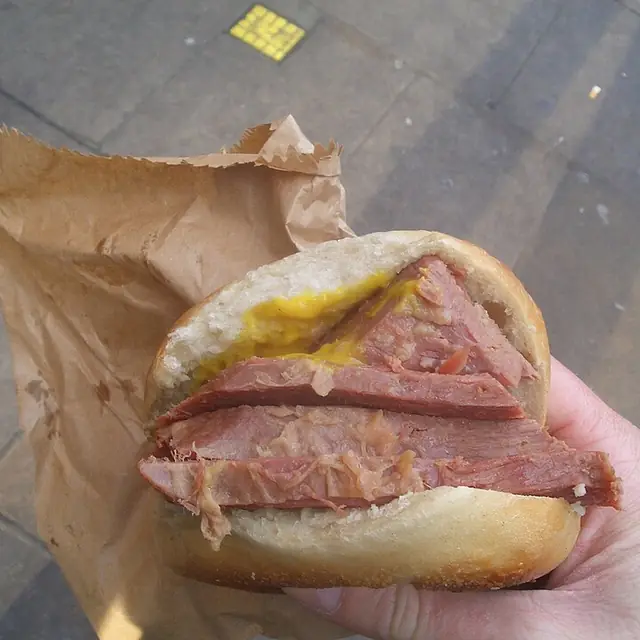
  • Salt beef bagel - Brined and slow-cooked salt beef brisket, hand-sliced thick onto a boiled-and-baked bagel with English mustard and pickled cucumber
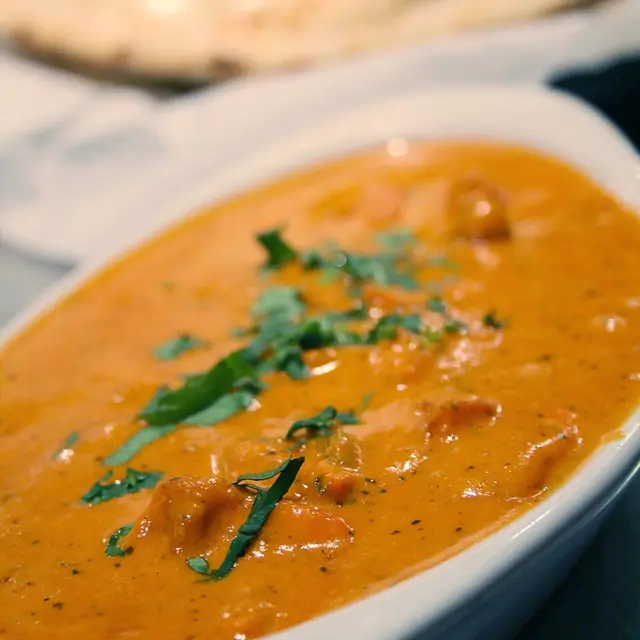
  • Chicken tikka masala - Marinated tandoor-roasted chicken in a creamy spiced tomato gravy with butter and fenugreek
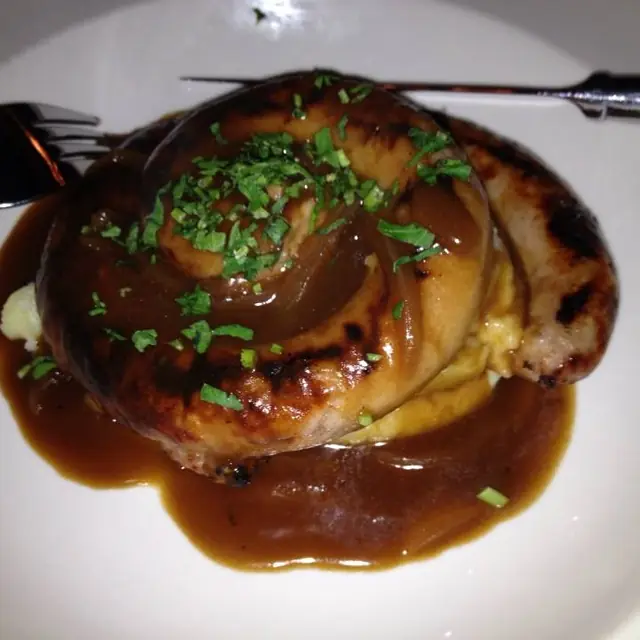
  • Bangers and mash - Pork sausages on buttery mashed potato with onion gravy

Best London neighborhoods for food

  • Soho - London's longest-running restaurant grid
  • Mayfair - The tasting-menu corridor
  • Marylebone - Village London on the High Street: The Golden Hind for fish and chips since 1914, La Fromagerie, Daunt Books for breakfast, Trishna for Indian
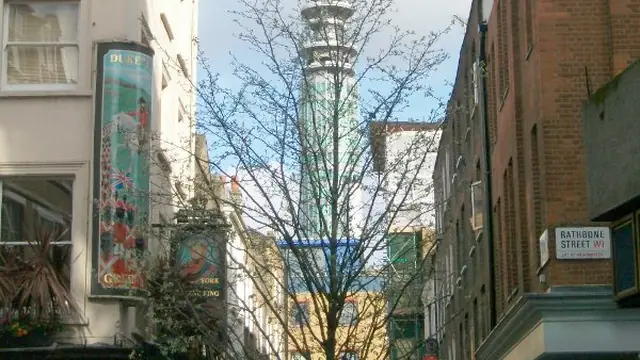
  • Fitzrovia - The post-Bloomsbury restaurant row: Charlotte Street, Berners Street and Newman Street between the BT Tower and Oxford Street
Read the full London food guide

London is the most internationally argued food city in the world. The cliche from the 1980s and 90s (warm beer, boiled vegetables, a nation that did not cook) was already wrong by 1994 when Fergus Henderson opened St John in Clerkenwell and built the modern British movement around offal, seasonality, and root vegetables done well. Thirty years later, London runs the western hemisphere's deepest Indian fine-dining scene (Gymkhana, Trishna, Dishoom, Bibi, Kahani), the world's most international Michelin map outside Tokyo (62 starred restaurants in the 2026 guide, including 3-star Restaurant Gordon Ramsay, Core by Clare Smyth, and The Ledbury), and the densest neighborhood-restaurant scene in Europe, with Soho, Shoreditch, Mayfair, Borough and Peckham each running their own complete eating maps.

The London food culture is built on three foundations. First, the diaspora corridors: Brick Lane for Bengali, Tooting and Southall for South Indian, Edgware Road for Lebanese and Levantine, Stoke Newington for Turkish ocakbasi grills, Peckham for West African (Nigerian, Ghanaian), Chinatown around Gerrard Street for Cantonese and Hong Kong. London became a serious eating city by feeding the empire's returning citizens. Second, the gastropub revolution that started at The Eagle in Farringdon in 1991 and turned the British pub from a beer-and-crisps room into one of the country's best dining-room formats: The Anchor & Hope, The Quality Chop House, The Bull & Last, The Camberwell Arms. Third, the modern-British movement around St John, the River Cafe, Rochelle Canteen and Quo Vadis, which built a generation of chefs who now run Brat, Mountain, Cycene, Behind, and the new wave of Hackney and Shoreditch rooms.

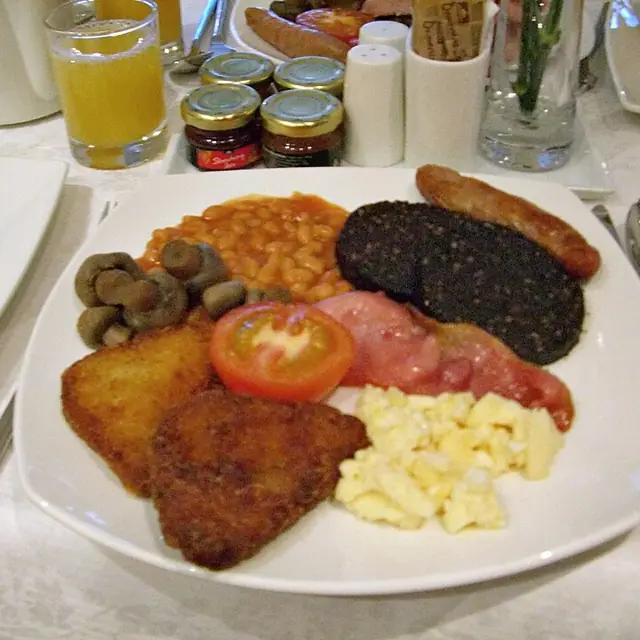
Above all that, London is the city of the curry house, the Sunday roast, the morning bacon roll, the cup of builder's tea, and the cheese-and-onion crisp. The grand tradition and the corner pub run side by side, and both are still the city eating itself, on its own terms.

The curry corridor: Brick Lane, Tooting, Southall

London's Indian and South Asian food scene is the deepest in the West, and it splits sharply by region of origin. Brick Lane in East London became the Bangladeshi-Sylheti corridor in the 1970s and is still where most of London's South Asian-owned curry houses are run; the heritage rooms (Aladin, Sheba) face Drummond Street as much as Brick Lane itself today, but the corridor remains symbolically important. Tooting in South London (Tooting Broadway tube, Northern line) is the South Indian and Sri Lankan corridor: Dosa n Chutny, Apollo Banana Leaf, Spice Village. Southall in West London (Southall station from Paddington) is the Punjabi corridor, with Brilliant, the Gifto's Lahore Karahi, and the Sweet Centre running for 40-plus years. Whitechapel is the spice market and grocery infrastructure. The fine-dining tier (Gymkhana, Trishna, Bibi, Kahani, Bombay Bustle) cooks regional Indian food at the level of any other London Michelin room. Dishoom is the cult Bombay-cafe chain (Carnaby, Covent Garden, Shoreditch, King's Cross, Kensington, Canary Wharf); book or queue, expect to wait.

Sunday roast: the British tradition

The Sunday roast is the only meal where most of London still eats together at fixed time. Most pubs and gastropubs serve from 12:00-16:00, with bookings essential at the destination rooms and walk-ins workable at the corner pub. The classic spread is roast beef (or lamb, pork, chicken) with Yorkshire pudding, roast potatoes (goose-fat roasted is the gold standard), roasted carrot and parsnip, cauliflower cheese, gravy, horseradish, and English mustard. The current generation of London Sunday-roast rooms is led by The Quality Chop House in Farringdon (Victorian dining room with side-of-beef on the trolley), The Anchor & Hope in Waterloo, Blacklock in Soho (the prime-rib specialist), The Camberwell Arms in Camberwell, The Bull & Last in Highgate, and The Hawksmoor (steakhouse, Sunday roast as a side note). For the ambitious version, Hide on Piccadilly and Rochelle Canteen in Shoreditch both run Sunday lunch services that hold their own next to the dinner menu. Book by Wednesday for a Sunday table; the best rooms fill 7 days out.

Modern British: St John and the new wave

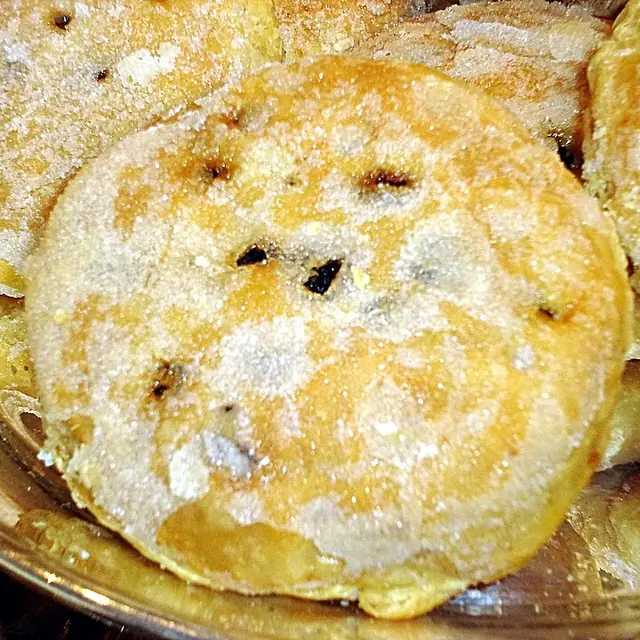
Modern British cooking, as a movement, began with the opening of St John in Smithfield in 1994 by chef Fergus Henderson and businessman Trevor Gulliver. The room codified what is now called nose-to-tail eating: roast bone marrow with parsley salad, ox heart, deviled kidneys, Welsh rarebit, eccles cake with Lancashire cheese. The bigger-picture revolution was that St John served them in a stripped-down white-walled dining room with bakery bread and the wine list selected by the chef. The St John approach (seasonality, root vegetables, offal, simplicity, no garnish) became the operating template for most of the modern London scene that followed: Brat by Tomos Parry in Shoreditch (Basque grill, whole turbot), Mountain (Brat's Soho sibling), The Clove Club, Rochelle Canteen, Quo Vadis, Trivet (Bermondsey), Cycene (Shoreditch). The current generation of West African, Caribbean and Pan-African rooms (Akoko, Akub, Chishuru, Tatale, Ikoyi) cooks within the same modern-British framework, with the regional ingredients foregrounded.

The diaspora map: Soho Chinatown, Edgware Road, Stoke Newington

London's other diasporas anchor the city's casual restaurant scene. Soho's Chinatown, around Gerrard Street and Lisle Street, is the oldest in Europe and runs Cantonese, Hong Kong, Sichuan and Malaysian: Four Seasons (the roast duck destination), Bun House for steamed buns, BaoziInn for soup dumplings, Plum Valley for dim sum, Imperial Treasure for tasting-menu Cantonese. Edgware Road is the Lebanese and Levantine corridor (Maroush, Beirut Express, Patogh), running from Marble Arch up past Paddington. Stoke Newington and Newington Green in North London are the Turkish ocakbasi grill corridor (Mangal 2, Petek, Mr Bayrak's Cypria), Turkish kebab and grilled meat over charcoal. Peckham in South London is the West African corridor (Akoko's neighborhood, Tasty Jerk, 805 Restaurant for Nigerian). Soho itself is the Italian, French, Spanish and modern-cosmopolitan layer (Bocca di Lupo, Polpo, Barrafina, Quo Vadis, Mountain). Pick a corridor per week; do not try to do them all on one trip.

Compare London to other food cities

Must-try dishes in London

The plates that define eating in London.

Sunday roast

The Sunday roast is a plate of roasted joint, Yorkshire pudding, roast potatoes, seasonal greens and gravy, eaten in London pubs on Sunday lunch. The capital's defining set-piece since the nineteenth century.

Where: The Eagle, The Camberwell Arms, Quality Chop House, Blacklock Soho, The Jugged Hare

Where to eat Sunday roast in London →

Fish and chips

Battered white fish (cod or haddock) deep-fried with thick-cut chips, salt, malt vinegar and mushy peas. The defining British take-away dish, eaten in London since the 1860s.

Where: J Sheekey, Wright Brothers Borough

Where to eat Fish and chips in London →

Salt beef bagel

Brined and slow-cooked salt beef brisket, hand-sliced thick onto a boiled-and-baked bagel with English mustard and pickled cucumber. A Brick Lane lunch from a 24-hour counter since 1974.

Where: Beigel Bake, Reuben's, The Dusty Knuckle

Where to eat Salt beef bagel in London →

Pie and mash

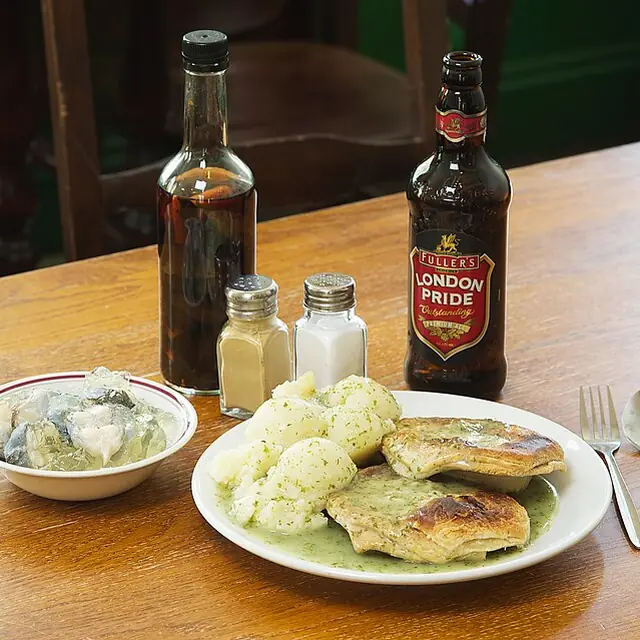
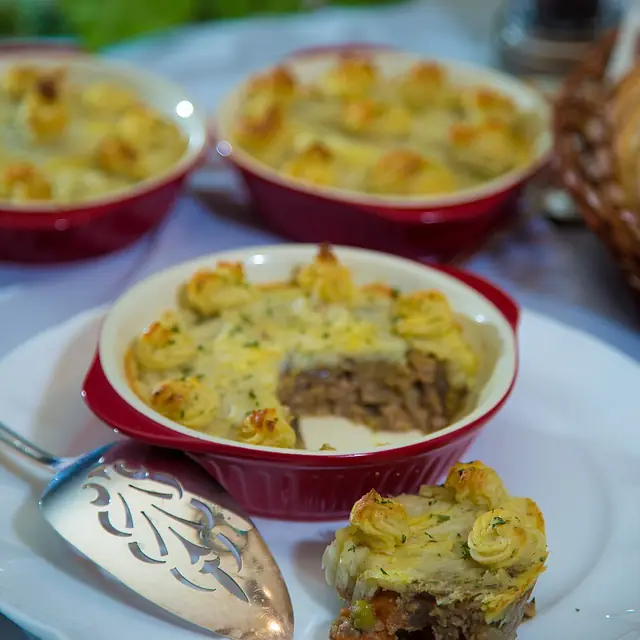
Minced beef pie with mashed potato and a green parsley liquor, the working-class East End plate served at heavy ceramic counters like Manze's on Tower Bridge Road continuously since 1902.

Where: The Eagle, Quality Chop House

Where to eat Pie and mash in London →

All London signature dishes →

Restaurants to know in London

A handful of the places we send friends to when they are in London.

St John

Modern British£££26 St John Street, London EC1M 4AY

Fergus Henderson's St John in Clerkenwell has cooked the nose-to-tail British canon in London since 1994. Priced at £££. Kitchen leans modern british.

Signature: Roast bone marrow and parsley salad, Eccles cake with Lancashire cheese

More about St John →

Brat

Basque Grill£££4 Redchurch Street, London E1 6JL

Tomos Parry's Basque-fired wood-grill room above the Smoking Goat in Shoreditch London, opened 2018 and the whole-turbot benchmark for the city.

Signature: Whole grilled turbot, Smoked potatoes

More about Brat →

Cycene

Modern British£££9 Chance Street, London E2 7JB

Taz Sarhane's one-Michelin-starred tasting-menu room inside the Blue Mountain School in Shoreditch London, opened 2022, runs a 90% British menu cooked.

Signature: Whole roasted fish over open fire, Foraged-herb tasting course

More about Cycene →

The Clove Club

Modern British££££Shoreditch Town Hall, 380 Old Street, London EC1V 9LT

Isaac McHale's tasting-menu kitchen inside Shoreditch Town Hall in London, opened 2013, kept its Michelin star and a place on the World's 50 Best list.

Signature: Buttermilk fried chicken, Wood-fired raw scallop

More about The Clove Club →

Kiln

Thai££58 Brewer Street, London W1F 9TL

Ben Chapman's wood-fired Northern Thai counter in Soho London, opened 2016, sits in front of an open grill that turns out skewers and clay-pot noodles.

Signature: Clay pot baked glass noodles with brown crab, Cured pork skewers

More about Kiln →

Bao Soho

Taiwanese££53 Lexington Street, London W1F 9AS

Erchen Chang and Shing Tat Chung's original Bao counter on Lexington Street Soho in London, opened 2015, the bao that put Taiwanese food on every restaurant.

Signature: Classic bao, Fried Horlicks ice cream

More about Bao Soho →

See every restaurant in London →

Where to eat by neighborhood

Soho (soho)

London's longest-running restaurant grid. Chinatown noodles, Italian counters on Brewer Street, late-night cocktail rooms and Bao's original Lexington Street counter.

Best for: Late night, Chinese, Cocktails, Italian

Mayfair (mayfair)

The tasting-menu corridor. Core, The Connaught, Sketch and Hide sit inside ten blocks and reservations open ninety days ahead. Hotel bars stay open late.

Best for: Fine dining, Hotel bars, Steakhouses

Marylebone (marylebone)

Village London on the High Street: The Golden Hind for fish and chips since 1914, La Fromagerie, Daunt Books for breakfast, Trishna for Indian.

Best for: Brunch, Indian, Wine bars, Fish and chips

Fitzrovia (fitzrovia)

The post-Bloomsbury restaurant row: Charlotte Street, Berners Street and Newman Street between the BT Tower and Oxford Street. Roka, Bubbledogs, Pied a Terre.

Best for: Japanese, European, Wine bars, Brunch

Covent Garden (covent-garden)

Theatreland eating: pre-show menus, century-old rooms like Rules and J Sheekey, plus Seven Dials' modern bistros and Neal's Yard Dairy on Shorts Gardens.

Best for: Pre-theatre, British, Seafood, Cheese

When to come hungry in London

Peak food season: May to October, the market and outdoor season, with summer Sundays at Broadway Market and Maltby Street. November to January brings game, oysters, mince pies and Borough's Christmas trading. August can quieten on the chef tasting circuit while staff take leave.

Local dining hours: Lunch 12:00-14:30. Dinner 18:30-22:30, last orders often 22:00 in residential neighbourhoods. Soho, Shoreditch and Chinatown run kitchens to 01:00 most nights. Pubs serve food 12:00-21:00 typically; classic last orders for drinks at 23:00.

Tipping: 12.5 percent discretionary service is often added at sit-down restaurants. Always check the bill before adding more; if service is on, tipping again is optional. Pubs and counters do not expect a tip; rounding up is welcome. Cash tips reach staff directly.

London food, FAQ

What food is London known for?

London's signature dishes include Sunday roast, Fish and chips, Salt beef bagel, Chicken tikka masala, Bangers and mash. See our signature dishes chapter for where to eat each.

What are the best food neighborhoods in London?

TableJourney editors map London by district. Soho, Mayfair, Marylebone, Fitzrovia are among the strongest for food, each with its own guide.

Where should I eat fine dining in London?

Editor picks in London include Core by Clare Smyth, The Ledbury, Restaurant Gordon Ramsay, plus the full fine dining chapter on TableJourney.

Are there food tours in London?

TableJourney covers 5 editor-picked food tours in London, with what each shows you and how much to budget.

Does London have good vegetarian or vegan food?

TableJourney's London dietary chapter covers vegan, vegetarian, gluten_free, halal, kosher venues, each editor-picked with what to order and how to ask.