Berlin is the only European capital where the defining food is not the national cuisine. The dish locals will name first is doner kebab, the rotating-spit lamb-and-veal sandwich a Turkish guest worker named Kadir Nurman is widely credited with inventing in West Berlin in 1972, and the city now runs roughly 1,500 doner counters across its 12 boroughs. Berlin's table is a layered immigrant ledger: the Turkish corridor that arrived in the 1960s gastarbeiter era and now anchors Kreuzberg and Neukolln; the Syrian and Lebanese wave that arrived after 2015 and built the Sonnenallee corridor in Neukolln (now the densest Arabic restaurant strip in Germany); the Vietnamese community concentrated in former East Berlin (Dong Xuan Center in Lichtenberg, the bigger and grittier of the city's two Asian food worlds); the Russian and Polish counters left from the GDR era; and the modern global wave that arrived with the rave-era expat boom (Israeli, Korean, Italian, third-wave coffee, natural wine). The classic German plates (currywurst, eisbein, buletten, kartoffelsalat, schnitzel) are still on the map but rarely the headline meal.
The second axis is the wild swing from late-night street food to serious fine dining. Berlin holds the most Michelin stars in Germany after Munich (six two-star restaurants in 2026 and roughly 30 one-stars), anchored by Tim Raue near Checkpoint Charlie (two-star, the city's most photographed tasting menu, Asian-influenced German), Rutz on Chausseestrasse in Mitte (the city's only three-star until Horvath caught up, hyperregional German), Horvath in Kreuzberg (two-star, Austrian-leaning), CODA in Neukolln (two-star, the world's only dessert-focused tasting room), Nobelhart und Schmutzig in Kreuzberg (one-star, strictly local-radius brandenburgian), Bricole and Bandol sur Mer in Mitte. A typical Berlin food weekend stretches from a 2 euro currywurst at Curry 36 in Kreuzberg through a 12 euro doner at Mustafas Gemuse Kebap on Mehringdamm to a 200 euro tasting at Rutz on Chausseestrasse, often in the same day.
The city's food clock is forgiving. Brunch (a Berlin export the rest of Germany has reluctantly adopted) runs Saturday and Sunday from 10:00-16:00, the day's most attended meal. Lunch is light, often a kebab or a Vietnamese pho. Dinner starts at 19:30 and runs late; the city's all-night kebab counters, doner kiosks and Vietnamese spots stay open until 04:00 in Kreuzberg, Neukolln and Friedrichshain. Markthalle Neun in Kreuzberg (the surviving 1891 market hall, the city's gastro-anchor since 2011) runs Thursday Street Food Thursday from 17:00-22:00 plus the Saturday market. The Wochenmarkt cycle moves through different neighborhoods on different days (Winterfeldtplatz Saturday, Boxhagener Platz Saturday, Kollwitzplatz Saturday, Maybachufer Tuesday and Friday).
Doner kebab: the city's defining sandwich
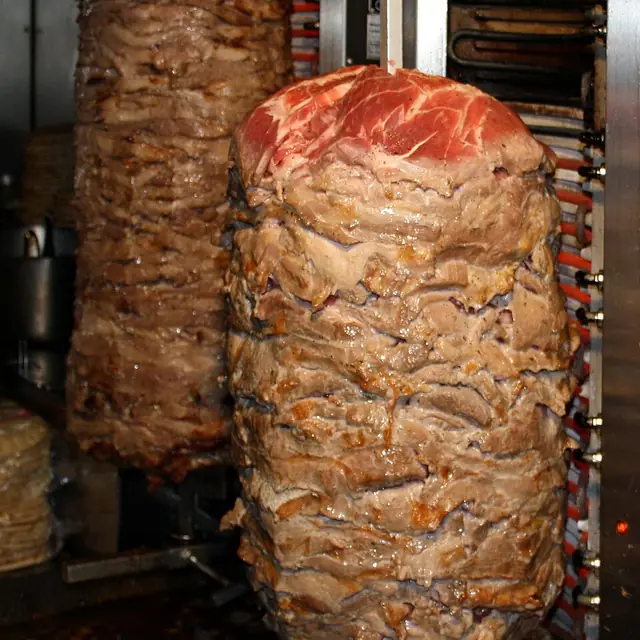
Doner kebab as the world knows it (lamb and veal grilled vertically on a rotating spit, sliced into a folded flatbread with salad, yogurt-garlic and chili sauces) was invented in Berlin in 1972, when Turkish gastarbeiter Kadir Nurman started selling it at his Zoologischer Garten kiosk. The dish does not exist in this form in Turkey; the meat-stuffed sandwich is a Berlin invention. The city now runs roughly 1,500 doner counters. The two reference addresses are Mustafas Gemuse Kebap on Mehringdamm in Kreuzberg (the queue runs 30 to 60 minutes most days, the original sweet-grilled vegetable plus pan-roasted feta version since 2003) and the original Hasir on Adalbertstrasse near Kottbusser Tor in Kreuzberg (since 1971, run by Mehmet Aygun, who claims independent invention). The newer generation includes Ruyam on Hauptstrasse in Schoneberg, Akin Gida on Sonnenallee (the late-night Neukolln version), and Doyum on Adalbertstrasse. Order it im Brot (in flatbread), als Teller (on a plate), or als Durum (rolled in a thin lavash). Cost: 6 to 8 euros for a standard kebab in 2026, 8 to 10 euros for Mustafas. Eat it standing.
Sonnenallee and the Arab corridor in Neukolln
Sonnenallee is the 5-kilometer street running south from the Landwehr Canal through Neukolln to Britz, and the 2-kilometer stretch between Hermannplatz and Sonnenallee S-Bahn station has been called the Arab Street since the post-2015 Syrian refugee wave settled here. It is now the densest Levantine restaurant corridor in Germany, with roughly 100 Syrian, Lebanese, Palestinian and Iraqi kitchens packed along a single avenue. The reference addresses are Aldimashqi (the Damascene shawarma counter, queue from 18:00), Konditorei Damaskus and Damaskus Konditorei (the two competing Syrian sweet shops, both excellent), Azzam (the falafel and hummus institution at the south end), Hummus and Friends (the Israeli-Palestinian shared-table room), Cocolo on Maybachufer (the Levantine seafood place near the canal), Risa Chicken (the Lebanese rotisserie counter), Akin Gida (the bakery-counter doner). The same walk also runs the city's best Arabic sweets, fresh-baked manakish, falafel-by-weight counters, and Turkish supermarkets the size of small department stores. Most kitchens stay open until 02:00. Cash and cards both work.
Currywurst, buletten, eisbein: the German plates
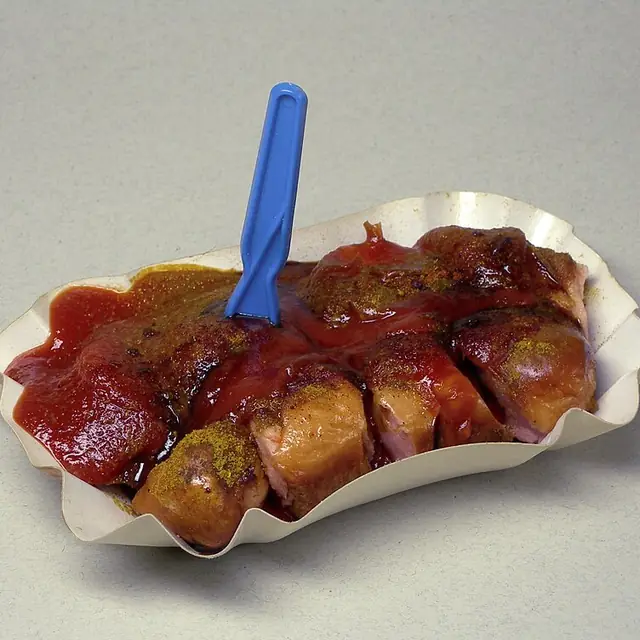
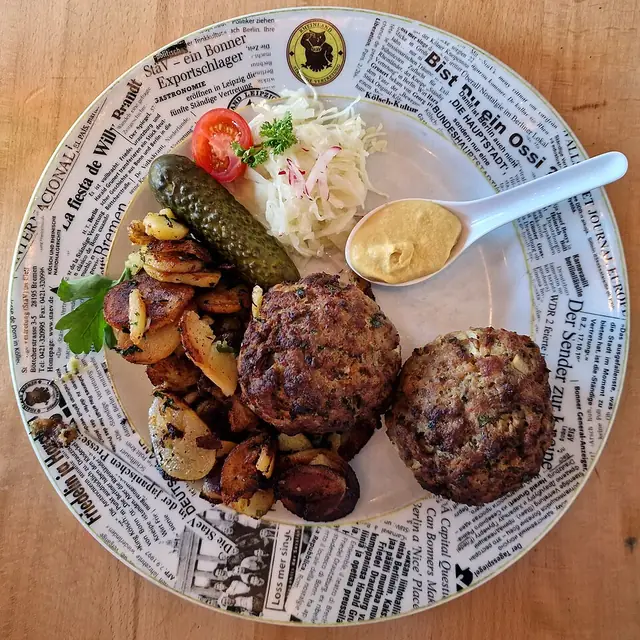
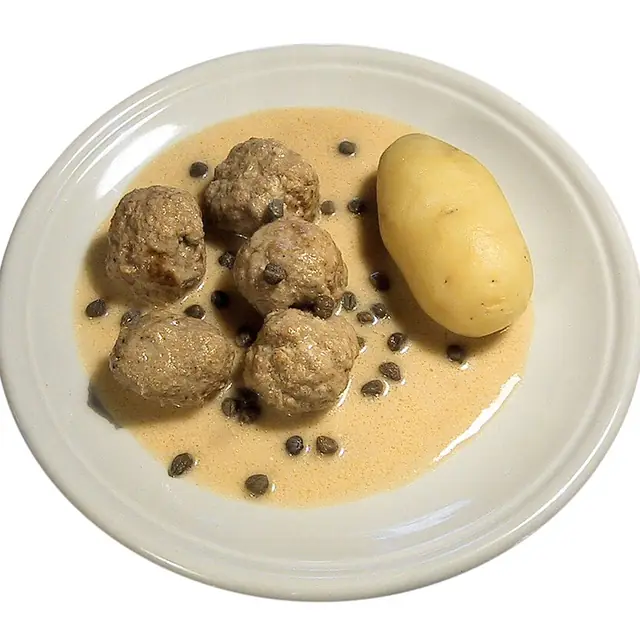
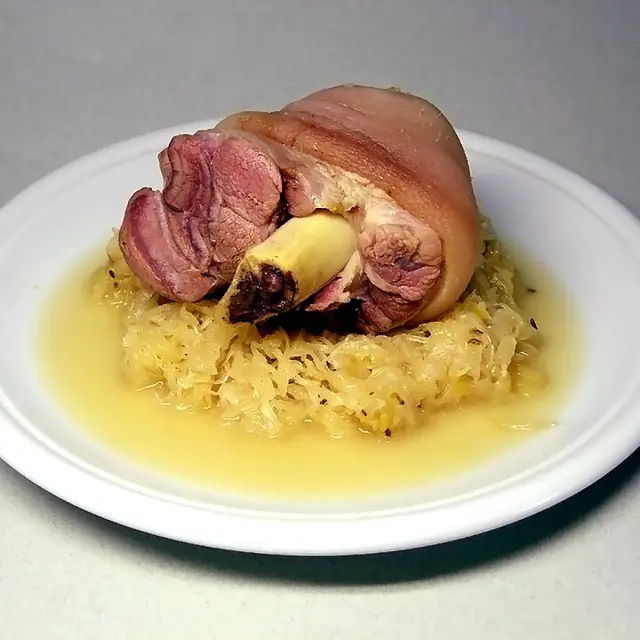
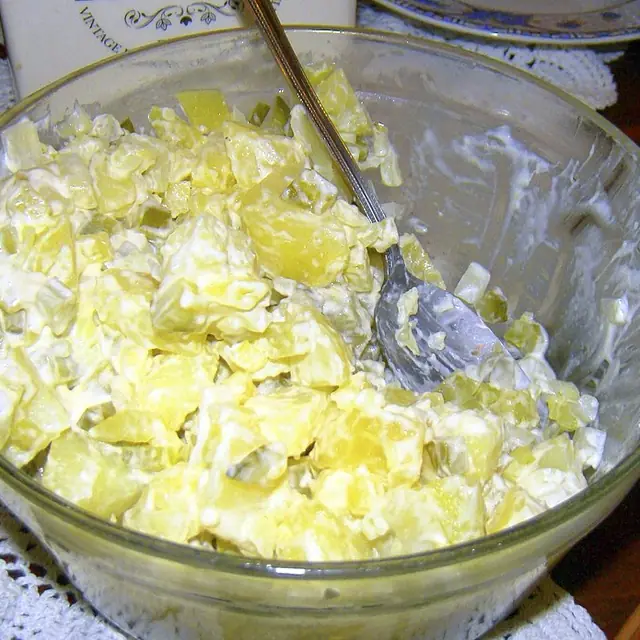
Currywurst, the steamed-and-fried pork sausage cut into bite-sized rounds and drowned in tomato sauce with curry powder, was invented in Charlottenburg in 1949 by Herta Heuwer, who claimed she traded a bottle of spirits to British soldiers for ketchup and Worcester sauce, mixed in curry powder, and started selling the sauce from her Imbiss at Kantstrasse. The city counts it as the unofficial Berlin dish; the Deutsches Currywurst Museum closed in 2018 but a memorial plaque marks the original Heuwer site. The reference addresses are Curry 36 on Mehringdamm in Kreuzberg (the queue runs all afternoon, the post-club 04:00 classic), Konnopke's Imbiss in Prenzlauer Berg (since 1930 under the U-Bahn arch on Schonhauser Allee, the East Berlin reference), Curry 61 on Oranienburger Strasse in Mitte (the tourist-zone version that holds up). Buletten, the Berlin version of a German meatball (pork, beef and bread soaked in milk, fried flat), and Eisbein (the slow-braised pork knuckle served on sauerkraut and pea puree) are the heritage plates; Zur letzten Instanz on Waisenstrasse (since 1621, the city's oldest restaurant) is the eisbein address. Konigsberger Klopse, the cream-and-caper meatballs, are the third classic.
Michelin, natural wine and the modern kitchen
Berlin holds the second-densest Michelin scene in Germany after Munich, with one three-star (Rutz on Chausseestrasse in Mitte, promoted 2020 under chef Marco Muller, hyperregional German), six two-stars (Tim Raue, Horvath, CODA, Restaurant Tim Raue, FACIL, Lorenz Adlon Esszimmer, Ernst), and roughly 30 one-stars across the city. The new wave clusters in Kreuzberg, Mitte and Neukolln: Nobelhart und Schmutzig on Friedrichstrasse in Kreuzberg (one-star, Billy Wagner's strictly Brandenburg-radius tasting menu, the city's most ideological room), Bricole on Linienstrasse in Mitte (natural wine-driven French bistro), Bandol sur Mer in Mitte (the tiny natural wine bistro since 2009), Lode and Stein in Mitte (natural wine), Cordobar in Mitte (the Austrian-leaning Riesling temple), Otto on Oderberger Strasse in Prenzlauer Berg (one-star, modern German). Tim Raue books 2 to 3 months ahead through Resy; the others typically open 4 to 6 weeks ahead. The third-wave coffee scene (The Barn, Five Elephant, Bonanza, Father Carpenter, Cafe Cinema) is older than Brooklyn's; the natural-wine scene is denser than Copenhagen's. Both are worth a half-day each.