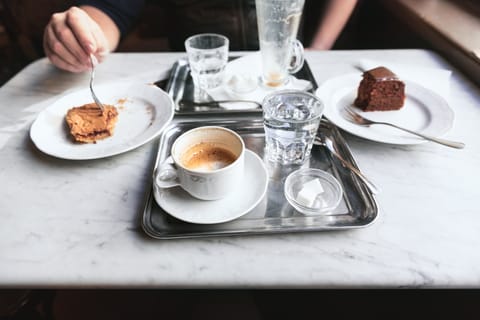
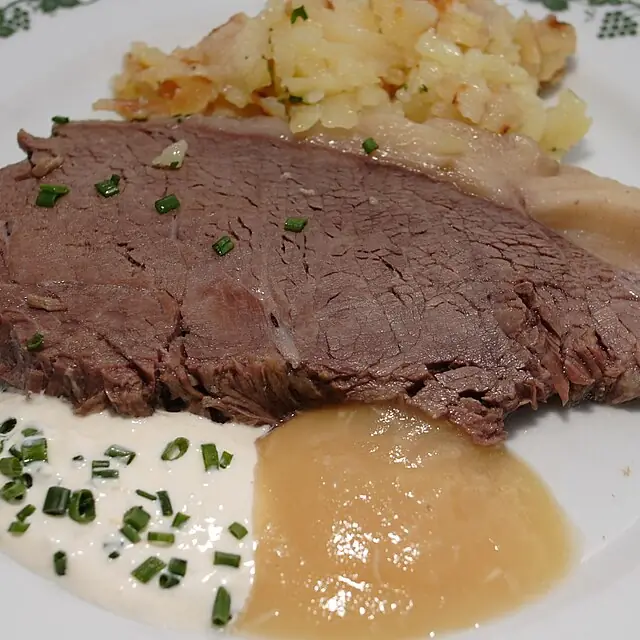
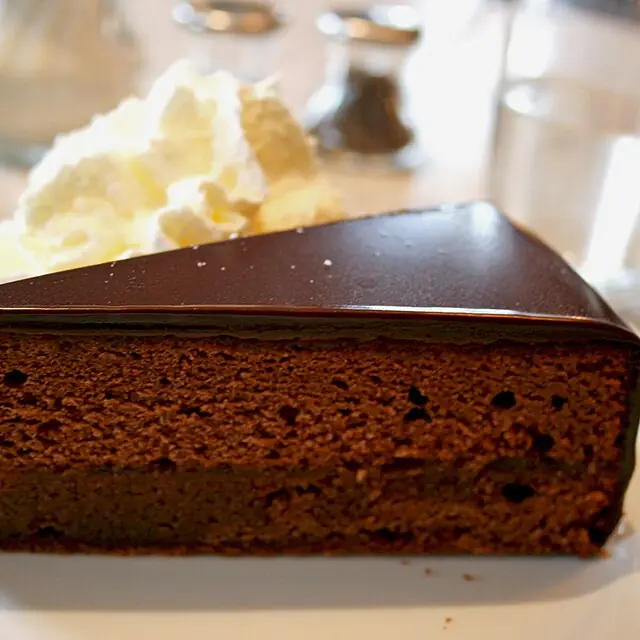
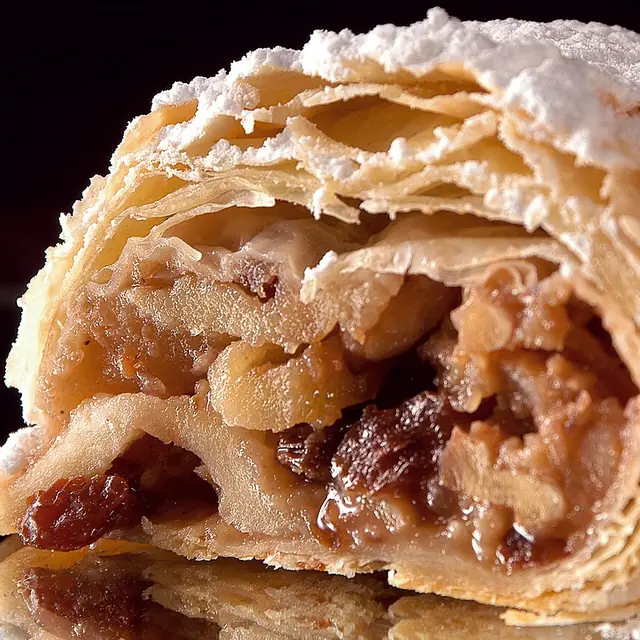
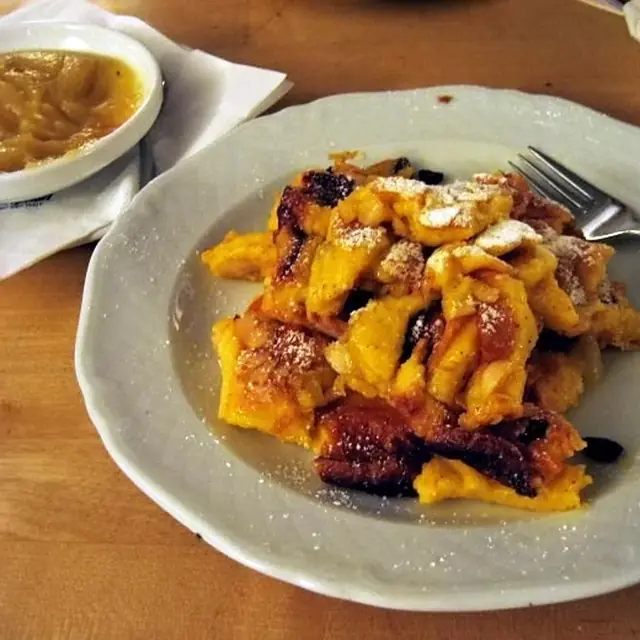
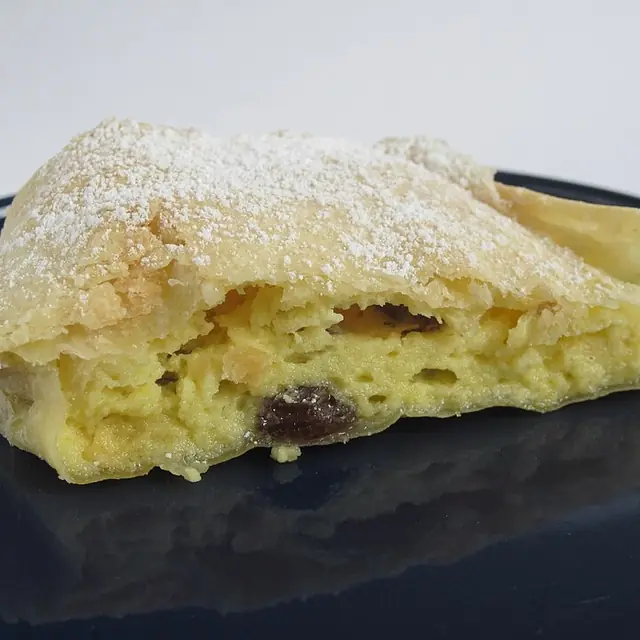
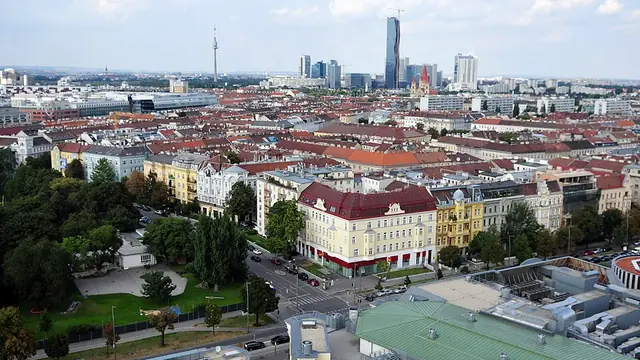
Vienna eats like the imperial capital of an empire that has not existed for over a century, and the city's food map is still organized around the Kaffeehaus, the schnitzel hall, the Heuriger wine tavern and the Naschmarkt. The classic Viennese plate runs from Wiener Schnitzel (the breaded veal cutlet, fried in clarified butter, served with parsley potatoes and a wedge of lemon, the dish that Wien gave its name to in the 19th century) through Tafelspitz (the boiled-beef plate Emperor Franz Josef ate every Sunday, served with rosti potatoes, apple-horseradish and chive sauce), Wiener Gulasch (the Hungarian-influenced beef stew with paprika and onion), Beuschel (the offal stew), to the dessert canon that may be the deepest in Europe: Sachertorte, Apfelstrudel, Kaiserschmarrn, Marillenknodel, Topfenstrudel, Esterhazy. The city's UNESCO-listed Kaffeehauskultur (Vienna coffee-house culture, listed 2011 as Intangible Cultural Heritage) is the defining food-adjacent ritual: a small marble table, a Wiener Melange (espresso with foamed milk, slightly different from a cappuccino), the day's newspapers on wooden racks, and a slice of cake, eaten unhurried for two hours.
The map has four working zones. The Innere Stadt (the first district, inside the Ringstrasse) holds the imperial Kaffeehauser (Cafe Central since 1876, Cafe Sacher since 1832, Demel since 1786, Cafe Landtmann since 1873, Cafe Hawelka since 1939), the classic schnitzel rooms (Figlmuller on Wollzeile, Figlmuller Lugeck, Meissl & Schadn, Plachutta Wollzeile for the boiled beef), and the formal restaurants (Steirereck im Stadtpark, Konstantin Filippou). The Naschmarkt belt, the 6th district market that has run continuously since the 16th century, is the city's food souk with Turkish, Lebanese and Persian stalls intermixed with the Austrian produce. The Heuriger belt in Grinzing, Heiligenstadt and Stammersdorf (the wine-tavern districts on the city's northern outskirts) is the most underrated part of Vienna's food map. And the modern neighborhoods (Karmelitermarkt, Brunnenmarkt, Yppenplatz) hold the third-wave coffee, the natural-wine rooms, the modern Austrian bistros.
The city's modern fine-dining scene is small but serious. Steirereck im Stadtpark holds two Michelin stars (and ranks consistently in the top 20 of the World's 50 Best, peaking at number 9 in 2018), running a modern Austrian tasting menu with hyperregional ingredient sourcing. Restaurant Amador in Dobling holds three Michelin stars (chef Juan Amador, the only three-star in Vienna). Konstantin Filippou (one star) on Dominikanerbastei runs a more international tasting in the Innere Stadt. Mraz und Sohn in Brigittenau and Silvio Nickol at Palais Coburg fill out the upper tier. Below the stars, the city has a deep neo-Austrian bistro layer (Tian, Heunisch & Erben, Pramerl & The Wolf) running the modernization of the classic Vienna plate.
Wiener Schnitzel: the city's defining plate
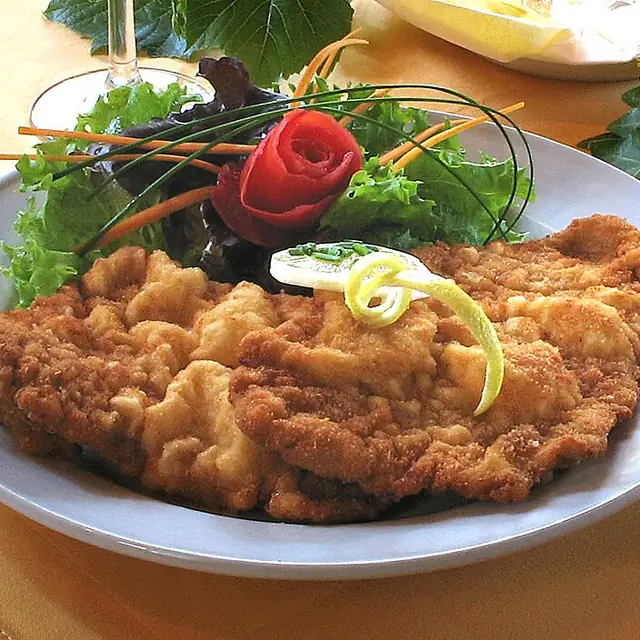
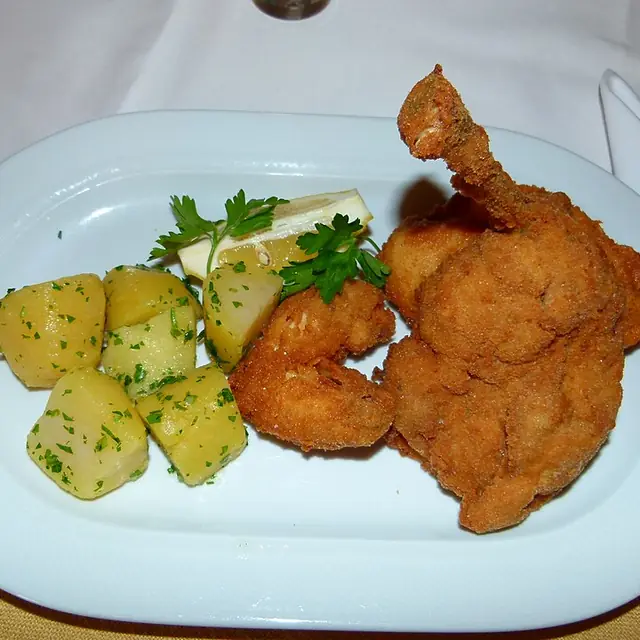
Wiener Schnitzel is the breaded veal cutlet, pounded thin (3 to 5 millimeters), dredged in flour, egg and breadcrumbs, fried in clarified butter or lard until the coating puffs into the famous Souffleeffekt (the bubble of air between the breading and the meat that signals a proper fry), served with parsley potatoes or potato salad, a wedge of lemon, and sometimes a small lingonberry preserve. The dish is legally protected in Austria: only veal can be called Wiener Schnitzel; the pork version is called Schnitzel Wiener Art. The cut is from the round (Schale or Nuss) and the size is enormous, traditionally hanging off the edge of the plate. The reference addresses are Figlmuller on Wollzeile (since 1905, the most photographed, queue from 18:00), Figlmuller Lugeck (the slightly less queue-prone branch), Plachutta Wollzeile (better known for Tafelspitz but the schnitzel holds), Schnitzelwirt in Neubau (the budget classic, schnitzel the size of a hubcap for under 15 euros), Meissl & Schadn (the historic version in the Grand Ferdinand hotel since 2017 reboot, table-side preparation). Order veal (Kalbsschnitzel), not pork, and always with potato salad.
Kaffeehauskultur: the imperial coffee house
The Vienna coffee house was granted UNESCO Intangible Cultural Heritage status in 2011 with the official description Places where time and space are consumed, but only the coffee is found on the bill. The institution dates to 1683 (when Polish merchant Jerzy Franciszek Kulczycki opened the first Vienna coffee house with sacks of beans left behind by the retreating Ottoman Turkish army) and codified in the 19th century into the format that survives: marble-topped tables, Thonet bentwood chairs, wooden racks of international newspapers, waiters in black tie, a small glass of water beside every coffee that gets refilled all morning, no rush. The order grammar is precise: Melange (espresso with foamed milk, the default), Verlangerter (the longer pull), Einspanner (espresso with whipped cream in a tall glass), Brauner (espresso with cream), Mokka (the straight short black), Fiaker (mokka with a shot of slivovitz, named for the carriage drivers). The reference addresses are Cafe Central on Herrengasse (since 1876, where Freud, Trotsky and Lenin all drank), Cafe Sacher in the Hotel Sacher (since 1832, the original Sachertorte), Demel on Kohlmarkt (since 1786, the imperial confectioner), Cafe Landtmann opposite the Burgtheater (since 1873), Cafe Hawelka in the Inner City (since 1939, the bohemian one), Cafe Sperl in Mariahilf (since 1880, the literary one). A coffee plus a cake runs 12 to 18 euros.
Naschmarkt and the market belt
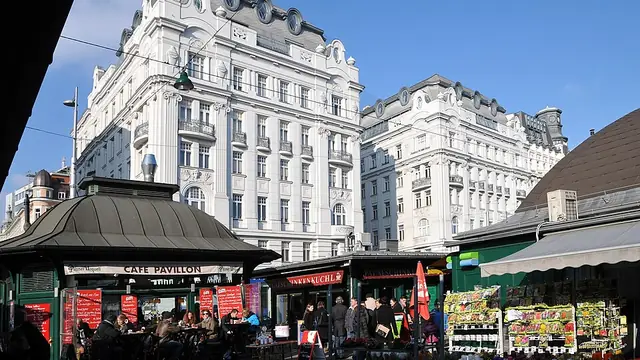
Naschmarkt is the open-air market running along the Wienzeile between Karlsplatz and Kettenbruckengasse, in operation since the 16th century (originally the dairy market when the Wien river still flowed open at the city's edge). It is the city's largest market and the most cosmopolitan, with roughly 120 permanent stalls mixing classic Austrian produce, butchers and bakeries with Turkish, Lebanese, Persian and Vietnamese vendors who arrived through the 20th-century guest-worker waves. The morning rhythm: opens 06:00 weekdays, 06:00-16:00 Saturday, closed Sunday. The Naschmarkt Flohmarkt (flea market) runs Saturday morning at the southern end. The market food stalls inside (Neni for Levantine, Umar for Mediterranean fish, the Persian saffron stand, Gegenbauer for vinegars, Schwarjo for olive oil) are worth a half-day. Karmelitermarkt in the second district (Leopoldstadt, the historic Jewish quarter) and Brunnenmarkt/Yppenmarkt in the 16th district (Ottakring, the Turkish corridor) are the smaller working markets where the actual neighborhood shopping happens. All three remain genuine working markets, not museum pieces.
Heuriger wine taverns and the Wienerwald
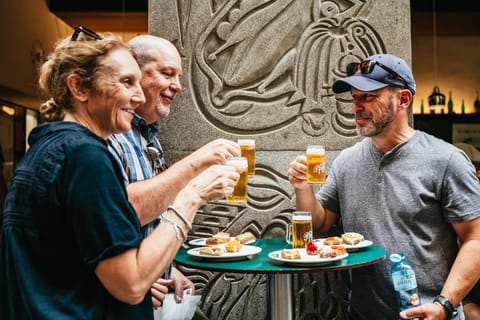
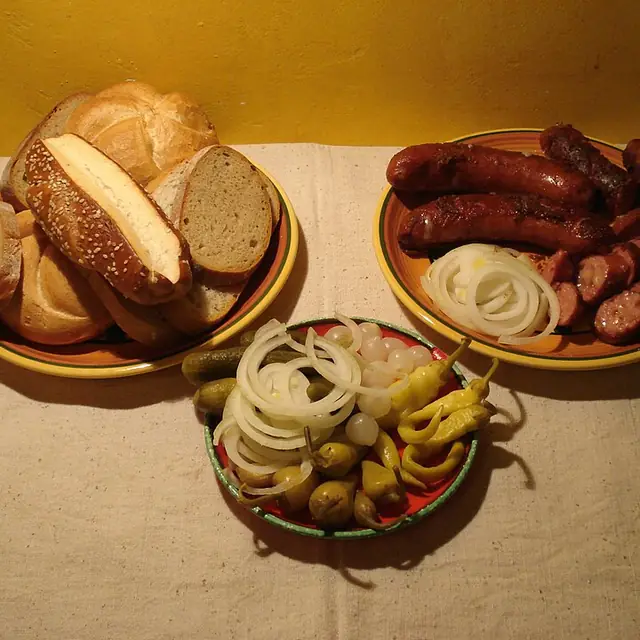
Vienna is the only major European capital that grows wine within its city limits, with roughly 700 hectares of vineyards on the slopes of the Wienerwald on the city's northern edge, mostly the Gemischter Satz (a Vienna-specific wine, multiple grape varieties co-planted, co-harvested and co-fermented in the same vineyard, DAC protected since 2013). The Heuriger is the Vienna wine tavern format: a small family-run tavern attached to a working vineyard, by tradition serving only the most recent vintage from the same estate, with cold-cut Brotzeit plates and the famous Heurigenmusik (the Schrammelmusik violin-and-accordion duos). The format dates to a 1784 imperial decree by Joseph II allowing wine growers to sell their own wine direct from the cellar, tax-free, but only when a bundle of pine branches (Buschen) is hung over the door to signal the tavern is open. The reference Heuriger districts are Grinzing (the most touristy, on a 38 tram from the center, with Mayer am Pfarrplatz where Beethoven lived in 1817), Heiligenstadt (quieter, including Werner Welser, Schubel-Auer, Pfarrwirt), Stammersdorf in the 21st district (Transdanubian, the actual locals' choice, with Wieninger and Wien 1 Weinhandwerk), and Mauer/Rodaun in the 23rd district (the south-side, with Edlmoser, Zahel). Visit between April and October, take the tram or the U-Bahn, order the Gemischter Satz by the carafe, and stay 3 hours.