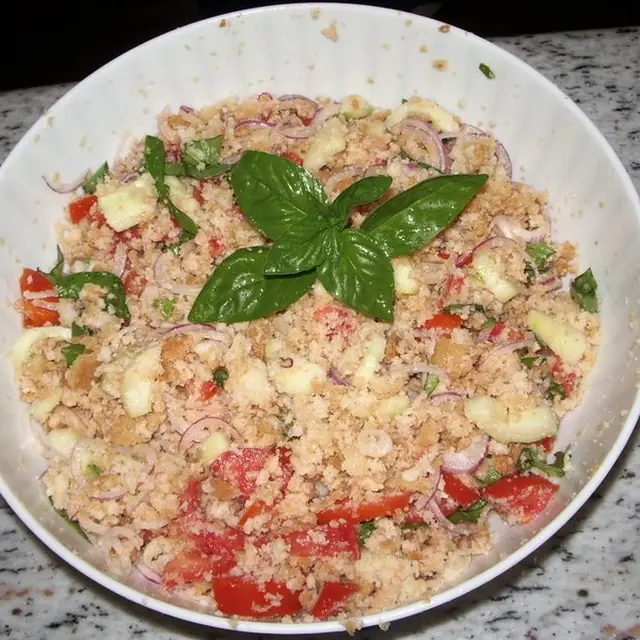
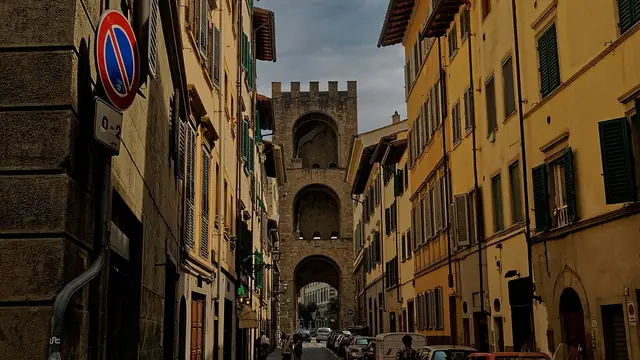
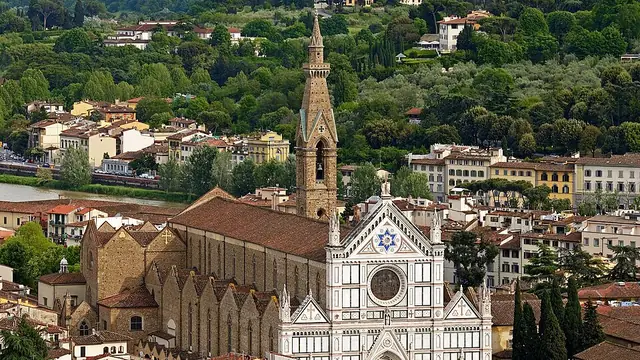
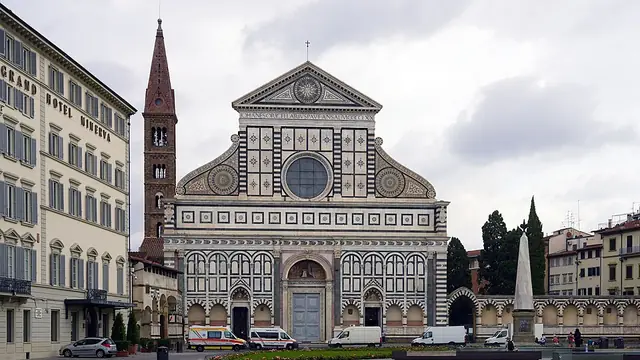
Florence eats on a Tuscan grammar of bread, beans, olive oil and the bistecca alla fiorentina, the dry-aged Chianina T-bone that anchors a Saturday-night dining table. Lunch starts at 13:00 and runs to 15:00; dinner sits at 20:30-22:30. The lampredotto tripe sandwich, served from the lampredottai carts at Mercato Centrale and Porcellino, is the canonical street lunch for under 6 euros. The four pillars of Florentine cucina povera, ribollita (the twice-cooked bread soup), pappa al pomodoro, panzanella and crostini di fegatini, run the trattoria carte from Trattoria Mario to Cibreo. Schiacciata fiorentina flatbread, stuffed by All'Antico Vinaio queues that wrap the block on Via dei Neri, anchors lunch by the slice. Vivoli, founded 1929 in Santa Croce, still pours the city benchmark gelato. Espresso at the counter costs about 1.30 euros, a quartino of Chianti 4 euros, and the queue at Trattoria Mario starts at 12:00 for the 12:30 opening.

Eat your way through Florence

Browse by price

Map of Florence

Every restaurant, cafe, market and bar we cover in Florence, pinned. Click a pin for the page.

Where to eat in Florence: editor-picked starting points

5 institutional venues to anchor a Florence food trip

Must-try Florence dishes

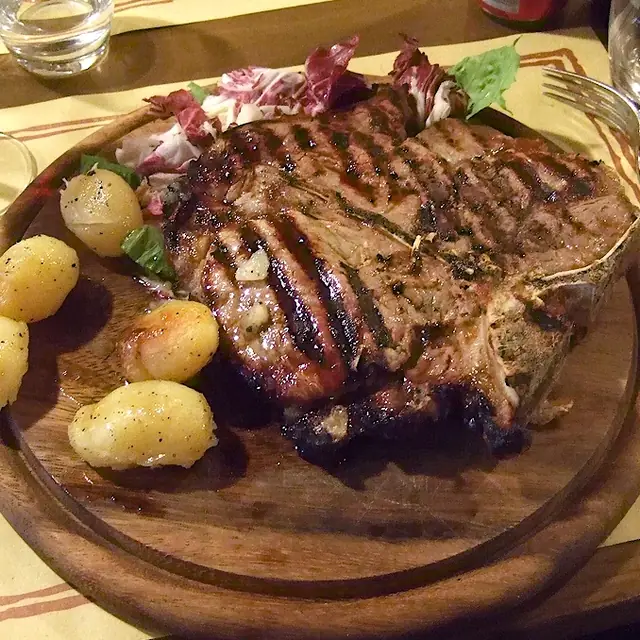
  • Bistecca alla fiorentina - The dry-aged Chianina T-bone, grilled over wood fire to a charred crust outside and blood-rare inside, seasoned only with salt and olive oil
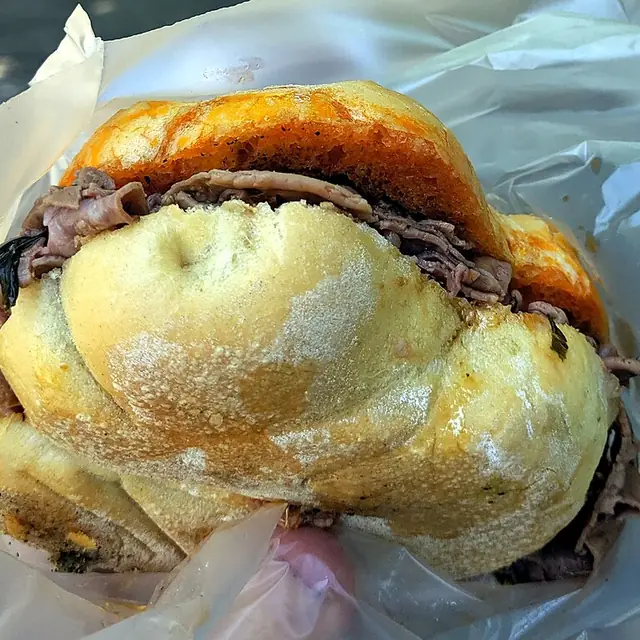
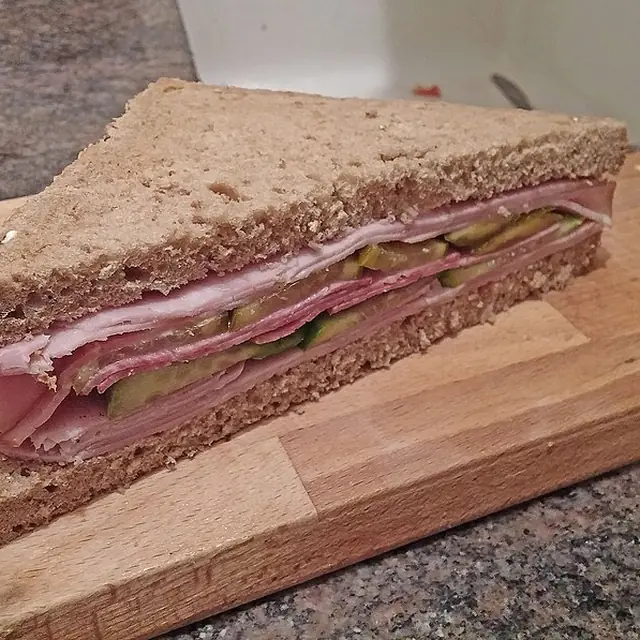
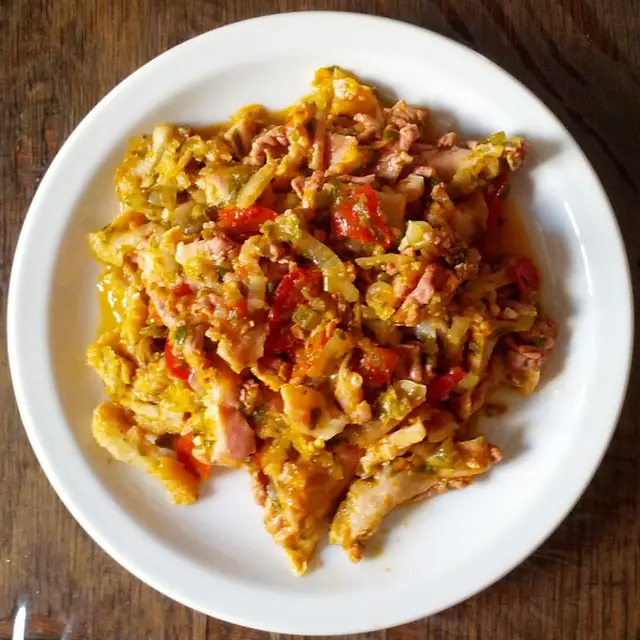
  • Lampredotto - The fourth chamber of the cow's stomach (abomasum), slow-cooked in a broth of tomato, onion, celery and parsley, served on a soft roll dipped in the cooking broth with salsa verde or chilli oil
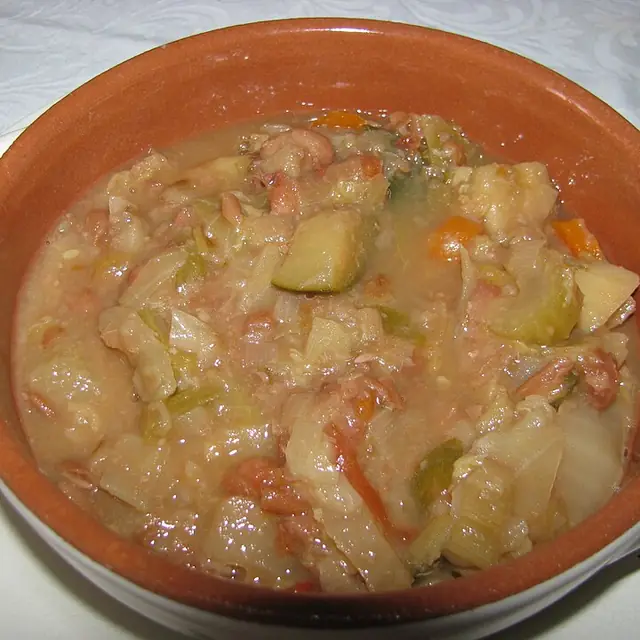
  • Ribollita - The twice-cooked Tuscan bread-and-bean soup, built off the previous day's minestrone, layered with stale bread, cavolo nero kale and cannellini beans, baked until the bread has dissolved into the broth
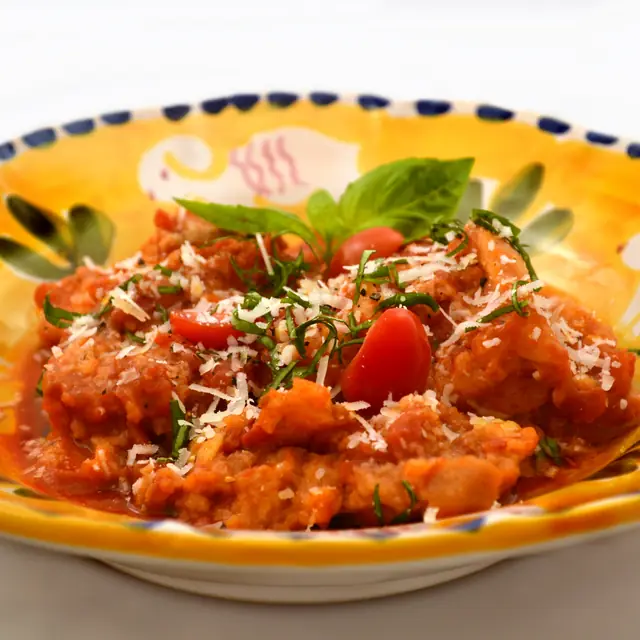
  • Pappa al pomodoro - The Tuscan stale-bread-and-tomato soup, slow-cooked into a dense porridge with garlic, olive oil and torn basil, served warm or at room temperature with a final drizzle of olive oil
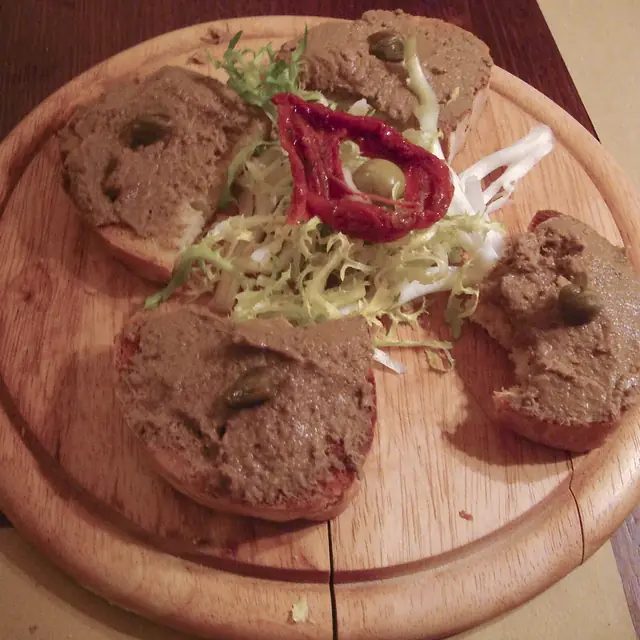
  • Crostini di fegatini - Toasted Tuscan bread topped with a creamy chicken-liver and anchovy spread laced with capers and Vin Santo, the canonical Florentine antipasto served before every trattoria dinner

Best Florence neighborhoods for food

  • Centro Storico - The papal-era core around the Duomo and Piazza della Signoria, where Caffe Gilli, Rivoire and All'Antico Vinaio anchor the daily food map
  • Oltrarno - Across-the-Arno artisan quarter with the Santo Spirito market, the wine-bar grammar of Le Volpi e l'Uva and the natural-wine carte at Il Santo Bevitore
  • San Niccolo - The southern-Oltrarno bohemian quarter under Piazzale Michelangelo, with cocktail rooms like Il Rifrullo and the gelato bench outside Gelateria della Passera
  • Santa Croce - The eastern medieval quarter around Piazza Santa Croce, home to Cibreo, Vivoli, Acqua al 2 and a working market every morning at Sant'Ambrogio
Read the full Florence food guide

Florence eats Tuscany in a way no other Italian city does, with the Renaissance walls still organizing the food map and the Mercato Centrale still operating as the city's working pantry. The classic Florentine kitchen is built on three ingredients: bread (unsalted, the famous saltless Tuscan pane sciocco that holds together stale-bread dishes like ribollita and panzanella), olive oil (cold-pressed from the surrounding hills, the green and peppery type Florentines pour on everything), and the Chianina cow (the white Tuscan breed that produces the bistecca alla fiorentina, the city's most photographed plate). The grammar of a Florentine meal is rustic, restrained, and built on cucina povera: peasant cooking that turns yesterday's bread, the cheapest cuts of meat, and a few vegetables into ribollita, pappa al pomodoro, panzanella, lampredotto, trippa.

The city's food map has three concentric zones. The historic center inside the old walls holds the working markets (Mercato Centrale on Via dell'Ariento for produce, meat, cheese and the famous Da Nerbone lampredotto counter; Mercato Nuovo near Ponte Vecchio for the leather stalls and the Trippaio del Porcellino) plus the classic trattorias near Santa Croce and San Lorenzo (Trattoria Mario, Trattoria Sostanza, Cibreo). The Oltrarno, the bohemian quarter across the Arno around Santo Spirito and San Frediano, runs the city's natural-wine rooms, the artisan-cocktail bars, the wine-cave bacari (Le Volpi e l'Uva, Il Santino, Pitti Gola e Cantina), and the trattorias locals send their friends to. Sant'Ambrogio, east of Santa Croce, holds the second working market (Mercato Sant'Ambrogio, smaller and more local than Centrale) plus Cibreo's mini-empire and the Sant'Ambrogio wine bars.

Beyond the urban shell, the Chianti hills start 30 minutes south for Sangiovese tastings (Greve, Castellina, Radda, Castelnuovo Berardenga), and the Tuscan countryside opens out toward Lucca, Pisa, Siena and the Maremma coast. The city itself is small enough to cover on foot in 20-minute hops, and three meals plus a cicchetti (the Tuscan equivalent of a Venetian small bite) stop is the standard food day. Florence also runs a quiet but real fine-dining scene anchored by three-star Enoteca Pinchiorri on Via Ghibellina (since 1972, the longest-running three-star outside the Po Valley), three-star Santa Elisabetta inside Hotel Brunelleschi, and the Gucci Osteria on Piazza della Signoria (Massimo Bottura's Florence outpost, one Michelin star).

Bistecca alla fiorentina: the city's signature plate

Bistecca alla fiorentina is the porterhouse-style steak cut from the Chianina cow (the white Tuscan breed, one of Europe's oldest and largest cattle), sliced thick (a minimum 4 to 5 cm, traditionally over 1 kg total) and grilled over wood embers, seasoned only with salt, pepper and rosemary, served deliberately rare. The bone runs down the middle, separating the filet from the strip. The price is by the kilo (typically 70 to 95 euros per kg in 2026 at the classic addresses), and the standard order is a single bistecca for two or three people. The reference addresses are Trattoria Mario at Mercato Centrale (since 1953, lunch only, cash only, no reservations, queue at noon), Trattoria Sostanza on Via del Porcellana for the classic family-room version, and Buca Lapi in the basement of Palazzo Antinori for the older fancier version. The rules: do not order it well done (chefs at Mario will refuse), do not put ketchup on it, do not expect a side beyond white beans and grilled vegetables. The bistecca is the meal.

Lampredotto: street food from the fourth stomach

Lampredotto is the city's defining street food and the cucina povera plate Florentines will defend against any other Italian city: the abomasum (the fourth stomach of the cow) slow-cooked for hours in broth with tomato, onion, celery and parsley, then sliced thin, stuffed into a crusty bread roll, dipped briefly into the cooking liquid, and topped with salsa verde (a parsley-garlic-anchovy sauce) and salsa piccante (chili oil). It is sold from carts (trippai) that have parked on Florentine street corners for over a century. The classic cart addresses are Lampredotto Pollini at Mercato Centrale's Da Nerbone counter (the institutional version since 1872), Sergio Pollini's outdoor cart on Loggia del Porcellino, Trippaio del Porcellino on the same square, Da Lorenzo Nencioni near Sant'Ambrogio market, and the lampredotto stall at Mercato Sant'Ambrogio. Order it bagnato (the bread dipped in broth) and split between two sauces. Cost: 5 to 7 euros for the sandwich. Eat it standing.

Mercato Centrale and the trattoria belt

Mercato Centrale, the 1874 iron-and-glass market hall designed by Giuseppe Mengoni (architect of Milan's Galleria Vittorio Emanuele), is the city's working pantry and the gateway to traditional Florentine eating. The ground floor runs the old produce, butcher and cheese stalls plus Da Nerbone's lampredotto counter (since 1872, the original); the upper floor was renovated in 2014 into a curated food court with a Sud Italia pizza counter, a fresh pasta station, a Tuscan cured-meat counter and a cooking school. The market opens 07:00 daily; the upper floor stays open until midnight. The classic trattoria belt is a 5-minute walk in every direction from the market: Trattoria Mario (since 1953, lunch only), Trattoria Za Za (next to the market, the easier sit), Trattoria Sergio Gozzi (around the corner, since 1915), Trattoria Sostanza on Via del Porcellana for the bistecca and the chicken-butter-and-cream signature, Trattoria Marione on Via della Spada, Trattoria Coco Lezzone near Palazzo Strozzi. Most run lunch from 12:30-14:30 and dinner from 19:30-22:30; many are cash-only and most do not take reservations. Arrive on the dot or queue.

Chianti, Sangiovese and the Oltrarno wine bars

Florence sits at the northern edge of the Chianti Classico wine region, which means the city is the practical base for Sangiovese tastings, and the cheapest Chianti served by the carafe in a trattoria is often better than anything on a New York restaurant list. The classic Florence wine quarter is the Oltrarno, the bohemian district across the Arno around Santo Spirito and San Frediano, where the small wine bars descended from the medieval buchette del vino (the tiny street-level wine windows where 16th-century palazzi sold wine by the glass to passers-by, recently reopened during the pandemic as a curiosity) anchor the modern scene. The reference addresses are Le Volpi e l'Uva (since 1992 on Piazza dei Rossi, the most quietly serious of them, by-the-glass list of 30-plus Tuscan and Italian wines), Il Santino on Via Santo Spirito (the smaller sister of Il Santo Bevitore), Pitti Gola e Cantina opposite the Pitti Palace, Casa del Vino on Via dell'Ariento near Mercato Centrale (since 1875, the oldest enoteca in Florence). For the day trips: Greve in Chianti is 30 minutes south for Castello di Verrazzano and Antinori nel Chianti Classico; Montalcino (1.5 hours) is the Brunello destination.

Compare Florence to other food cities

Must-try dishes in Florence

The plates that define eating in Florence.

Lampredotto

The fourth chamber of the cow's stomach (abomasum), slow-cooked in a broth of tomato, onion, celery and parsley, served on a soft roll dipped in the cooking broth with salsa verde or chilli oil.

Where: Da Nerbone, Trippaio del Porcellino, Mercato Centrale

Where to eat Lampredotto in Florence →

Ribollita

The twice-cooked Tuscan bread-and-bean soup, built off the previous day's minestrone, layered with stale bread, cavolo nero kale and cannellini beans, baked until the bread has dissolved into the broth.

Where: Trattoria Mario, Trattoria da Burde, Trattoria La Casalinga, Trattoria Marione

Where to eat Ribollita in Florence →

Pappa al pomodoro

The Tuscan stale-bread-and-tomato soup, slow-cooked into a dense porridge with garlic, olive oil and torn basil, served warm or at room temperature with a final drizzle of olive oil.

Where: Cibreo Trattoria, Trattoria La Casalinga, Osteria di Giovanni, Trattoria Marione

Where to eat Pappa al pomodoro in Florence →

All Florence signature dishes →

Restaurants to know in Florence

A handful of the places we send friends to when they are in Florence.

Cibreo Trattoria

Florentine, Tuscan€€Via dei Macci 122r, 50122 Firenze

Cibreo Trattoria in Florence's Sant'Ambrogio quarter is Fabio Picchi's no-pasta trattoria, the casual side of the Cibreo group. Located in Sant Ambrogio.

Signature: Trippa alla fiorentina, Pappa al pomodoro, Polpettine di pollo

More about Cibreo Trattoria →

Trattoria Sostanza

Florentine Trattoria€€Via del Porcellana, 25/r, 50123 Firenze

Trattoria Sostanza in Florence's Santa Maria Novella quarter has cooked the same bistecca and butter chicken on a coal grill since 1869. Priced at €€.

Signature: Bistecca alla fiorentina, Pollo al burro, Tortino di carciofi

More about Trattoria Sostanza →

Trattoria Mario

Florentine Trattoria€€Via Rosina 2r, 50123 Firenze

Trattoria Mario in Florence's San Lorenzo quarter has been the working lunch room next to Mercato Centrale since 1953. Kitchen leans florentine trattoria.

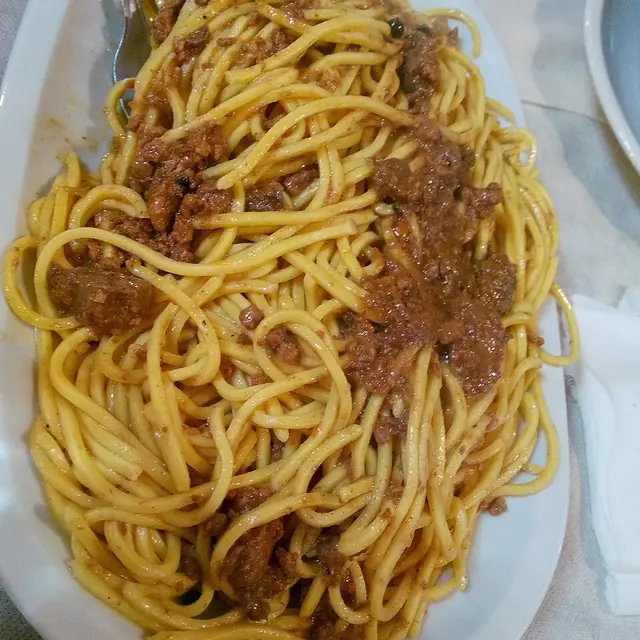
Signature: Bistecca alla fiorentina, Ribollita, Pappardelle al cinghiale

More about Trattoria Mario →

Il Santo Bevitore

Modern Tuscan€€€Via di Santo Spirito 64r, 50125 Firenze

Il Santo Bevitore in Florence's Oltrarno quarter is Marco Bechi's modern Tuscan dining room, with a 600-bottle natural-wine cellar and a daily-changing.

Signature: Crudo di manzo, Pici al ragu di anatra, Coniglio in porchetta

More about Il Santo Bevitore →

Ora d'Aria

Modern Tuscan Fine Dining€€€€Via dei Georgofili, 11/r, 50122 Firenze

Marco Stabile's Ora d'Aria in Florence's Centro Storico holds a Michelin star for a modern Tuscan kitchen that reads pappa al pomodoro and bistecca.

Signature: Risotto al pomodoro, Pigeon, Tasting menu

More about Ora d'Aria →

Locale Firenze

Modern Italian€€€€Via delle Seggiole 12R, 50122 Firenze

Locale Firenze in Florence's Centro Storico sits inside the 13th-century Palazzo delle Seggiole, the Concettini family's Michelin-starred kitchen with a bar.

Signature: Tortelli di rabarbaro, Pigeon, Tasting menu

More about Locale Firenze →

See every restaurant in Florence →

Where to eat by neighborhood

Oltrarno (oltrarno/santo-spirito)

Across-the-Arno artisan quarter with the Santo Spirito market, the wine-bar grammar of Le Volpi e l'Uva and the natural-wine carte at Il Santo Bevitore.

Best for: Trattorias, Wine bars, Aperitivo

San Niccolo (san-niccolo)

The southern-Oltrarno bohemian quarter under Piazzale Michelangelo, with cocktail rooms like Il Rifrullo and the gelato bench outside Gelateria della Passera.

Best for: Cocktail bars, Gelato, Late-night

Santa Croce (santa-croce)

The eastern medieval quarter around Piazza Santa Croce, home to Cibreo, Vivoli, Acqua al 2 and a working market every morning at Sant'Ambrogio.

Best for: Markets, Gelato, Trattorias

San Lorenzo (san-lorenzo/mercato-centrale)

The market quarter north of the Duomo around Mercato Centrale, with Trattoria Mario, Da Nerbone lampredotto counter and Il Trippaio serving the working lunch.

Best for: Lampredotto, Trattorias, Markets

Santa Maria Novella (santa-maria-novella/smn)

The station-side quarter around the Dominican basilica, with Sostanza's century-old kitchen, Buca Lapi bistecca cellar and Procacci's truffle panini.

Best for: Bistecca, Truffle panini, Cocktail bars

When to come hungry in Florence

Peak food season: October to November (porcini, white truffles from San Miniato, new olive oil, schiacciata con l'uva) and March to May (artichokes, fava beans, pecorino primavera). August empties out; many trattorias close for two to three weeks of ferragosto.

Local dining hours: Lunch 13:00-15:00, dinner 20:30-22:30. Most trattorias stop seating by 22:00; Florence dinner runs earlier than Rome. Sunday is the working family lunch; Sunday and Monday evenings see many small rooms closed.

Tipping: Coperto (cover charge) of 2 to 4 euros per person is standard. Service is not added separately. Round up the bill or leave a couple of euros for very good service; never more than 5 to 10 percent and never on the card terminal.

Florence food, FAQ

What food is Florence known for?

Florence's signature dishes include Bistecca alla fiorentina, Lampredotto, Ribollita, Pappa al pomodoro, Crostini di fegatini. See our signature dishes chapter for where to eat each.

What are the best food neighborhoods in Florence?

TableJourney editors map Florence by district. Centro Storico, Oltrarno, San Niccolo, Santa Croce are among the strongest for food, each with its own guide.

Where should I eat fine dining in Florence?

Editor picks in Florence include Enoteca Pinchiorri, Santa Elisabetta, Atto di Vito Mollica, plus the full fine dining chapter on TableJourney.

Are there food tours in Florence?

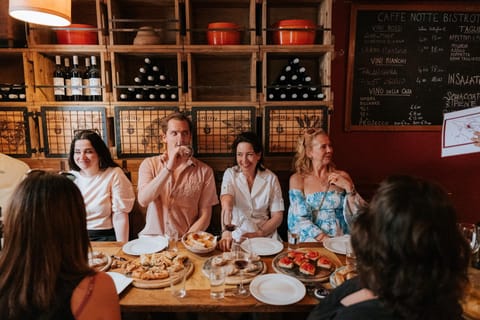
TableJourney covers 6 editor-picked food tours in Florence, with what each shows you and how much to budget.

Does Florence have good vegetarian or vegan food?

TableJourney's Florence dietary chapter covers vegan, vegetarian venues, each editor-picked with what to order and how to ask.