Paris eats on a schedule that hasn't changed much in fifty years and on a menu that has changed a great deal. The 12:30 bistro lunch still runs the city. Lines still form at Du Pain et des Idées before eight. But the room behind the menu now reads more like a Tokyo, Lisbon and Marseille mash-up than the Parisian rulebook of 1995. Bertrand Grébaut's Septime turned bistronomie into the new orthodoxy. Tomy Gousset, Sota Atsumi and Mory Sacko keep redrawing what a French kitchen can do. The natural-wine list at any wine bar in the 11e is denser than any cave in 2010 could have promised. Below the editorial veneer, the everyday city is steady: a baguette tradition costs €1.40, a coffee at the counter €1.60, a glass of côtes-du-rhône €4.50, and the falafel queue on Rue des Rosiers still moves at lunchtime.

Eat your way through Paris

Browse by price

Map of Paris

Every restaurant, cafe, market and bar we cover in Paris, pinned. Click a pin for the page.

Where to eat in Paris: editor-picked starting points

5 institutional venues to anchor a Paris food trip

Must-try Paris dishes

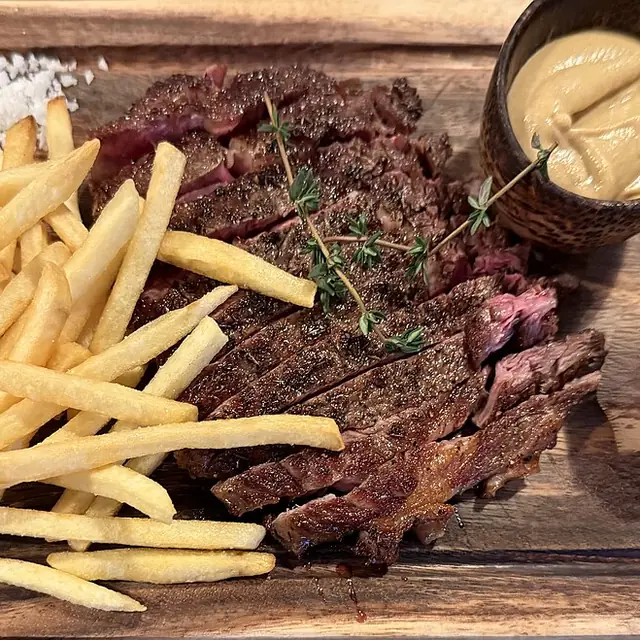
  • Steak frites - Steak frites is the dish Paris built into its bistro grammar: contre-filet or onglet pulled saignant, hand-cut fries fried twice, butter sauce or just sea salt on the side
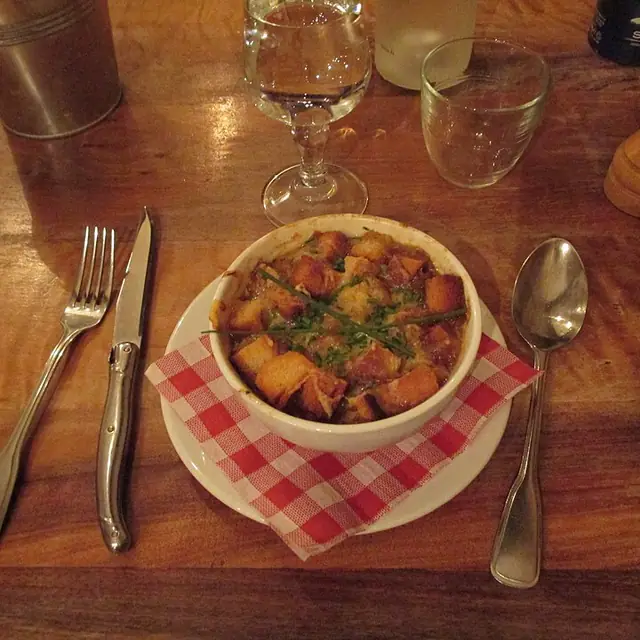
  • Soupe à l'oignon - Soupe à l'oignon is the slow-cooked onion soup that the Les Halles market porters of Paris finished at 03:00 with toasted baguette and gratinated Gruyère
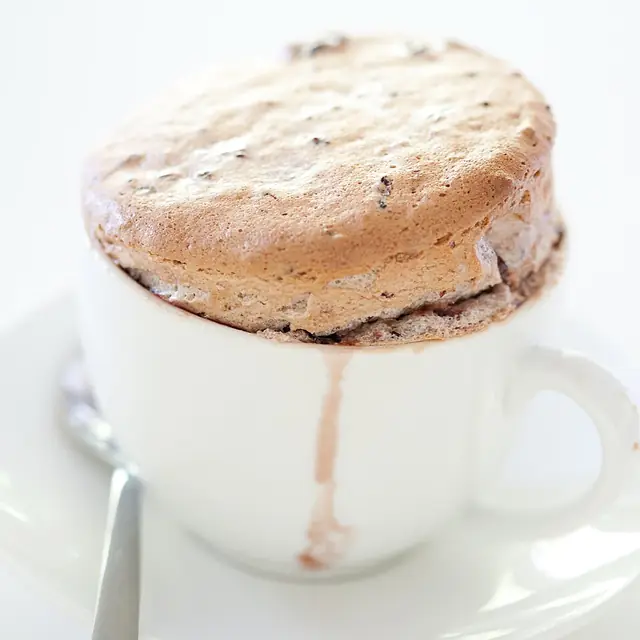
  • Soufflé - Soufflé is Paris's risen, twice-baked technique dish: a hot bechamel, separated eggs, the whites whipped to peaks, folded, baked at 200°C for 12 minutes, served immediately or it falls
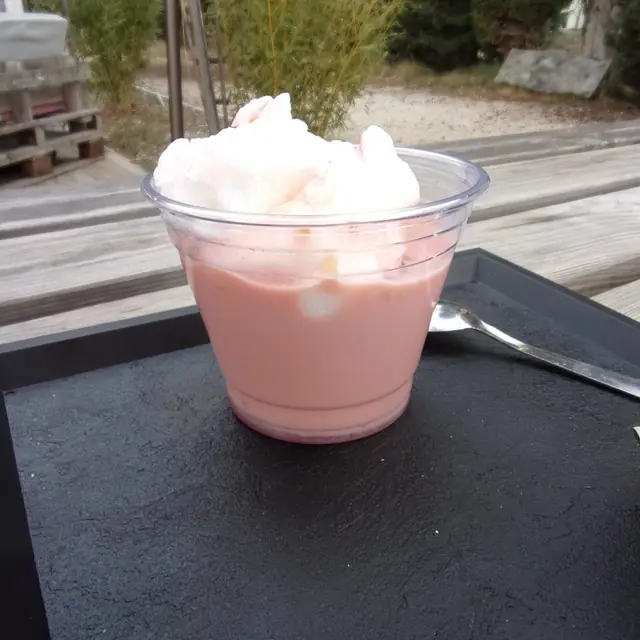
  • Île flottante - Île flottante is the Paris bistro's standard dessert: poached meringue islands floating on a thin crème anglaise, finished with a streak of caramel that pours over the plate
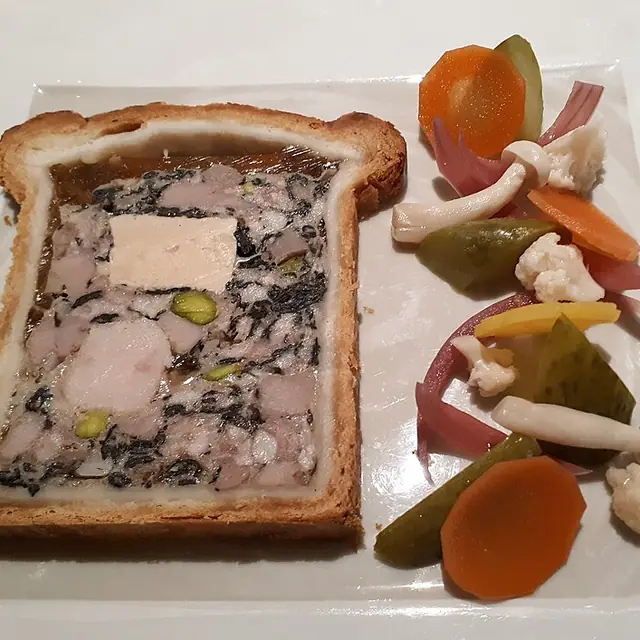
  • Pâté en croûte - Pâté en croûte is a Paris charcuterie classic: a layered chilled pâté set inside a pastry case with pork, foie gras, jelly, pistachios or veal, sliced thick at the counter

Best Paris neighborhoods for food

  • Le Marais - Old Jewish quarter and gay village now layered with falafel queues, Pletzl bakeries, white-glove galleries and the city's densest run of cafes
  • Saint-Germain-des-Prés - The post-war intellectual quarter where Café de Flore and Les Deux Magots still anchor the Left Bank cafe ritual
  • Latin Quarter - Sorbonne students, Rue Mouffetard market mornings, Lebanese sandwich counters and the old order of Brasserie Balzar
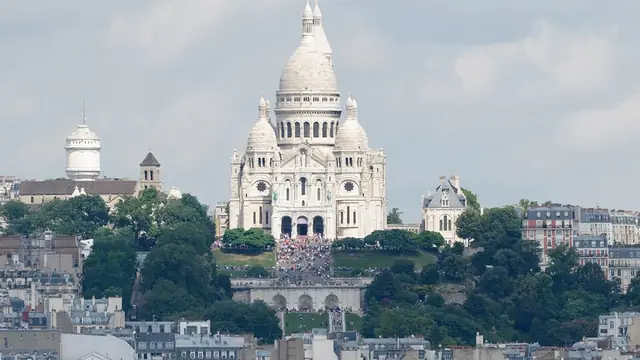
  • Montmartre - Sacré-Cœur on the hill and an actual neighbourhood underneath: bistros on Rue des Abbesses, the Saint-Pierre fabric market, and bakeries locals queue at
Read the full Paris food guide

Paris is the city where the modern restaurant was invented. The word restaurant entered French in 1765 to describe the restorative bouillons sold by Boulanger on Rue des Poulies, and by the 1780s the format (an a-la-carte menu, individual tables, opening hours, a chef's signature) had crystallized in the Palais-Royal arcades. Everything the world now calls a restaurant traces back to that moment. The Paris food culture is built around three institutional formats that have run continuously for 200 years: the bistro (small, family-run, chalkboard menu, lunch and dinner service), the brasserie (large, all-day, Alsatian-rooted, choucroute and oysters on ice), and the restaurant (a chef's a-la-carte room, often Michelin-anchored). Each format has its own etiquette, price point, and reservation rhythm.

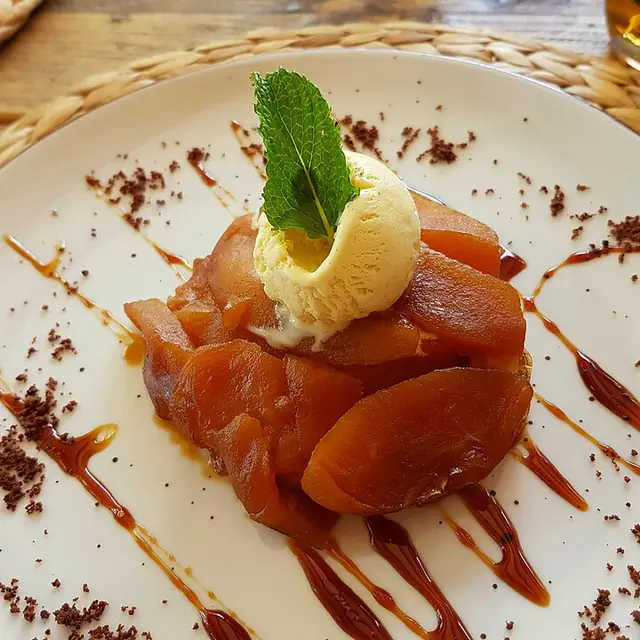
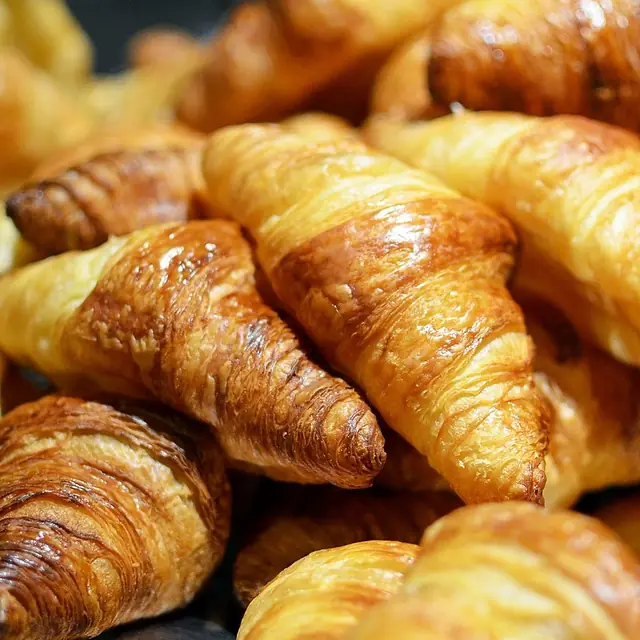
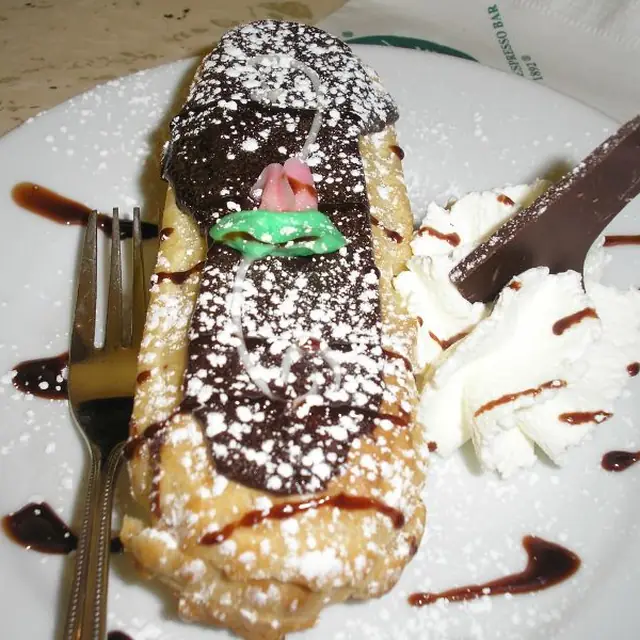
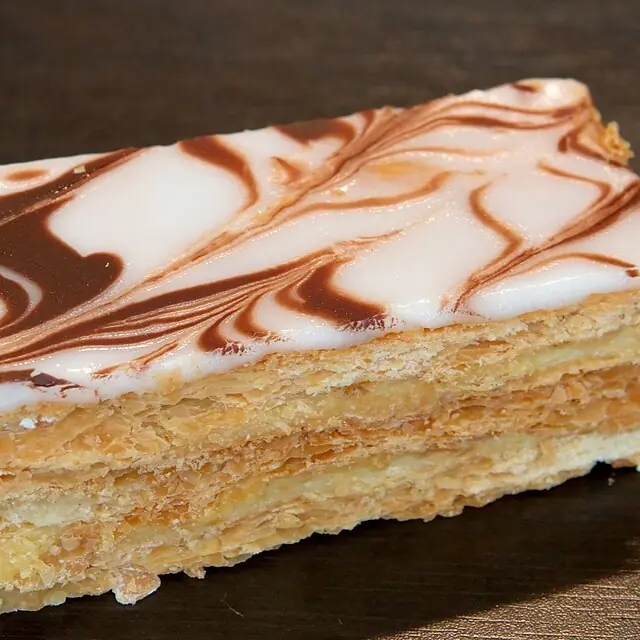
The second axis of Paris eating is the boulangerie and the patisserie, which are not the same shop. A boulangerie sells bread (baguette, pain de campagne, fougasse) and a limited line of viennoiserie (croissant, pain au chocolat, brioche). A patisserie sells the finished sweet pastries (eclair, mille-feuille, tarte tatin, Saint-Honore, opera). The best Paris addresses do one or the other at the top level: Du Pain et des Idees, Poilane, Tout Autour du Pain, Mamiche, Boulangerie Utopie for bread; Cedric Grolet, Pierre Herme, Yann Couvreur, Jacques Genin for pastry. The Paris baguette law (1993, codified the Tradition baguette: water, flour, yeast, salt, no additives, made on premises) shaped what a city block tastes like.

Third, the markets. Paris runs 13 covered markets and 70-plus open-air street markets twice or three times a week, with the Marche d'Aligre (12e), Marche des Enfants Rouges (3e, the oldest covered market, since 1615), and Marche Bastille (11e, Thursday and Sunday) as the destination versions. The covered market system feeds the city's bistros, restaurants, and home cooks; visitors who book a single market tour will understand Paris faster than from any restaurant meal.

Bistro, brasserie, restaurant: the formats explained

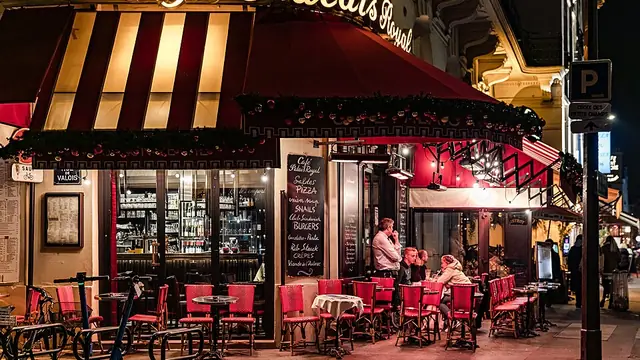
A bistro is the small neighborhood room (typically 25 to 50 seats) with a 3-to-5-course menu chalked on a board, two services (lunch 12:00-14:30, dinner 19:30-22:30), and the kitchen closed in between. The classic bistro plate is steak frites, oeuf mayonnaise, or boeuf bourguignon, with a carafe of the house red. The neo-bistro revolution (1990s onward) gave the format a chef-driven update: Septime, Frenchie, Le Servan, Le Baratin, Clamato, Le Saint-Sebastien. A brasserie is the large all-day room (often 100 to 200 seats) that runs continuous service from 11:30-23:30 or later, with an Alsatian rooting that means choucroute, oysters on ice, and a long beer list. Brasserie Lipp, La Coupole, Le Train Bleu, Bouillon Pigalle, Bouillon Chartier are the heritage brasseries. The Bouillon revival (Bouillon Pigalle, Bouillon Republique, Bouillon Julien) is the value brasserie: three-course menus under 20 euros. A restaurant in the strict Paris sense is the chef's a-la-carte room, usually evening-only, often Michelin-starred. Plenitude, Arpege, Le Cinq, Guy Savoy, Alleno Paris.

Boulangerie and the baguette tradition

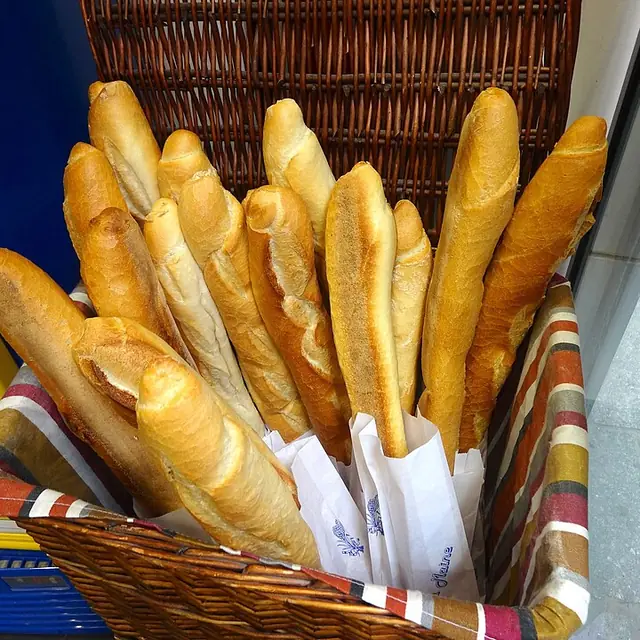
The Paris baguette is protected by the 1993 decret pain: it must be made on premises (no industrial dough), contain only water, flour, yeast and salt, with no additives. The baguette tradition (so labeled) is the artisan version; the standard baguette has slightly looser rules. The annual Prix de la Meilleure Baguette de Paris (April) names the winning bakery, which then supplies the Elysee Palace for a year and gets a citywide queue for 12 months. Recent winners include Tharsis (2024), Boulangerie Utopie (2022), Mahmoud M'seddi (2018). The destination boulangeries are: Du Pain et des Idees in the 10e (Christophe Vasseur, escargot pastries, pain des amis), Poilane in the 6e (Lionel Poilane's sourdough miche), Tout Autour du Pain in the 3e, Mamiche in the 9e and 10e, Boulangerie Utopie in the 11e. The patisserie tier (separate shops) is Cedric Grolet at Le Meurice and his rue de Valois flagship, Pierre Herme on Bonaparte, Yann Couvreur in the 10e and the Marais, Jacques Genin in the 3e, Stohrer in the 2e (since 1730, the oldest patisserie in Paris). Most close Mondays.

Paris market culture

Marche d'Aligre in the 12e is the morning destination: a covered hall (Marche Beauvau) plus an open-air street market on Rue d'Aligre, with the city's most diverse, cheapest, and least touristy produce. Open Tuesday to Sunday morning, closed Monday; arrive 09:00-11:30 for the best selection. Marche des Enfants Rouges in the 3e is the oldest covered market in Paris (since 1615), now a destination for the lunch food stalls (Moroccan, Japanese, Italian, Lebanese, French wine bar). Open Tuesday to Sunday 08:30-19:30. Marche Bastille runs Thursday and Sunday mornings on Boulevard Richard Lenoir, the largest open-air market in central Paris, with 100-plus stalls including the city's best oyster shucker (Huitres Olivier) and goat-cheese tower at Pascale Fromagerie. Marche President Wilson in the 16e runs Wednesday and Saturday with the seafood and prepared-food tier the 16e arrondissement expects. Marche Mouffetard, on Rue Mouffetard in the 5e, runs Tuesday to Sunday and is the Latin Quarter's village market. Pick one or two markets per visit; do not try to do them all on one trip.

How to book Michelin in Paris

Paris holds 11 three-Michelin-star restaurants in the 2026 guide, more than any city except Tokyo, including Plenitude at Cheval Blanc Paris (Arnaud Donckele), Arpege (Alain Passard), Guy Savoy, Le Cinq at the Four Seasons, Epicure at Le Bristol, and Alleno Paris. Three booking pathways work. First, the restaurant's own website is the most reliable for the three-star and two-star rooms (most use a custom booking flow or La Fourchette/TheFork). Second, hotel concierges at the Ritz, Plaza Athenee, Cheval Blanc, Le Bristol, the Four Seasons George V, and the Crillon hold relationships the apps do not match, particularly for last-minute or hard-to-book seats. Third, TheFork (formerly La Fourchette) covers the broader Michelin-starred and bistronomy tier (Septime, Frenchie, Clamato, Le Servan), with frequent 30 to 50 percent off-peak discounts on weekday lunches. Book the three-star rooms 2 to 4 months ahead, the two-star 4 to 8 weeks, and the bistronomy stars 2 to 4 weeks. Lunch menus run roughly half the dinner price. Strict dress codes apply at the palace hotels (jacket, no jeans, closed shoes).

Compare Paris to other food cities

Must-try dishes in Paris

The plates that define eating in Paris.

Steak frites

Steak frites is the dish Paris built into its bistro grammar: contre-filet or onglet pulled saignant, hand-cut fries fried twice, butter sauce or just sea salt on the side.

Where: Bistrot Paul Bert, Le Relais de l'Entrecôte, Bouillon Chartier, Le Bon Georges, Robert et Louise

Where to eat Steak frites in Paris →

Soupe à l'oignon

Soupe à l'oignon is the slow-cooked onion soup that the Les Halles market porters of Paris finished at 03:00 with toasted baguette and gratinated Gruyère. The dish defines French winter.

Where: Au Pied de Cochon, Bouillon Chartier, Le Comptoir du Relais, Polidor

Where to eat Soupe à l'oignon in Paris →

Soufflé

Soufflé is Paris's risen, twice-baked technique dish: a hot bechamel, separated eggs, the whites whipped to peaks, folded, baked at 200°C for 12 minutes, served immediately or it falls.

Where: Le Grand Véfour, Tomy & Co, La Poule au Pot

Where to eat Soufflé in Paris →

Île flottante

Île flottante is the Paris bistro's standard dessert: poached meringue islands floating on a thin crème anglaise, finished with a streak of caramel that pours over the plate.

Where: Bistrot Paul Bert, Bouillon Chartier, Bouillon Pigalle, Le Comptoir du Relais

Where to eat Île flottante in Paris →

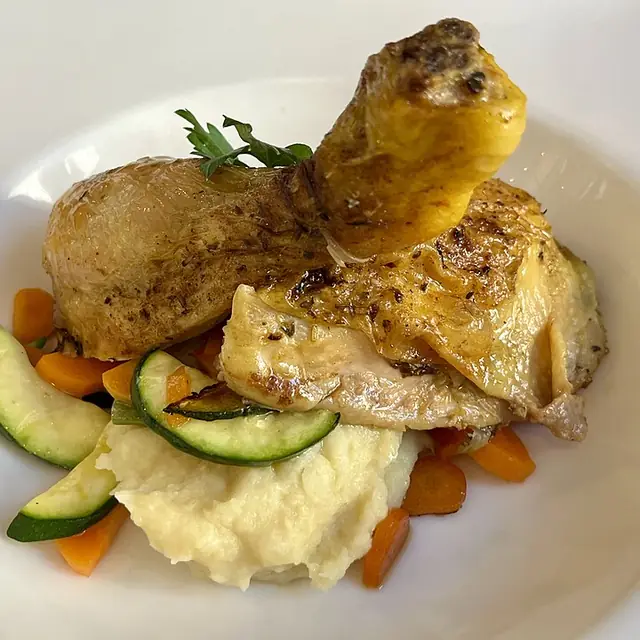
Poulet rôti

Poulet rôti is Paris's Sunday-bistro standard: a salt-rubbed Bresse or Loué chicken roasted on a rotisserie or oven, served whole with fat-cooked potatoes and the pan juice.

Where: Bouillon Pigalle, La Rôtisserie d'Argent, Robert et Louise

Where to eat Poulet rôti in Paris →

All Paris signature dishes →

Restaurants to know in Paris

A handful of the places we send friends to when they are in Paris.

Septime

French Bistro€€€80 Rue de Charonne, 75011 Paris

Bertrand Grébaut's Septime in Paris remains the room every neo-bistro in the city compares itself to. Reservations open 21 days ahead and burn within an hour.

Signature: Cured mackerel, Smoked egg yolk

More about Septime →

Frenchie

French Bistro€€€5-6 Rue du Nil, 75002 Paris

Gregory Marchand's Frenchie sits on Paris's Rue du Nil, the alley he and his suppliers turned into a four-shop street: bistro, bar, wine cellar.

Signature: Beef bavette, Pavlova

More about Frenchie →

Le Servan

French Bistro€€32 Rue Saint-Maur, 75011 Paris

Tatiana and Katia Levha's Le Servan in Paris reads the seasonal-French rulebook through a Filipino lens. The dining room is loud, the menu changes weekly.

Signature: Pork rillettes, Tomato salad with anchovy

More about Le Servan →

Le Comptoir du Relais

French Bistro€€9 Carrefour de l'Odéon, 75006 Paris

Yves Camdeborde's Le Comptoir du Relais in Paris helped invent the term bistronomie in the 1990s and still serves the dining-room version every weeknight.

Signature: Pâté en croûte, Têtes de veau

More about Le Comptoir du Relais →

Le Baratin

French Bistro€€3 Rue Jouye-Rouve, 75020 Paris

Raquel Carena cooks Argentine-French intuition food at Le Baratin, the Belleville room every Parisian chef calls their favourite when no one is listening.

Signature: Veal sweetbreads, Pigeon

More about Le Baratin →

Clamato

Seafood€€80 Rue de Charonne, 75011 Paris

Septime's seafood little sister, Clamato in Paris runs no-reservation oysters, ceviche and grilled fish from 19:00. Walk-in only; queue forms by 18:45.

Signature: Oysters, Hake ceviche

More about Clamato →

See every restaurant in Paris →

Where to eat by neighborhood

Le Marais (3e/4e)

Old Jewish quarter and gay village now layered with falafel queues, Pletzl bakeries, white-glove galleries and the city's densest run of cafes.

Best for: Falafel, Cafes, Wine bars, Brunch

Saint-Germain-des-Prés (6e)

The post-war intellectual quarter where Café de Flore and Les Deux Magots still anchor the Left Bank cafe ritual.

Best for: Cafes, Brasseries, Pastry

Latin Quarter (5e)

Sorbonne students, Rue Mouffetard market mornings, Lebanese sandwich counters and the old order of Brasserie Balzar.

Best for: Brasseries, Lebanese, Market lunches

Montmartre (18e)

Sacré-Cœur on the hill and an actual neighbourhood underneath: bistros on Rue des Abbesses, the Saint-Pierre fabric market, and bakeries locals queue at.

Best for: Bistros, Bakeries, Brunch

Pigalle (SoPi) (9e)

South Pigalle, the cocktail-and-bistro spine of the 9e, where Buvette, Panthéon and Bouillon Pigalle keep the room full from 19:00.

Best for: Cocktail bars, Bistros, Bouillons

Canal Saint-Martin (10e)

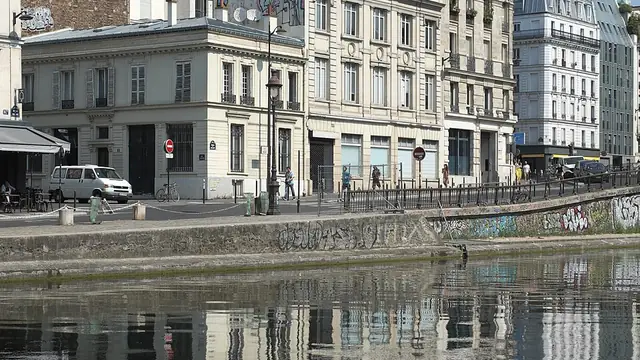
Locks, terraces, the corridor where Holybelly invented the new Paris brunch and Du Pain et des Idées opens at 07:15.

Best for: Brunch, Bakeries, Cafes, Wine bars

When to come hungry in Paris

Peak food season: September to November (la rentrée, white truffles, game), plus April to June (asparagus, strawberries, the year's best terrace weather). August is the slowest month: many small rooms close for three weeks.

Local dining hours: Lunch 12:00-14:30, dinner 19:30-22:30. Most bistros stop seating by 22:00. Brasseries and a handful of late-night rooms run later. Sunday closing is common outside tourist neighbourhoods.

Tipping: Service is included by law (service compris). Round up or leave a few euros for service that warranted it. Never more than 5 percent, and never as a percentage entered on the card terminal.

Paris food, FAQ

What food is Paris known for?

Paris's signature dishes include Steak frites, Soupe à l'oignon, Soufflé, Île flottante, Pâté en croûte. See our signature dishes chapter for where to eat each.

What are the best food neighborhoods in Paris?

TableJourney editors map Paris by district. Le Marais, Saint-Germain-des-Prés, Latin Quarter, Montmartre are among the strongest for food, each with its own guide.

Where should I eat fine dining in Paris?

Editor picks in Paris include Arpège, Plénitude, Le Clarence, plus the full fine dining chapter on TableJourney.

Are there food tours in Paris?

TableJourney covers 7 editor-picked food tours in Paris, with what each shows you and how much to budget.

Does Paris have good vegetarian or vegan food?

TableJourney's Paris dietary chapter covers vegan, vegetarian, gluten_free venues, each editor-picked with what to order and how to ask.