Guided tour · 3 hours
Lisbon: Tastes and Traditions Guided Food Tour
Eat like a Lisbon local for a morning as you taste the foods and drinks you can't leave Portugal without trying.
from€63 Check dates

Charcoal sardines, bacalhau, pastel de nata since 1837.
Free cancellation on most tours, with live prices on the partner's site.
Lisbon eats the Atlantic. Charcoal-grilled sardines, salt cod simmered into a hundred dishes, clams steamed in white wine and coriander, octopus rice cooked low and slow. The city's defining sweet, the pastel de nata, was perfected by the monks at the Jeronimos monastery long before the 1834 dissolution; the recipe passed to a refinery next door and Pasteis de Belem opened in 1837 still making it the same way. Manteigaria reopened the conversation in 2014 and the two now bracket the city's bakery scene. Bairro Alto and Cais do Sodre stay loud past midnight; Alfama keeps fado and tasca cooking alive on the same cobbled streets. A 2010s generation of chefs, Avillez at Belcanto, Sa Pessoa now at his eponymous room, Antonio Galapito at Prado, Alexandre Silva at Loco, has dragged Lisbon onto the global fine-dining map without breaking the city's everyday rhythm.
Guided tour · 3 hours
Eat like a Lisbon local for a morning as you taste the foods and drinks you can't leave Portugal without trying.

Guided tour · 3.5 hours
Discover the flavors of Lisbon on a guided food and wine tour. Taste a variety of local dishes, including bifana and pastel de nata, and sip on Portuguese beer, sparkl...

Guided tour · 3 hours
Taste the soul of Lisbon on our Secret Food Tour. Discover authentic Portuguese tapas, wine, and pastries in local taverns, including our famous Secret Dish! Come hung...
The plates that define eating in Lisbon.
Lisbon's defining sweet: a flaky puff-pastry shell holding a thin custard of egg yolk, milk and sugar, blistered black on top under high heat.
Where Pasteis de Belem, Manteigaria Chiado, Manteigaria Mercado da Ribeira, Manteigaria Belem, Confeitaria Nacional
Taste it2-Hour Pastel de Nata Cooking Class€54Where to eat Pastel de nata in Lisbon →Shredded salt cod tossed with thin-fried potatoes, sweet onion, garlic and scrambled egg, finished with black olives and parsley, eaten hot.
Where Solar dos Presuntos, O Velho Eurico, Casa do Alentejo, Pap'Acorda
Where to eat Bacalhau a Bras in Lisbon →Whole sardines salted, charcoal-grilled until the skin blackens, served on a thick slice of country bread that catches the dripping oil and juice.
Where Cervejaria Ramiro, Solar dos Presuntos, Cervejaria Pinoquio
Where to eat Sardinhas assadas in Lisbon →Thin slices of pork marinated in garlic, white wine and paprika, seared on the plancha and stuffed into a soft Portuguese papo seco roll, mustard optional.
Where As Bifanas do Afonso, O Trevo, Casa das Bifanas
Where to eat Bifana in Lisbon →Live clams steamed open with olive oil, garlic, coriander and white wine, served at once in their broth with bread to soak it up at the Lisbon cervejaria counters.
Where Cervejaria Ramiro, Cervejaria Pinoquio, Cervejaria Liberdade
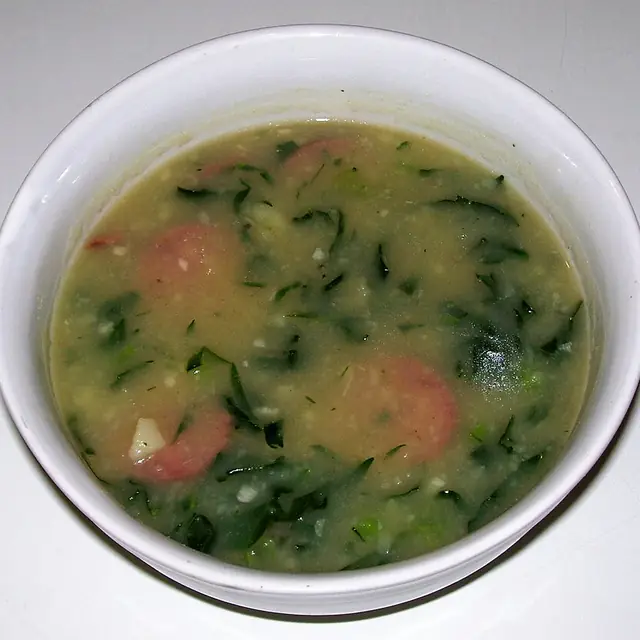
Where to eat Ameijoas a Bulhao Pato in Lisbon →A puréed potato-and-onion soup with finely shredded couve galega (Galician collard) and a slice of chourico, drizzled with olive oil, eaten hot.
Where Solar dos Presuntos, Casa do Alentejo, Cervejaria Trindade
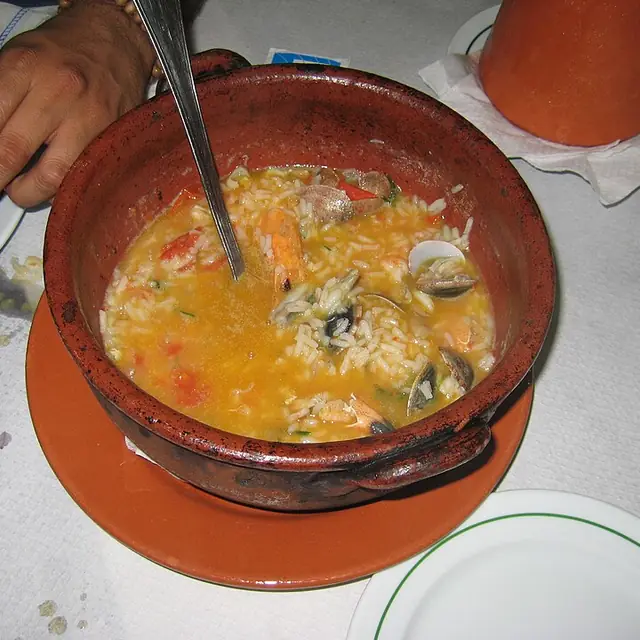
Where to eat Caldo verde in Lisbon →A loose, soupy seafood rice cooked in a tomato-and-shellfish broth, layered with prawns, clams, mussels and crab claws, finished with coriander.
Where Solar dos Presuntos, Cervejaria Ramiro, Cervejaria Liberdade, Cervejaria Pinoquio
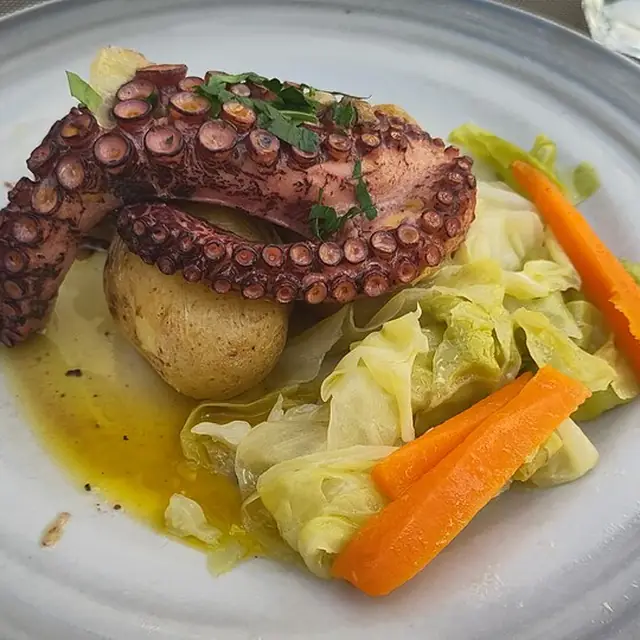
Where to eat Arroz de marisco in Lisbon →Octopus tenderised, boiled, then roasted in the oven with smashed potatoes (batatas a murro), garlic and a flood of olive oil until the skin crisps.
Where Cervejaria Ramiro, Tasquinha do Lagarto, Cervejaria Liberdade
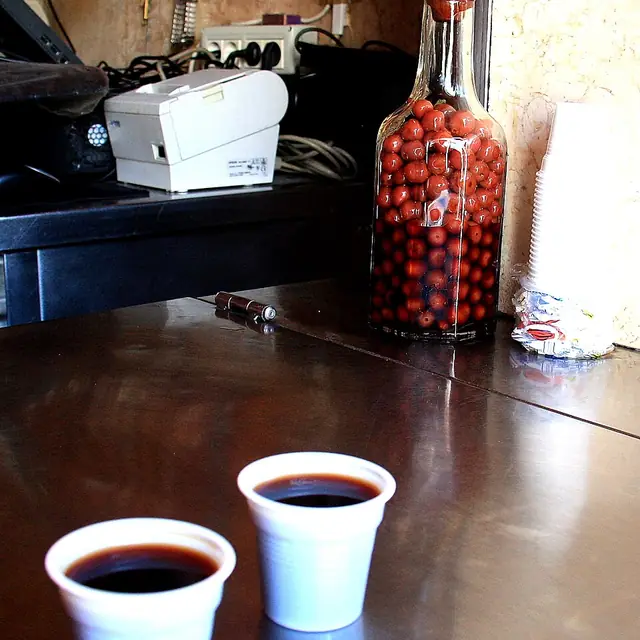
Where to eat Polvo a lagareiro in Lisbon →A sour-cherry liqueur made by macerating ginja cherries in aguardente with cinnamon and sugar, drunk as a shot at standing-room counters across Lisbon.
Where A Ginjinha, O Bom, O Mau e O Vilao
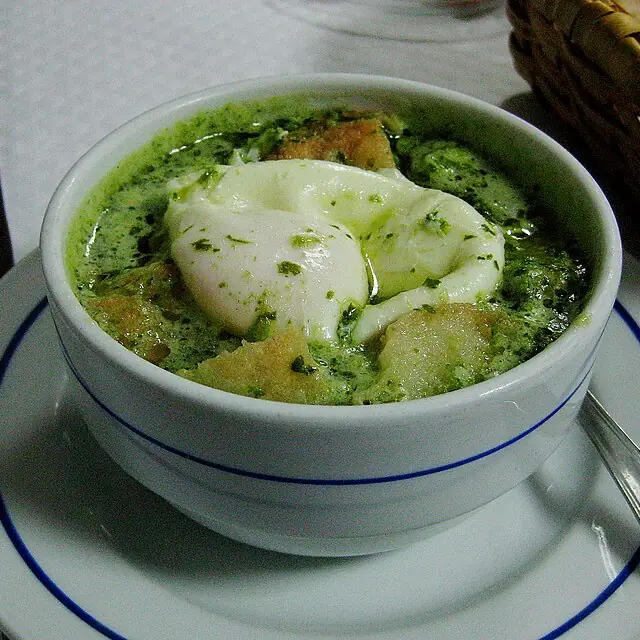
Where to eat Ginjinha in Lisbon →A Portuguese bread soup of stale country loaf reborn in a garlicky broth with olive oil, coriander, poached egg and either shellfish or salt cod added.
Where Pap'Acorda, Pateo Bairro do Avillez, Solar dos Presuntos, Casa do Alentejo
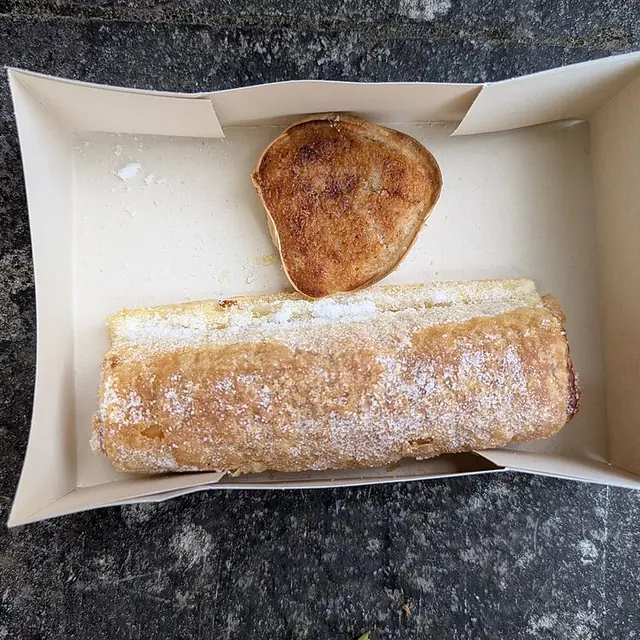
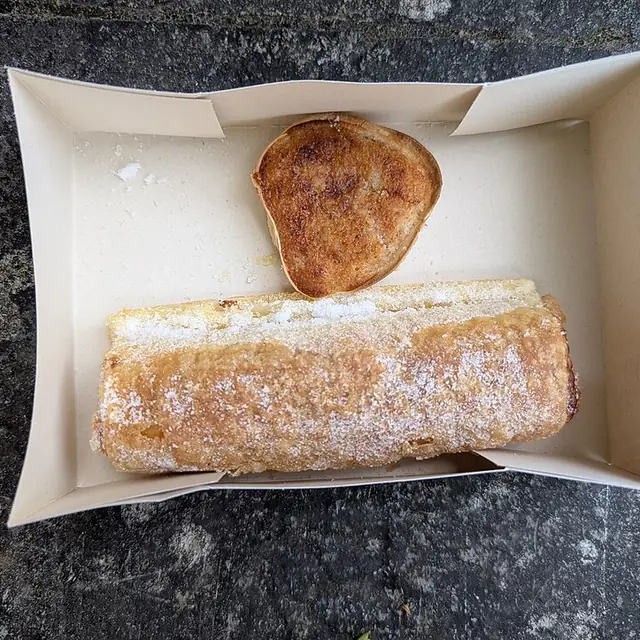
Where to eat Acorda in Lisbon →The Travesseiro is a Sintra puff-pastry pillow filled with almond-and-egg cream, developed at Casa Piriquita in the 1940s. Order it with a glass of Colares wine.
Where to eat Travesseiro de Sintra in Lisbon →The Queijada is a Sintra fresh-cheese tartlet, a 13th-century recipe of curd, sugar, eggs and cinnamon in a thin pastry shell. Eaten in fours, never alone.
Where to eat Queijada de Sintra in Lisbon →Pastel de bacalhau is Lisbon's salt-cod croquette: a fluffy egg-and-potato cod mixture deep-fried into oval-shape patties, eaten warm with a glass of port at every counter and tasca.
Where Casa Portuguesa do Pastel de Bacalhau, Solar dos Presuntos, Tasca do Jaime, Bistro 100 Maneiras
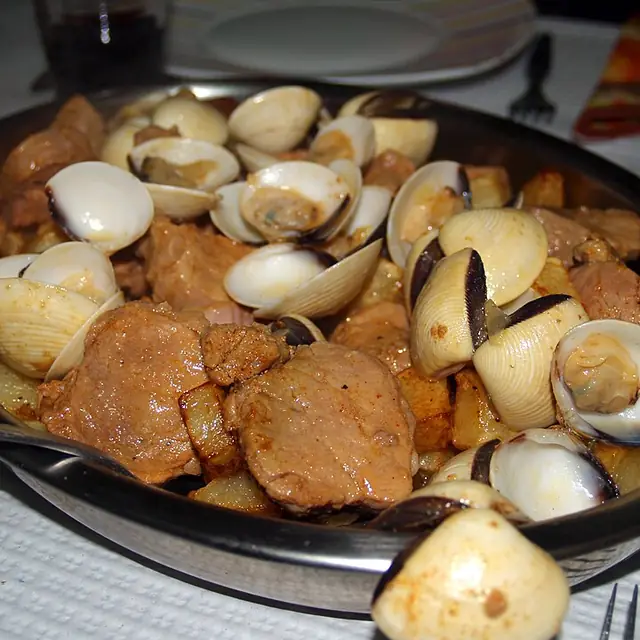
Where to eat Pastel de bacalhau in Lisbon →Carne de porco à alentejana is the Alentejo-origin Lisbon supper: marinated pork sauteed with clams and lemon-coriander pickle, plated over fried potato cubes and bread for mopping the juices.
Where Casa do Alentejo, O Magano, Solar dos Presuntos, Bistro 100 Maneiras
Where to eat Carne de porco à alentejana in Lisbon →A handful of the places we send friends to when they are in Lisbon.
Cervejaria Ramiro in Lisbon: a 1950s seafood hall on Avenida Almirante Reis where goose barnacles, tiger prawns and clams come straight off the boat.
OrderAmeijoas a Bulhao Pato then a prego no pao to close.
100 Maneiras in Lisbon's Bairro Alto: a ten-course nightly tasting on Rua do Teixeira, the Bosnian-Portuguese menu Ljubomir Stanisic built between 2009.
OrderWhichever ten-course tasting menu the kitchen is running this season.
Bairro do Avillez in Chiado, Lisbon: Jose Avillez's 1000 sqm complex housing the Taberna, Pateo, Mini Bar and Pizzaria Lisboa under one roof.
OrderThe Taberna's exploding olives and a glass of Esporao branco.
Cantinho do Avillez in Chiado, Lisbon: Jose Avillez's longest-running room, open since 2011, small plates that travel from Portugal to South America.
OrderThe deep-fried green beans alongside Alentejo-style black pork.
Solar dos Presuntos in Restauradores, Lisbon: a family seafood institution open since 1974, famous for cured ham, Minho cuisine and a celebrity wall.
OrderThe plate of presunto first, then arroz de marisco for two.
Taberna da Rua das Flores in Chiado, Lisbon: Andre Magalhaes cooks Portugal's colonial-route flavours from a blackboard menu, cash only, no bookings.
OrderWhatever Magalhaes has chalked on the board for the day.
Lisbon's literary heart and the home of its fine-dining boom. Belcanto, Bairro do Avillez and the Manteigaria flagship are all walkable here.
Best for: Fine dining, Pastel de nata, Wine bars
A grid of steep cobbled streets that goes quiet by day and loud by midnight. Bars spill onto the pavement, tascas anchor the corners.
Best for: Late-night, Cocktails, Tascas
The oldest quarter of Lisbon, surviving the 1755 earthquake intact. Fado houses, tiled facades and tascas pressed into the hillside.
Best for: Fado dinners, Tascas, Petiscos
The riverside ceremonial district where Portuguese explorers set sail. Home of Pasteis de Belem, Feitoria's Michelin star and the maritime museums.
Best for: Pastel de nata, Fine dining, Riverside lunches
The old red-light docks turned dining quarter. Home of Time Out Market, the pink street and the city's natural-wine scene.
Best for: Wine bars, Market food, Late-night
A genteel garden quarter on the hill above Bairro Alto. Concept stores, modern brunch rooms and chef-led restaurants like A Cevicheria.
Best for: Brunch, Modern Portuguese, Cocktails
Lisbon is the Atlantic edge of Europe, and it eats accordingly. The Portuguese capital sits where the Tagus river meets the ocean, and the city's food culture is built on what the boats land (fresh sardines, octopus, clams, sea bass, dorada, percebes) plus what the Empire brought back from five centuries of trans-oceanic trade (chili peppers from Brazil, cinnamon from India and Sri Lanka, coffee from Brazil and Angola, piri piri from Mozambique). The defining Portuguese ingredient is bacalhau, the salt-cod that has been imported from Norway and Newfoundland since the 15th century and dried and salted to feed a maritime nation; the Portuguese phrase is um bacalhau para cada dia do ano (one bacalhau dish for every day of the year), and Lisbon's tasca repertoire genuinely runs 100-plus distinct bacalhau preparations.
The Lisbon food map runs by neighborhood. Chiado in the city center holds the modern fine-dining set (Belcanto, Alma, Bairro do Avillez, Mini Bar) and the destination heritage rooms. Bairro Alto is the wine-bar and tasca crawl neighborhood; the steep cobbled streets open into 50-plus rooms that fill from 19:00-02:00. Alfama is the oldest Lisbon neighborhood (the only one that survived the 1755 earthquake), with the destination fado-and-food houses and the small family tascas in the warren below the Castelo de Sao Jorge. Belem holds the cult Pasteis de Belem (the original 1837 pastel de nata bakery, the only place legally allowed to use the protected Pasteis de Belem name), the Time Out Market's Marvila warehouse-district cousin, and the Jeronimos monastery whose monks invented the pastel de nata in the 18th century. Marvila in the east is the warehouse-district up-and-coming food corridor, with the breweries and the new wave of casual destination rooms.
Lisbon's deeper truth is that the city has the cheapest serious eating of any Western European capital. A full meal at a neighborhood tasca with wine runs 12 to 18 euros per person; a destination tasting menu at Belcanto (2 Michelin stars) runs 220 to 260 euros. The middle of the spectrum is broad and excellent.
The pastel de nata is Lisbon's most internationally famous food, invented by the monks of the Jeronimos monastery in Belem before 1837, the year the Confeitaria de Belem (now Pasteis de Belem) bought the recipe and began selling it to the public. The defining traits: a hand-laminated puff-pastry shell baked at 350 degrees Celsius for caramelization, a custard center of egg yolks, sugar, milk, and cinnamon, served warm dusted with cinnamon and powdered sugar. The original Pasteis de Belem (open since 1837, Rua de Belem 84-92, just east of the Jeronimos monastery) is still the canonical version; the secret recipe is held by three master pastry chefs and is unchanged in 188 years. Manteigaria (multiple Lisbon locations including the Time Out Market) is the contemporary contender with a slightly creamier center and a flakier shell. Other destination natas: Aloma in Campo de Ourique (multiple-times winner of the Best Pastel de Nata award), Cristo Rei in Almada, Fabrica da Nata in Praca dos Restauradores. Eat one warm from the counter, with a bica (Portuguese espresso). Most natas cost 1.20 to 1.50 euros; the destination shops sell roughly 20,000 a day.
Bacalhau (salt cod) is Portugal's national fish despite not being fished in Portuguese waters. The tradition began in the 15th century when Portuguese fishermen sailed to the Newfoundland Grand Banks and brought back the cod, dried and salted to survive the months-long return voyage. The Portuguese phrase is que ha mil receitas de bacalhau (there are a thousand bacalhau recipes), and the canon includes: bacalhau a Bras (shredded with onion, potato matchsticks, scrambled eggs, olives), bacalhau a Gomes de Sa (a baked casserole with sliced potato, onion, hard-boiled egg, black olives), bacalhau a lagareiro (roasted with garlic and olive oil), pasteis de bacalhau (the croquettes, also called bolinhos), bacalhau com natas (with cream sauce and potato), bacalhau a Zé do Pipo, bacalhau a Conde da Guarda. The destination rooms for bacalhau in Lisbon: Solar dos Presuntos (the classic tasca near Restauradores, since 1974), Casa do Bacalhau in Beato (a temple specifically for cod), Laurentina O Rei do Bacalhau, Versailles (Avenidas Novas), Faz Figura in Alfama. Most tascas list 3 to 5 bacalhau preparations on the menu; pick the regional one if it's a daily special.
A tasca is the Portuguese equivalent of an Italian trattoria or a French bistro: small, family-run, tiled-walled, with the menu hand-written on a chalkboard, hours running 12:00-15:00 (lunch) and 19:00-23:00 (dinner), and the wine on a list of 8 to 15 Portuguese bottles plus a house red and white sold by the carafe. The tasca tradition is the working-class Lisbon food culture, distinct from the destination rooms. The defining tasca meal: couvert (the small starters of olives, butter, cheese, bread that arrive uninvited and cost 3 to 6 euros), a sopa (caldo verde, sopa alentejana), a main of grilled fish (sardinhas, dourada, robalo) or pork (bifana, carne de porco a alentejana), a salad of tomato and onion, batatas a murro (smashed roast potatoes), a vinho da casa carafe, an espresso, and a pastel de nata. The destination Lisbon tascas: Cervejaria Ramiro (the seafood beer-hall near Intendente, since 1956, the destination for percebes, gambas, and steak sandwich), O Velho Eurico in Mouraria, Taberna da Rua das Flores in Chiado, A Cevicheria (Peruvian-Portuguese), Cantinho do Aziz (Mozambican-Portuguese, since 1981). A full tasca dinner runs 12 to 25 euros per person with wine.
Lisbon's Michelin scene grew significantly in the 2010s and 2020s. The 2026 Michelin Guide Portugal lists 14 starred restaurants in greater Lisbon. Belcanto (chef Jose Avillez, 2 Michelin stars since 2014, in Chiado) is the destination room: a 12-to-14-course modernist Portuguese tasting menu drawing on the country's regional traditions and the modern technique vocabulary, served in a small dining room behind Largo de Sao Carlos. Alma (chef Henrique Sa Pessoa, 2 stars, in Chiado near Largo do Carmo) is the second 2-star and the more contemporary kitchen of the two. The 1-star tier is broad: Loco (chef Alexandre Silva, near Estrela, the most modernist of the set), Encanto (Jose Avillez's vegetarian sibling), Epur (chef Vincent Farges, Chiado), Feitoria (Belem), Eleven (Sao Sebastiao), Fifty Seconds (chef Martin Berasategui, in the Vasco da Gama tower at Parque das Nacoes). Bairro do Avillez (the casual sibling of Belcanto, also Chiado) is the easier-booking version. Belcanto books 60 to 90 days ahead through its website; the chef's-counter is the signature seat. Smart casual dress; no jeans at Belcanto and Alma.
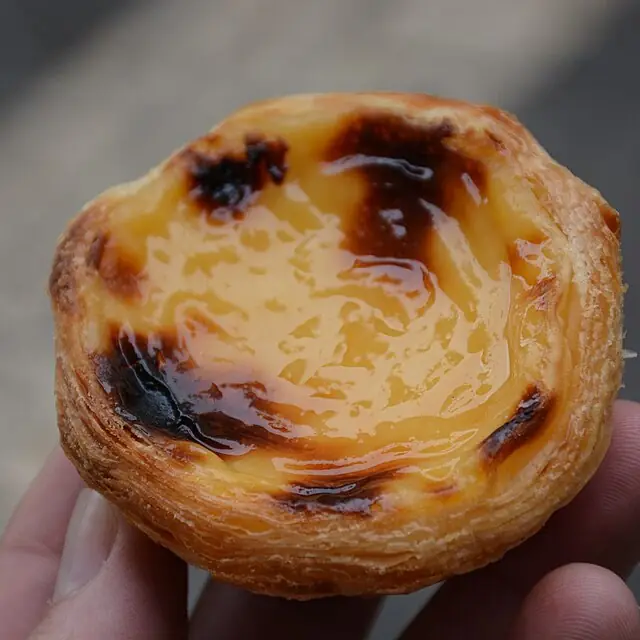 Pastel de nata
Lisbon's defining sweet: a flaky puff-pastry shell holding a thin custard of egg yolk, milk and sugar, blistered black on top under high heat
Pastel de nata
Lisbon's defining sweet: a flaky puff-pastry shell holding a thin custard of egg yolk, milk and sugar, blistered black on top under high heat
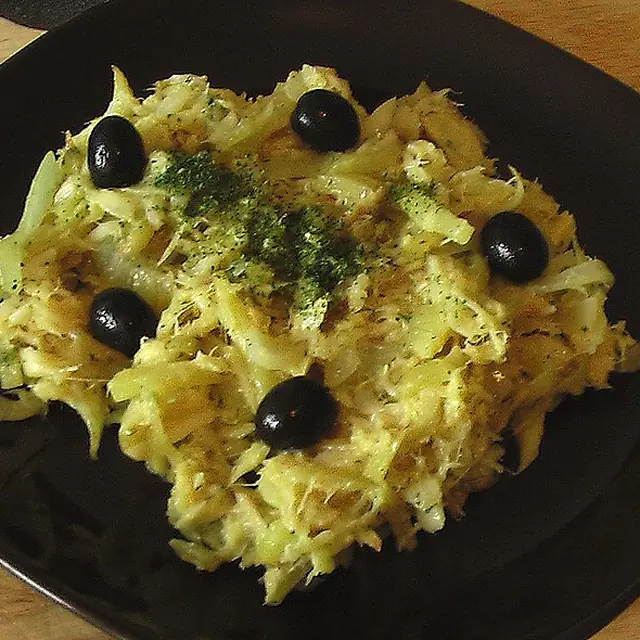 Bacalhau a Bras
Shredded salt cod tossed with thin-fried potatoes, sweet onion, garlic and scrambled egg, finished with black olives and parsley, eaten hot
Bacalhau a Bras
Shredded salt cod tossed with thin-fried potatoes, sweet onion, garlic and scrambled egg, finished with black olives and parsley, eaten hot
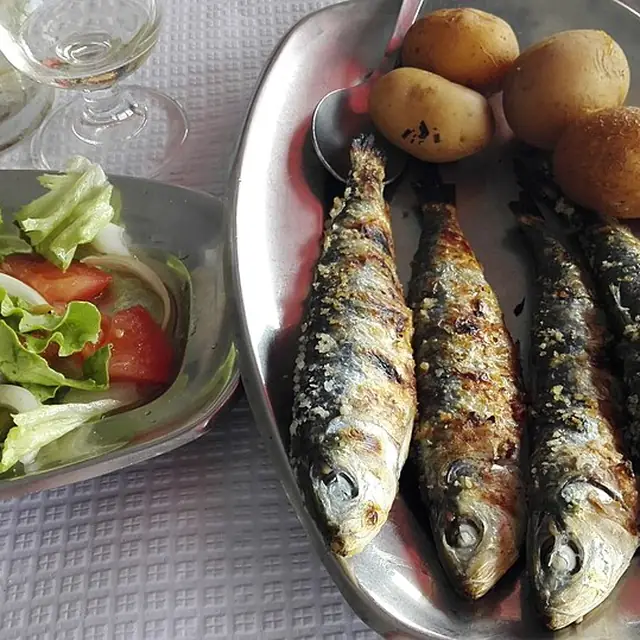 Sardinhas assadas
Whole sardines salted, charcoal-grilled until the skin blackens, served on a thick slice of country bread that catches the dripping oil and juice
Sardinhas assadas
Whole sardines salted, charcoal-grilled until the skin blackens, served on a thick slice of country bread that catches the dripping oil and juice
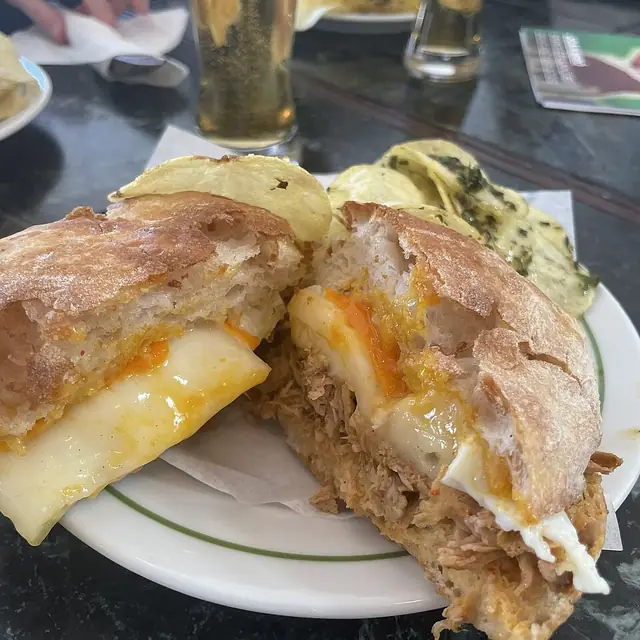 Bifana
Thin slices of pork marinated in garlic, white wine and paprika, seared on the plancha and stuffed into a soft Portuguese papo seco roll, mustard optional
Bifana
Thin slices of pork marinated in garlic, white wine and paprika, seared on the plancha and stuffed into a soft Portuguese papo seco roll, mustard optional
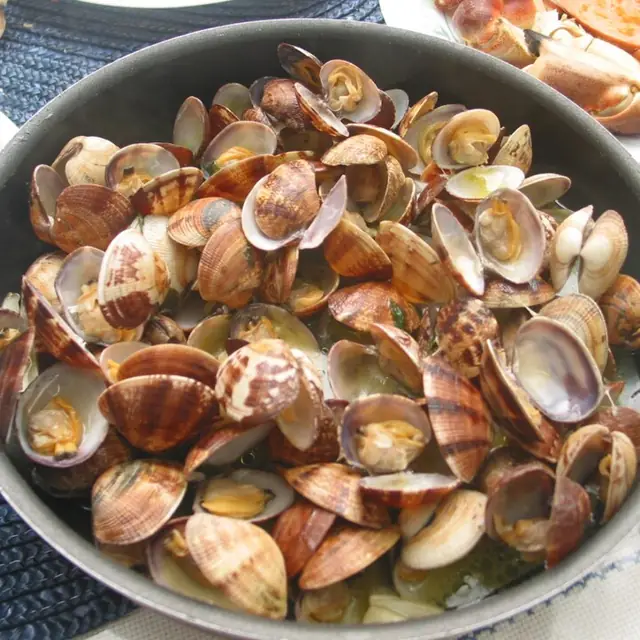 Ameijoas a Bulhao Pato
Live clams steamed open with olive oil, garlic, coriander and white wine, served at once in their broth with bread to soak it up at the Lisbon cervejaria counters
Ameijoas a Bulhao Pato
Live clams steamed open with olive oil, garlic, coriander and white wine, served at once in their broth with bread to soak it up at the Lisbon cervejaria counters
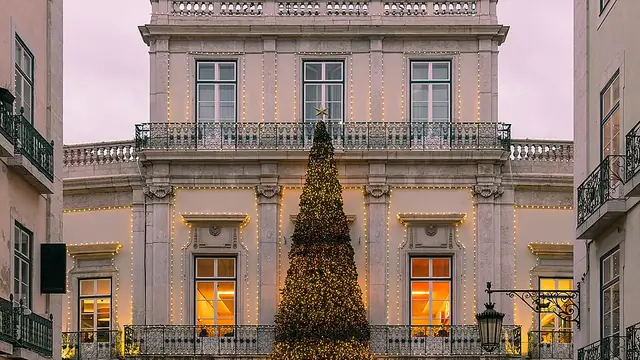 Chiado
Lisbon's literary heart and the home of its fine-dining boom
Chiado
Lisbon's literary heart and the home of its fine-dining boom
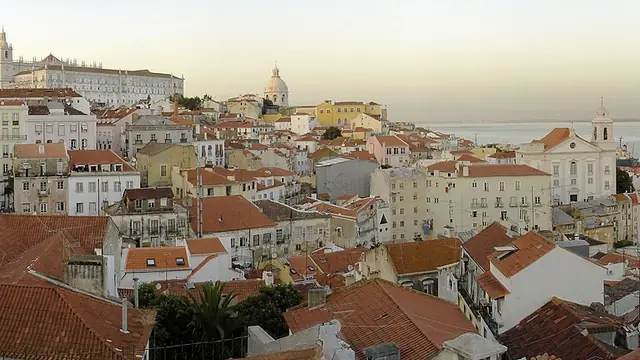 Alfama
The oldest quarter of Lisbon, surviving the 1755 earthquake intact
Alfama
The oldest quarter of Lisbon, surviving the 1755 earthquake intact
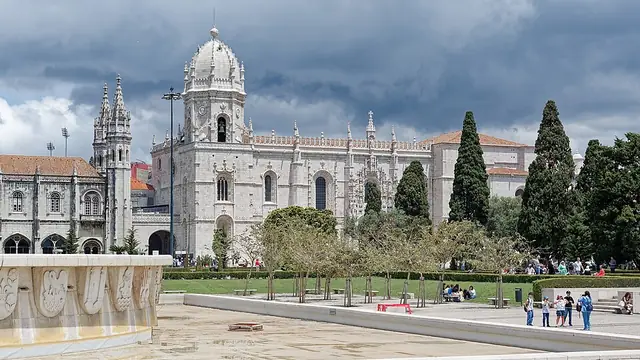 Belem
The riverside ceremonial district where Portuguese explorers set sail
Belem
The riverside ceremonial district where Portuguese explorers set sail
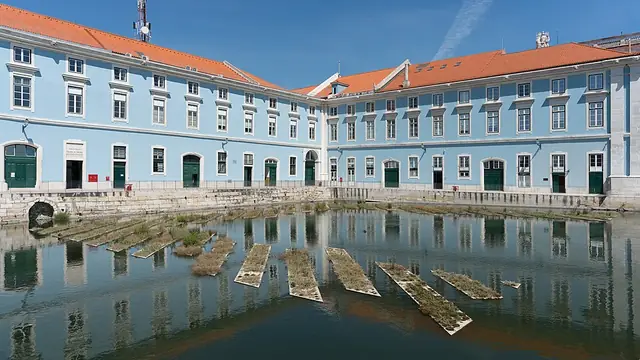 Cais do Sodre
The old red-light docks turned dining quarter
Cais do Sodre
The old red-light docks turned dining quarter
A sample of Lisbon hotels from our booking partner, who list 2,772 here. Live prices and availability open on their site.
 Travel Inn Lisbon
With a stay at Travel Inn Lisbon in Lisbon (Lisbon Old Town), you'll be a 2-minute drive from Fonte Luminos...
Check dates
Travel Inn Lisbon
With a stay at Travel Inn Lisbon in Lisbon (Lisbon Old Town), you'll be a 2-minute drive from Fonte Luminos...
Check dates
 Lisbon Suite Home
With a stay at Lisbon Suite Home in Lisbon (Lisbon City Center), you'll be within a 15-minute walk of Graca...
Check dates
Lisbon Suite Home
With a stay at Lisbon Suite Home in Lisbon (Lisbon City Center), you'll be within a 15-minute walk of Graca...
Check dates
 Reiki Lovers Lisbon
With a stay at Reiki Lovers Lisbon in Lisbon (Lisbon City Center), you'll be within a 10-minute walk of Lib...
Check dates
Reiki Lovers Lisbon
With a stay at Reiki Lovers Lisbon in Lisbon (Lisbon City Center), you'll be within a 10-minute walk of Lib...
Check dates
 Just Lisbon Hostel & A.L
A stay at Just Lisbon Hostel & A.L places you in the heart of Lisbon, within a 10-minute walk of Graca and ...
Check dates
Just Lisbon Hostel & A.L
A stay at Just Lisbon Hostel & A.L places you in the heart of Lisbon, within a 10-minute walk of Graca and ...
Check dates
 Lisbon Style Guesthouse
A stay at Lisbon Style Guesthouse places you in the heart of Lisbon, within a 15-minute walk of Graca and M...
Check dates
Lisbon Style Guesthouse
A stay at Lisbon Style Guesthouse places you in the heart of Lisbon, within a 15-minute walk of Graca and M...
Check dates
 Lisbon Palma Rooms
With a stay at Lisbon Palma Rooms in Lisbon (Lisbon Old Town), you'll be steps from Martim Moniz Square and...
Check dates
Lisbon Palma Rooms
With a stay at Lisbon Palma Rooms in Lisbon (Lisbon Old Town), you'll be steps from Martim Moniz Square and...
Check dates
 Lisbon Angels Hostel
With a stay at Lisbon Angels Hostel in Lisbon (Lisbon City Center), you'll be a 5-minute walk from Graca an...
Check dates
Lisbon Angels Hostel
With a stay at Lisbon Angels Hostel in Lisbon (Lisbon City Center), you'll be a 5-minute walk from Graca an...
Check dates
 My Charm Lisbon Suites
A stay at My Charm Lisbon Suites places you in the heart of Lisbon, within a 15-minute walk of Atrium Salda...
Check dates
My Charm Lisbon Suites
A stay at My Charm Lisbon Suites places you in the heart of Lisbon, within a 15-minute walk of Atrium Salda...
Check dates
 Be Lisbon Hostel Intendente
A stay at Be Lisbon Hostel Intendente places you in the heart of Lisbon, steps from Graca and 7 minutes by ...
Check dates
Be Lisbon Hostel Intendente
A stay at Be Lisbon Hostel Intendente places you in the heart of Lisbon, steps from Graca and 7 minutes by ...
Check dates
 Come Inn Lisbon Estefania
With a stay at Come Inn Lisbon Estefania in Lisbon (Lisbon City Center), you'll be within a 15-minute walk ...
Check dates
Come Inn Lisbon Estefania
With a stay at Come Inn Lisbon Estefania in Lisbon (Lisbon City Center), you'll be within a 15-minute walk ...
Check dates
 Lisbon City Hotel
A stay at Lisbon City Hotel places you in the heart of Lisbon, within a 15-minute walk of Graca and Martim ...
Check dates
Lisbon City Hotel
A stay at Lisbon City Hotel places you in the heart of Lisbon, within a 15-minute walk of Graca and Martim ...
Check dates
 Metro Hostel Lisbon
With a stay at Metro Hostel Lisbon in Lisbon (Lisbon City Center), you'll be within a 5-minute walk of Atri...
Check dates
Metro Hostel Lisbon
With a stay at Metro Hostel Lisbon in Lisbon (Lisbon City Center), you'll be within a 5-minute walk of Atri...
Check dates
Also compare: Zen Hotels in Lisbon from USD 47/night · Minor Hotels in Lisbon · Holidu in Lisbon from USD 27/night
Stays are listed by our booking partners, not editor picks. We earn a commission if you book, at no cost to you.
Every restaurant, cafe, market and bar we cover in Lisbon, pinned. Click a pin for the page.
Peak food season: April to June for clams, sardines and outdoor terraces; September to November for cooler fish and chestnut season. August is hot and many small rooms close for two to three weeks.
Local dining hours: Lunch 12:30-15:00, dinner from 19:30 with most kitchens taking last orders by 22:30. Tascas and seafood halls often serve through the afternoon.
Tipping: Service is not included by default. Round up on small bills, leave five to ten percent at a sit-down meal where you enjoyed the service.
Lisbon's signature dishes include Pastel de nata, Bacalhau a Bras, Sardinhas assadas, Bifana, Ameijoas a Bulhao Pato. See our signature dishes chapter for where to eat each.
TableJourney editors map Lisbon by district. Chiado, Bairro Alto, Alfama, Belem are among the strongest for food, each with its own guide.
Editor picks in Lisbon include Belcanto, Henrique Sa Pessoa, Fifty Seconds, plus the full fine dining chapter on TableJourney.
TableJourney covers 9 editor-picked food tours in Lisbon, with what each shows you and how much to budget.
TableJourney's Lisbon dietary chapter covers vegan, vegetarian, gluten_free, halal venues, each editor-picked with what to order and how to ask.