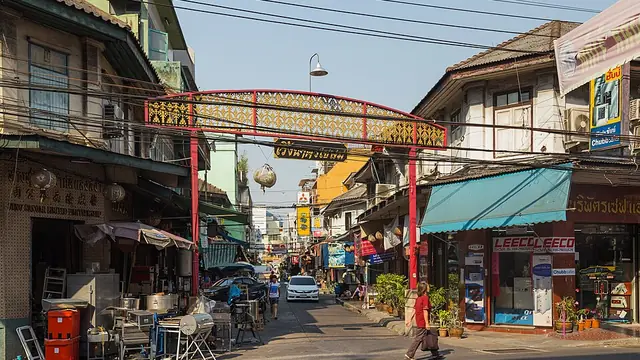
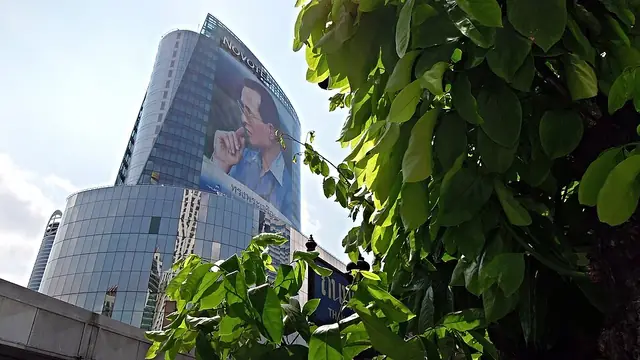
Bangkok eats at every price point at once. Michelin-starred crab-omelet street stalls (Jay Fai, one star since 2018) sit a tuk-tuk ride from the world's first three-Michelin-star Thai restaurant (Sorn, promoted 2025) and Asia's first three-star German room (Suhring, promoted 2026), and the city has held more Bib Gourmands per capita than any food capital in Asia since the 2018 Michelin Guide Thailand launched. The grammar is regional, layered and intensely social: Isan grilled meats and som tam from the northeast, Chinese-Thai stir-fries through Yaowarat (the 1782 Chinatown), Hainanese chicken-rice counters in Silom and Bang Rak, royal-influenced central Thai cuisine in the Old City, and Muslim-Thai khao mok in Phra Khanong. Add a chef-led wave from Le Du, Nusara, 80/20 and Potong (Pichaya 'Pam' Soontornyanakij won The World's Best Female Chef 2025) and you get a city where a 50-baht boat noodle and a 9,000-baht tasting menu can be eaten on the same day without contradiction. Streetside, in the Old Town's covered alleys, on rooftops above the Chao Phraya river: Bangkok feeds at every elevation and budget the day can offer.

Eat your way through Bangkok

Browse by price

Map of Bangkok

Every restaurant, cafe, market and bar we cover in Bangkok, pinned. Click a pin for the page.

Where to eat in Bangkok: editor-picked starting points

5 institutional venues to anchor a Bangkok food trip

  • Sorn - Thai, chef Supaksorn 'Ice' Jongsiri
  • Le Du - Thai, chef Thitid 'Ton' Tassanakajohn
  • Nusara - Thai, chef Thitid 'Ton' Tassanakajohn
  • Suhring - German, chef Thomas and Mathias Suhring
  • Gaggan Anand - Indian, chef Gaggan Anand

Must-try Bangkok dishes

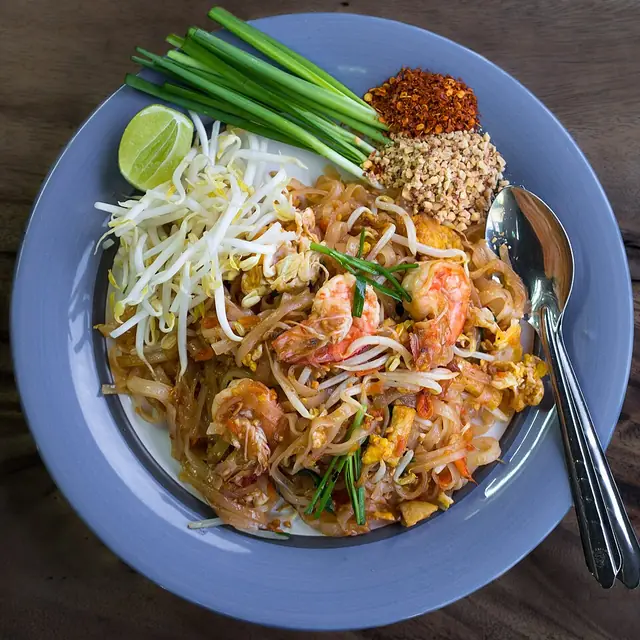
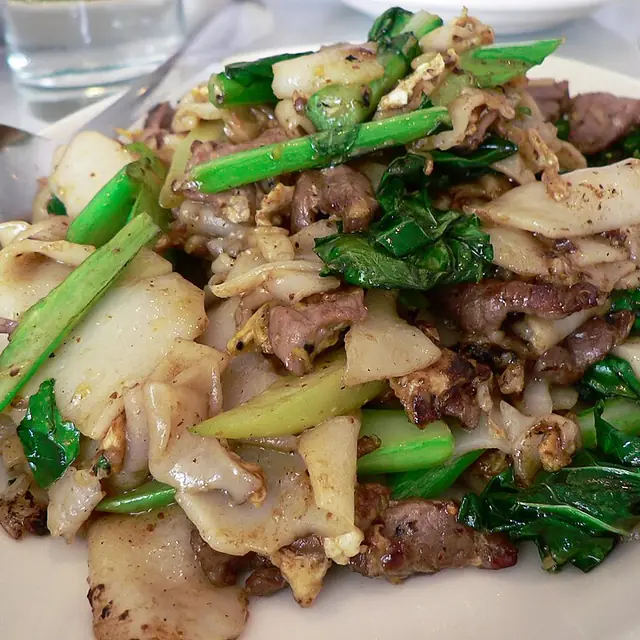
  • Pad Thai - Pad Thai is the canonical Bangkok stir-fried rice-noodle dish: tamarind-sweetened, fish-sauce-savoury, tossed with shrimp, egg, beansprouts and crushed peanuts in a smoking-hot wok, garnished with lime and chilli
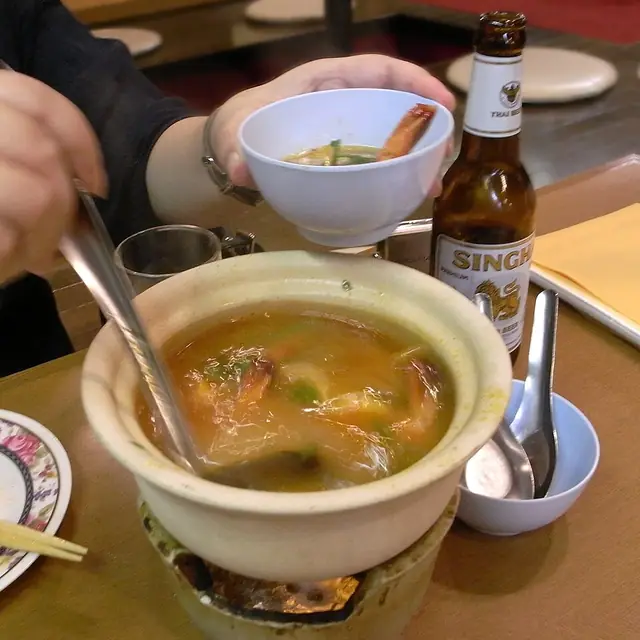
  • Tom Yum Goong - Tom yum goong is Thailand's well-known hot-and-sour river-prawn soup: lemongrass, galangal, kaffir lime leaves and Thai chillies in a clear or chilli-paste-thickened broth around a whole goong mae nam river prawn
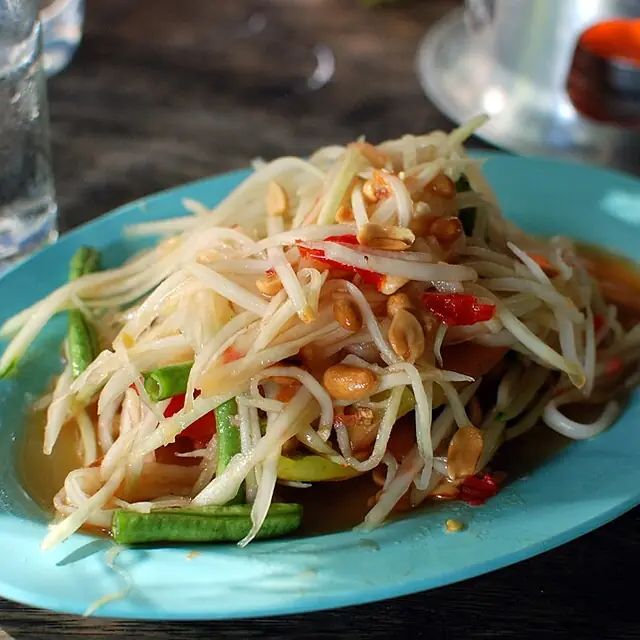
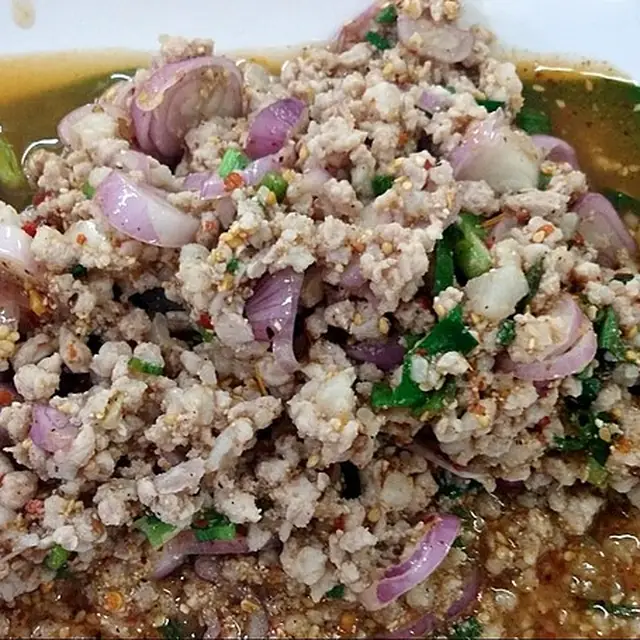
  • Som Tam - Som tam is the Isan-Lao pounded papaya salad: shredded green papaya, palm sugar, lime, fish sauce and bird's-eye chilli bashed in a clay mortar to bruise the fruit into the dressing
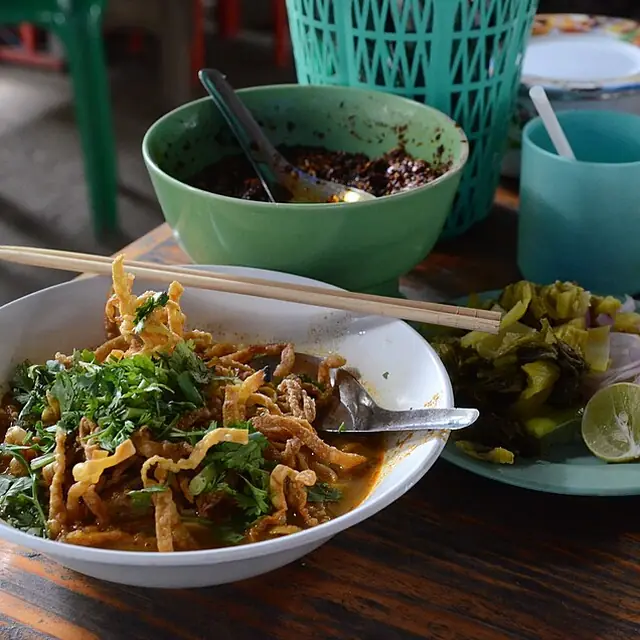
  • Khao Soi - Khao soi is northern Thailand's curry-noodle bowl: silky coconut-and-yellow-curry broth ladled over egg noodles, topped with crispy fried noodles, pickled mustard greens, shallots and lime
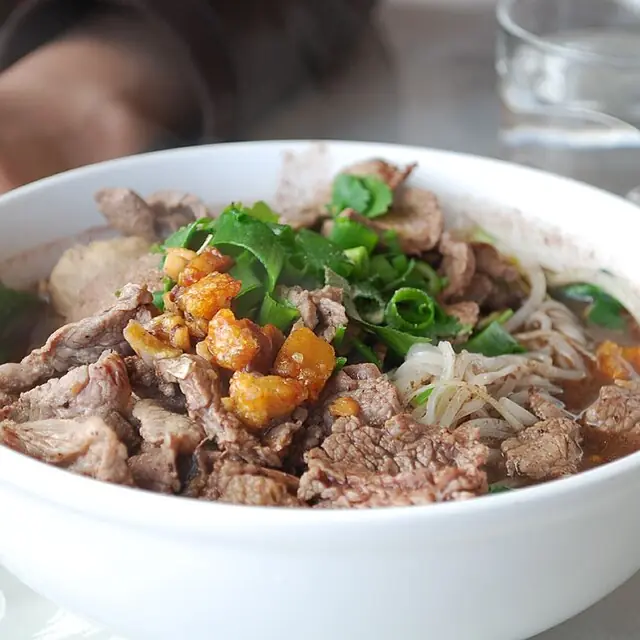
  • Boat Noodles (Kuay Teow Ruea) - Bangkok's canal-boat 50-baht-bowl tradition: tiny rice-noodle portions in a dark beef or pork broth thickened with pig's blood, star anise and cinnamon, topped with pork balls and sprouts

Best Bangkok neighborhoods for food

  • Yaowarat (Chinatown) - Bangkok's 1782 Chinatown and the city's most theatrical food street, neon-lit stalls of grilled seafood, dim sum and shark-fin shophouses jamming the kerb from 18:00
  • Sukhumvit Thonglor and Ekkamai - The expat-and-cool-kid Sukhumvit axis with chef-led modern Thai rooms, design-led cafes, natural-wine cellars and the cocktail counters that anchor Asia's 50 Best Bars
  • Sukhumvit Asoke and Phrom Phong - BTS-spine business and shopping district with Emporium and EmQuartier food halls, Soi 11 nightlife, Bib Gourmand Thai canteens and Japan-Town's deep izakaya scene
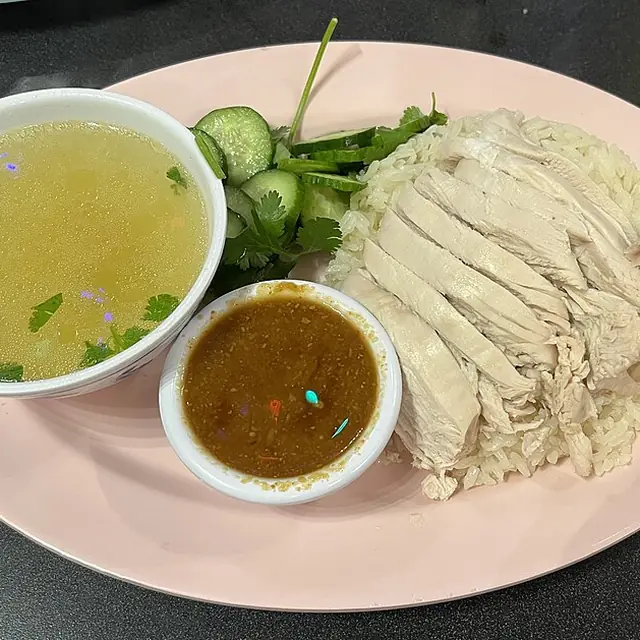
  • Silom and Sathorn - Financial-district CBD with rooftop bars at Vertigo and Sirocco, Convent Road lunch stalls and the heritage Hainanese chicken-rice shops along Silom and Bang Rak
Read the full Bangkok food guide

Bangkok is the most layered street-food city in the world and now also one of Asia's deepest Michelin scenes, with the gap between the two often a single soi (alley). A 50-baht bowl of boat noodles from a Victory Monument stall and a 7,500-baht tasting menu at Sorn or Le Du sit within a 20-minute taxi ride of each other, and the cooks at both ends of that spectrum trained at the same set of family kitchens, food stalls, and royal-palace lineages. The city's eating culture is built on six regional Thai food traditions (Central, Northern, Northeastern Isaan, Southern, Royal, and Thai-Chinese), plus an immigrant Chinese diaspora layer in Yaowarat that runs four to five generations deep, plus the imported Japanese, Korean and Western fine-dining scenes that arrived in the 2000s.

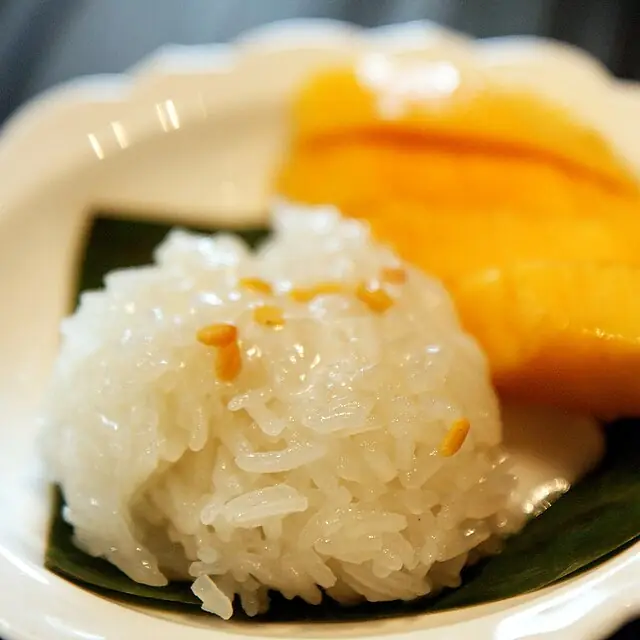
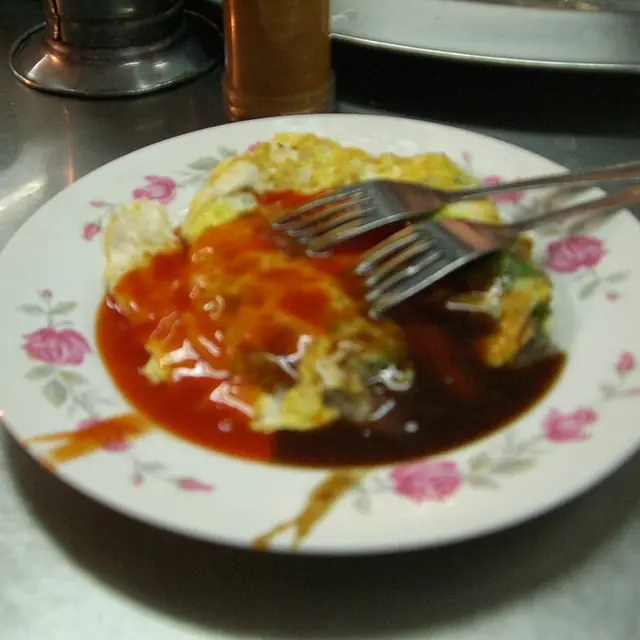
The Bangkok food map runs by neighborhood. Yaowarat (Chinatown, the Charoen Krung corridor) is the night-eating destination: 18:00 onward the street comes alive with hoi tod oyster omelettes, kuay jub, roasted goose, boat noodles, mango sticky rice, and the city's most concentrated street-food scene. The Old Town (Rattanakosin, Phra Nakhon) holds Raan Jay Fai's Michelin-starred crab omelette, Krua Apsorn for Central Thai home cooking, and Thip Samai for the canonical pad Thai. Sukhumvit (Thonglor, Ekkamai, Asoke, Phrom Phong) is the modern fine-dining and chef-driven corridor: Sorn, Gaggan Anand, Le Du, Nusara, Suhring. Silom and Sathorn hold the business-lunch and tasting-menu rooms; Ari and Phaya Thai are the up-and-coming cafe and indie-restaurant corridor.

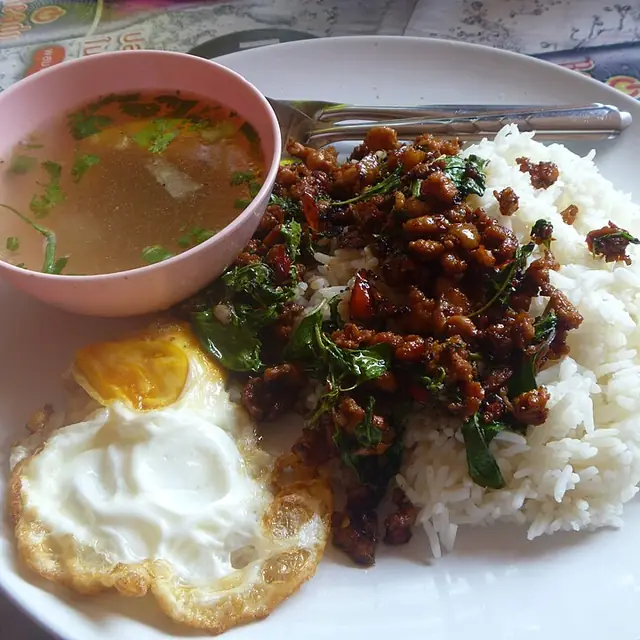
The deeper truth about Bangkok eating is that the city does not separate everyday food from luxury food the way other capitals do. A pad krapow from a 60-baht street stall and a pad krapow plated at a 2-Michelin-star Thai restaurant are recognized as the same dish in different rooms. The chef at Sorn (Supaksorn Jongsiri) sources palm sugar, dried shrimp and fermented fish from the same southern Thai producers that supply the 30-baht morning vendor on the corner. Eat across the spectrum, not within one tier.

Bangkok street food: the night map

The Bangkok street-food scene runs hardest from 18:00-02:00, with each neighborhood specializing in a different cuisine. Yaowarat (Chinatown) is the densest: walk down Yaowarat Road or Soi Texas from 19:00 onward and the food stalls colonize the sidewalks. The destination stalls are T&K Seafood (charcoal-grilled prawns), Nai Mong Hoi Tod (oyster omelettes), Guay Jub Mr Joe (rolled rice noodle soup), Hia Kui (crab and roast duck), the Yaowarat mango sticky rice carts. Raan Jay Fai (Mahachai Road, off Yaowarat) is the world's most famous street-food stall, with Auntie Fai cooking her crab omelette in flames behind goggles; one Michelin star, four-hour queue, 1,500-baht main. Victory Monument is the boat-noodle alley: tiny bowls of intensely seasoned pork or beef noodle soup at 20 to 30 baht each, eaten in stacks of 5 to 10 bowls per person. Sukhumvit Soi 38 was the famous street-food night market until the 2018 redevelopment; the surviving stalls relocated to nearby sois. Or Tor Kor market in Chatuchak is the daytime version: covered, clean, slightly more expensive, but a one-stop introduction.

Royal Thai vs commoner cuisine

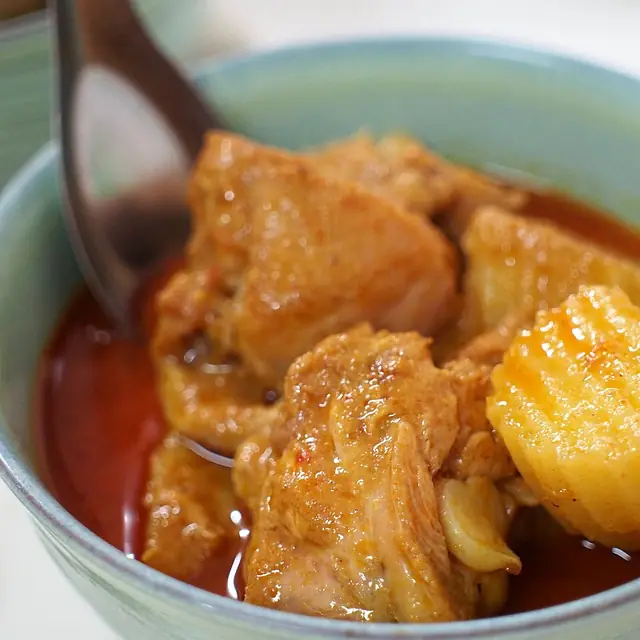
Royal Thai cuisine (Khao Chae, gaeng massaman, Thai curries served in the precise Bangkok palace style) is its own tradition, originally cooked for the inner court of the Chakri dynasty and only commercialized in the 20th century. The defining traits: delicate carving, vegetables sculpted into flowers, lighter seasoning than street food, dishes served in many small portions rather than a few large ones. The destination rooms for royal Thai cooking are Paste Bangkok (1 Michelin star, chef Bongkoch Satongun), Blue Elephant (the cooking-school flagship in a colonial building on Sathorn), Saneh Jaan, and Samrub Samrub Thai. Commoner Thai cooking is everything else: the street food, the rice-and-curry shops (raan khao gaeng), the boat noodles, the night markets, the working family kitchen. The fundamental difference is in the seasoning: street food is louder, hotter, and more deeply fermented, while royal Thai is restrained and built to please a king. Eat both. Most visitors over-index on royal Thai because the rooms book through hotel concierges; the food memory comes from the street.

Yaowarat: Bangkok Chinatown

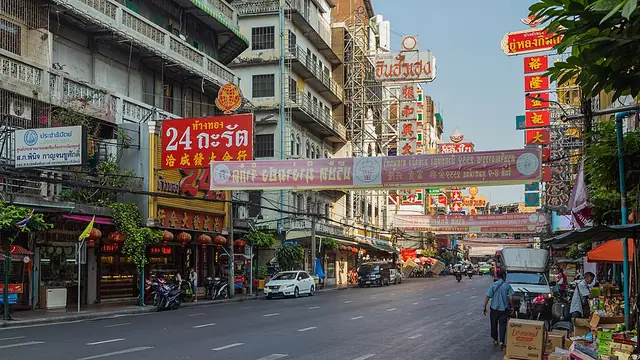
Yaowarat is the oldest, densest, and most photogenic of Bangkok's eating neighborhoods. The Chinese-Thai community has been on this strip of Charoen Krung since 1782 when Bangkok was founded; Yaowarat Road itself was cut in 1891 and named after King Chulalongkorn (Yaowarat means young king). The food map: Yaowarat Road and Plaeng Nam Road for street stalls (oyster omelettes, kuay jub, boat noodles), Soi Texas (Soi Phadungdao) for the late-night seafood stalls with sidewalk tables, Soi Itsaranuphap for the morning produce and dried-goods market, Yaowaphanit Road for the herbal medicine and bird's nest shops. The destination sit-down rooms in the area are Potong (a Michelin-starred Thai-Chinese restaurant inside a heritage shophouse, chef Pichaya Soontornyanakij), Hua Seng Hong for Chinese-style noodles, T&K Seafood for the charcoal prawns, Sun Heng Tai Hong Kong for Cantonese roast meats, and Lek & Rut Seafood (the rival sidewalk seafood operation on Soi Phadungdao). Visit on a weeknight (Tuesday to Thursday) for the lightest crowds; Saturday evening is shoulder-to-shoulder until 02:00. The nearest BTS is not on Yaowarat itself; take a tuk-tuk or the MRT to Wat Mangkon station.

Modern Thai fine dining: the new wave

Bangkok is the only Asian city outside Tokyo where modern Thai fine dining is a coherent movement rather than a single restaurant. The breakthrough room was Nahm at the Metropolitan Hotel, opened in 2010 by Australian chef David Thompson and named World's Best Restaurant 50 Best Asia in 2014. Nahm closed in 2018, but its alumni opened most of the modern Thai destination kitchens that followed. Le Du (chef Thitid Tassanakajohn, 1 Michelin star, modern Thai with hyperlocal Thai sourcing) ranks consistently in Asia's 50 Best top 10. Sorn (chef Supaksorn Jongsiri, 2 Michelin stars, the only Southern Thai 2-star in the world) opened 2018 and is the hardest table in Bangkok. Nusara (chef Thitid, the sibling of Le Du, focused on the chef's grandmother's recipe book) holds one star. Gaggan Anand (progressive Indian, a former Asia's 50 Best No. 1) is the only Indian fine-dining room in Asia at this level. Potong (Pichaya Soontornyanakij, modern Thai-Chinese in Yaowarat) holds one star. Baan Tepa (chef Chudaree Debhakam, sustainable Thai) holds one. Reservations open 60 to 90 days ahead at Sorn and Le Du; the lunch tasting menu is the easier slot at both.

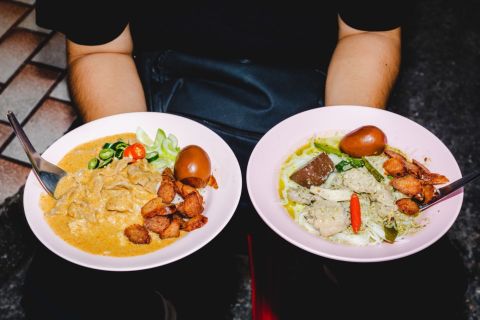
Must-try dishes in Bangkok

The plates that define eating in Bangkok.

Pad Thai

Pad Thai is the canonical Bangkok stir-fried rice-noodle dish: tamarind-sweetened, fish-sauce-savoury, tossed with shrimp, egg, beansprouts and crushed peanuts in a smoking-hot wok, garnished with lime and chilli.

Where: Thipsamai Pad Thai, Raan Jay Fai

Where to eat Pad Thai in Bangkok →

Tom Yum Goong

Tom yum goong is Thailand's well-known hot-and-sour river-prawn soup: lemongrass, galangal, kaffir lime leaves and Thai chillies in a clear or chilli-paste-thickened broth around a whole goong mae nam river prawn.

Where: Pa Aor Tom Yum Goong Noodles, Raan Jay Fai, Mit Ko Yuan

Where to eat Tom Yum Goong in Bangkok →

Som Tam

Som tam is the Isan-Lao pounded papaya salad: shredded green papaya, palm sugar, lime, fish sauce and bird's-eye chilli bashed in a clay mortar to bruise the fruit into the dressing.

Where: Som Tam Jay So, Soi Polo Fried Chicken, Or Tor Kor Market food stalls

Where to eat Som Tam in Bangkok →

Khao Soi

Khao soi is northern Thailand's curry-noodle bowl: silky coconut-and-yellow-curry broth ladled over egg noodles, topped with crispy fried noodles, pickled mustard greens, shallots and lime.

Where: Krua Aroy Aroy, Supanniga Eating Room Tha Tien

Where to eat Khao Soi in Bangkok →

All Bangkok signature dishes →

Restaurants to know in Bangkok

A handful of the places we send friends to when they are in Bangkok.

Le Du

Modern Thai฿฿฿฿399/3 Silom Soi 7, Silom, Bang Rak, Bangkok 10500

Le Du in Bangkok is Thitid 'Ton' Tassanakajohn's modern Thai room, a former No. 1 on Asia's 50 Best (2023, No. 36 in 2026) and one Michelin star retained.

Signature: Khao kluk kapi, River prawn with turmeric rice, Thai-style aged duck

More about Le Du →

Nusara

Heritage Thai฿฿฿฿336 Maha Rat Road, Phra Borom Maha Ratchawang, Phra Nakhon, Bangkok 10200

Nusara in Bangkok's Old Town is Chef Ton's heritage-Thai sister room to Le Du, named for his grandmother and ranked No. 5 on Asia's 50 Best 2026 (No. 6.

Signature: Tom kha, Kaeng pla raat khao, Massaman lamb shank

More about Nusara →

Gaggan Anand

Progressive Indian฿฿฿฿68 Sukhumvit 31, Klongton-Neu, Watthana, Bangkok 10110

Gaggan Anand in Bangkok is the eponymous Indian chef's 25-course emoji-menu counter on Sukhumvit 31, ranked No. 1 on Asia's 50 Best 2025 (No. 3 in 2026).

Signature: Emoji tasting menu, Yogurt explosion, Charcoal scallop

More about Gaggan Anand →

Sorn

Southern Thai฿฿฿฿56 Sukhumvit 26, Khlong Tan, Khlong Toei, Bangkok 10110

Sorn in Bangkok is the southern-Thai fine-dining room from Chef Ice Supaksorn, the world's first three-Michelin-star Thai restaurant (promoted.

Signature: Crab curry with stink beans, Southern Thai stink-bean rice, Whole crab feast

More about Sorn →

Suhring

Modern German฿฿฿฿10 Yen Akat 3 Alley, Chong Nonsi, Yan Nawa, Bangkok 10120

Suhring in Bangkok's Yan Nawa is twins Thomas and Mathias Suhring's modern German room set in a 1970s villa, promoted to three Michelin stars.

Signature: Sauerbraten, Konigsberger klopse, Black forest gateau

More about Suhring →

Potong

Progressive Thai-chinese฿฿฿฿422 Wanit 1 Road, Samphanthawong, Bangkok 10100

Potong in Bangkok's Chinatown is Pichaya 'Pam' Soontornyanakij's five-element tasting room set in her family's century-old apothecary, one Michelin star.

Signature: Five-element tasting menu, Aged duck with five-spice, Crab and salted egg

More about Potong →

See every restaurant in Bangkok →

Where to eat by neighborhood

Yaowarat (Chinatown) (yaowarat/chinatown/samphanthawong)

Bangkok's 1782 Chinatown and the city's most theatrical food street, neon-lit stalls of grilled seafood, dim sum and shark-fin shophouses jamming the kerb from 18:00.

Best for: Street food, Chinese-Thai, Dim sum, Late-night dining

Silom and Sathorn (silom/sathorn/bang-rak/bang rak)

Financial-district CBD with rooftop bars at Vertigo and Sirocco, Convent Road lunch stalls and the heritage Hainanese chicken-rice shops along Silom and Bang Rak.

Best for: Hainanese chicken rice, Rooftop bars, Indian, Office lunches

When to come hungry in Bangkok

Peak food season: November through February is the cool dry window: night markets, riverside dining and outdoor stalls peak. March to May runs hot; cooling som tam, mango sticky rice and shaved-ice stalls take over. The October Vegetarian Festival turns Yaowarat into a jay (Thai vegan) crawl for nine days; Songkran in mid-April puts pop-up Thai sweet stalls on every corner.

Local dining hours: Lunch 11:30-14:00, dinner 18:00-22:00. Street stalls open from late morning into the night; Yaowarat night stalls run 18:00-02:00. Fine dining counters typically run two seatings, last orders 21:30. Many stalls close one day a week, often Monday or the day of the King's birthday.

Tipping: Service is included at higher-end restaurants (10 percent on the bill). At street stalls and casual rooms, no tipping is expected. Round up the bill or leave small change for genuinely good service at sit-down places. Tuk-tuk and taxi tips are not customary, though small change for the meter is welcomed.

Bangkok food, FAQ

What food is Bangkok known for?

Bangkok's signature dishes include Pad Thai, Tom Yum Goong, Som Tam, Khao Soi, Boat Noodles (Kuay Teow Ruea). See our signature dishes chapter for where to eat each.

What are the best food neighborhoods in Bangkok?

TableJourney editors map Bangkok by district. Yaowarat (Chinatown), Sukhumvit Thonglor and Ekkamai, Sukhumvit Asoke and Phrom Phong, Silom and Sathorn are among the strongest for food, each with its own guide.

Where should I eat fine dining in Bangkok?

Editor picks in Bangkok include Sorn, Suhring, Mezzaluna, plus the full fine dining chapter on TableJourney.

Are there food tours in Bangkok?

TableJourney covers 5 editor-picked food tours in Bangkok, with what each shows you and how much to budget.

Does Bangkok have good vegetarian or vegan food?

TableJourney's Bangkok dietary chapter covers vegan, vegetarian, gluten_free, halal venues, each editor-picked with what to order and how to ask.