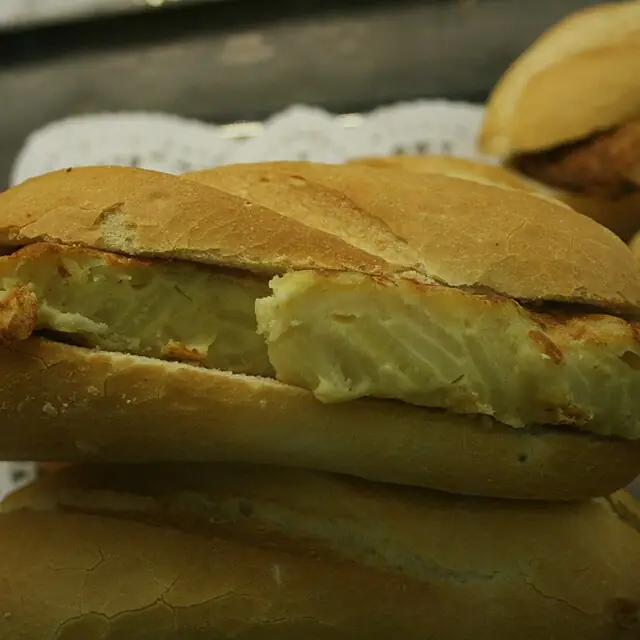
Madrid eats late and runs on five small meals more than two big ones. Morning coffee and a slice of tortilla de patatas at the counter; midday vermut hour around 13:00; menu del dia (12 to 22 euros) from 14:00; tapas with cana from 19:30; dinner pushed past 22:00. The four-century-old asadores around La Latina still slow-roast cochinillo and cordero in wood ovens, while DiverXO, Coque and Saddle anchor a Michelin scene that finally caught the rest of Europe in 2024. The Mercado de San Miguel anchors the centre, the Mercado de la Cebada anchors La Latina, and the Sunday morning rastro stalls trade callos and bocadillos de calamares to a crowd of locals. Vermut culture, gilda tapas at Casa Salva, and the Filipino-Madrileno calamari sandwich at Plaza Mayor still rule the city's working-day lunch.

Eat your way through Madrid

Browse by price

Map of Madrid

Every restaurant, cafe, market and bar we cover in Madrid, pinned. Click a pin for the page.

Where to eat in Madrid: editor-picked starting points

5 institutional venues to anchor a Madrid food trip

  • DiverXO - Tasting menu, chef David Munoz
  • Coque - Tasting menu, chef Mario Sandoval
  • DSTAgE - Tasting menu, chef Diego Guerrero
  • Deessa - Tasting menu, chef Quique Dacosta
  • Ramon Freixa Atelier - Spanish, chef Ramon Freixa

Must-try Madrid dishes

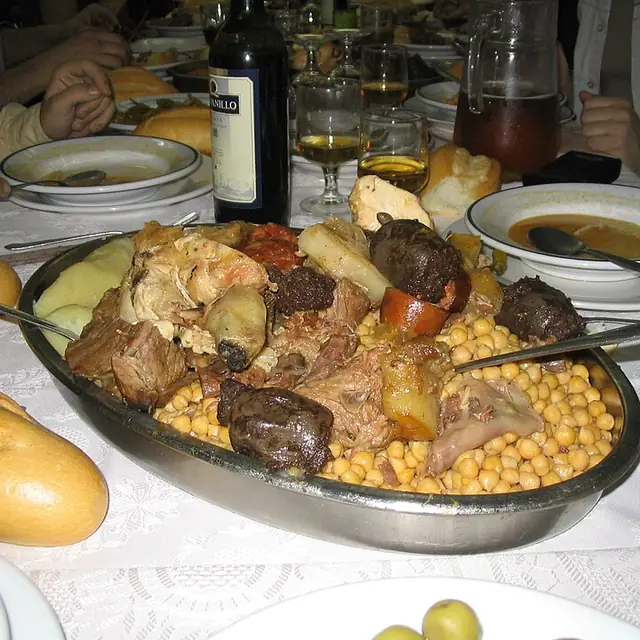
  • Cocido madrileno - Cocido madrileno is Madrid's defining stew: chickpeas, slow-cooked beef, chicken, chorizo and morcilla simmered for hours, served as three sequential courses (broth, chickpeas and vegetables, then meats) in a single pot
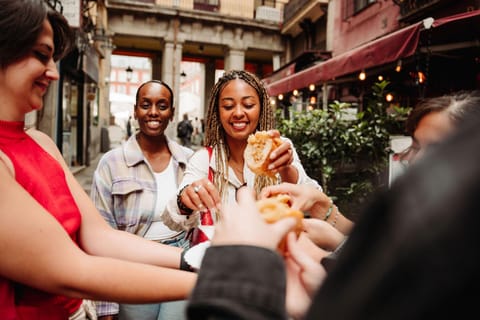
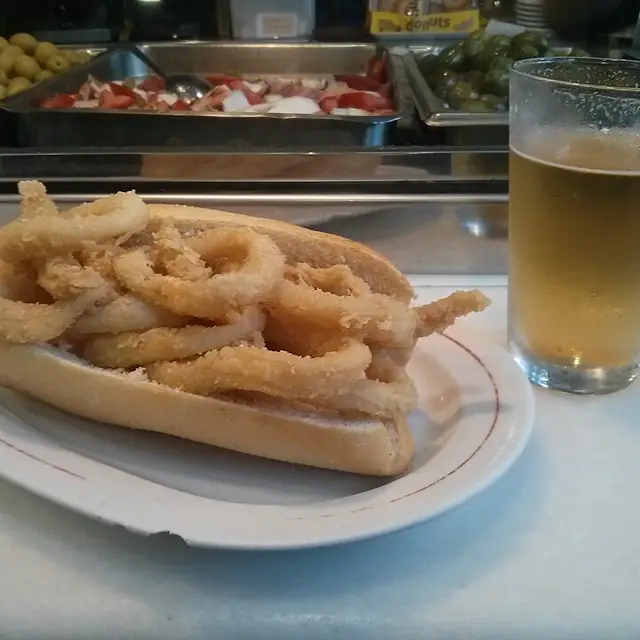
  • Bocadillo de calamares - The bocadillo de calamares is Madrid's defining sandwich: battered squid rings on a fresh bread roll, a slice of lemon on the side, eaten standing at a Plaza Mayor counter at 13:00 with a cana
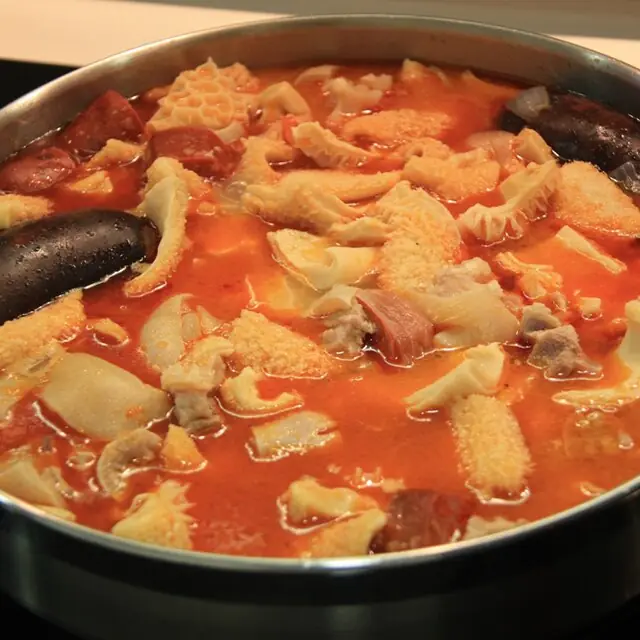
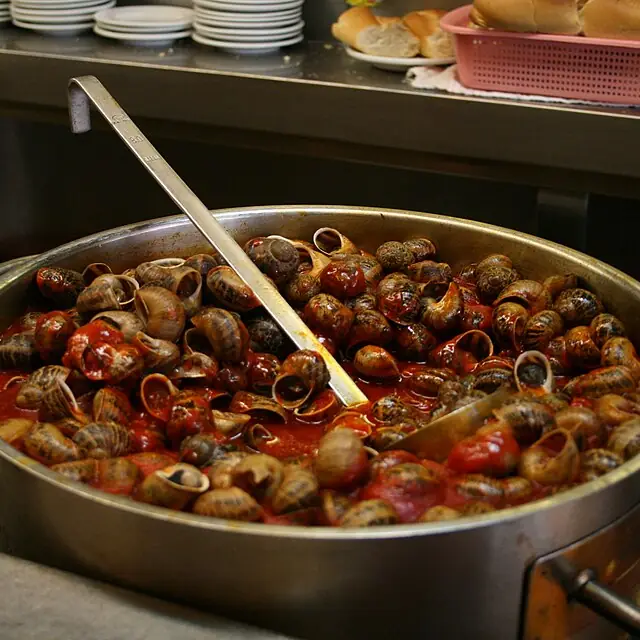
  • Callos a la madrilena - Callos a la madrilena is Madrid's offal headline: tripe slow-cooked with chorizo, morcilla, ham hock and a spiced tomato base, served bubbling in a clay pot with crusty bread
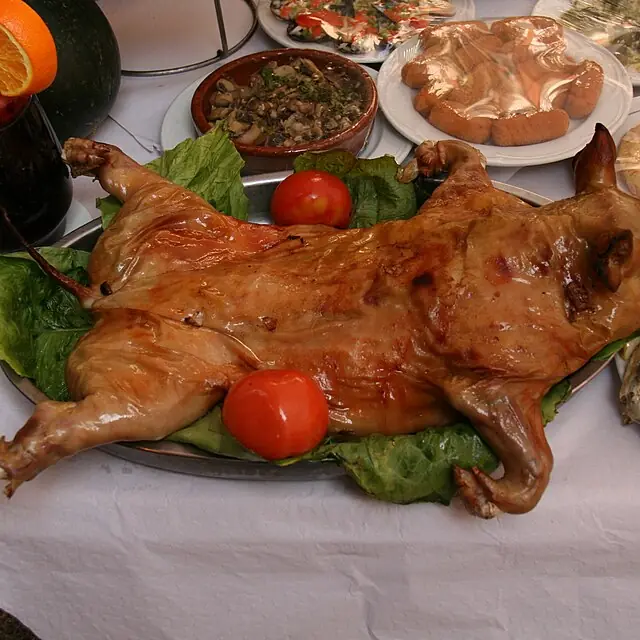
  • Cochinillo asado - Cochinillo asado is the Madrid asador's headline: a 21-day-old suckling pig roasted whole in a wood-fired oven, the skin crackling and the meat carved with a plate edge to prove its tenderness
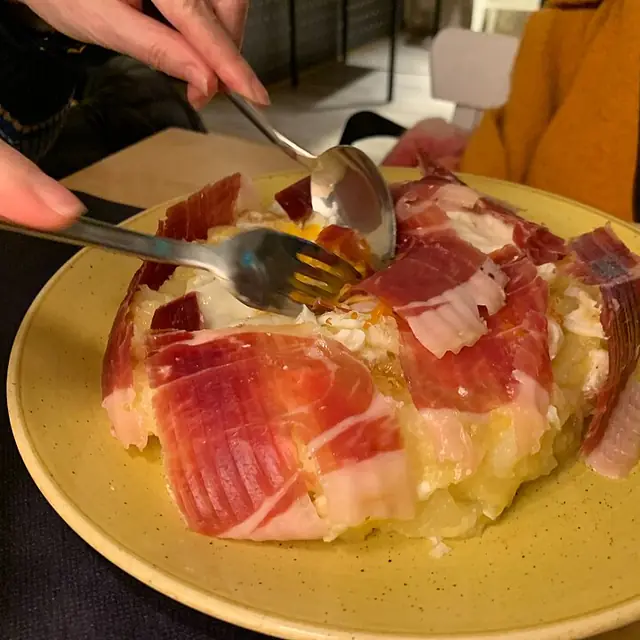
  • Huevos rotos - Huevos rotos is Madrid's broken-egg dish: fried eggs over thick fried potatoes, served with chorizo or jamon iberico on top, the yolks broken by the spoon to coat the potatoes with golden yellow

Best Madrid neighborhoods for food

  • La Latina - The old medieval quarter south of Plaza Mayor where the Sunday vermut crawl runs along Cava Baja and Casa Lucio still cooks the broken-egg dish since 1974
  • Malasana - The 1980s movida-born bohemian quarter around Plaza del Dos de Mayo, now anchoring third-wave coffee, natural-wine bars and the new Madrid bistro wave
  • Chueca - Madrid's queer-and-design quarter around Mercado San Anton, with rooftop terraces, gastrobars and the gentrified Calle Augusto Figueroa
  • Salamanca - The 19th-century grid uptown, Madrid's bourgeois quarter where Goya, Ortega y Gasset and Velazquez streets host the fine-dining canon and the jamoneria flagships
Read the full Madrid food guide

Madrid eats late, eats heavy, and eats in three distinct rhythms a day that have not budged since the 19th century. Breakfast is a churro dunked in thick chocolate at San Gines or a tostada with grated tomato and olive oil at a neighborhood bar around 09:00. Lunch, the day's biggest meal, runs from 14:00-16:30, and the menu del dia (three courses with bread, wine and coffee for 12 to 18 euros) is one of the genuine bargains left in any European capital. Dinner does not start before 21:00; many tabernas do not seat full tables until 22:00. Plan around it. The classic Madrid mistake is showing up at 19:30 expecting service.

The Madrid table is a mash-up that does not exist anywhere else in Spain. The city is the capital of cocido madrileno (the three-course chickpea-and-meat stew), the home of the lampredotto-equivalent street food called gallinejas and entresijos (lamb offal fried in its own fat), the inventor of the bocadillo de calamares (a fried-squid sandwich eaten near Plaza Mayor), and the birthplace of the tapa as a free side with a drink. It is also the Spanish capital of regional cuisine: Castilian wood-oven roasts at Botin (the 1725 institution Guinness lists as the world's oldest restaurant), Asturian sidra bars, Galician seafood counters, Basque pintxos rooms, and every Latin American kitchen the empire pulled north. The Mercado de San Miguel by Plaza Mayor is the gateway food hall; serious eaters move on quickly to the Mercado de Anton Martin in Lavapies, the Mercado de la Cebada in La Latina, or the dense vermut counters around Calle Cava Baja.

Layered over all this is a modern fine-dining scene that earned Spain's top Michelin density outside the Basque Country: Dabiz Munoz's three-star DiverXO, two-star Coque, two-star DSTAgE, and a deep bench of one-star rooms (Clos Madrid, Saddle, Deessa, Ricardo Sanz Wellington). The city's vermut hour (an aperitivo ritual between 12:30 and 14:00 on weekends, with a glass of red vermouth, a few olives and a gilda skewer) is the most underused entry point for a visitor. Find a Cava Baja bar with a chalkboard, order una de vermut, and the rest of the day arranges itself.

Cocido madrileno: the city's signature dish

Cocido madrileno is the slow-cooked chickpea stew that defines the Madrid winter table, served as three separate courses from the same pot. First the broth (a clear, deeply meaty consomme from boiling the meats and bones) is ladled over fine fideo noodles. Second the chickpeas, cabbage, carrots and potatoes arrive on a shared platter. Third the meats (beef shank, chicken, chorizo, morcilla, tocino, pork belly and a marrow bone) come out on another platter, eaten with mustard or the broth-soaked chickpeas. The classic addresses run cocido on a fixed weekday: La Bola in Centro has cooked it in individual clay pots over a charcoal fire since 1870 and serves it Tuesdays through Saturdays; Lhardy on Carrera de San Jeronimo (since 1839) runs cocido Mondays through Saturdays; Malacatin in La Latina is the no-frills version since 1895; Taberna La Daniela in Salamanca runs it daily. Cocido is a 3-hour lunch, not a quick meal. Book ahead, arrive at 14:00, and skip dinner.

Where Madrid eats: La Latina, Malasana, Salamanca

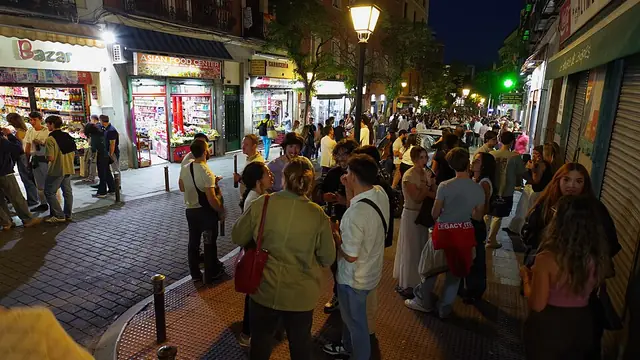
La Latina, the medieval quarter south of Plaza Mayor, is the tapas heartland. Calle Cava Baja runs a dense corridor of tabernas where the Sunday vermut crawl after the Rastro flea market is a Madrid ritual: Taberna El Tempranillo, Casa Lucas, Juana La Loca, Taberna Txakoli. Malasana, the bohemian quarter north of Gran Via, hosts the new-wave Madrid: the third-wave coffee bars (Toma, Hola, Mision), natural-wine rooms, taco counters and Korean fried-chicken spots that have opened since 2018. Chueca, next door, is the LGBTQ+ neighborhood and the home of Mercado de San Anton plus a thick lineup of brunch cafes. Salamanca, the wealthy grid east of Recoletos, is where the haute kitchens cluster: DiverXO at the Eurobuilding hotel, Saddle on Amador de los Rios, Ramon Freixa Madrid, plus the classic gran restaurantes Horcher and Jockey. Lavapies, south of Anton Martin, runs the city's most diverse street food: Senegalese, Bangladeshi, Indian, Moroccan, Cuban, all within a 10-minute walk.

Tapas, vermut and the late lunch

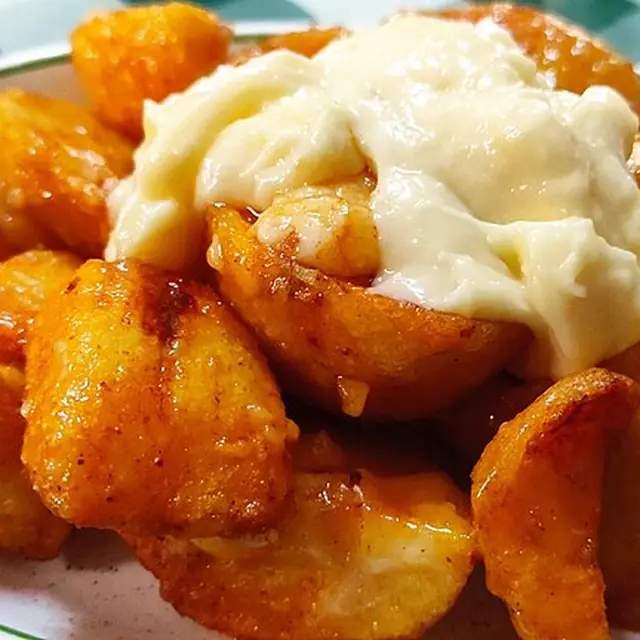
Tapas in Madrid is closer to its original definition than in Seville or Barcelona: a free small plate that arrives with a caña of beer or a glass of vermut, often a few olives, a slice of tortilla, a small bowl of patatas bravas, or a gilda (the iconic skewer of anchovy, olive and pickled guindilla pepper invented in San Sebastian but adopted everywhere). The free tapa is still alive in classic Madrid neighborhoods (La Latina, Lavapies, the working-class barrios), though it has faded in tourist-dense zones. The vermut hour is the late-morning ritual: between 12:30 and 14:00 on weekends, locals stop at a taberna for una de vermut (a glass of red vermouth on the rocks with an orange slice and an olive), a couple of skewers, and a few minutes of conversation before the late lunch begins at 14:30. The classic vermut addresses are Casa Camacho in Malasana (since 1929), Bodegas Rosell near Atocha, La Venencia for sherry (since 1929), and any taberna on Calle Cava Baja. The order: una de vermut, una de gilda, una de boquerones.

Sobrino de Botin: the world's oldest restaurant

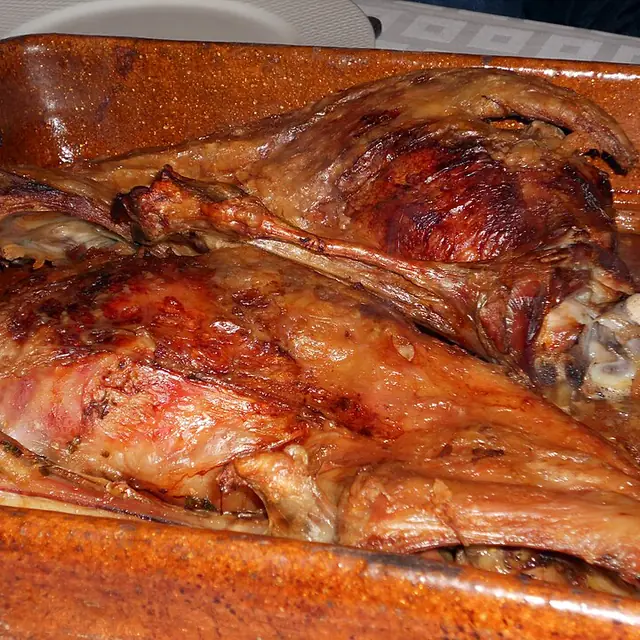
Sobrino de Botin on Calle Cuchilleros, a 30-second walk south from Plaza Mayor, has operated continuously since 1725, and Guinness World Records lists it as the oldest restaurant in the world. The original wood-fired oven, still in daily use, was lit 300 years ago and has never been extinguished; the staff bank the embers each night and rebuild the fire the next morning. The signature dish is cochinillo asado, the suckling pig roasted whole in the oven for several hours until the skin shatters under a fork (the traditional carving test). The second classic is cordero lechal, milk-fed lamb cooked in the same oven. Both are best ordered for two. Botin is touristy, expensive, and worth it once for the room, the oven, and the literary history (Hemingway sent his characters there in The Sun Also Rises, Goya reportedly washed dishes in the kitchen as a teenager). Book 3 to 4 weeks ahead for dinner, 2 weeks for the 13:00 lunch seating, which is the easier slot.

Compare Madrid to other food cities

Must-try dishes in Madrid

The plates that define eating in Madrid.

Cocido madrileno

Cocido madrileno is Madrid's defining stew: chickpeas, slow-cooked beef, chicken, chorizo and morcilla simmered for hours, served as three sequential courses (broth, chickpeas and vegetables, then meats) in a single pot.

Where: Lhardy, Taberna La Bola, Malacatin, Casa Ciriaco, La Carmencita

Where to eat Cocido madrileno in Madrid →

Cochinillo asado

Cochinillo asado is the Madrid asador's headline: a 21-day-old suckling pig roasted whole in a wood-fired oven, the skin crackling and the meat carved with a plate edge to prove its tenderness.

Where: Sobrino de Botin, Posada de la Villa, Los Galayos, Casa Paco, Casa Lucio

Where to eat Cochinillo asado in Madrid →

Huevos rotos

Huevos rotos is Madrid's broken-egg dish: fried eggs over thick fried potatoes, served with chorizo or jamon iberico on top, the yolks broken by the spoon to coat the potatoes with golden yellow.

Where: Casa Lucio, Sobrino de Botin, Casa Mono, Casa Revuelta

Where to eat Huevos rotos in Madrid →

Tortilla de patatas

Tortilla de patatas is Spain's defining egg dish and Madrid's daily breakfast pincho: a thick, juicy potato-and-egg cake (with or without onion), sliced from the pan and eaten at the counter with a cana.

Where: Casa Dani, Sacha, Bodega de la Ardosa, Casa Ciriaco, Celso y Manolo

Where to eat Tortilla de patatas in Madrid →

All Madrid signature dishes →

Restaurants to know in Madrid

A handful of the places we send friends to when they are in Madrid.

Sobrino de Botin

Castilian Asador€€€Calle de los Cuchilleros 17, 28005 Madrid

Sobrino de Botin near Plaza Mayor in Madrid is the Guinness-certified oldest restaurant in the world, in business since 1725. Located in Centro.

Signature: Cochinillo asado, Cordero asado, Sopa de ajo

More about Sobrino de Botin →

Casa Lucio

Madrileno Taberna€€Cava Baja 35, 28005 Madrid

Casa Lucio on Cava Baja in Madrid's La Latina has cooked the huevos rotos (broken eggs over fried potatoes) since 1974. Kitchen leans madrileno taberna.

Signature: Huevos rotos, Cocido madrileno, Solomillo

More about Casa Lucio →

Lhardy

Spanish€€€Carrera de San Jeronimo 8, 28014 Madrid

Lhardy on Carrera de San Jeronimo in Madrid has run the wood-panelled dining rooms above its Parisian-style charcuterie counter since 1839, serving.

Signature: Cocido madrileno, Callos a la madrilena, Consome de ave

More about Lhardy →

Casa Ciriaco

Madrileno Taberna€€Calle Mayor 84, 28013 Madrid

Casa Ciriaco on Calle Mayor in Madrid has served the gallina en pepitoria (hen in almond and saffron sauce) since 1929, three steps from where Alfonso XIII.

Signature: Gallina en pepitoria, Callos a la madrilena, Perdiz estofada

More about Casa Ciriaco →

Taberna La Bola

Cocido Madrileno Specialist€€Calle de la Bola 5, 28013 Madrid

Taberna La Bola near the Teatro Real in Madrid has cooked the cocido madrileno in individual clay pots over charcoal since 1870. Located in Centro.

Signature: Cocido madrileno, Callos a la madrilena, Bacalao con tomate

More about Taberna La Bola →

Casa Mono

Spanish€€Calle de Tutor 37, 28008 Madrid

Casa Mono in Madrid's Arguelles district is the modern taberna by chef Ramiro Vazquez, with a market-led carte of croquetas, tartares and slow-braised.

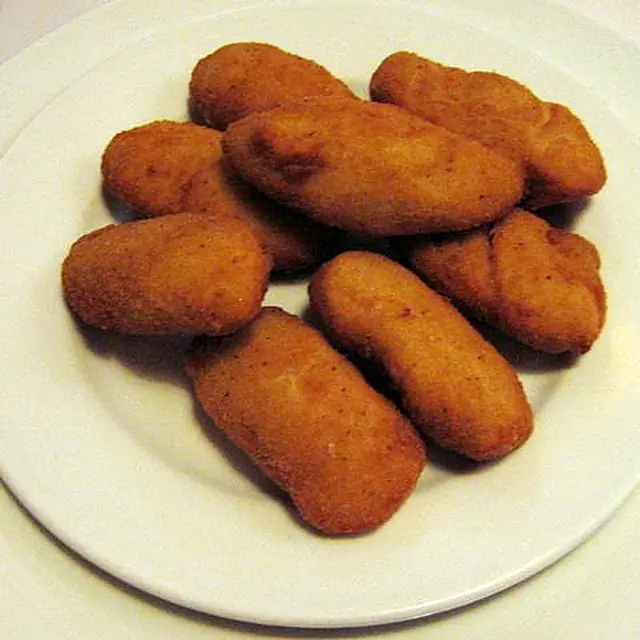
Signature: Carrillera estofada, Croquetas de jamon, Tartar de atun

More about Casa Mono →

See every restaurant in Madrid →

Where to eat by neighborhood

La Latina (la-latina)

The old medieval quarter south of Plaza Mayor where the Sunday vermut crawl runs along Cava Baja and Casa Lucio still cooks the broken-egg dish since 1974.

Best for: Tabernas, Vermut, Cochinillo

Malasana (malasana)

The 1980s movida-born bohemian quarter around Plaza del Dos de Mayo, now anchoring third-wave coffee, natural-wine bars and the new Madrid bistro wave.

Best for: Cafes, Wine bars, Brunch

Chueca (chueca)

Madrid's queer-and-design quarter around Mercado San Anton, with rooftop terraces, gastrobars and the gentrified Calle Augusto Figueroa.

Best for: Tapas, Markets, Cocktails

Salamanca (salamanca/barrio-de-salamanca)

The 19th-century grid uptown, Madrid's bourgeois quarter where Goya, Ortega y Gasset and Velazquez streets host the fine-dining canon and the jamoneria flagships.

Best for: Fine dining, Jamon, Patisserie

Centro (centro/sol/plaza-mayor)

The historic centre around Sol and Plaza Mayor, home to the 1725 Botin wood ovens, Casa Labra cod fritters and Mercado de San Miguel.

Best for: Asadores, Tapas, Markets

Lavapies (lavapies)

The multi-ethnic working quarter south of Anton Martin, home to Madrid's best Indian, Senegalese and Moroccan tables, plus the Tabacalera arts squat.

Best for: Indian, African, Tapapies festival

When to come hungry in Madrid

Peak food season: October to December for setas (wild mushrooms), partridge and roast lamb; April to June for white asparagus, anchoas and the spring vermut terraces. August is the slowest month; many Madrid restaurants close for two to three weeks. January brings the heaviest stews (cocido madrileno) and the offal canon.

Local dining hours: Lunch 14:00-16:00, dinner 21:00-23:30. Madrid dinner runs the latest in Europe; most kitchens stop seating at 23:30 on weekdays, 00:30 on weekends. Many tapas counters open from 12:00 with vermut and stay open until 01:00. Sunday lunch is the major weekly meal.

Tipping: Service is included; no tip is expected. Round up the bill or leave a coin or two at a tapas counter for very good service. Never tip on the card terminal. A 5 percent tip at a fine-dining room is on the high end of generous; 10 percent is American territory.

Madrid food, FAQ

What food is Madrid known for?

Madrid's signature dishes include Cocido madrileno, Bocadillo de calamares, Callos a la madrilena, Cochinillo asado, Huevos rotos. See our signature dishes chapter for where to eat each.

What are the best food neighborhoods in Madrid?

TableJourney editors map Madrid by district. La Latina, Malasana, Chueca, Salamanca are among the strongest for food, each with its own guide.

Where should I eat fine dining in Madrid?

Editor picks in Madrid include DiverXO, Coque, DSTAgE, plus the full fine dining chapter on TableJourney.

Are there food tours in Madrid?

TableJourney covers 6 editor-picked food tours in Madrid, with what each shows you and how much to budget.

Does Madrid have good vegetarian or vegan food?

TableJourney's Madrid dietary chapter covers vegan, vegetarian, gluten_free, halal venues, each editor-picked with what to order and how to ask.