

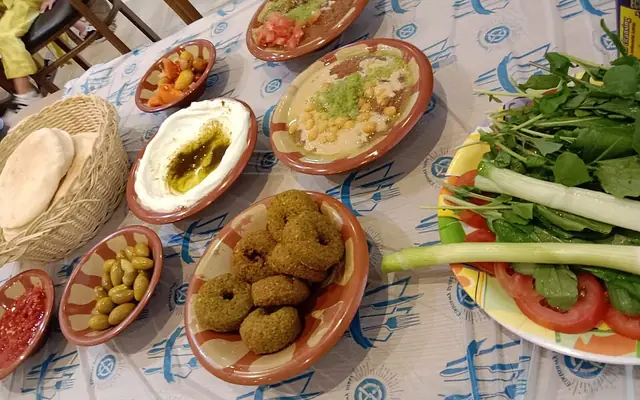
Middle Eastern cuisine is an umbrella term covering the cooking of a region that stretches from Morocco to Iran and from Turkey to Yemen, though in most Western usage it refers to the eastern half of that range: the Levant, Egypt, Iraq, the Arabian peninsula, Persia, and Turkey. There is no single Middle Eastern cuisine, but there are shared grammars: flatbread at every meal, rice pilafs as a foundation, lamb as the prestige meat, yogurt as both ingredient and condiment, and a spice cabinet that includes cumin, coriander, cardamom, cinnamon, sumac, saffron, baharat, and ras el hanout in regional blends.
What unites the region is also a hospitality tradition built around mezze, communal platters, and tea or coffee that closes every meal. The cooking is generally slow and ingredient-led, with stews simmered for hours, breads baked daily, and rice prepared with the precision of a fine craft. Sweets are syrup-soaked and often built around nuts, semolina, phyllo, and rose or orange blossom water.
Within the umbrella, the regional kitchens are distinct enough that 'Middle Eastern restaurant' as a category is usually a Lebanese-Palestinian-Israeli hybrid in practice, with Persian, Egyptian, and Iraqi food typically requiring their own dedicated restaurants to find authentically. Travelers who use the broad label as a wayfinding device often miss the most interesting cooking, which sits inside the regional kitchens rather than at their intersection. A serious eater treats Middle Eastern as a starting point rather than a destination, and learns to distinguish a Damascene from a Beiruti from a Tehrani table within a few meals of arriving in the region.
Book a food experience
Tours, tastings and classes that match this page, bookable on GetYourGuide.

Top picks
The best-scored Middle Eastern place in each of 12 cities.
Oleana ★ 4.8
Ana Sortun's Inman Square room has run an Eastern Mediterranean kitchen in Cambridge since 2001. Turkish, Syrian and Lebanese plates from Siena Farms produce.
OrderThe sultan's delight: tamarind-glazed beef on smoky eggplant cream.
TipThe garden patio in summer is one of Cambridge's best outdoor seats. Books out three weeks ahead in season.
Habibi ★ 4.8
Habibi on Zülpicher Strasse in Cologne's Kwartier Latäng serves a fully loaded falafel wrap with houmous, cabbage and hot sauce for under €5; the benchmark.
Yemen Cafe ★ 4.8
Yemen Cafe on Joseph Campau in Hamtramck is the quiet Yemeni dining room plating lamb mandi and saltah with cardamom coffee to finish a meal.
Why locals goMost visitors stick to Polish or Lebanese; Yemeni cooking in Hamtramck is the city's quietest immigrant cuisine.
TipLamb mandi and saltah are the orders; cardamom coffee finishes the visit.
El Jannah Granville ★ 4.8
The first El Jannah store, open since 1998 at 4/8 South Street, Granville, serving Lebanese charcoal chicken with toum garlic sauce and crispy chips.
TryCharcoal chicken with toum and chips
Honey Road ★ 4.8
Cara Chigazola Tobin and Allison Gibson opened Honey Road on Church Street in 2017. The eastern Mediterranean mezze room has been a James Beard finalist.
OrderThe harissa chicken wings, the whipped feta with hot honey and the whole lamb shoulder for the table.
TipReservations open on Resy 30 days out and book out the same day. The bar holds walk-ins and serves the full menu.
Calliope ★ 4.8
Calliope cooks modern Levantine food from Southern ingredients on MLK Boulevard in Chattanooga, a 2026 James Beard semifinalist for Best Chef: Southeast.
OrderThe seasonal mezze spread for the table before any main.
TipChef Khaled Albanna's room lands on national lists; book table seating ahead on Tock, or take your chances at the walk-in bar.
Zareh ★ 4.8
Zareh on Smith Street in Collingwood applies Armenian and Lebanese heritage to a wood-fired menu of roasted lamb, spiced rice and labneh; opened in 2025.
OrderWood-roasted lamb with spiced rice and labneh
Orfali Bros 1 ★ ★ 4.7
Orfali Bros in Jumeirah 1, Dubai, is the one Michelin star kitchen of three Syrian brothers, cooking around a two storey open kitchen and pastry counter.
Maydan ★ 4.7
Maydan in Washington DC is Rose Previte's James Beard award-winner above 14th Street, a courtyard around a live-fire pit serving North African.
OrderThe lamb shoulder cooked over fire for ten hours, ordered as a family-style bookend.
TipThe booth seats face the fire; ask for one. The pre-shift cocktail flight at the upstairs bar is the value pick.
Shahrazad ★ 4.7
Shahrazad on North Oakland Avenue on the East Side serves Middle Eastern food in a long-running family-run dining room with shawarma, kebabs and mezze.
Why locals goAn East Side Middle Eastern room locals book but tourists miss, run by the same family since 1991 today.
TipOrder the lamb shawarma plate with extra garlic sauce and a side of tabbouleh.
Irit's Lachuch ★ 4.6
Irit cooks Yemenite lachuch with a crispy egg, grated tomato and zhug in a small shack-like cafe beside her childhood home on the edge of Carmel Market.
Why locals goA small shack-like cafe beside the house where Irit grew up, behind a bright blue door on a lane off Carmel Market, with no fixed menu.
TipLook for the bright blue door on Simtat HaCarmel; hours can shift, so come mid-morning on a weekday.
Golden Avenue ★ 4.6
Golden Avenue is the Anyday group's take on Middle Eastern flavour on Edward Street: smoky charcoal, woodfired breads and a garden terrace under one roof.
Find a place
Oleana ★ 4.8
Ana Sortun's Inman Square room has run an Eastern Mediterranean kitchen in Cambridge since 2001. Turkish, Syrian and Lebanese plates from Siena Farms produce.
OrderThe sultan's delight: tamarind-glazed beef on smoky eggplant cream.
TipThe garden patio in summer is one of Cambridge's best outdoor seats. Books out three weeks ahead in season.
Sarma ★ 4.8
Cassie Piuma and Ana Sortun's meze room on Pearl Street in Somerville has run Turkish-style small plates since 2013. Kitchen leans eastern mediterranean.
OrderLamb manti, Turkish dumplings with yogurt and chili butter.
TipOrder the chef's choice tasting; the kitchen will send the best of the night unprompted.
Habibi ★ 4.8
Habibi on Zülpicher Strasse in Cologne's Kwartier Latäng serves a fully loaded falafel wrap with houmous, cabbage and hot sauce for under €5; the benchmark.
Yemen Cafe ★ 4.8
Yemen Cafe on Joseph Campau in Hamtramck is the quiet Yemeni dining room plating lamb mandi and saltah with cardamom coffee to finish a meal.
Why locals goMost visitors stick to Polish or Lebanese; Yemeni cooking in Hamtramck is the city's quietest immigrant cuisine.
TipLamb mandi and saltah are the orders; cardamom coffee finishes the visit.
El Jannah Granville ★ 4.8
The first El Jannah store, open since 1998 at 4/8 South Street, Granville, serving Lebanese charcoal chicken with toum garlic sauce and crispy chips.
TryCharcoal chicken with toum and chips
Honey Road ★ 4.8
Cara Chigazola Tobin and Allison Gibson opened Honey Road on Church Street in 2017. The eastern Mediterranean mezze room has been a James Beard finalist.
OrderThe harissa chicken wings, the whipped feta with hot honey and the whole lamb shoulder for the table.
TipReservations open on Resy 30 days out and book out the same day. The bar holds walk-ins and serves the full menu.
Calliope ★ 4.8
Calliope cooks modern Levantine food from Southern ingredients on MLK Boulevard in Chattanooga, a 2026 James Beard semifinalist for Best Chef: Southeast.
OrderThe seasonal mezze spread for the table before any main.
TipChef Khaled Albanna's room lands on national lists; book table seating ahead on Tock, or take your chances at the walk-in bar.
Zareh ★ 4.8
Zareh on Smith Street in Collingwood applies Armenian and Lebanese heritage to a wood-fired menu of roasted lamb, spiced rice and labneh; opened in 2025.
OrderWood-roasted lamb with spiced rice and labneh
Orfali Bros 1 ★ ★ 4.7
Orfali Bros in Jumeirah 1, Dubai, is the one Michelin star kitchen of three Syrian brothers, cooking around a two storey open kitchen and pastry counter.
Aalia ★ 4.7
Aalia is a two hatted Middle Eastern restaurant at 25 Martin Place in the Sydney CBD, named Gourmet Traveller’s NSW Restaurant of the Year 2023.
Maydan ★ 4.7
Maydan in Washington DC is Rose Previte's James Beard award-winner above 14th Street, a courtyard around a live-fire pit serving North African.
OrderThe lamb shoulder cooked over fire for ten hours, ordered as a family-style bookend.
TipThe booth seats face the fire; ask for one. The pre-shift cocktail flight at the upstairs bar is the value pick.
Shahrazad ★ 4.7
Shahrazad on North Oakland Avenue on the East Side serves Middle Eastern food in a long-running family-run dining room with shawarma, kebabs and mezze.
Why locals goAn East Side Middle Eastern room locals book but tourists miss, run by the same family since 1991 today.
TipOrder the lamb shawarma plate with extra garlic sauce and a side of tabbouleh.
Irit's Lachuch ★ 4.6
Irit cooks Yemenite lachuch with a crispy egg, grated tomato and zhug in a small shack-like cafe beside her childhood home on the edge of Carmel Market.
Why locals goA small shack-like cafe beside the house where Irit grew up, behind a bright blue door on a lane off Carmel Market, with no fixed menu.
TipLook for the bright blue door on Simtat HaCarmel; hours can shift, so come mid-morning on a weekday.
Golden Avenue ★ 4.6
Golden Avenue is the Anyday group's take on Middle Eastern flavour on Edward Street: smoky charcoal, woodfired breads and a garden terrace under one roof.
Naïm ★ 4.6
Naïm reimagines traditional Middle Eastern flavours in Paddington; its banquet of the most popular dishes is a three-course meal served family style.
SignatureHummus platter, Carrot falafels
Habibi Falafel ★ 4.6
Habibi Falafel on Zülpicher Strasse in Cologne's Kwartier Latäng serves fully loaded falafel wraps for under €5; best-value street food on the student strip.
Zhug ★ 4.6
Zhug on Cedar Road at Cedar-Fairmount, chef Doug Katz's Middle Eastern mezze room named one of Esquire's best new restaurants, runs a casual high-energy.
OrderOrder four to five mezze for the table including the namesake zhug sauce.
TipReserve on OpenTable; small-plate dinners run faster than the prix fixe.
Neni am Naschmarkt ★ 4.6
NENI Naschmarkt at Naschmarkt 510 is a family-run restaurant joining traditional Middle Eastern cuisine with modern flair, with breakfast, lunch and dinner.
TipNENI is built around sharing: its own line is that life is more beautiful when you celebrate it together.
Butcher and Bee ★ 4.6
Butcher & Bee, a 2022 James Beard Finalist in East Nashville, cooks with heirloom vegetables and pasture raised meats in dishes meant to be shared.
OrderA family style spread of mezze, built on heirloom vegetables and pasture raised meats.
TipOrder a la carte or the chef's choice experience; dishes arrive as they come, and brunch is served every Saturday and Sunday.
Sabich Tchernichovsky ★ 4.5
Sabich Tchernichovsky on Allenby Street in Tel Aviv fills pita with fried aubergine, boiled egg, tahini and amba, and shuts for Shabbat on Friday afternoon.
TrySabich: fried eggplant, egg and tahini in pita
TipPick your toppings at the counter, from tahini and amba to spicy sauce and chopped salad; the pita comes generously filled.
Shmuel ★ 4.5
Shmuel grills homemade kebabs and Jerusalem mixed grill in pita, ciabatta or on a plate at a Carmel Market diner on Rabbi Meir Street, for lunch only.
TryKebab and Jerusalem mix in pita
TipCome for lunch only; the grill closes by mid-afternoon and there is no dinner service at this market counter.
Falafel's Drive-In ★ 4.5
Falafel's Drive-In in San Jose is the 1966 Stevens Creek landmark on Diners, Drive-Ins and Dives, serving crisp falafel in pita with tahini sauce.
TryCalifornia-style falafel sandwich
Hoyo's Kitchen ★ 4.5
Hoyo's Kitchen at North Market downtown serves Somali sambusas, suqaar and rice bowls for Columbus's significant Somali population since 2014.
Why locals goInside North Market, the Hassan family's Somali counter is one of the few US Somali restaurants visible to non-Somali Columbus eaters.
TipOrder the beef sambusa and a chicken suqaar over rice Word-of-mouth is the only marketing.
The Palomar ★ 4.5
The Layo Paskin brothers' Jerusalem-leaning counter and dining room on Rupert Street in Soho London, opened 2014, runs a kitchen-counter front and a calmer.
OrderKubaneh bread (warm pull-apart with tahini and pepper jam) followed by the octopus mishmish main.
TipCounter seats face the open kitchen and take walk-ins. Tables in the back take bookings two weeks ahead.
Ladino ★ 4.5
Ladino is chef Berty Richter's Eastern Mediterranean room at the Pearl, built for family-style sharing across mezze, hummus and a wood-fired grill section.
BookBook ahead, closed Monday ahead
TipGo family-style across the mezze with the grill section as the anchor. The hummus and the lamb are reliable openers.
Restaurant Bazar Late Night ★ 4.4
A Witte de With landmark in a converted church, Bazar serves North African tagines, mezze, and baked flatbreads until midnight on weekends in a spectacular.
Yasmine's Cafe ★ 4.4
Yasmine's Cafe at 1600 Central Ave SE serves Middle Eastern food, from gyros and chicken shawarma sandwiches to hummus, baklava and freshly baked pita bread.
SignatureChicken shawarma sandwich, Gyros sandwich, Hummus
Matina ★ 4.4
Matina bakes naan to order and stuffs it with chargrilled lamb, chicken or halloumi, the queue that defines lunch at Bristol's St Nicholas Market.
TryChargrilled meat or halloumi in fresh-baked naan
TipWatch for the naan coming off the dome oven; the mixed grill wrap is the order the queue is for.
Kepos Street Kitchen ★ 4.4
Kepos Street Kitchen is a Redfern cafe by day and neighbourhood restaurant by night, serving Modern Mediterranean food by award-winning chef Michael Rantissi.
OrderThe falafels, one of the most popular dishes here.
TipNo bookings, just walk-ins; if no table is free, staff add your name to the waitlist and give you an indication of the wait.
Big Guy's Chicken and Rice ★ 4.4
Big Guy's Chicken and Rice on Elm Street is the post-bar halal institution in Deep Ellum: Zabihah-certified chicken over saffron rice with white garlic sauce.
TryHalal chicken over rice with white sauce and hot sauce
TipThe standard order is the large chicken-over-rice with both white sauce and hot sauce. The line moves fast.
Brother Hubbard South ★ 4.4
Brother Hubbard South on Harrington Street in Dublin 8, Garrett FitzGerald and James Boland's sit-down Middle Eastern room and the all-day brunch reference.
OrderThe shakshuka at brunch, the lamb shawarma at lunch, with a cardamom-bun cinnamon roll to take away.
TipWalk-in only Saturday morning; the queue starts at 09:30. Bookings open Sunday to Friday on the website.
Habashi House ★ 4.4
Habashi House in Kansas City's City Market runs a family-owned Middle Eastern counter with halal meats, including beef shawarma and falafel platters.
OrderBeef shawarma platter with rice, hummus and salad.
TipOpen Mon-Tue 10:00-14:00, Wed-Fri 10:00-17:00. Cash works fastest; takeaway is the move at peak lunch.
Tusk ★ 4.4
The bright, plant-forward Middle Eastern room on East Burnside in Portland, open since 2016 with Pacific Northwest produce on every plate. Priced at $$$.
OrderThe slow-roasted lamb shoulder with sumac and pomegranate
TipOpen for dinner Wednesday through Sunday. The covered patio is the best seat in summer.
Evo Kitchen + Bar ★ 4.4
Evo Kitchen + Bar at the Hyatt Place Old Port opened 2016, with a Mediterranean and Middle Eastern menu of wood-fired flatbreads, mezze and grilled kebabs.
OrderThe full mezze plate with wood-fired pita, plus lamb kefta off the grill.
TipDaily from 17:00. Reservations via OpenTable; bar seats hold for walk-ins.
Sumac ★ 4.4
Sumac Grill + Drinks is a restaurant at Laugavegur 28 in downtown Reykjavik, inspired by Beirut, serving Middle Eastern cuisine and Mediterranean cocktails.
SignatureMezze, Charcoal-grilled meats
TipSumac sells its official recipe book, which focuses on fresh and quality ingredients cooked under the influence of the Middle East and North Africa.
Zaytinya ★ 4.4
Zaytinya in Washington DC is Jose Andres's Penn Quarter Eastern Mediterranean room on 9th Street since 2002, a high-ceiling space drawing from Greek.
OrderThe Greek-style spiced fries with feta; the most-ordered single dish in the room.
TipPre-theatre reservations from 17:00 are the fastest seat; the upstairs bar runs the full menu without the reservation pressure.
Jerusalem Restaurant ★ 4.4
Jerusalem Restaurant in Denver is the University-area Middle Eastern kitchen since 1979, open 24 hours Friday-Saturday with halal kebabs and a hookah lounge.
OrderFalafel combo with hummus and baba ghanoush.
TipThe hookah lounge is the room's late-night gathering point; the back garden patio opens in summer.
Baba ★ 4.4
Baba is a mezze, charcoal grill and cocktail bar at 130 George Street, inspired by the flavours of the Levant, in the Kimpton Charlotte Square Hotel.
TipBaba always keeps a number of tables free for walk ins, even when online availability is full.
Aheste ★ 4.4
Aheste in Beyoğlu, a 40-seat Michelin-listed mezze room running modern Turkish and Levantine small plates from a kitchen on Meşrutiyet Caddesi nightly.
Book1 to 2 weeks ahead
Le Femina ★ 4.4
Le Femina in Marseille's 1er Noailles has cooked Algerian Berber couscous since 1921, the same family carrying it across generations, the barley semolina.
OrderThe Berber couscous with lamb on barley semolina; the kitchen turns the dish all day.
TipClosed Sunday evening and Monday; reservation strongly recommended.
Lebanon's Cafe ★ 4.4
Lebanon's Cafe at 1500 S Carrollton Ave has been feeding New Orleans for 22+ years with Middle Eastern dishes, from homemade Hummus and Kabobs to lamb chops.
OrderThe 3-days marinated chicken shawarma, hand-sliced off a vertical rotisserie, a favorite for over 22 years.
TipFor take-out, order online and pick up at the take-out counter; delivery runs through UberEats, GrubHub, DoorDash and ASAP.
Mecca ★ 4.3
A Middle Eastern-style brunch cafe on Noordsingel serving shakshuka, mezze platters, and specialty coffee in a lively room. Located in Rotterdam Noord.
OrderMiddle Eastern breakfast spread with specialty coffee.
TipThe shakshuka with feta is served in a cast-iron skillet and is large enough to share between two.
BY AMI ★ 4.3
A Middle Eastern brunch cafe on Witte de Withstraat with an Israeli-influenced menu: shakshuka, sabich, labneh, and fresh-baked pita alongside specialty.
OrderThe sabich plate: fried aubergine, hard-boiled egg, tahini, and amba pickle on fresh pita.
Sofreh ★ 4.3
Sofreh is a Persian restaurant on St Marks Avenue in Prospect Heights, Brooklyn, from chef Nasim Alikhani, known for its lamb shank and traditional ash stew.
OrderThe lamb shank, the traditional ash stew, and a side of tahdig with the house bread.
TipA $25 per person fee applies to no-shows and cancellations after 11:30 on the day. The restaurant is closed Mondays.
Yemen Cafe ★ 4.3
Yemen Cafe on Atlantic Avenue in Cobble Hill, Brooklyn, is a Yemeni restaurant known for slow-cooked lamb haneeth and a bowl of marag broth to start.
Why locals goA Cobble Hill Yemeni restaurant serving slow-cooked lamb haneeth, with a bowl of marag, a lamb or chicken broth soup, to open every meal.
TipThe operator lists this Atlantic Avenue branch open 10:00 to 23:00, from 14:00 on Friday. Its other branches keep different hours, so check the address.
Sifr ★ 4.3
Sifr serves Middle Eastern cuisine with Mediterranean notes from Chef Sujan Sarkar and Chef Sahil Sethi, cooked mostly over a charcoal and wood-fired hearth.
OrderLamb kebab with sumac onions and tzatziki, or the lamb shank with pine nuts and saffron rice.
TipGuests may bring up to 2 bottles of wine per party at a $35 corkage fee each; cancellations under 24 hours carry a fee.
Tang ★ 4.3
Tang on Dawson Street in Dublin, an all-day Middle Eastern counter, the city's most reliable lunch-grab and weekend brunch in one room. Priced at €.
OrderHalloumi wrap with house slaw and a turmeric latte to go.
TipTwo-floor venue; the basement is the table service room. Walk-in only at lunch; book the basement for weekend brunch.
East Side Pockets ★ 4.3
Thayer Street's Middle Eastern late counter for Brown and RISD students. Falafel, shawarma, kebab wraps until 02:00 weekends; only late option here.
TryFalafel and shawarma wraps
Bazar Vest ★ 4.3
The bazaar in Brabrand is one of the most genuinely multicultural food destinations in Denmark. Kitchen leans middle eastern and asian market food.
SignatureTurkish lahmacun, Afghan bolani, Somali sambusa
Yalla ★ 4.3
Yalla at Krog Street Market in Atlanta runs Middle Eastern fast-casual: $12 shawarma pita with fried eggplant and tahini, falafel, fresh laffa bread.
TryMiddle Eastern shawarma, falafel, kebabs
TipChicken shawarma pita with fried eggplant and tahini for $12 is the sleeper. Eat on the market patio.
Saffy's ★ 4.3
Saffy’s is a Middle Eastern restaurant at 4845 Fountain Ave, rooted in traditional flavors, with a wood fired shawarma rotisserie and a sixteen seat bar.
OrderLamb and pork kebabs, the golden-brown falafel with creamy tahini, or turmeric mussels.
TipReservations open up to 60 days ahead, but walk-in guests are welcome to enjoy the full menu at the bar and table seating as availability permits.
Tazal ★ 4.2
Tazal is a Michelin Bib Gourmand restaurant at Al Qana in Abu Dhabi, mixing European influences with Arabic touches, plus Gulf and Levant breakfasts.
OrderThe Iranian kabab, bang bang shrimps and kaak Al Quds that the Michelin Guide names as originals.
TipDining service starts at noon; before that the kitchen serves Gulf, Egyptian and Levant breakfast menus, and Michelin praises its weekend breakfast.
Abu Al Afwal ★ 4.2
Abu Al Afwal has served Sudanese foul and falafel in Al Zahiyah, Abu Dhabi, since 1975, opening each evening and named an Urban Treasure in 2023.
TrySudanese foul with bread
TipFoul is an evening dish here: the cafeteria opens in the late afternoon and runs to 23:30 daily, so a lunchtime visit finds it closed.
Al Farah ★ 4.2
Al Farah bakes manaqeesh in its oven on Khalidiyah Street in Abu Dhabi, a Michelin Selected room where regulars queue to collect orders to take away.
TryManaqeesh from the oven
TipExpect a queue of people collecting manaqeesh orders; the Michelin Guide lists Al Farah among the best breakfast spots in Abu Dhabi.
Sahara Middle Eastern Eatery ★ 4.2
Sahara Middle Eastern Eatery, at 2622 Central Ave SE, serves fresh falafel, shawarma, kabobs and family recipes with warm hospitality in Albuquerque.
Why locals goSince 2007 the Khalil family has served falafel, shawarma and kabobs here, and KOB 4 News featured the restaurant for helping feed people experiencing homelessness.
TipThe char-grilled lamb chops come on a bed of basmati rice with a side of fattoush salad and tzatziki sauce.
Falafel King ★ 4.2
Falafel King on Washington Street has served halal Middle Eastern in Boston's Downtown Crossing since 1998. Falafel platter $12, shawarma plate $14.
TryFalafel platter
TipFalafel sandwich $9 is the takeaway order. Closed Sundays at the Washington Street location.
Souk Kitchen ★ 4.2
Souk Kitchen cooks Middle Eastern and North African plates on North Street in Southville, Bristol, a Time Out pick for excellent-value small plates.
OrderA spread of mezze and the daily flatbread, with pomegranate over everything.
TipMuch of the menu can be made gluten-free; the deli counter sells spice blends to take the cooking home.
Boustan ★ 4.2
Boustan is a Middle Eastern restaurant at 2020A Rue Crescent in downtown Montreal, and its Crescent location serves shawarma and Mediterranean food.
TryShawarma
Carmel Market ★ 4.2
Carmel Market on the Janskerkhof serves Mediterranean sharing plates spanning Italy to Lebanon, with a spacious courtyard terrace open in summer.
OrderMixed mezze sharing board for two with house carafe
Sunset Falafelkungen ★ 4.2
Sunset Falafelkungen near Kungstorget fries chickpea falafel to order and stuffs them into flatbread with pickled cabbage, tahini and fresh vegetables.
OrderFalafel wrap with tahini, Hummus plate, Falafel plate with sides
Amir ★ 4.2
Amir is a classic Arab restaurant in Copacabana, still run by the founding Baouchi family, with sidewalk tables by Praça do Lido, in Rio de Janeiro.
OrderHummus, coalhada seca and babaganoush to share, then arroz com cordeiro, lamb with rice
TipPortions are large and made for sharing; the weekday executive menu runs from 12:00 to 16:00 and the tables face Praça do Lido.
Kebab City ★ 4.2
Kebab City on Customs Street East in Auckland CBD runs halal kebabs late into the night. A reliable post-bar shawarma at 51 Customs Street East.
TryHalal lamb shawarma and falafel
Mamoun's Falafel ★ 4.2
Mamoun's Falafel at 119 Macdougal Street has served Middle Eastern food in Greenwich Village since 1971, with pita baked daily and food made from scratch.
TryFalafel
TipThe falafel, hummus, baba ganouj and grape leaves are all vegan and gluten free, and all the meat served is certified halal.
Fat Prince ★ 4.2
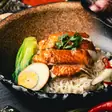
Michelin Guide-listed Mediterranean and Middle Eastern restaurant on Peck Seah Street. Bold mezze and grilled meats; back in Tanjong Pagar in 2025.
OrderThe mezze spread to share followed by the slow-roasted lamb shawarma
TipThe bar programme is genuinely good; a cocktail before dinner is part of the Fat Prince ritual.
Ashwaq Cafeteria ★ 4.1
Ashwaq Cafeteria slices chicken shawarma off the spit near the Gold Souk, a Deira counter in the Al Hillu Building opposite the Deira Palace Hotel.
TryChicken shawarma
TipIt is a quick counter stop, best combined with a walk through the souks.
Kabab Erbil Iraqi Restaurant ★ 4.1
Kabab Erbil Iraqi Restaurant grills Kurdish kebab and masgouf fish on Al Muraqqabat Street in Deira, Dubai, a room busiest on Thursday nights.
Why locals goA plain storefront on Al Rigga's old strip, where a Thursday night crowd and a grill behind glass are the only signals of its Iraqi and Kurdish kebab.
TipWatch the masgouf grilling on slow flames behind the glass panel; meals start with salads and lentil soup, and Iraqi tea is refilled free.
Mecca Bah ★ 4.1
Mecca Bah serves Middle Eastern and Mediterranean food at Gasworks Plaza on Longland Street, with a wine list and cocktails from classics to house creations.
Z Garden ★ 4.1
Z Garden plates certified halal Middle Eastern food on Pico Boulevard in Santa Monica, Muslim-owned and generous with kebab plates, hummus and saffron rice.
OrderMixed grill over saffron rice with garlic sauce
TipPortions run huge; a single mixed grill plate with extra garlic sauce covers two people at lunch.
De Babel ★ 4.1
De Babel on Pima Road in Scottsdale is the original halal Middle Eastern fast-casual counter, making chicken tawook, hand-carved shawarma and kafta to order.
OrderThe chicken tawook or chicken shawarma pita sandwich, with fresh-cut fries.
TipThis is the original of two Scottsdale branches; the newer one is at The Edge on 90th Street, and both close on Sunday.
Tewa am Naschmarkt ★ 4.1
Tewa am Naschmarkt is at Naschmarkt 672, 1060 Wien.
Sababa ★ 4.1
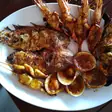
Sababa serves Middle Eastern mezze, chicken shawarma and a Levantine mixed grill on Jl. Pantai Berawa in Canggu, Bali, plus cocktails and daily happy hours.
SignatureChicken shawarma, Braised lamb shank, Levantine mixed grill
Leen's Middle East Kitchen ★ 4.1
Leen's Middle East Kitchen cooks Syrian food in TTDI, Kuala Lumpur, run by a Syrian chef, and carries a Michelin Bib Gourmand for its smoked hummus.
OrderOrder the smoked hummus, finished with charcoal smoked Syrian olive oil and paprika oil.
TipThe smoked hummus is the dish everyone orders, come hungry enough to add a main alongside it.
Abi Falafel ★ 4.1
Abi Falafel is an oriental-style refreshment room at Trubarjeva cesta 40, billed as Slovenia's first restaurant with Arabic food, run by the Shaar family.
Sabibi Pita ★ 4.1
Sabibi Pita stuffs house-baked pitas with falafel, grilled halloumi and roast vegetables beside the Halles Centrales in Rennes, a 2023 street-food arrival.
OrderThe falafel pita, crisp outside and soft inside, with house sauces
Galit 1 ★ ★ 4.0
Galit is a Middle Eastern restaurant on Lincoln Avenue in Lincoln Park, owned by Andrés Clavero and James Beard Award-winning chef Zachary Engel.
TipHappy hour runs from 5:00pm to 6:00pm, Tuesday through Thursday, before the evening's dinner service.
Wava Halal Grill ★ 4.0
Plano halal Mediterranean grill serving shawarma wraps, falafel bowls, and garlic chicken plates with scratch-made sauces and Zabihah-verified meat sourcing.
OrderChicken shawarma wrap; falafel plate with garlic sauce; mixed meat plate
TipZabihah-verified halal certification on-site. The garlic sauce is made from scratch daily; order extra. Good for group halal dining in North Dallas suburbs.
Exotische Markt ★ 4.0
The Exotische Markt on Theaterplein every Saturday serves Mediterranean and North African plates from a row of stalls. Lamb tagine, lahmacun, falafel.
TrySaturday market street plates
TipBring cash. The food stalls clear by 14:00; arrive before noon for the freshest plates.
Halal Bros (West Campus) ★ 4.0
Halal Bros in Austin is the West Campus halal chicken-and-rice counter on Guadalupe, the cheapest reliable halal plate in town and the closest meal to UT.
TryChicken-and-rice platter
TipThe chicken-and-rice platter is the campus default; the white-sauce-and-hot-sauce combo is the menu hack.
Achla ★ 4.0
Achla is a Middle Eastern street food counter near Roeland Square in Gardens, Cape Town, cooking fresh falafel and shawarma, with takeaways by WhatsApp.
TryFalafel and shawarma wrap with a deli-style salad bar
TipOrder the mixed falafel and shawarma wrap if you cannot decide between the two.
Bocaito Andalusí ★ 4.0
Bocaito Andalusí runs the Arabic counter inside the Mercado Victoria in Córdoba, hummus and falafel through to harira, mint teas and pastries.
OrderFalafel with hummus, the quickest Andalusi plate in the market.
TipIt is listed as halal by the Cargest directory, though the stall does not carry the word itself.
Halal Munchies ★ 4.0
Halal Munchies feeds the UK campus halal platters and wraps until 02:00 or later on South Limestone, Lexington's dependable late halal kitchen.
TryHalal platters and wraps
TipIt runs to 04:00 on Friday and Saturday nights, by far the latest halal food in Lexington.
Mandi ★ 3.9
Mandi at Veltusund 3b in Reykjavik serves Middle Eastern food made from carefully selected ingredients, with fresh falafel, hummus and juicy shawarma.
OrderFresh falafel, hummus or juicy shawarma.
TipIt caters company parties, family celebrations and meetings, and will create a menu to suit the group if you get in touch.
Adieu Paris ★ 3.8
Adieu Paris on Aachener Strasse in Cologne's Belgisches Viertel serves plant-based döner and creative Middle Eastern fast food for the vegetarian Belgian.
OrderVegan döner in house-baked flatbread with grilled halloumi or seasoned falafel
TipGood for a quick lunch or early dinner; the seating is limited but the food is fast.
Ali Bakery ★ 3.7
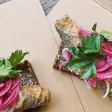
Ali Bageri at Heimdalsgade 39 bakes authentic Arabic manaish, including a Manaish Fusion with grilled vegetables, crispy bacon and exotic cheeses.
Worth the queueManaish Fusion: airy dough with grilled vegetables, crispy bacon and exotic cheeses.
TipYou can order online, and the bakery also delivers bread to businesses.
House of Kebab ★ 3.6
House of Kebab grills Turkish specialities on Viale Amendola in eastern Modena, a budget counter for lunch and dinner with free home delivery.
OrderA durum kebab wrap with extra vegetables and garlic sauce.
TipDelivery runs from the same counter and is free on any order over twenty euros.
Middle Eastern by city
 Abu Dhabi18 places
Tazal, Abu Al Afwal
Abu Dhabi18 places
Tazal, Abu Al Afwal
 Tel Aviv11 places
Irit's Lachuch, Sabich Tchernichovsky
Tel Aviv11 places
Irit's Lachuch, Sabich Tchernichovsky
 Dubai9 places
Orfali Bros, Ashwaq Cafeteria
Dubai9 places
Orfali Bros, Ashwaq Cafeteria
 Brisbane7 places
Golden Avenue, Naïm
Brisbane7 places
Golden Avenue, Naïm
 Rotterdam5 places
Restaurant Bazar Late Night, Mecca
Rotterdam5 places
Restaurant Bazar Late Night, Mecca
 San Jose5 places
Falafel's Drive-In
San Jose5 places
Falafel's Drive-In
 Albuquerque4 places
Yasmine's Cafe, Sahara Middle Eastern Eatery
Albuquerque4 places
Yasmine's Cafe, Sahara Middle Eastern Eatery
 Boston4 places
Oleana, Sarma
Boston4 places
Oleana, Sarma
 Bristol4 places
Matina, Souk Kitchen
Bristol4 places
Matina, Souk Kitchen
 Cologne4 places
Habibi, Habibi Falafel
Cologne4 places
Habibi, Habibi Falafel
 Detroit4 places
Yemen Cafe
Detroit4 places
Yemen Cafe
 Montreal3 places
Boustan
Montreal3 places
Boustan
 Sydney3 places
El Jannah Granville, Aalia
Sydney3 places
El Jannah Granville, Aalia
 Utrecht3 places
Carmel Market
Utrecht3 places
Carmel Market
 Brooklyn2 places
Sofreh, Yemen Cafe
Brooklyn2 places
Sofreh, Yemen Cafe
 Burlington2 places
Honey Road
Burlington2 places
Honey Road
 Chattanooga2 places
Calliope
Chattanooga2 places
Calliope
 Chicago2 places
Sifr, Galit
Chicago2 places
Sifr, Galit
 Cleveland2 places
Zhug
Cleveland2 places
Zhug
 Dallas2 places
Big Guy's Chicken and Rice, Wava Halal Grill
Dallas2 places
Big Guy's Chicken and Rice, Wava Halal Grill
 Dublin2 places
Brother Hubbard South, Tang
Dublin2 places
Brother Hubbard South, Tang
 Gothenburg2 places
Sunset Falafelkungen
Gothenburg2 places
Sunset Falafelkungen
 Kansas City2 places
Habashi House
Kansas City2 places
Habashi House
 Melbourne2 places
Zareh
Melbourne2 places
Zareh
 Portland2 places
Tusk
Portland2 places
Tusk
 Portland2 places
Evo Kitchen + Bar
Portland2 places
Evo Kitchen + Bar
 Providence2 places
East Side Pockets
Providence2 places
East Side Pockets
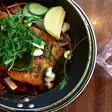 Reykjavik2 places
Sumac, Mandi
Reykjavik2 places
Sumac, Mandi
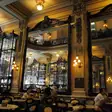 Rio de Janeiro2 places
Amir
Rio de Janeiro2 places
Amir
 Santa Monica2 places
Z Garden
Santa Monica2 places
Z Garden
 Scottsdale2 places
De Babel
Scottsdale2 places
De Babel
 Vienna2 places
Neni am Naschmarkt, Tewa am Naschmarkt
Vienna2 places
Neni am Naschmarkt, Tewa am Naschmarkt
 Washington DC2 places
Maydan, Zaytinya
Washington DC2 places
Maydan, Zaytinya
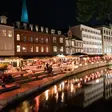 Aarhus1 place
Bazar Vest
Aarhus1 place
Bazar Vest
 Antwerp1 place
Exotische Markt
Antwerp1 place
Exotische Markt
 Atlanta1 place
Yalla
Atlanta1 place
Yalla
 Auckland1 place
Kebab City
Auckland1 place
Kebab City
 Austin1 place
Halal Bros (West Campus)
Austin1 place
Halal Bros (West Campus)
 Bali1 place
Sababa
Bali1 place
Sababa
 Cape Town1 place
Achla
Cape Town1 place
Achla
 Columbus1 place
Hoyo's Kitchen
Columbus1 place
Hoyo's Kitchen
 Copenhagen1 place
Ali Bakery
Copenhagen1 place
Ali Bakery
 Córdoba1 place
Bocaito Andalusí
Córdoba1 place
Bocaito Andalusí
 Denver1 place
Jerusalem Restaurant
Denver1 place
Jerusalem Restaurant
 Edinburgh1 place
Baba
Edinburgh1 place
Baba
 Istanbul1 place
Aheste
Istanbul1 place
Aheste
 Kuala Lumpur1 place
Leen's Middle East Kitchen
Kuala Lumpur1 place
Leen's Middle East Kitchen
 Lexington1 place
Halal Munchies
Lexington1 place
Halal Munchies
 Ljubljana1 place
Abi Falafel
Ljubljana1 place
Abi Falafel
 London1 place
The Palomar
London1 place
The Palomar
 Los Angeles1 place
Saffy's
Los Angeles1 place
Saffy's
 Marseille1 place
Le Femina
Marseille1 place
Le Femina
 Milwaukee1 place
Shahrazad
Milwaukee1 place
Shahrazad
 Modena1 place
House of Kebab
Modena1 place
House of Kebab
 Nashville1 place
Butcher and Bee
Nashville1 place
Butcher and Bee
 New Orleans1 place
Lebanon's Cafe
New Orleans1 place
Lebanon's Cafe
 New York City1 place
Mamoun's Falafel
New York City1 place
Mamoun's Falafel
 Rennes1 place
Sabibi Pita
Rennes1 place
Sabibi Pita
 San Antonio1 place
Ladino
San Antonio1 place
Ladino
 Singapore1 place
Fat Prince
Singapore1 place
Fat Prince
Regional variations
Levant
Lebanon, Syria, Palestine, Jordan. Olive oil-led, herb-forward, mezze culture, grilled meats, sumac and za'atar. The most internationally visible Middle Eastern kitchen.
Persia
Iran. Rice as the centerpiece (tahdig, polo), saffron and dried lime, slow stews (khoresh), kebabs over charcoal, herb-heavy soups. Distinct grammar from the Arab traditions.
Egypt
Ful medames and ta'ameya (the original fava-bean falafel) as breakfast staples, koshary as the national street food, mahshi (stuffed vegetables), molokhia, hamam mahshi (stuffed pigeon). Heavier use of legumes and grains.
Turkey and the Anatolian-Arab borderlands
Often grouped with Middle Eastern in Western markets though geographically and culturally distinct. Kebabs, meze, pide, lahmacun, and an Ottoman legacy that shaped much of the Levant's restaurant culture.
Iraq and the Gulf
Masgouf (grilled river fish) in Baghdad, machbous and kabsa (spiced rice with meat) in Saudi Arabia and the Gulf states, biryani-influenced rice dishes in the eastern coast, dates as a sweet and savory ingredient throughout.
Defining Middle Eastern dishes
- Hummus
- Chickpeas pureed with tahini, lemon, garlic, olive oil. The signature shared across the Levant and increasingly served region-wide as a starter.
- Falafel
- Deep-fried chickpea (Levantine) or fava-bean (Egyptian) fritters, served in flatbread or as part of mezze with tahini, pickles, and salad.
- Shawarma
- Spit-roasted marinated meat shaved into flatbread. The street food of the modern Middle East from Beirut to Dubai.
- Kebab
- Grilled marinated meat on skewers, in dozens of regional forms: shish (cubed), kofta (ground), Adana (spiced ground lamb), tikka (Persian and Indo-Persian), kabab karaz (Aleppo's cherry-sauce version).
- Tabbouleh
- Levantine parsley and bulgur salad with tomato, mint, lemon. The benchmark herb salad of the region.
- Baba ghanoush
- Smoke-charred eggplant with tahini, lemon, garlic. The smoky cousin of hummus.
- Kibbeh
- Bulgur and lamb shells, fried, baked, or eaten raw (kibbeh nayyeh). The most technically demanding Levantine dish.
- Manakish
- Za'atar flatbread, the Levantine breakfast, often eaten folded around fresh vegetables and labneh.
- Mansaf
- Jordan's lamb-and-jameed national dish, served over rice and shrak bread for communal eating.
- Koshary
- Egypt's national street dish: rice, lentils, macaroni, chickpeas, fried onions, tomato sauce, vinegar-garlic dressing.
- Baklava
- Layered phyllo with nuts, butter, and syrup. Turkish, Levantine, and Persian versions all claim heritage; the gold standard is Gaziantep's pistachio baklava.
- Kunafa
- Cheese pastry soaked in syrup, with shredded phyllo or semolina topping. The defining Levantine dessert.
How to order
A Middle Eastern restaurant meal almost always begins with mezze. Order five or six small plates (hummus, baba ghanoush, tabbouleh, fattoush, labneh, muhammara, stuffed grape leaves) for the table and ask for warm flatbread. Then choose one or two mains: a mixed grill (mashawi mishakal), a stew (khoresh in a Persian restaurant, yakhneh in an Arab one), or a rice dish (kabsa, machbous, maqluba) to share. Sides are not really separate; vegetables, pickles, and rice come with the main.
The rookie mistakes: under-ordering mezze (the plates are small, the meal is built on them), ordering one of every protein on the grill platter for one person, expecting individual plated courses (this is a sharing cuisine), skipping the tea or coffee at the end (it is part of the meal, not an option), and treating bread as a side rather than a utensil (in much of the region, bread is the spoon, the fork, and the plate-cleaner). Pace yourself; a Middle Eastern dinner can stretch over two or three hours, and ordering everything at the start is the most common foreigner mistake.
What to drink with it
Tea, mint tea, or cardamom-scented Arabic coffee are the universal accompaniments to a Middle Eastern meal. Alcohol varies sharply by country and community: arak in the Levant, raki in Turkey, Lebanese and increasingly Israeli and Jordanian wine, and almost nothing alcoholic in the Gulf states. With grilled meats, a medium-bodied red works well; with mezze, a crisp white, rose, or arak with water is traditional. Fresh juices (pomegranate, sour cherry, tamarind) and yogurt drinks (ayran, doogh) are the non-alcoholic table options.
Where to eat it
Beirut for Levantine; Tehran and Isfahan for Persian; Cairo for Egyptian; Istanbul for Turkish; Dubai and Abu Dhabi for the broadest pan-regional scenes. Outside the region, London is now the best Middle Eastern food city in the West, with serious Lebanese, Persian, and Palestinian restaurants. Paris, Berlin, Sydney, Toronto, and New York all hold strong scenes anchored by their respective diaspora communities.
A short history
Middle Eastern cuisine descends from the agricultural civilizations of Mesopotamia and the eastern Mediterranean, with continuous written recipe traditions going back nearly four millennia. The medieval Arab cookbooks of Baghdad (Kitab al-Tabikh, 10th century) document many dishes still recognizable today. The Ottoman Empire (1299 to 1922) standardized much of the modern mezze and kebab vocabulary across the region.
Frequently asked
Is Middle Eastern the same as Mediterranean cuisine?
Overlap, not equivalence. The eastern Mediterranean (Lebanon, Syria, Greece, Turkey) shares ingredients and techniques with the wider Mediterranean. Inland Middle Eastern (Iraq, Persia, Gulf) is distinct and not Mediterranean by any measure.
Is all Middle Eastern food halal?
Most restaurants in the region serve halal meat by default, but the cuisine is not exclusively Muslim. Christian, Jewish, and Druze communities have shaped the regional kitchens for centuries, and pork appears in Christian Lebanese and Coptic Egyptian cooking.
What is the difference between Middle Eastern and Mediterranean diet?
The 'Mediterranean diet' as a nutritional concept refers to the eating patterns of southern Europe and the Levant. Middle Eastern food includes the Levantine kitchen plus inland traditions (Persian rice cookery, Gulf rice dishes) that are not part of the Mediterranean diet framework.
More cities are in research. Want Middle Eastern covered somewhere specific? Tell us where you want to eat.