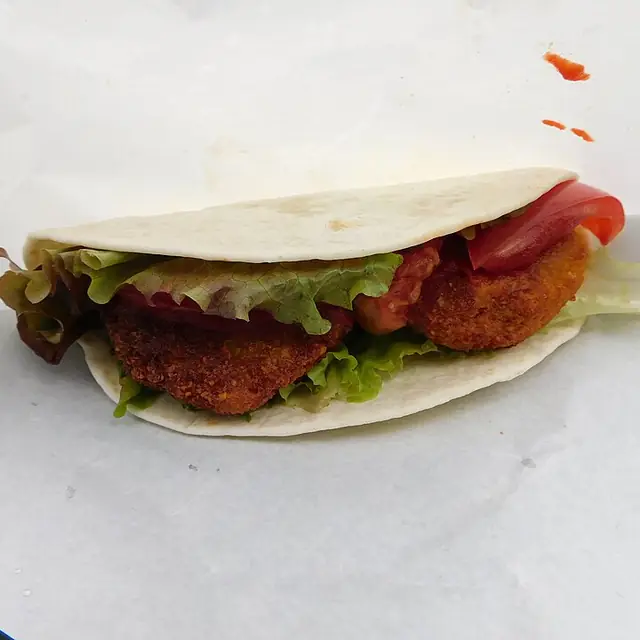
The Paris Falafel sandwich is a pita-pocket built at the Rue des Rosiers counters: five fried falafel, aubergine, red and white cabbage, cucumber, hummus, harissa, tahini.
Falafel arrived in Paris's 4e Marais with the post-1945 Jewish migration from North Africa and the eastern Mediterranean. The Pletzl quarter on Rue des Rosiers had been the Jewish centre of Paris since the 1900s but turned to falafel-as-street-food only in the 1970s. L'As du Fallafel opened 1979 and codified the €9 takeaway-pita format that now anchors a four-block strip with at least six rival counters. The sandwich is closed Saturdays for Shabbat at the Jewish-owned shops; King Falafel Palace three doors up opens to fill the gap. The pita is overstuffed by design; the trick is to eat it standing.
L'As du Fallafel in Paris is the falafel-pita window that has run the queue on Rue des Rosiers since 1979. €9 for the sandwich, the line moves in 15 minutes.
OrderFalafel sandwich
TipClosed Saturdays for Shabbat. The queue moves fast; take it to Place des Vosges for a bench.
Eyal Shani's Miznon in Paris's 4e Marais inverts the falafel-row format: roasted-cauliflower whole-head pita, slow-cooked lamb shoulder, fries and baba.
OrderStuffed pitas
TipThe whole roasted cauliflower is the room's dish; take it to the small terrace at the side.
King Falafel Palace in Paris is the Marais falafel rival to L'As, three doors up the same Rue des Rosiers. €8 sandwich, faster queue, six pita variations.
OrderFalafel pita
TipOpen Saturdays unlike L'As. The aubergine-and-egg variant is the order if you want a switch-up.
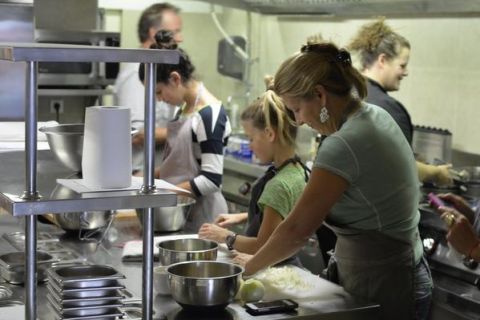
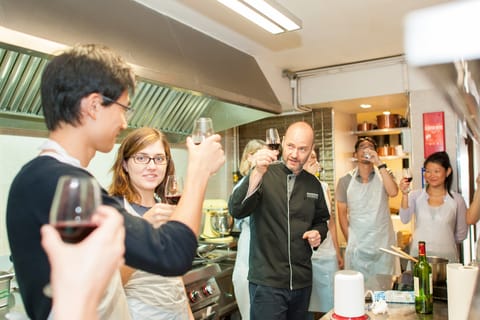
Learn classic French cooking techniques at a 6-hour cooking class in the Latin Quarter of Paris, visiting a local open air market to forage for fresh produce to turn i...
Learn classic French cooking techniques at a 5-hour cooking class in the Latin Quarter of Paris, using fresh produce from the local market to turn into a memorable 3-c...