Signature dishes
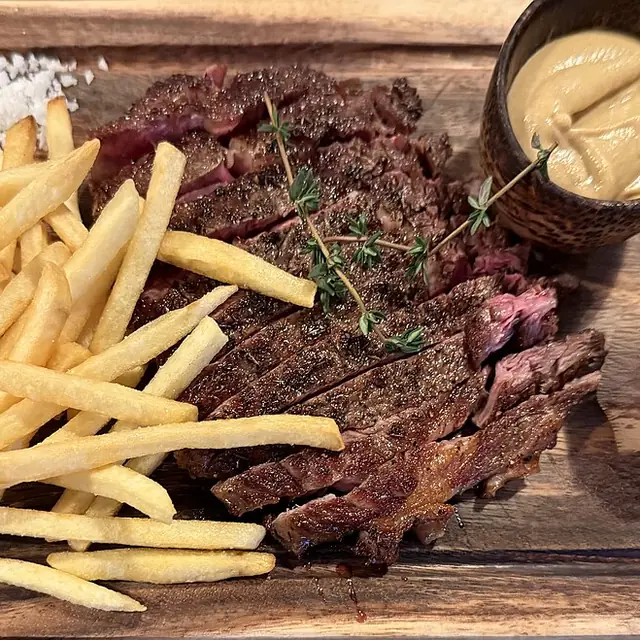
Steak frites is the dish Paris built into its bistro grammar: contre-filet or onglet pulled saignant, hand-cut fries fried twice, butter sauce or just sea salt on the side.
Where: Bistrot Paul Bert, Le Relais de l'Entrecôte, Bouillon Chartier, Le Bon Georges, Robert et Louise
Price: €18-€32
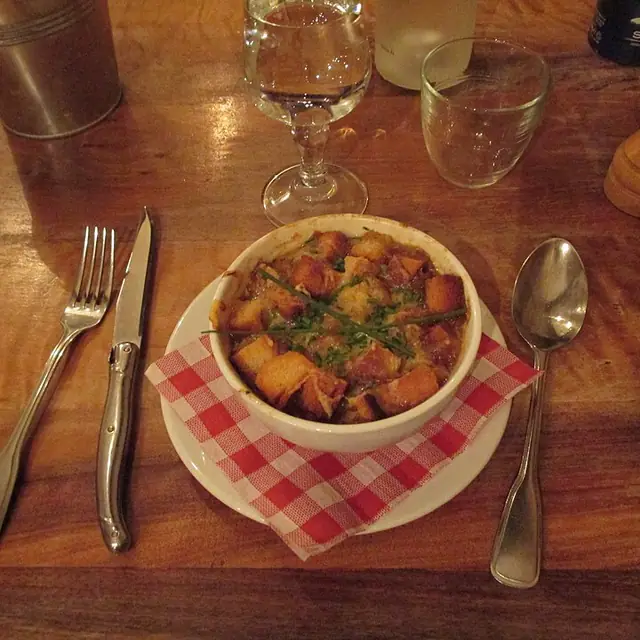
Soupe à l'oignon is the slow-cooked onion soup that the Les Halles market porters of Paris finished at 03:00 with toasted baguette and gratinated Gruyère. The dish defines French winter.
Where: Au Pied de Cochon, Bouillon Chartier, Le Comptoir du Relais, Polidor
Price: €10-€18
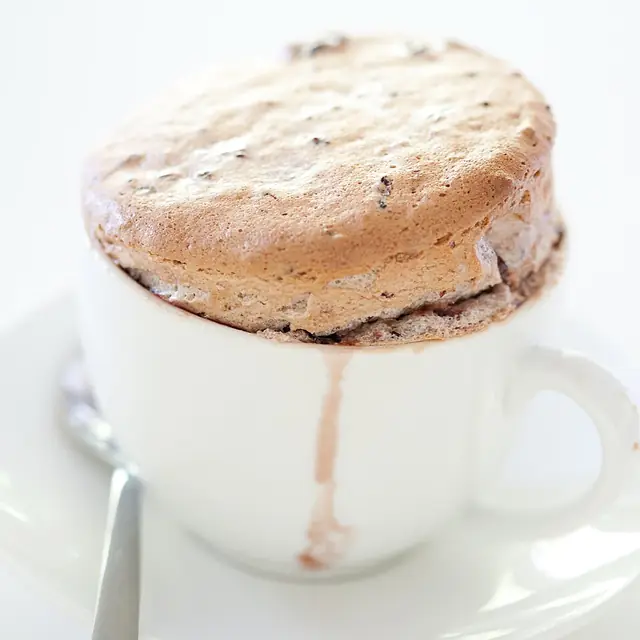
Soufflé is Paris's risen, twice-baked technique dish: a hot bechamel, separated eggs, the whites whipped to peaks, folded, baked at 200°C for 12 minutes, served immediately or it falls.
Where: Le Grand Véfour, Tomy & Co, La Poule au Pot
Price: €14-€22
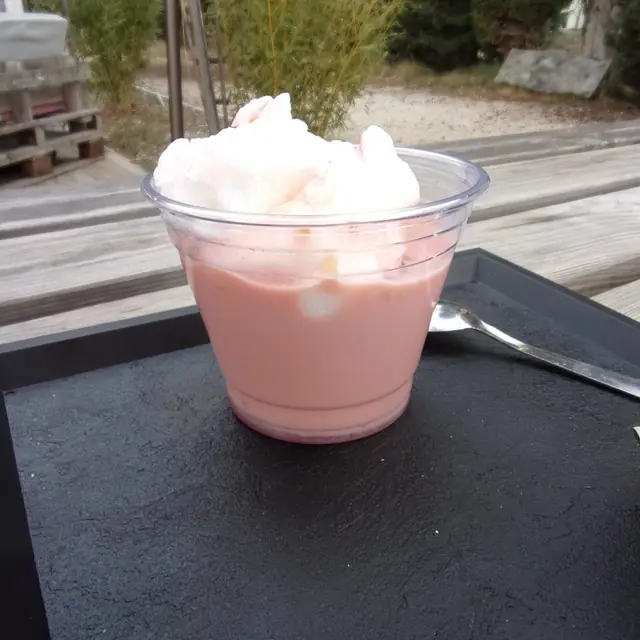
Île flottante is the Paris bistro's standard dessert: poached meringue islands floating on a thin crème anglaise, finished with a streak of caramel that pours over the plate.
Where: Bistrot Paul Bert, Bouillon Chartier, Bouillon Pigalle, Le Comptoir du Relais
Price: €7-€14
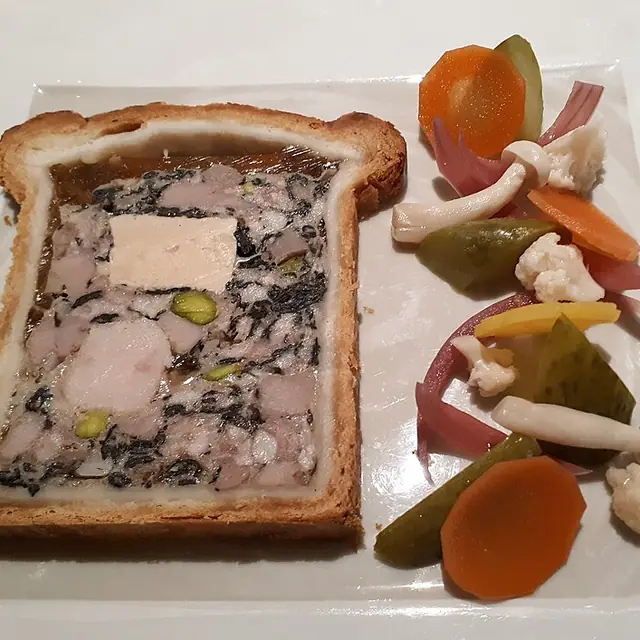
Pâté en croûte is a Paris charcuterie classic: a layered chilled pâté set inside a pastry case with pork, foie gras, jelly, pistachios or veal, sliced thick at the counter.
Where: Le Comptoir du Relais, Le Bistrot Flaubert
Price: €8-€16
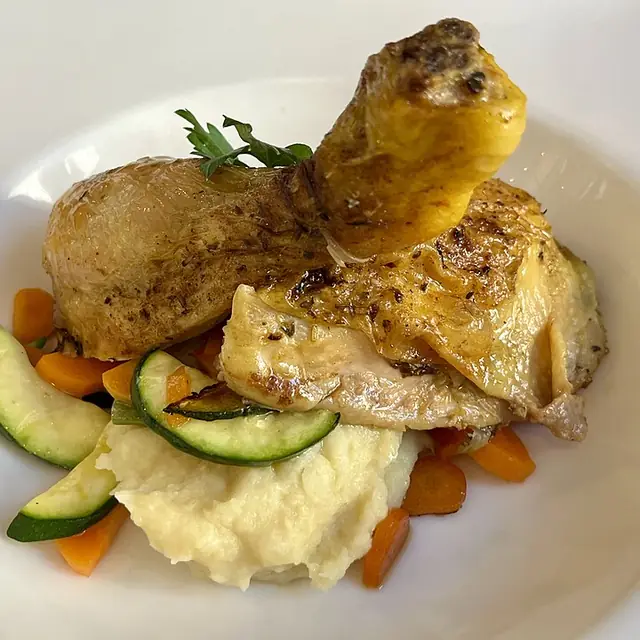
Poulet rôti is Paris's Sunday-bistro standard: a salt-rubbed Bresse or Loué chicken roasted on a rotisserie or oven, served whole with fat-cooked potatoes and the pan juice.
Where: Bouillon Pigalle, La Rôtisserie d'Argent, Robert et Louise
Price: €15-€38
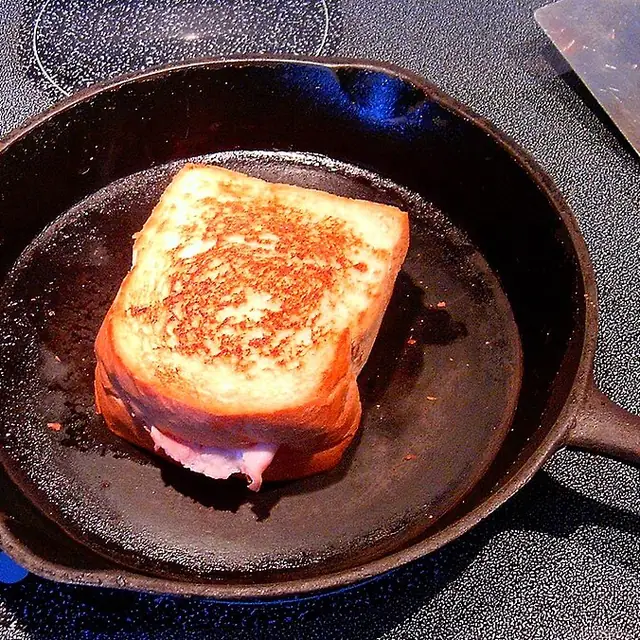
Croque-monsieur is the Parisian counter sandwich: brioche or pain de mie, jambon de Paris, Gruyère and béchamel, grilled until the cheese on top is bubbling and gold.
Where: Café de Flore, Le Petit Cler, Le Petit Vendôme, Telescope
Price: €10-€18
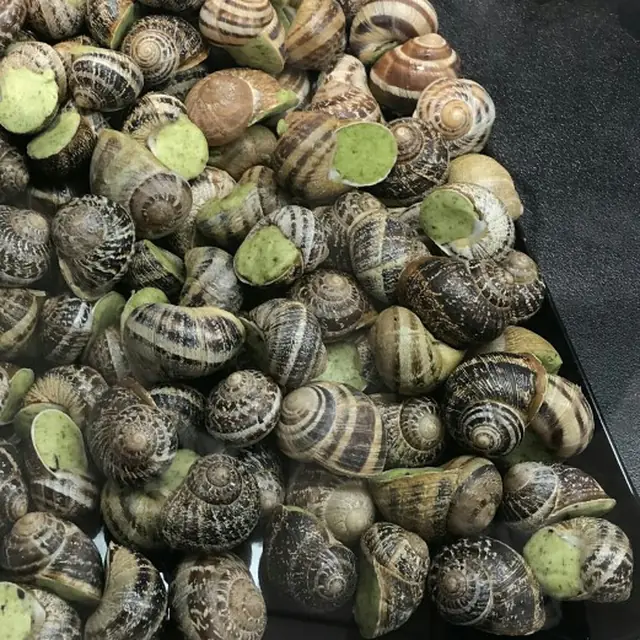
Escargots de Bourgogne in Paris is the snail starter served in its shell with garlic-and-parsley butter, eaten with tongs and a slim two-tined fork, sopped up with baguette.
Where: Bouillon Chartier, Le Grand Véfour, Polidor, Aux Lyonnais
Price: €12-€24
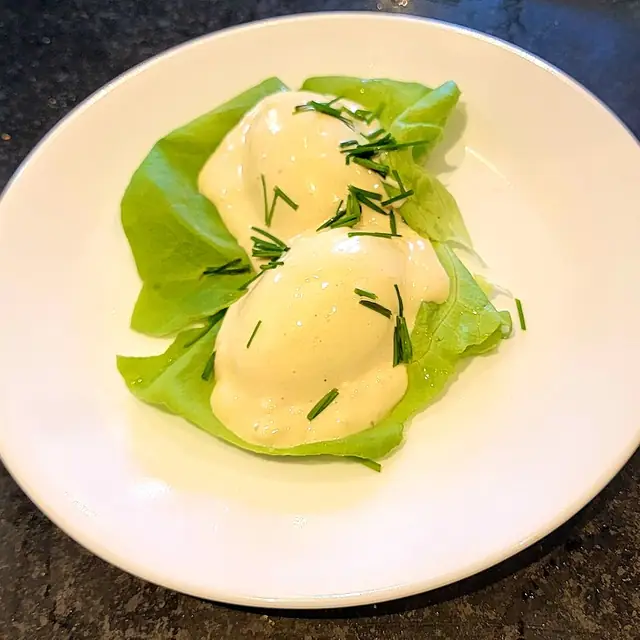
Œuf mayonnaise is the cheapest serious starter in Paris: a hard-boiled egg, halved, set on lettuce with a hand-whisked mayonnaise that should cover the egg without sliding off.
Where: Bouillon Chartier, Bistrot Paul Bert, Bouillon Pigalle, Le Petit Vendôme
Price: €3-€8
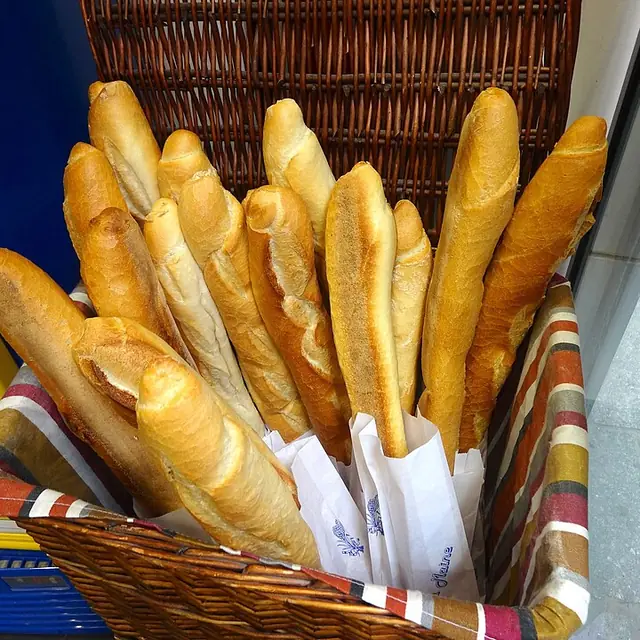
Baguette tradition is the daily Paris bread: a 250g loaf made only with flour, water, yeast and salt, hand-shaped, no additives. Crisp crust, open crumb, eaten the same day.
Where: Du Pain et des Idées, Poilâne, Utopie, Boulangerie BO
Price: €1.30-€2.20
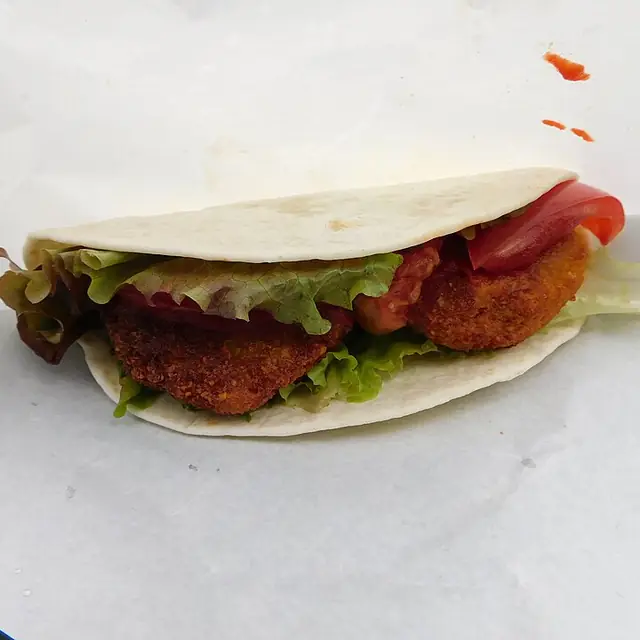
The Paris Falafel sandwich is a pita-pocket built at the Rue des Rosiers counters: five fried falafel, aubergine, red and white cabbage, cucumber, hummus, harissa, tahini.
Where: L'As du Fallafel, Miznon, King Falafel Palace
Price: €8-€10
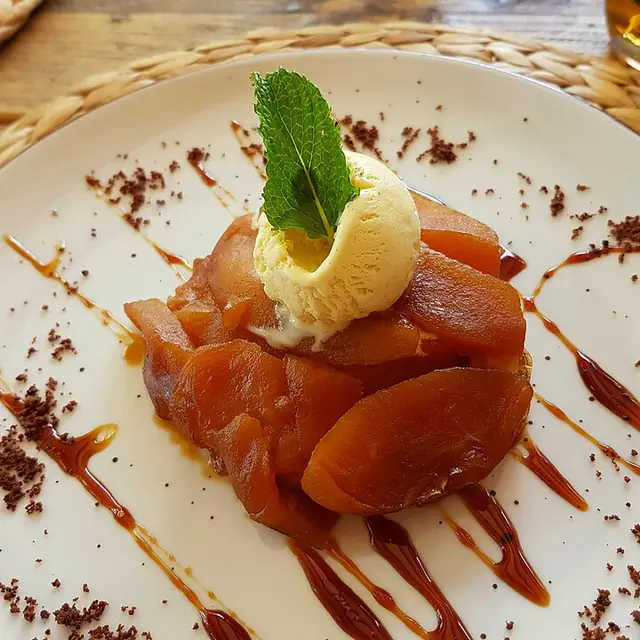
Tarte tatin is the upside-down caramelised-apple tart Paris bistros plate by the slice with crème fraîche. The apples are cooked in butter and sugar before the pastry goes on top.
Where: Le Bon Georges, Polidor, Bistrot Paul Bert, Chez Georges
Price: €8-€14
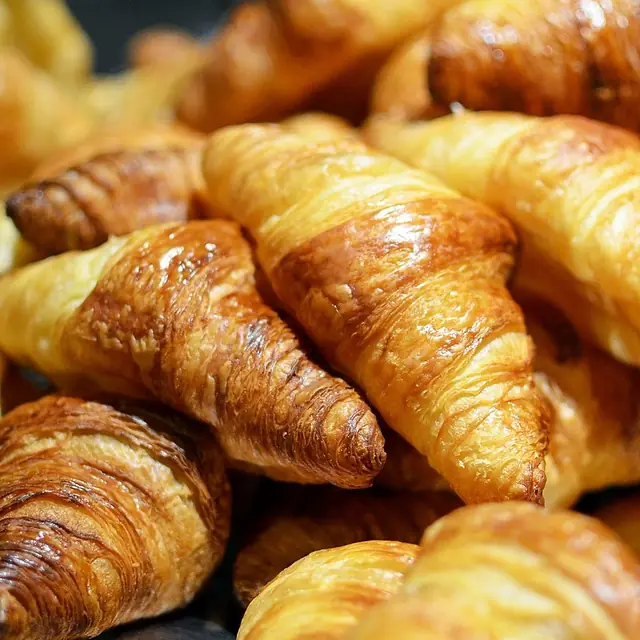
The Parisian croissant is a laminated butter pastry, hand-rolled into a crescent, proofed slowly and baked to a deep amber shell with honeycomb crumb. Eaten warm with a noisette in the morning.
Where: Du Pain et des Idées, Poilâne, Mamiche, Boulangerie BO, Stohrer
Price: €1.40-€3.50
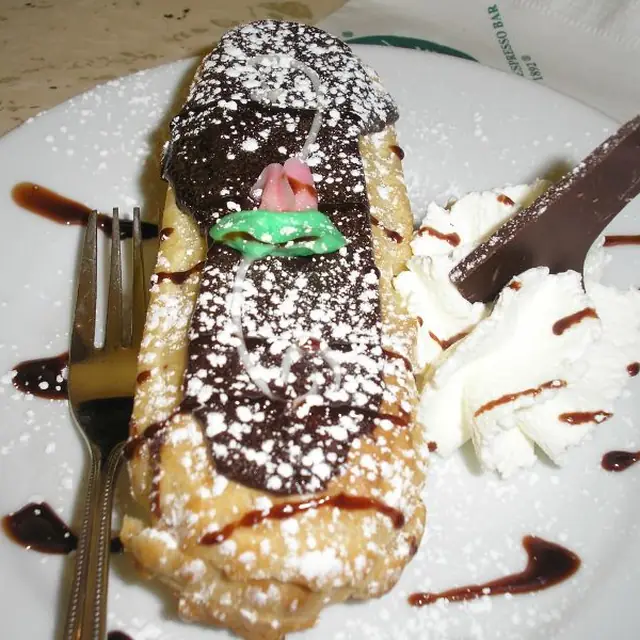
An éclair au chocolat is an oblong choux pastry filled with cool dark-chocolate crème pâtissière and capped with a thin chocolate fondant. The proportions are pâtisserie 101 in Paris.
Where: Stohrer, Cédric Grolet Opéra, Des Gâteaux et du Pain, Boulangerie Pâtisserie l'Équilibre, Liberté Pâtisserie Boulangerie
Price: €3.50-€8.50
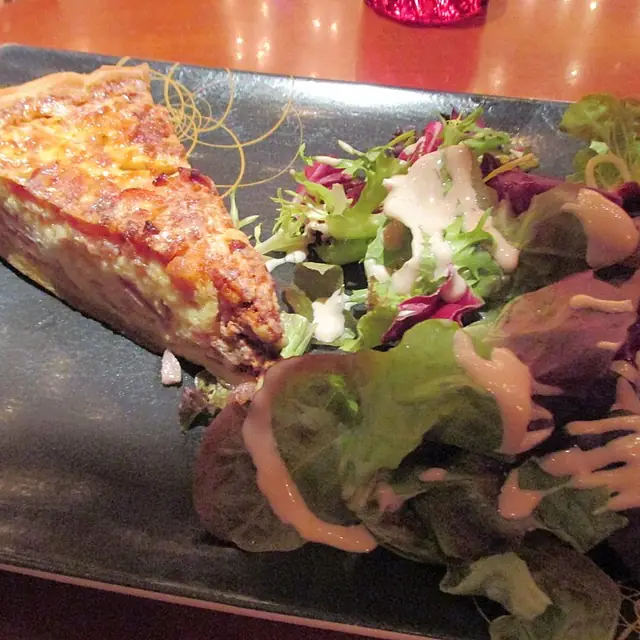
Quiche Lorraine is a savoury egg-and-cream tart in shortcrust pastry, set with smoky lardons. No cheese in the canonical version. Served warm in slim wedges at every Parisian bistro lunch.
Where: Polidor, Du Pain et des Idées, Boulangerie BO, Mamiche, Stohrer
Price: €6-€14
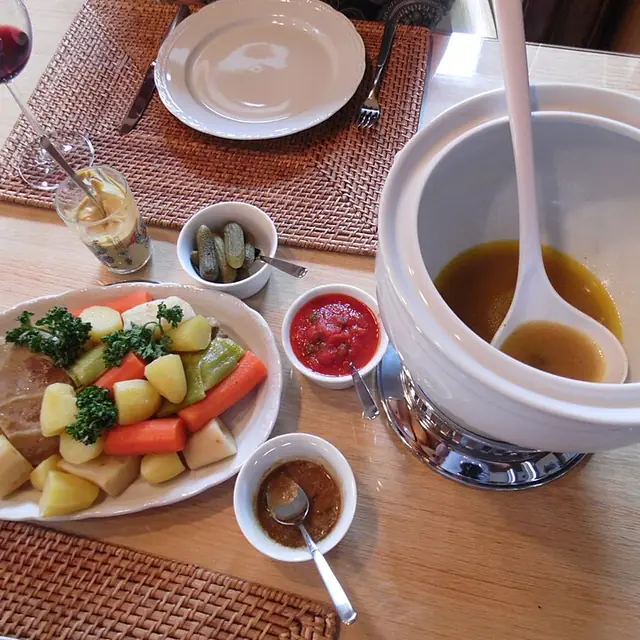
Pot-au-feu is the long-simmered French boiled-beef-and-root-vegetable supper: beef brisket, marrow bones, leeks, carrots, turnips, celery in a clear bouillon. Served in two courses with mustard and cornichons.
Where: La Poule au Pot, Polidor, Chez Georges, Bistrot Paul Bert, Bouillon Chartier
Price: €22-€38
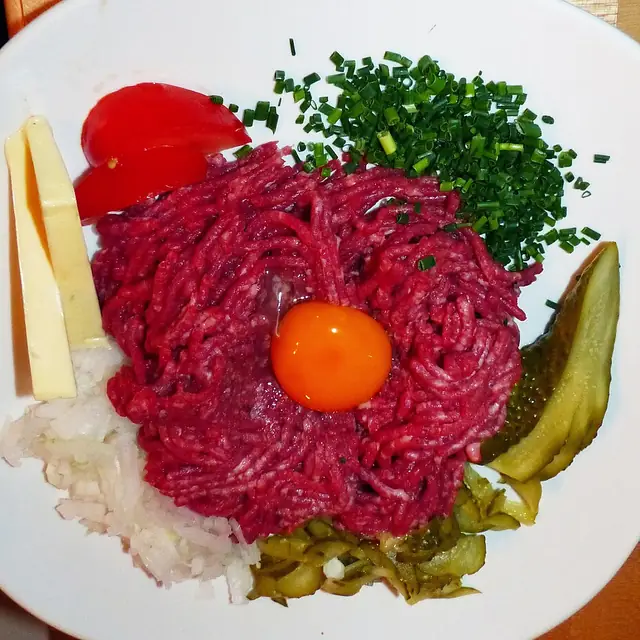
Steak tartare is hand-chopped raw beef seasoned at the table with capers, cornichons, shallot, egg yolk, mustard and Worcestershire. Served with a green salad and a heap of hand-cut frites.
Where: Bistrot Paul Bert, Le Comptoir du Relais, Le Cinq Mars, Le Bon Georges, Robert et Louise
Price: €18-€32
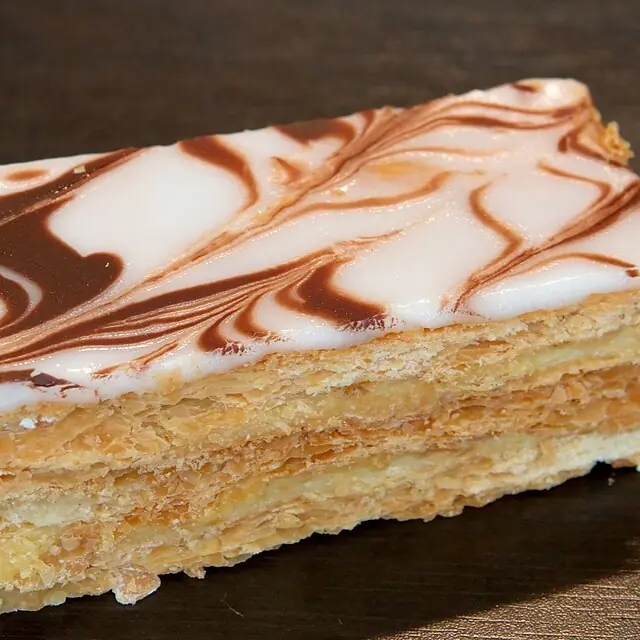
Mille-feuille is three sheets of caramelised puff pastry layered with vanilla crème pâtissière, capped with a marbled fondant or a snow of icing sugar. The pâtissier's signature exam piece.
Where: Stohrer, Cédric Grolet Opéra, Des Gâteaux et du Pain, Liberté Pâtisserie Boulangerie, Boulangerie Pâtisserie l'Équilibre
Price: €5.50-€12
Steak frites
Steak frites is the dish Paris built into its bistro grammar: contre-filet or onglet pulled saignant, hand-cut fries fried twice, butter sauce or just sea salt on the side.
History: The Parisian bistro form of steak frites took shape in the second half of the 19th century, when Belgian-style frites travelled to Paris bistros and the slim contre-filet cut became the city's default beef. By the 1930s, the dish was the standard set lunch across working-class quarters of the 11e and 12e. Yves Camdeborde's 1990s bistronomie movement, then Bertrand Grébaut and the neo-bistros after, kept steak frites on the carte but moved the meat sourcing onto farmer-named cuts. Le Relais de l'Entrecôte, founded 1959, codified the no-choice salad-then-steak-then-frites format with secret-recipe butter sauce that the chain now runs across four addresses.
Where to try it: Bistrot Paul Bert, Le Relais de l'Entrecôte, Bouillon Chartier, Le Bon Georges, Robert et Louise
Watch out for: Gluten if served with sauce béarnaise, Egg in béarnaise sauce
Soupe à l'oignon
Soupe à l'oignon is the slow-cooked onion soup that the Les Halles market porters of Paris finished at 03:00 with toasted baguette and gratinated Gruyère. The dish defines French winter.
History: Onion soup, in its garlic-stock-and-bread peasant form, predates Paris by centuries. The Parisian version with melted cheese on top emerged in the markets of Les Halles in the 18th century, where the night porters and traders ate a fortifying late bowl to warm up before the dawn close. Au Pied de Cochon, founded 1947 at the Les Halles edge, kept the porter tradition alive past the 1969 market move to Rungis. The dish requires 45 to 60 minutes of patient onion caramelisation in butter, a beef or chicken stock, a splash of dry white wine, and a generous gratinated finish under the broiler. Every bistro in the city now serves a version; few earn it.
Where to try it: Au Pied de Cochon, Bouillon Chartier, Le Comptoir du Relais, Polidor
Watch out for: Dairy, Gluten
Soufflé
Soufflé is Paris's risen, twice-baked technique dish: a hot bechamel, separated eggs, the whites whipped to peaks, folded, baked at 200°C for 12 minutes, served immediately or it falls.
History: The soufflé was codified by Antonin Carême around 1815 in his Palais-Royal patisserie, where he wrote the first recipe to call for separated eggs and gentle folding. Auguste Escoffier expanded the form in Le Guide Culinaire (1903) into both sweet and savoury versions: Grand Marnier, Suzette, cheese, mushroom. Le Soufflé restaurant in the 1er has cooked nothing but the dish since 1961, with 30 sweet and savoury versions on the carte. Le Grand Véfour has kept its Grand Marnier soufflé on the menu unchanged for six decades. The technique is unforgiving: whites to firm peaks, the folding must keep the air in, the oven door cannot open mid-bake.
Where to try it: Le Grand Véfour, Tomy & Co, La Poule au Pot
Watch out for: Dairy, Egg, Gluten
Île flottante
Île flottante is the Paris bistro's standard dessert: poached meringue islands floating on a thin crème anglaise, finished with a streak of caramel that pours over the plate.
History: The dish takes its name from a 19th-century Carême creation called œufs à la neige, a stiffer egg-white meringue. The simpler floating-island form spread through Parisian bistros in the 20th century as a use for leftover egg whites from sauces and crème pâtissière. Bistrot Paul Bert on Rue Paul Bert has plated the dessert for two on a single oval platter since opening in 1959; the version sets the city's benchmark. Bouillon Chartier still serves a €3.50 single-portion version that has not changed in price since the Euro changeover. The technique is gentle: the meringue must poach, not boil, and the crème anglaise must hit 82°C without scrambling.
Where to try it: Bistrot Paul Bert, Bouillon Chartier, Bouillon Pigalle, Le Comptoir du Relais
Watch out for: Egg, Dairy
Pâté en croûte
Pâté en croûte is a Paris charcuterie classic: a layered chilled pâté set inside a pastry case with pork, foie gras, jelly, pistachios or veal, sliced thick at the counter.
History: The pâté en croûte form dates to medieval French royal kitchens, where game pies were transported sealed inside pastry. The standardised Parisian pâté en croûte we recognise today, with its straight-sided rectangular mould and gelée layer, was perfected in the 19th century by charcutiers across the Faubourg Saint-Germain. The annual Championnat du Monde du Pâté Croûte, founded in Lyon in 2009 but with a Paris qualifying round each year, has driven a revival. Maison Verot on Rue Notre-Dame-des-Champs and Maison Vérot's flagship on Rue de Sèvres turn out the city's most cited versions, sliced thick at the counter for around €9 per 200g piece.
Where to try it: Le Comptoir du Relais, Le Bistrot Flaubert
Watch out for: Gluten, Egg, Pork
Poulet rôti
Poulet rôti is Paris's Sunday-bistro standard: a salt-rubbed Bresse or Loué chicken roasted on a rotisserie or oven, served whole with fat-cooked potatoes and the pan juice.
History: Bresse chicken, the only French poultry with full AOC protection since 1957, anchored the Sunday-roast tradition that runs through Paris bistros from the 19th century. Marie Antoinette's chef, Pierre Beauvilliers, codified the rotisserie roast at his Palais-Royal restaurant in the 1790s. Bouillon Pigalle and La Rôtisserie d'Argent now anchor the dish at scale, with whole birds for two on the rotisserie. Modern Paris bakeries with rotisseries, including the Saturday Marché des Enfants Rouges, sell take-away versions for €15 a bird.
Where to try it: Bouillon Pigalle, La Rôtisserie d'Argent, Robert et Louise
Croque-monsieur
Croque-monsieur is the Parisian counter sandwich: brioche or pain de mie, jambon de Paris, Gruyère and béchamel, grilled until the cheese on top is bubbling and gold.
History: The dish first appears on a Paris cafe menu in 1910, at a Boulevard des Capucines establishment whose proprietor put grilled ham-and-cheese sandwiches on the carte to feed the lunchtime crowd. The béchamel-topped form, distinct from a simple grilled sandwich, was codified by 1925. Le Café de Flore and Les Deux Magots in Saint-Germain serve €18 versions that have not changed shape in fifty years. The home version is forgiving: any decent jambon, any decent Gruyère, a 5-minute béchamel, three minutes under a hot grill. Add a fried egg on top and it becomes a croque-madame.
Where to try it: Café de Flore, Le Petit Cler, Le Petit Vendôme, Telescope
Watch out for: Gluten, Dairy, Pork
Escargots de Bourgogne
Escargots de Bourgogne in Paris is the snail starter served in its shell with garlic-and-parsley butter, eaten with tongs and a slim two-tined fork, sopped up with baguette.
History: Snails entered Parisian dining in the 19th century after a 1814 banquet at the Palais-Royal where Antonin Carême served them to Tsar Alexander I. By 1900, the dish was standard at Paris brasseries: a half-dozen escargots de Bourgogne, the Helix pomatia raised in vineyards across Burgundy, baked in their shells with garlic, parsley and Champagne butter. L'Escargot Montorgueil, founded 1832 in the 1er, has cooked the dish without interruption longer than any other restaurant in the city. Modern Paris has stayed loyal to the form: bistros serve a half or a full dozen at €12 to €24, with a slim escargot fork in lieu of an oyster pick.
Where to try it: Bouillon Chartier, Le Grand Véfour, Polidor, Aux Lyonnais
Watch out for: Dairy, Mollusc
Œuf mayonnaise
Œuf mayonnaise is the cheapest serious starter in Paris: a hard-boiled egg, halved, set on lettuce with a hand-whisked mayonnaise that should cover the egg without sliding off.
History: The dish appears on Parisian bouillon menus from the 1880s, when the workers' canteens of Les Halles needed a sub-€1 starter. By 1955 it was standard at every Paris bistro and brasserie. The Association de Sauvegarde de l'Œuf Mayonnaise (ASOM), founded 1990 by Claude Lebey, runs an annual contest in the city for the best version, judged on the firmness of the egg yolk (just-set, not chalky), the consistency of the mayonnaise (it should coat the back of a spoon), and the proportions. Bouillon Chartier serves the bistro template at €3.20; Bistrot Paul Bert's version with extra-virgin oil mayonnaise is the editorial benchmark.
Where to try it: Bouillon Chartier, Bistrot Paul Bert, Bouillon Pigalle, Le Petit Vendôme
Watch out for: Egg
Baguette tradition
Baguette tradition is the daily Paris bread: a 250g loaf made only with flour, water, yeast and salt, hand-shaped, no additives. Crisp crust, open crumb, eaten the same day.
History: The baguette took its long thin form in Paris in the 1830s when Viennese baker August Zang introduced steam-oven techniques. The current standard, the baguette de tradition française, was defined by the 1993 décret on traditional bread, which limits the loaf to four ingredients: flour, water, yeast, salt. No additives, no freezing, hand-shaping required. The Concours de la Meilleure Baguette de Paris has been awarded annually since 1994; the winner becomes the official supplier to the Élysée Palace for a year. Du Pain et des Idées on Rue Yves Toudic and Utopie on Rue Jean-Pierre Timbaud have both won; both still queue daily.
Where to try it: Du Pain et des Idées, Poilâne, Utopie, Boulangerie BO
Watch out for: Gluten
Falafel sandwich
The Paris Falafel sandwich is a pita-pocket built at the Rue des Rosiers counters: five fried falafel, aubergine, red and white cabbage, cucumber, hummus, harissa, tahini.
History: Falafel arrived in Paris's 4e Marais with the post-1945 Jewish migration from North Africa and the eastern Mediterranean. The Pletzl quarter on Rue des Rosiers had been the Jewish centre of Paris since the 1900s but turned to falafel-as-street-food only in the 1970s. L'As du Fallafel opened 1979 and codified the €9 takeaway-pita format that now anchors a four-block strip with at least six rival counters. The sandwich is closed Saturdays for Shabbat at the Jewish-owned shops; King Falafel Palace three doors up opens to fill the gap. The pita is overstuffed by design; the trick is to eat it standing.
Where to try it: L'As du Fallafel, Miznon, King Falafel Palace
Watch out for: Sesame, Gluten
Tarte tatin
Tarte tatin is the upside-down caramelised-apple tart Paris bistros plate by the slice with crème fraîche. The apples are cooked in butter and sugar before the pastry goes on top.
History: The dish was reportedly invented by the Tatin sisters at their hotel-restaurant in Lamotte-Beuvron in 1898, when Stéphanie Tatin tipped a forgotten apple pan upside-down and discovered the caramelised result was better than the planned tart. The Parisian uptake came through Curnonsky, the food critic who featured the dish at his Larue restaurant near the Madeleine in 1926. By the 1950s, every Paris bistro had the tarte tatin on the dessert list. Le Bon Georges in the 9e is the editorial benchmark today: a 12-hour rest on the apples, served warm with crème fraîche in winter, with vanilla ice cream in summer.
Where to try it: Le Bon Georges, Polidor, Bistrot Paul Bert, Chez Georges
Watch out for: Gluten, Dairy
Croissant
The Parisian croissant is a laminated butter pastry, hand-rolled into a crescent, proofed slowly and baked to a deep amber shell with honeycomb crumb. Eaten warm with a noisette in the morning.
History: Croissants arrived in Paris from Vienna in the 19th century, via the city's Austrian-bakery wave that brought the kipferl shape to French laminated-dough technique. The modern butter-laminated form was canonised by Parisian boulangers in the 1920s. The annual concours de la meilleure baguette tradition pushed quality across the city's 1,500-plus boulangeries; the croissant followed. Du Pain et des Idées in the 10e plates a Sunday-only croissant; Poilâne sells a copper-coloured version from its Cherche-Midi shop opened 1932; modern bakeries like Mamiche and Boulangerie BO run weekday croissants that sell out by 11:00.
Where to try it: Du Pain et des Idées, Poilâne, Mamiche, Boulangerie BO, Stohrer
Watch out for: Gluten, Dairy
Éclair au chocolat
An éclair au chocolat is an oblong choux pastry filled with cool dark-chocolate crème pâtissière and capped with a thin chocolate fondant. The proportions are pâtisserie 101 in Paris.
History: The éclair entered Parisian pâtisseries in the 1860s; the name (lightning) refers to the speed with which it is eaten. The choux-and-fondant form is often traced to Antonin Carême's early-19th-century pastry workshop. Stohrer (founded 1730, the city's oldest pâtisserie) and the postwar Parisian houses canonised the format. The contemporary éclair revival came via Christophe Adam's L'Éclair de Génie opening in 2012, which sparked a city-wide flavour-of-the-month treatment; Cédric Grolet at Opéra plates a chocolate éclair stripped back to two ingredients. Des Gâteaux et du Pain (Claire Damon) runs a refined classic.
Where to try it: Stohrer, Cédric Grolet Opéra, Des Gâteaux et du Pain, Boulangerie Pâtisserie l'Équilibre, Liberté Pâtisserie Boulangerie
Watch out for: Gluten, Egg, Dairy
Quiche Lorraine
Quiche Lorraine is a savoury egg-and-cream tart in shortcrust pastry, set with smoky lardons. No cheese in the canonical version. Served warm in slim wedges at every Parisian bistro lunch.
History: Quiche Lorraine originates in the Lorraine region of northeastern France, where it was a peasant tart of cream, eggs and smoked pork. The dish entered Parisian bistro menus in the early 20th century and standardised by the 1950s. The strict French version is eggs, cream and lardons only; the addition of cheese (Gruyère, Comté) is a Parisian deviation that the bistros now run alongside the canonical version. Polidor (founded 1845, in the 6e) plates a classical version; Boulangerie BO and Du Pain et des Idées both sell a slim slice at the lunchtime counter. The quiche is the cheapest hot lunch in the city and the easiest to do badly.
Where to try it: Polidor, Du Pain et des Idées, Boulangerie BO, Mamiche, Stohrer
Watch out for: Gluten, Egg, Dairy, Pork
Pot-au-feu
Pot-au-feu is the long-simmered French boiled-beef-and-root-vegetable supper: beef brisket, marrow bones, leeks, carrots, turnips, celery in a clear bouillon. Served in two courses with mustard and cornichons.
History: Pot-au-feu is the dish that anchors the French kitchen; the historian Raymond Oliver called it la marmite éternelle (the eternal pot). The two-course form (clear broth poured over toasted baguette as a starter; the meat and vegetables plated with mustard and cornichons as the main) was codified in Paris bistros by the 19th century. La Poule au Pot in the 1er has plated it since the 1930s; Polidor in the 6e keeps the dish on the lunchtime carte. Chez Georges and Bistrot Paul Bert both run a Sunday-only pot-au-feu. The dish requires the cheapest cuts (jarret, paleron, plat de côtes) and four hours of patience.
Where to try it: La Poule au Pot, Polidor, Chez Georges, Bistrot Paul Bert, Bouillon Chartier
Steak tartare
Steak tartare is hand-chopped raw beef seasoned at the table with capers, cornichons, shallot, egg yolk, mustard and Worcestershire. Served with a green salad and a heap of hand-cut frites.
History: Steak tartare became a Parisian bistro classic in the early 20th century; Larousse Gastronomique 1938 records the dish in its modern form (the apocryphal Tatar-warriors-under-saddle story is invention). The hand-chopped version (couteau, not minced) is the canonical preparation; the mixed-at-the-table service style (waiter chops shallots, capers, egg yolk, hot sauce, Worcestershire and seasoning into the meat before plating) is the Parisian bistro signature. Le Comptoir du Relais in the 6e keeps the tableside chop; Bistrot Paul Bert and Le Cinq Mars both plate hand-chopped versions every lunch. The dish is a barometer of bistro quality; if the kitchen will not hand-chop, walk out.
Where to try it: Bistrot Paul Bert, Le Comptoir du Relais, Le Cinq Mars, Le Bon Georges, Robert et Louise
Watch out for: Egg, Gluten
Mille-feuille
Mille-feuille is three sheets of caramelised puff pastry layered with vanilla crème pâtissière, capped with a marbled fondant or a snow of icing sugar. The pâtissier's signature exam piece.
History: The mille-feuille appears in 17th-century French confectionery, but the modern three-layer form was codified by Marie-Antoine Carême in early 19th-century Paris and refined by the city's grand pâtissiers through the 1900s. The marbled-fondant top with chevron pattern is the Parisian visual signature. Stohrer (Paris's oldest pâtisserie, founded 1730 by Louis XV's pastry chef) still plates the classical version on Rue Montorgueil. Cédric Grolet at Opéra runs a refined modern interpretation. Des Gâteaux et du Pain by Claire Damon plates an inverted-puff version that the city's pâtissiers cite as a reference. The dish is a Sunday-afternoon pâtisserie ritual.
Where to try it: Stohrer, Cédric Grolet Opéra, Des Gâteaux et du Pain, Liberté Pâtisserie Boulangerie, Boulangerie Pâtisserie l'Équilibre
Watch out for: Gluten, Egg, Dairy