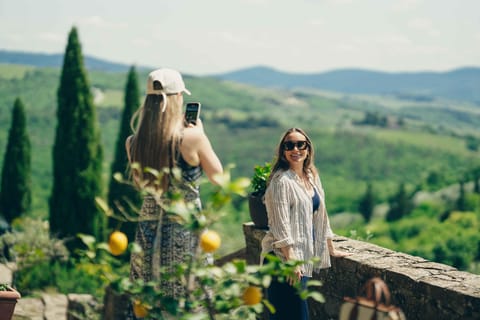
How Florence came to eat the way it does: the people, migrations and accidents that shaped the plate.

Key eras

13th-15th century: medieval guilds and the Mercato Vecchio

Florence's medieval food economy ran through the Arti, the trade guilds, which set the rules for butchers, bakers and innkeepers in the Mercato Vecchio (today's Piazza della Repubblica). The Arte dei Beccai (butchers) divided the city's meat trade by quarter; the Arte dei Fornai (bakers) controlled bread weights and prices.

1469-1543: the Medici banquets

Under Lorenzo il Magnifico and his successors, the Medici court built a banquet tradition that codified Tuscan cuisine for centuries. Caterina de' Medici's 1533 marriage to King Henri II of France brought Florentine cooks to the French court, where they introduced spinach, peas, ice cream and the artichoke; many French claims about Italian roots in their cuisine trace to that move.

1865-1870: Florence as capital of Italy

When Florence served as capital of the new Italian kingdom (1865-1870), the city's restaurant scene boomed to feed the moved government class. Caffe Doney on Via Tornabuoni and Caffe Gilli's Piazza della Repubblica room hosted the first Italian unification dinners. The 1874 Mercato Centrale was commissioned to consolidate the food trade away from the old market.

1891: Artusi and the codification of Tuscan cuisine

Pellegrino Artusi's 1891 'La scienza in cucina e l'arte di mangiare bene', written in Florence, codified Tuscan recipes for the first time as a national project. Ribollita, pappa al pomodoro, panzanella and crostini di fegatini all entered the canonical recipe record through Artusi. The book ran 15 editions in his lifetime and is still in print.

1990s-2026: the lampredotto-and-schiacciata revival

The 1990s lampredotto-cart revival, anchored by Da Nerbone and the Mercato del Porcellino, repositioned Florentine working-class food as the city's defining street grammar. All'Antico Vinaio's 2010 expansion turned the stuffed schiacciata into a global format, with queues that wrap the Via dei Neri block daily.
Immigrant influences

  • French (post-1533 Caterina de' Medici migration in reverse): Florence and France traded cooks for four centuries after the 1533 marriage; the French bouillabaisse, brioche and onion soup trace partly to Florentine kitchens, and the Florentine crepes alla fiorentina trace to French nuns.
  • Sephardic Jewish (post-1492 expulsion from Spain): Florence's Sephardic community, settled after the 1492 Alhambra Decree, brought carciofi alla giudia (twice-fried artichokes) and a kosher bread tradition that the Mercato Centrale's kosher butcher counter still anchors today.
  • Albanian (post-1991 migration): Florence's Albanian community runs many of the city's late-night kebab counters and corner shops, particularly around Mercato Centrale and Sant'Ambrogio, plus the halal kebab counters Italians eat after midnight.
  • Chinese (post-2000 migration into nearby Prato): While Florence has a smaller Chinese community than Prato 20km north, the Mercato delle Cascine Tuesday market and Esquilino-area shops draw on Prato's Chinese trade, with affordable noodle counters near Santa Maria Novella station.

Signature innovations

  • Caterina de' Medici exports Florentine cooking to the French court in 1533
  • Pellegrino Artusi codifies Tuscan cuisine in 1891 from Florence
  • Mercato Centrale opens 1874 in a cast-iron Giuseppe Mengoni building
  • Lampredotto cart format crystallises at Mercato Vecchio in the 19th century
  • Vivoli opens the first Florence artisan gelateria in 1929
  • Slow Food enrols ribollita in its Arca del Gusto in 1997
  • All'Antico Vinaio's 2010 expansion makes stuffed schiacciata a global format

Food History in Florence, FAQ

When is the best time to eat in Florence?

Peak food season in Florence is year-round.

What time do people eat in Florence?

Local dining hours: lunch around 12:30, dinner from 19:30.

How does tipping work in Florence?

service is typically included; small extra is welcome but not expected.

What is the one dish to try in Florence?

Ask the next local you meet what they would order. Florence rewards trust.

← Back to Florence food guide