What is in season in Florence. and what to order when the market changes.
Spring
- Carciofi (artichokes): March to May, peak season for the violet Toscano artichoke from Empoli, eaten fried alla giudia or braised with pecorino at Trattoria Cammillo.
- Fave (fava beans) e pecorino: April and May, raw fava beans shelled at the table with fresh pecorino primavera at Mercato Sant'Ambrogio and in every Tuscan trattoria.
- Asparagi (asparagus): Both white from Bassano and green from the Mugello hills appear at Mercato Centrale from late March through May, eaten with grated Parmigiano and lemon.
Summer
- Pomodori e panzanella: June to August, San Marzano and heirloom Tuscan tomatoes at the Mercato Centrale and Mercato Sant'Ambrogio drive the panzanella and pappa al pomodoro carte across the city.
- Cocomero e melone: July and August, fragole watermelon from Pistoia and Toscano melone arrive at the market stalls and gelato counters as sorbets.
- Gelato al gusto del mese: Vivoli, Gelateria della Passera and Perche No! all run summer-only flavours including pesca, fragola di bosco and fior di latte, daily until 23:30.
Autumn
- Porcini (boletus mushrooms): September and October, porcini from the Mugello hills appear at Mercato Centrale and in trattoria pasta carte; pappardelle ai porcini holds the season.
- Tartufo bianco di San Miniato (white truffle): Mid-October to mid-December, the San Miniato truffle, 40km west of Florence, is the regional white-truffle gold; Procacci serves the panino tartufato all season.
- Olio nuovo (new olive oil): November is the new-oil release; the Mercato delle Cascine contadini stalls open their barrels for fettunta tastings every Tuesday morning all month.
Winter
- Cavolo nero (Tuscan kale) e ribollita: December to February, the cavolo nero kale is at peak; every trattoria runs ribollita and zuppa di cavolo nero as the winter staple, with new olive oil drizzled on top.
- Cinghiale (wild boar): October to February, wild boar from the Tuscan hills runs as pappardelle al cinghiale or as the slow stew at Trattoria Mario, Trattoria Marione and Trattoria da Burde.
- Schiacciata alla fiorentina (Carnevale): January and February, the sweet sheet cake of Carnevale, covered in cocoa powder and stuffed with chocolate cream, appears at Forno Pugi, Caffe Gilli and every Florentine pasticceria.
Seasonal: tours, tastings and classes in Florence
Day trip · 9 hours
All the Tuscan experiences in 1 day: truffle hunting with truffle guide and his dog, cooking class, truffle lunch with wine and olive oil tasting in Chianti
Day trip · 6.5 hours
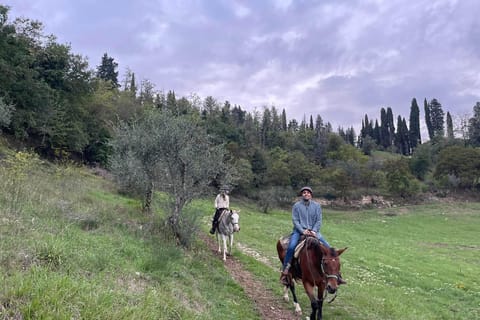
Embark on a private horseback ride through the Tuscan countryside, join a truffle hunt, and enjoy a full Tuscan lunch with local wine. Add a private guided wine tastin...
5 hours
Relax in the countryside and experience the magic of a truffle hunt adventure alongside beautiful dogs and a professional guide. Enjoy a Tuscan lunch with wine tasting...
See all 802 bookable experiences in Florence