Signature dishes
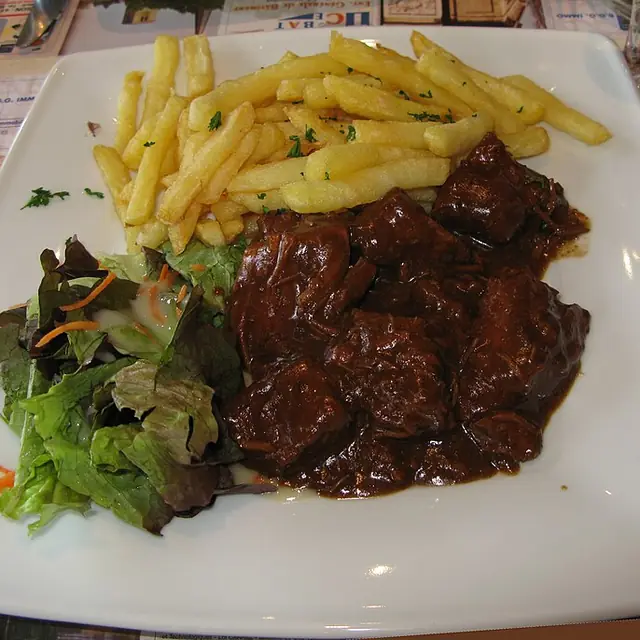
Beef braised slowly in dark northern beer, sweetened with brown sugar and thickened by a slice of mustarded pain d'épices dropped into the pot. Served with frites.
Where: Chez Raoul Estaminet, Estaminet Au Soyeux, Estaminet La Vieille France, La Ducasse, Le Barbu d'Anvers, Le Porthos
Price: €15-19
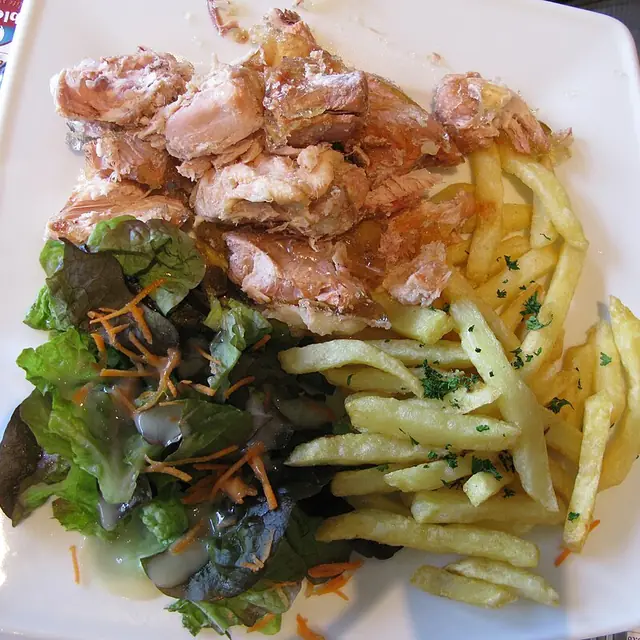
Four white meats set cold in a lightly vinegared jelly and eaten straight from the pot with hot frites, which melt the jelly into a sauce as you go.
Where: Estaminet Au Soyeux, La Petite Table, L'Estaminet du Welsh, Au Georges V, Le Porthos
Price: €14-18
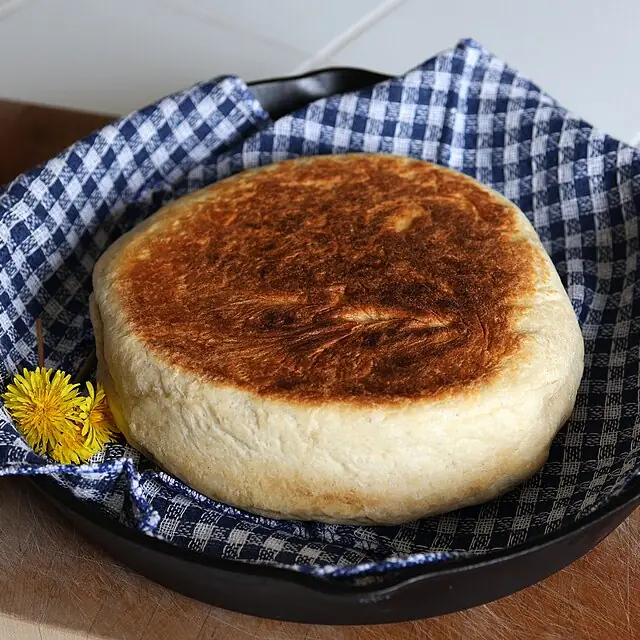
Cheddar melted down in beer and poured over toast spread with mustard and a slice of ham, then browned hard under the grill and buried under frites.
Where: L'Estaminet du Welsh, Au Georges V, La Ducasse, Estaminet Chez Ronny, Le Barbier qui Fume (Place Rihour), Les Compagnons de la Grappe
Price: €13-17
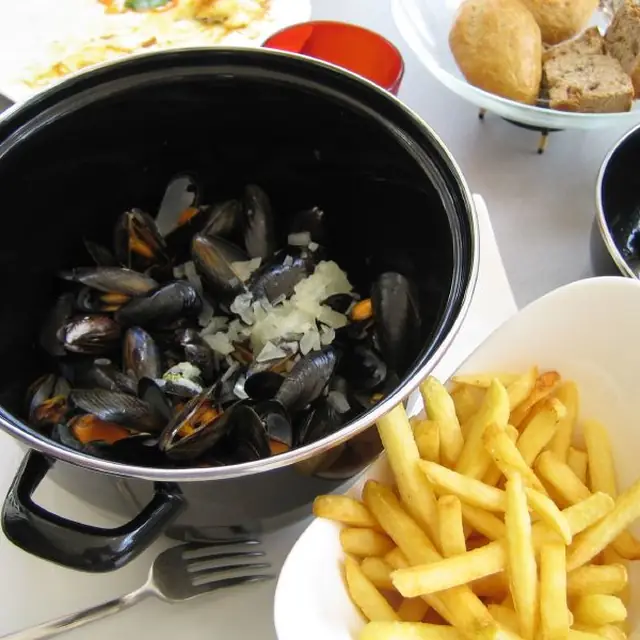
Mussels steamed open in white wine, shallot, parsley and butter, served in the pot with a paper cone of frites kept separately so they stay crisp.
Where: Aux Moules de Lille, Brasserie La Chicorée, Le Lys
Price: €16-22
A thin oval waffle split horizontally while still warm and filled with a paste of butter, sugar and Madagascar vanilla, then wrapped in gold paper.
Where: Méert, Boulangerie Brier
Price: €3-5
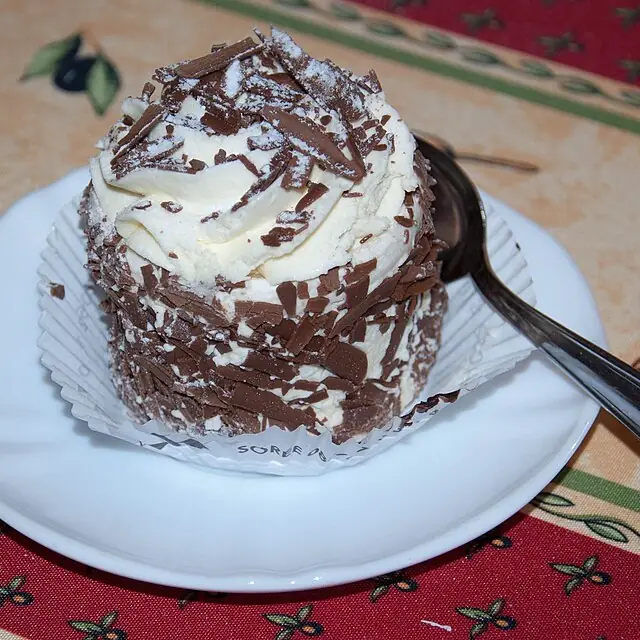
Two dry meringues joined with whipped cream, coated all over in more cream and rolled in chocolate shavings, sometimes topped with a candied cherry.
Where: Aux Merveilleux de Fred (Rue de la Monnaie), Aux Merveilleux de Fred (Wazemmes), Aux Merveilleux de Fred (Gare Lille Flandres)
Price: €3-6
Belgian endives braised until bitter-sweet, wrapped in ham, laid in bechamel and baked under cheese until the top blisters. Called chicons here, never endives.
Where: Chez Raoul Estaminet, Estaminet Au Vieux de la Vieille
Price: €12-16
Bintje potatoes fried twice, the second time in beef fat, served in a paper cone with a fricadelle, the long skinless sausage of the northern friterie.
Where: Friterie des Lilas, Friterie Meunier, La Friterie du Splendid, Bierbuik
Price: €5-9
An open tart of yeasted dough baked with maroilles and cream until the cheese collapses into the base. The Avesnois version of the northern savoury tart.
Where: Bierbuik, Estaminet La Ch'tite Brigitte
Price: €9-14
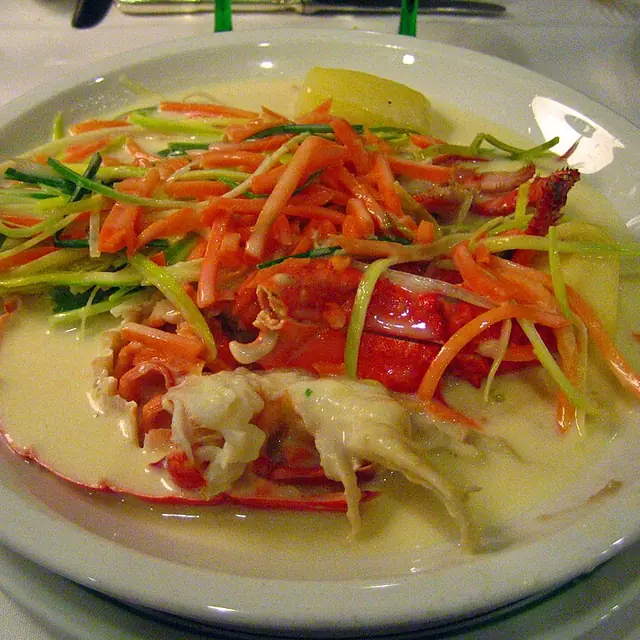
A pale stew of chicken or fish and cut vegetables in a broth bound with egg yolk and cream. Ghent's dish, adopted across French Flanders and still on Lille cards.
Where: Le Lys
Price: €17-22
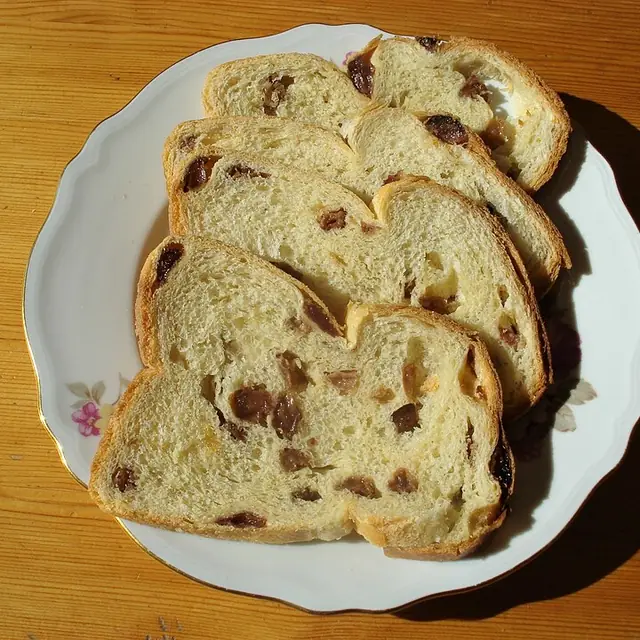
A Belgian enriched brioche loaf studded with raisins, sliced thick and eaten with butter at breakfast or with an afternoon coffee. Sugar-pearl versions exist too.
Where: Aux Merveilleux de Fred (Gare Lille Flandres), Boulangerie Brier, Banana Drama
Price: €4-8
Chicken braised and finished in a sauce of cream and melted maroilles, the washed-rind cheese of the Avesnois. Powerfully savoury, and always served with frites.
Where: Estaminet Chez la Vieille, Estaminet La Vieille France, L'Estaminet Lillois
Price: €16-20
A grain spirit flavoured with juniper, distilled in the Nord since the 18th century. Drunk neat and very cold after a plate of carbonade, or stirred into coffee.
Where: Estaminet Au Vieux de la Vieille, Genever
Price: €5-9
Carbonade flamande
Beef braised slowly in dark northern beer, sweetened with brown sugar and thickened by a slice of mustarded pain d'épices dropped into the pot. Served with frites.
History: Carbonade belongs to the whole of Flanders, and Lille inherited it along with the language and the beer. It is mill-worker food: cheap shoulder cuts, a long fire and whatever brown ale was in the cellar. Recipes vary by household and by brewery, with oud bruin, abbey beer and Flanders red all in use. East and West Flanders add prunes; Lille estaminets mostly do not. The gingerbread is the trick, dissolving into the sauce and doing the work a roux would do further south.
Where to try it: Chez Raoul Estaminet, Estaminet Au Soyeux, Estaminet La Vieille France, La Ducasse, Le Barbu d'Anvers, Le Porthos
Watch out for: Gluten
Potjevleesch
Four white meats set cold in a lightly vinegared jelly and eaten straight from the pot with hot frites, which melt the jelly into a sauce as you go.
History: The name is Flemish for little pot of meats, and the dish is recorded in Taillevent's Viandier of 1486 as already popular around Dunkerque. Westhoek farmers made it in winter, preserving good cuts with wine, vinegar and spice rather than salt or smoke, and ate it cold in the fields at harvest. Purists use rabbit, chicken and pork; a fourth camp adds veal. It reaches Lille from the coast and is now a fixture of every estaminet card on Rue de Gand.
Where to try it: Estaminet Au Soyeux, La Petite Table, L'Estaminet du Welsh, Au Georges V, Le Porthos
Welsh
Cheddar melted down in beer and poured over toast spread with mustard and a slice of ham, then browned hard under the grill and buried under frites.
History: The dish is Welsh in origin and English in name, and how it reached the Nord is not settled. One story puts Welsh soldiers at Baincthun during the 1544 siege of Boulogne, though no reliable source supports it. What is certain is that it took root along the Cote d'Opale and across Nord-Pas-de-Calais, where the French version is heavier and more orange than the British one. Lille has run a Welsh'Fest every November since 2023, which tells you how seriously the city takes it.
Where to try it: L'Estaminet du Welsh, Au Georges V, La Ducasse, Estaminet Chez Ronny, Le Barbier qui Fume (Place Rihour), Les Compagnons de la Grappe
Watch out for: Gluten, Milk
Moules-frites
Mussels steamed open in white wine, shallot, parsley and butter, served in the pot with a paper cone of frites kept separately so they stay crisp.
History: Cheap mussels off the Flemish coast met cheap winter potatoes, and the pairing became the national dish of Belgium and the default of northern France. In Lille it is bound to the Braderie: on the first weekend of September the restaurants serve mussels by the tonne and stack the empty shells on the pavement, competing for the tallest heap. A typical edition gets through around 500 tonnes of mussels and 30 tonnes of frites. Marinière is the standard, but maroilles, curry and beer versions are all common here.
Where to try it: Aux Moules de Lille, Brasserie La Chicorée, Le Lys
Watch out for: Molluscs
Gaufre fourrée
A thin oval waffle split horizontally while still warm and filled with a paste of butter, sugar and Madagascar vanilla, then wrapped in gold paper.
History: Meert has traded on Rue Esquermoise since 1761 and is one of the oldest patisseries in France still working. The filled waffle became its signature after Michael Paulus Gislinus Meert, a confectioner of Belgian origin, took the house over in 1849. By 1864 Meert was an official supplier to Leopold I of Belgium, and Charles de Gaulle, born a few streets away, had them sent to the Elysee. The waffle is flat rather than deep, and is meant to be eaten at room temperature rather than hot.
Where to try it: Méert, Boulangerie Brier
Watch out for: Gluten, Milk, Eggs
Merveilleux
Two dry meringues joined with whipped cream, coated all over in more cream and rolled in chocolate shavings, sometimes topped with a candied cherry.
History: The merveilleux is Belgian by origin and was reworked in French Flanders, where the Hazebrouck pastry chef Roger Mouille made a lighter version bound with whipped cream rather than buttercream. Frederic Vaucamps built a business on it, opening the first Aux Merveilleux de Fred on Rue de la Monnaie in Lille in 1997 before the brand reached Paris, London and New York. The northern French variants sometimes swap the whipped cream for chocolate buttercream and are formed as spheres rather than cylinders. Speculoos, coffee and cherry versions are all standard.
Where to try it: Aux Merveilleux de Fred (Rue de la Monnaie), Aux Merveilleux de Fred (Wazemmes), Aux Merveilleux de Fred (Gare Lille Flandres)
Watch out for: Milk, Eggs
Chicons au gratin
Belgian endives braised until bitter-sweet, wrapped in ham, laid in bechamel and baked under cheese until the top blisters. Called chicons here, never endives.
History: The endive is the winter vegetable of the Nord, grown in the dark so it stays pale and tight. Lille calls it a chicon, and the gratin is what the region does with it: braised, wrapped in ham, buried in bechamel and finished with cheese. Maroilles turns up in place of gruyere in the estaminets, which makes the dish considerably more assertive. It is a household dish before it is a restaurant one, and it sits on the estaminet card in Lille all winter alongside carbonade.
Where to try it: Chez Raoul Estaminet, Estaminet Au Vieux de la Vieille
Watch out for: Milk, Gluten
Frites et fricadelle
Bintje potatoes fried twice, the second time in beef fat, served in a paper cone with a fricadelle, the long skinless sausage of the northern friterie.
History: The friterie is its own institution in the Nord, a wooden hut or a shopfront doing one thing properly. Frites are cut fresh, blanched at low heat and finished hot, traditionally in beef fat rather than oil, which is what gives them their flavour and their reputation. The fricadelle is the standard partner, a mixed-meat sausage with no skin, fried until dark. Sauces run to andalouse, samourai and, in Lille, a maroilles sauce that no other region attempts.
Where to try it: Friterie des Lilas, Friterie Meunier, La Friterie du Splendid, Bierbuik
Watch out for: Gluten
Flamiche au maroilles
An open tart of yeasted dough baked with maroilles and cream until the cheese collapses into the base. The Avesnois version of the northern savoury tart.
History: Flamiche is a family of tarts running across Belgium, the Nord and Picardy, each region filling it with what it has. Picardy uses leeks; Abbeville and the Somme bay use leeks and salmon; Dinant makes a curd-cheese version and founded a confraternity for it in 1956. The Avesnois version, the one Lille eats, uses maroilles, the washed-rind cheese first made by a monk at the Abbey of Maroilles in 962. It reaches the table hot and is meant to be cut in wedges and eaten with beer.
Where to try it: Bierbuik, Estaminet La Ch'tite Brigitte
Watch out for: Gluten, Milk
Waterzooï
A pale stew of chicken or fish and cut vegetables in a broth bound with egg yolk and cream. Ghent's dish, adopted across French Flanders and still on Lille cards.
History: Waterzooi comes from Ghent, and the second half of the name traces to Middle Dutch words for boiling. It began as a fish stew, made with burbot from the rivers around the city, and turned to chicken when the water grew too polluted for the fish to survive. Charles V is recorded as eating the rich version even while suffering from gout. It crossed the border with everything else Flemish and now sits on brasserie cards in Lille, usually as chicken, occasionally as the original fish.
Where to try it: Le Lys
Watch out for: Milk, Eggs, Celery
Cramique
A Belgian enriched brioche loaf studded with raisins, sliced thick and eaten with butter at breakfast or with an afternoon coffee. Sugar-pearl versions exist too.
History: The word goes back to 1257, when cremmiche was used at an abbey in Nivelles as a measure for flour or bread. Cramique itself appears in Brussels in 1831. It is Belgian by origin and standard across the Nord and Luxembourg, sold by every serious bakery in Lille and eaten at breakfast or as a four o'clock snack. Toasted, it also turns up beside foie gras. Lille bakeries make it both plain with raisins and in a sugar-pearl version called cramique au sucre.
Where to try it: Aux Merveilleux de Fred (Gare Lille Flandres), Boulangerie Brier, Banana Drama
Watch out for: Gluten, Milk, Eggs
Poulet au maroilles
Chicken braised and finished in a sauce of cream and melted maroilles, the washed-rind cheese of the Avesnois. Powerfully savoury, and always served with frites.
History: Maroilles is reported to have first been made in 962 by a monk at the Abbey of Maroilles, southeast of Lille, and it won AOC status in 1976 and AOP in 1996. It is a washed-rind cheese with an orange crust and a smell that arrives before the plate does. Northern kitchens use it as a sauce base rather than a cheese board, and chicken in maroilles is the most common result. Every estaminet on Rue de Gand has a version, and the differences come down to how much rind goes in the pan.
Where to try it: Estaminet Chez la Vieille, Estaminet La Vieille France, L'Estaminet Lillois
Watch out for: Milk
Genièvre
A grain spirit flavoured with juniper, distilled in the Nord since the 18th century. Drunk neat and very cold after a plate of carbonade, or stirred into coffee.
History: Joseph Claeyssens converted an oil mill on the Deule at Wambrechies into a genever distillery in 1817, and it still runs one of the last French genievre productions on a near-unchanged process. The spirit became the drink of the region's miners and textile workers, taken neat for warmth or poured into coffee to make a bistouille. It won a prize at the 1935 Brussels international exhibition and reached its peak in the 1930s. In Lille it is the correct thing to order after a heavy estaminet plate.
Where to try it: Estaminet Au Vieux de la Vieille, Genever