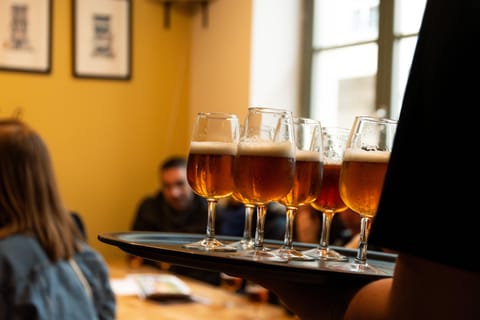
Guided tour · 2.5 hours
Lille: Scavenger hunt and beer tasting in Old Lille
Join a beer-themed scavenger hunt in Old Lille. Your game includes discovering the city, the history of Lille beer, and tastings!
from€30 Check dates
How Lille came to eat the way it does: the people, migrations and accidents that shaped the plate.
How Lille came to eat the way it does: the people, migrations and accidents that shaped the plate.
The cheese that flavours half of Lille's menu is older than the city's fame. Maroilles is reported to have first been made in 962 by a monk at the Abbey of Maroilles, a village southeast of Lille. It won French AOC status in 1976 and AOP in 1996, and its orange washed rind still turns up melted over chicken, folded into flamiche and stirred into frites sauce.
Lille grew rich as a Flemish merchant town, and from the 12th century the fame of its cloth fair spread. The Braderie is thought to date from the same period, when servants were allowed to sell their masters' cast-offs in the street. It still runs on the weekend of the first Sunday in September and still draws more than two million people.
Meert was founded in 1761 and is one of the oldest patisseries in France still trading. The house took its name and its direction from Michael Paulus Gislinus Meert, a confectioner of Belgian origin who took over in 1849 and made the flat waffle filled with Madagascar vanilla sugar the shop's signature. By 1864 it was an official supplier to Leopold I of Belgium.
Joseph Claeyssens turned an oil mill on the Deule at Wambrechies into a genever distillery in 1817. The grain spirit flavoured with juniper became the drink of the region's miners and textile workers, taken neat or stirred into coffee. The distillery still trades from its riverside shop, and genievre is still the correct thing to order after a plate of carbonade.
Lille's textile mills pulled tens of thousands of workers into the city, and the estaminet fed them: a tavern with a stove, a beer pump and one pot of stew. Carbonade flamande, welsh and potjevleesch are all mill-worker food, cheap cuts cooked long in beer. Chicory grown locally was roasted as a coffee substitute, and it is still drunk in the Nord.
Florent Ladeyn opened Bloempot in a converted carpentry workshop and proved Flanders produce could carry a tasting menu. A cluster of young rooms followed, and by the 2026 Michelin guide three Lille addresses held a star: Le Restaurant du Cerisier, Purete and Ginko. The estaminets did not go anywhere. They just stopped being the only option.
Guided tour · 2.5 hours
Join a beer-themed scavenger hunt in Old Lille. Your game includes discovering the city, the history of Lille beer, and tastings!
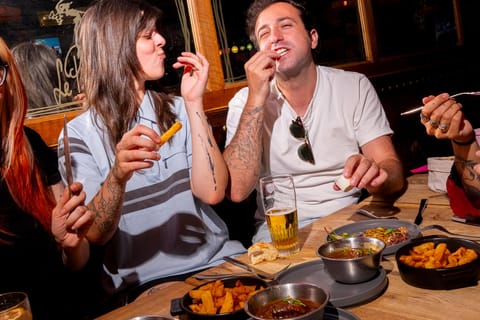
Guided tour · 3 hours
A gourmet tour of 6 spots to discover Lille! Enjoy small portions from Vieux Lille's best savory and sweet spots. Fun facts and good vibes with our fantastic guides!

Guided tour · 2 hours
A guided zythological walk that will take you from specialized bars and wine merchants to micro-breweries to discover the know-how and the brewing revival that is shak...