

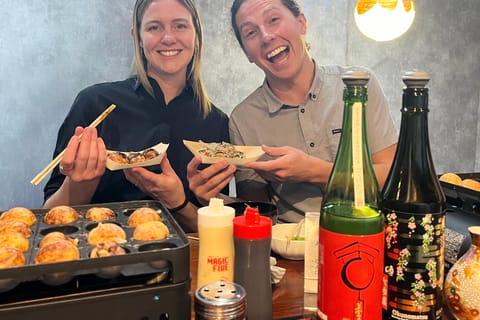
Osaka runs on kuidaore (eat until you drop), a phrase that captures the city's defining obsession. Where Tokyo pursues refinement through restraint, Osaka pursues it through abundance: more flavour, more fat in the dashi, more takoyaki shops on a single street than most cities have in a borough. The city's merchant-era nickname was tenka no daidokoro, the kitchen of the country, because every ingredient shipped to Edo first passed through Osaka ports. That history left a city that knows how to source, how to cook, and above all, how to eat without ceremony. The Dotonbori canal district is the visual headline: giant mechanical crabs, neon dragons above ramen counters, and the running Glico man lit against the night sky. But the real eating happens in the backstreets: at a standing kushikatsu counter in Shinsekai where the sauce tub is communal and double-dipping is the one unforgivable crime, in a tatami-floored kaiseki room in Kitashinchi where the chef sources Naniwa vegetables grown in Osaka's own suburban fields, or in the narrow alley of Hozenji Yokocho where lantern-lit facades have barely changed since the Meiji era. Osaka also holds the Michelin Guide's fourth-highest global star count after Tokyo, Paris, and Kyoto, with three three-star rooms and sixty-six one-star entries in the 2026 edition. The spectrum runs from a 1844 oden shop that still uses the same tako-kanroni recipe to a ten-seat French counter that riffs on Japanese condiments from Kagoshima and Amami Oshima. Price has nothing to do with quality here: a ¥800 ramen bowl at Kinryu can be more satisfying than a tasting menu elsewhere.
Where to eat in Osaka
All 18 restaurants-
Kashiwaya
- ★ 4.8
- Kaiseki
- ¥¥¥¥
- Umeda and Kita
Order Seasonal kaiseki course
-
La Cime
- ★ 4.8
- French
- ¥¥¥¥
- Kitashinchi and Fukushima
Order Chef's tasting menu, Japanese beef course
-
Sushi Minazuki
Order Omakase course
-
Agnel d'Or
- ★ 4.7
- French
- ¥¥¥¥
- Kitashinchi and Fukushima
Order Chef's omakase menu
-
Nagahori
- ★ 4.6
- Izakaya
- ¥¥¥
- Kitashinchi and Fukushima
Order Roasted chicken, Dashimaki tamago, Sake pairing
-
Chi-Fu
- ★ 4.6
- Chinese
- ¥¥¥¥
- Umeda and Kita
Order Chef's tasting menu
Book food experiences in Osaka


Food festivals coming up in Osaka
All Osaka food festivalsWhere to stay in Osaka
All Osaka hotels-
 Osaka Guesthouse HIVE - Hostel
Check prices
Osaka Guesthouse HIVE - Hostel
Check prices
-
 Qoo Hostel Osaka
Check prices
Qoo Hostel Osaka
Check prices
-
 Homee Osaka
Check prices
Homee Osaka
Check prices
-
 Nest Hotel Osaka Shinsaibashi
Check prices
Nest Hotel Osaka Shinsaibashi
Check prices
-
 APA Hotel Osaka-Tanimachi
Check prices
APA Hotel Osaka-Tanimachi
Check prices
-
 Nest Hotel Osaka Umeda
Check prices
Nest Hotel Osaka Umeda
Check prices
-
 HOTEL UNIZO Osaka Shinsaibashi
Check prices
HOTEL UNIZO Osaka Shinsaibashi
Check prices
-
 APA Hotel Osaka-Tenma
Check prices
APA Hotel Osaka-Tenma
Check prices
-
 ibis Osaka Umeda
Check prices
ibis Osaka Umeda
Check prices
-
 Osaka View Hotel Honmachi
Check prices
Osaka View Hotel Honmachi
Check prices
-
 OYO Hotel Gloire Osaka
Check prices
OYO Hotel Gloire Osaka
Check prices
-
 Osaka Tomato Hostel
Check prices
Osaka Tomato Hostel
Check prices
Also compare
Hotels are listed by our booking partners, not picked by our editors. We earn a commission if you book, at no cost to you.
Getting there and around Osaka


Sold by our booking partners. We earn a commission if you book, at no cost to you.
Signature dishes in Osaka
All 18 dishes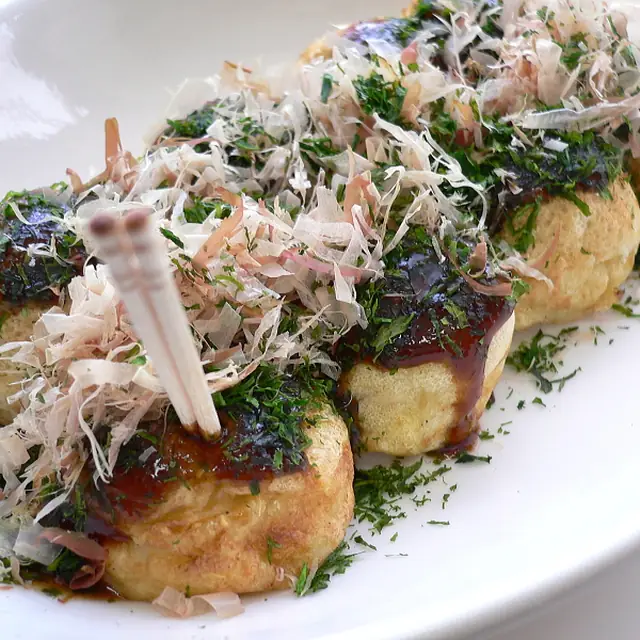
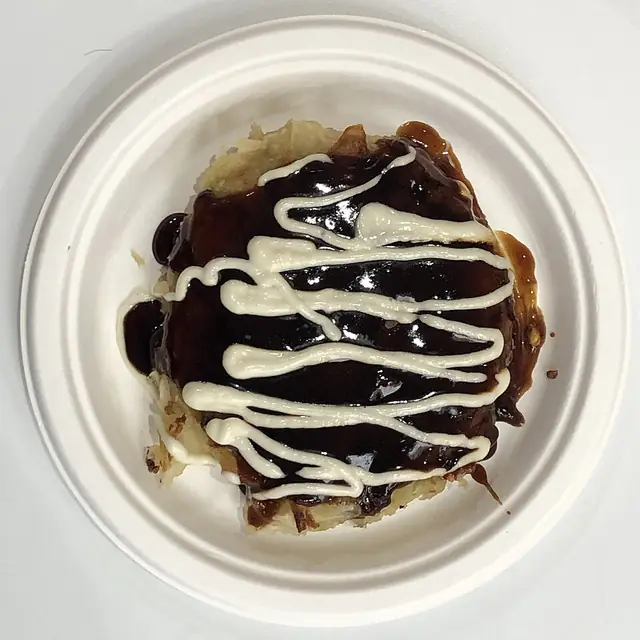
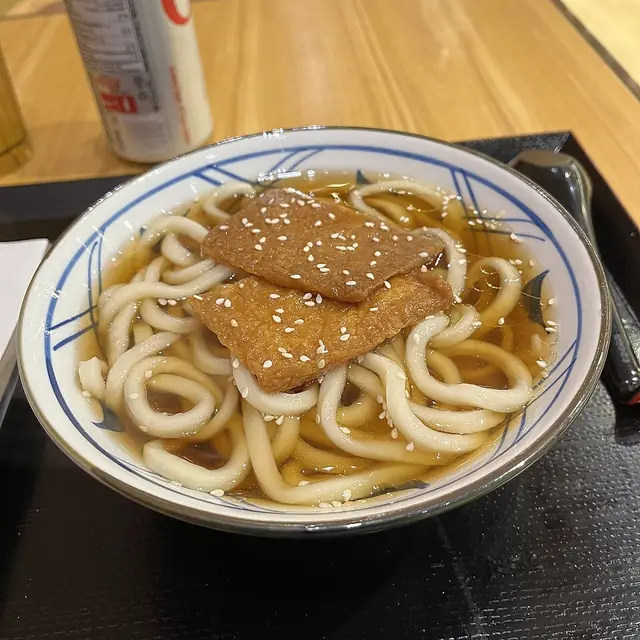
More dishes
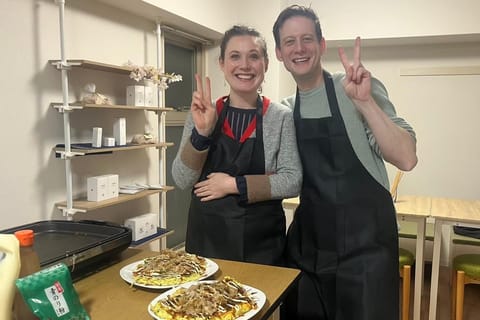
Where to eat by neighborhood
All neighbourhoods- Dotonbori and Namba24 places
- Shinsekai7 places
- Kitashinchi and Fukushima10 places
- Shinsaibashi and Amerikamura14 places
- Nakanoshima and Kitahama9 places
- Tennoji and Abeno6 places
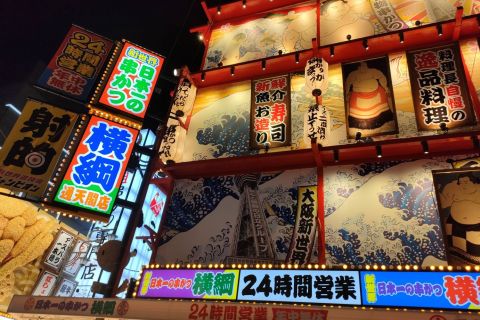
Also in Osaka: tickets for the sights



Tickets are sold by our booking partners. We earn a commission if you book, at no cost to you.
Map of Osaka
Every restaurant, cafe, market and bar we cover in Osaka, pinned. Click a pin for the page.
Everything in Osaka
When to come hungry in Osaka
- Peak food season
- October and November for matsutake, Naniwa negi (sweet winter leeks), crab season opening, and the year's richest dashi. April to early June for spring vegetables, cherry-blossom sweets, and bamboo shoots at their peak. August for hamo (pike conger) grilled with sansho pepper, a classic Osaka summer dish. December through February for fugu (pufferfish) hot pot, oysters, and winter yellowtail.
- Local dining hours
- Lunch 11:30-14:00. Dinner 17:30-22:00, with last orders typically 21:30. Kushikatsu and izakaya counters open from 17:00 and run to midnight or later. Ramen shops in Dotonbori, including several 24-hour operations, serve through the night. High-end kaiseki and omakase counters run fixed seatings of two per evening: typically 18:00 and 20:30. Sunday closures are common at fine-dining and many specialist counters.
- Tipping
- No tipping anywhere in Japan. Service is included in the bill. Most izakaya and drinking counters add an otoshi (small house amuse) charge of 300 to 600 yen per person. A polite arigato gozaimashita and a bow are the expected currency. Attempting to tip will cause embarrassment on both sides.
Osaka food, FAQ
What food is Osaka known for?
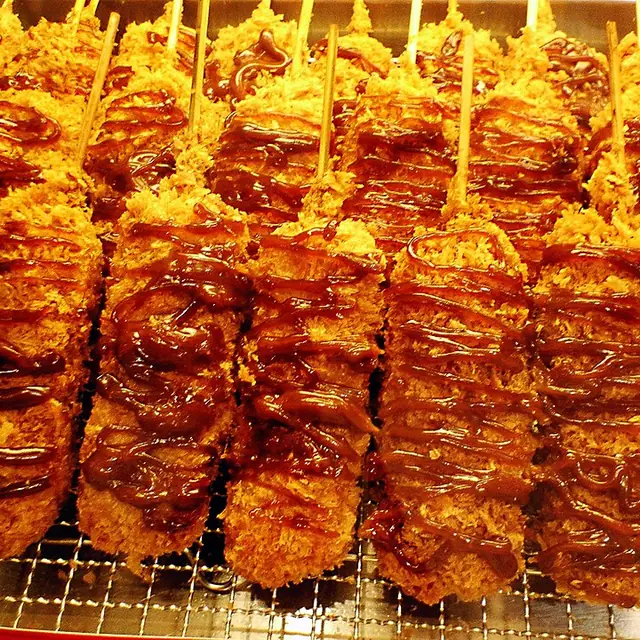
Osaka's signature dishes include Takoyaki, Kushikatsu, Okonomiyaki, Kitsune Udon, Fugu (Pufferfish). See our signature dishes chapter for where to eat each.
What are the best food neighborhoods in Osaka?
TableJourney editors map Osaka by district. Dotonbori and Namba, Shinsekai, Kitashinchi and Fukushima, Shinsaibashi and Amerikamura are among the strongest for food, each with its own guide.
Where should I eat fine dining in Osaka?
Editor picks in Osaka include Kashiwaya Osaka Senriyama, La Cime, Koryu, plus the full fine dining chapter on TableJourney.
Are there food tours in Osaka?
TableJourney covers 5 editor-picked food tours in Osaka, with what each shows you and how much to budget.
Does Osaka have good vegetarian or vegan food?
TableJourney's Osaka dietary chapter covers vegan, vegetarian, gluten_free, halal venues, each editor-picked with what to order and how to ask.