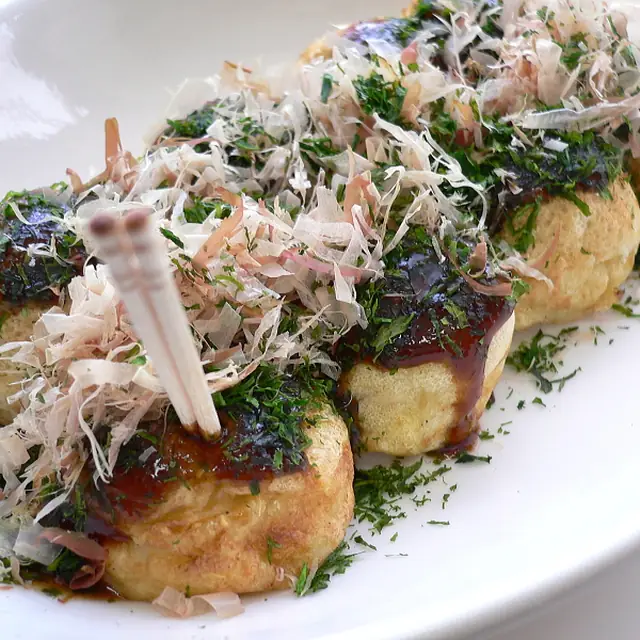
Takoyaki ★ 4.0
Spherical balls of thin wheat-dashi batter enclosing octopus, spring onion, tenkasu, and pickled ginger, cooked in a cast-iron mould and served in groups of eight.
Where: Aizuya Takoyaki, Wanaka Takoyaki Shinsaibashi
The plates that define Osaka: what they are, and where to eat the canonical version.
The plates that define Osaka. what they are, where they came from, and where to eat the canonical version.
Spherical balls of thin wheat-dashi batter enclosing octopus, spring onion, tenkasu, and pickled ginger, cooked in a cast-iron mould and served in groups of eight.
Where: Aizuya Takoyaki, Wanaka Takoyaki Shinsaibashi
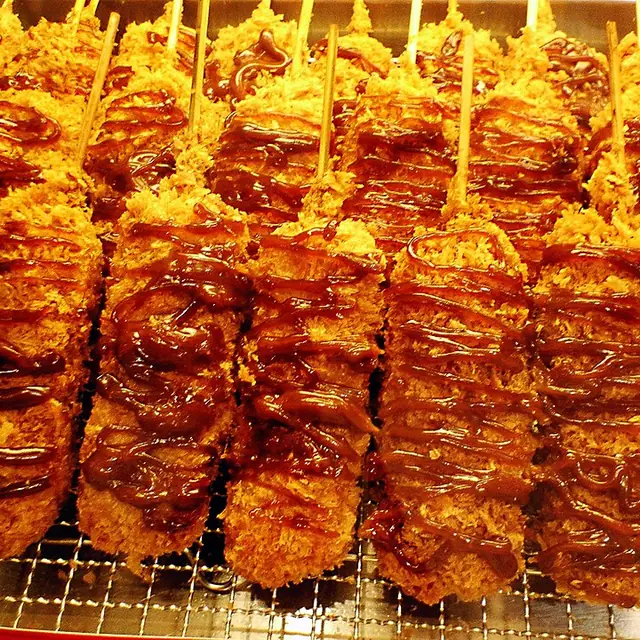
Deep-fried skewers of meat, vegetable, and seafood in very crisp panko batter, served with a communal Worcestershire sauce pot. No double-dipping is the one rule.
Where: Daruma Shinsekai Honten, Kushikatsu Daruma Shinsekai
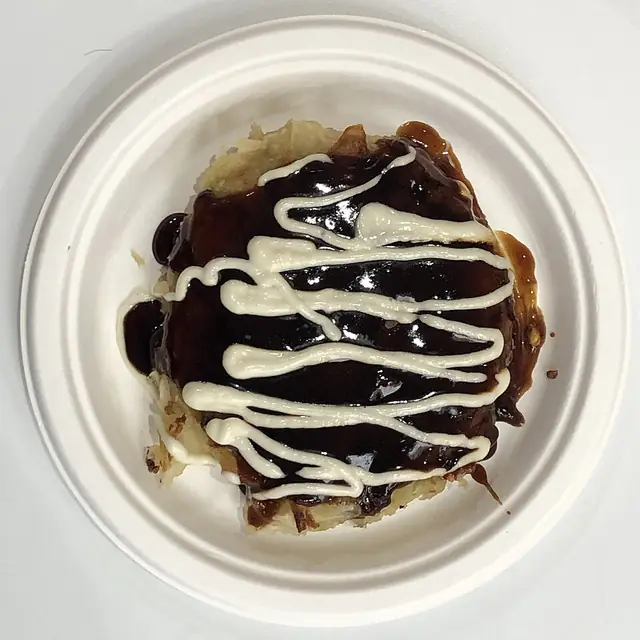
Osaka's savoury pancake: a wheat batter with grated nagaimo yam, shredded cabbage and pork belly or squid cooked on a teppan, finished with okonomiyaki sauce, Kewpie mayonnaise, bonito flakes and aonori.
Where: Okonomiyaki Mizuno, Tsuruhashi Fugetsu Namba, Teppan Sakaba Hiro
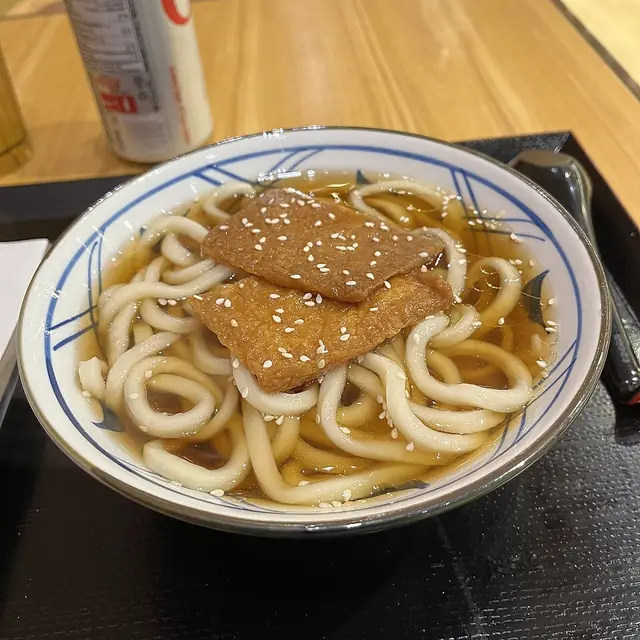
Thick soft udon noodles in pale kombu-bonito dashi topped with sweetened aburaage tofu skin that dissolves slowly into the broth. Osaka's defining noodle dish.
Where: Dotonbori Imai Honten
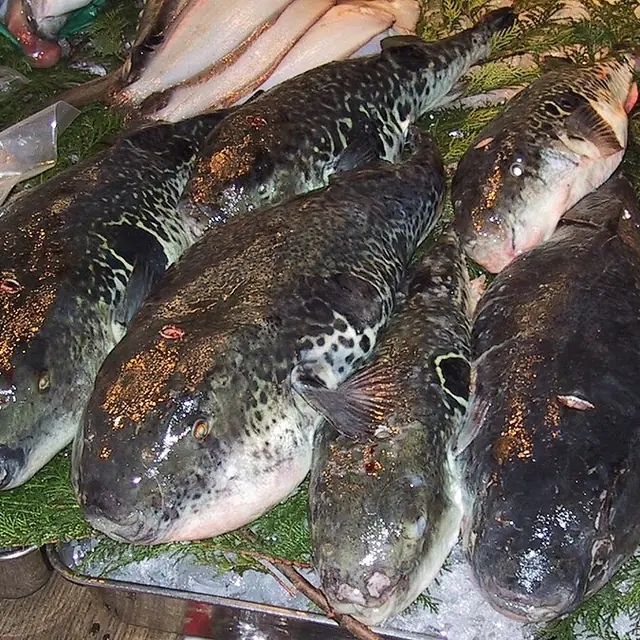
The poisonous pufferfish served only by licensed chefs under Japanese law. Osaka is Japan's leading fugu market after Shimonoseki; tessa sashimi and chirinabe are the canonical presentations.
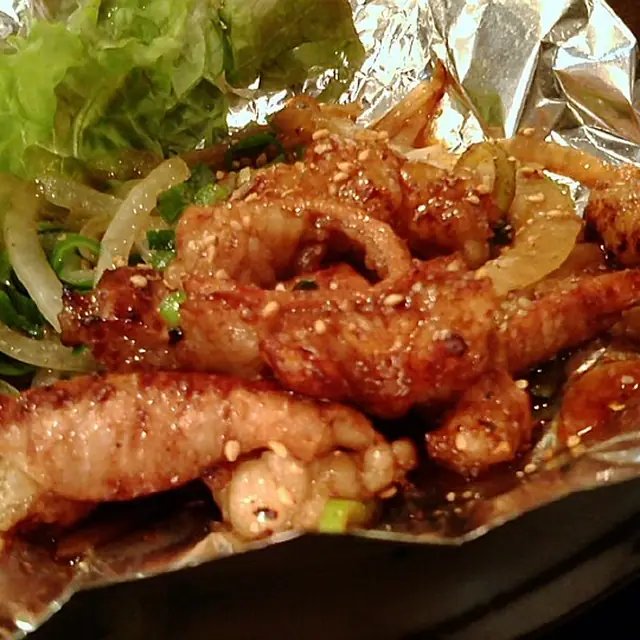
Grilled offal (tripe, intestine, heart, tongue) cooked over charcoal at a tabletop grill with house tare sauce. Osaka's Zainichi Korean community developed this tradition in Tsuruhashi.
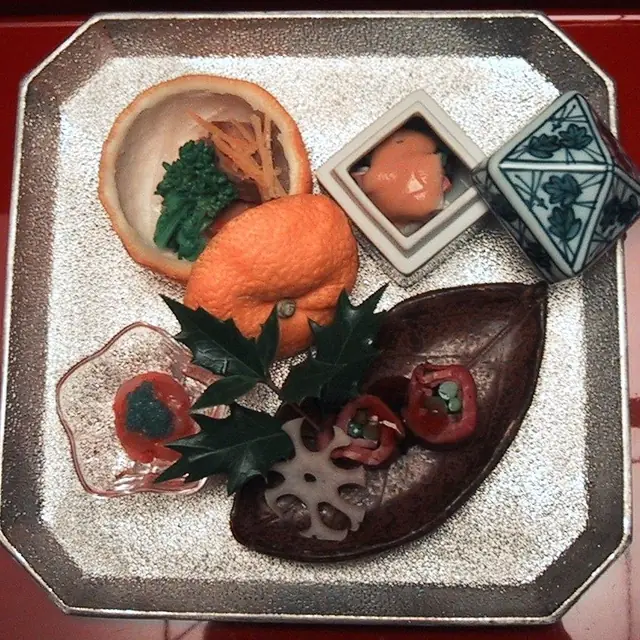
Japan's multi-course tasting meal in seasonal sequence. Osaka kaiseki emphasises dashi intensity and Osaka Bay seafood over the vegetable-forward Kyoto approach.
Where: Kashiwaya, Koryu, Ajikitcho Horieten
Osaka's indigenous sushi form predating Edo nigiri by two centuries: kombu-marinated mackerel pressed over seasoned rice in a rectangular mould. Sold in triangular kombu-wrapped cuts.
Where: Yoshino Sushi Honten
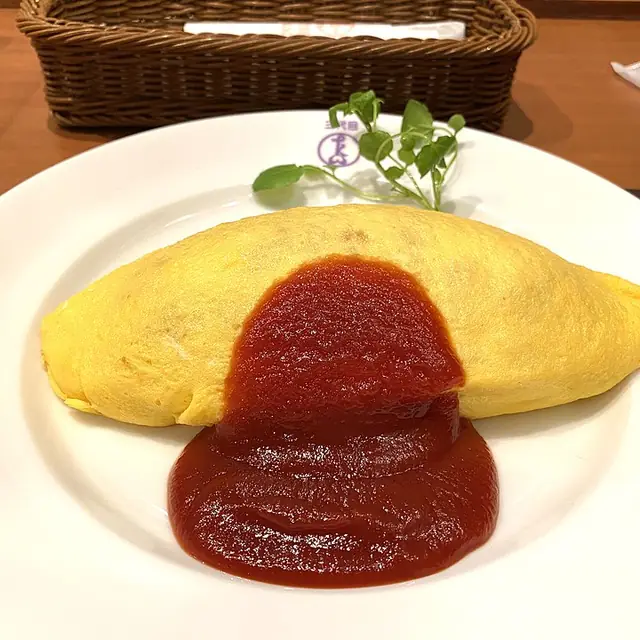
Ketchup-seasoned chicken rice wrapped in a soft folded omelette, finished with a stripe of tomato sauce or demi-glace. Yoshoku (Japanese-Western) comfort food, invented in Osaka and now national.
Where: Hokkyokusei Shinsaibashi, Kadoya Shokudo, Dotonbori Imai Honten
Price: ¥1200-2200
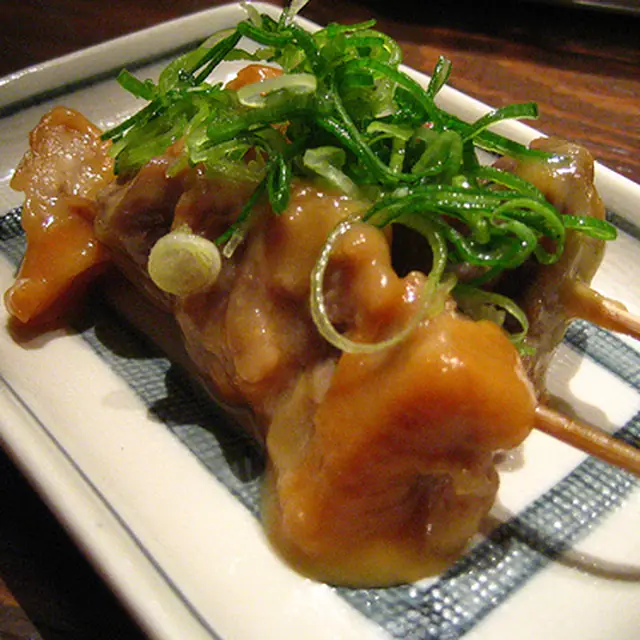
Beef tendon and konjac simmered for hours in a sweet white miso, mirin and dashi broth until the tendon collapses to gelatinous tenderness. The Shinsekai dive-bar staple, served on skewers with a beer.
Where: Daruma Shinsekai Honten, Kushikatsu Daruma Shinsekai, Daruma Kushikatsu Standing Counter Shinsekai
Price: ¥350-650 a skewer
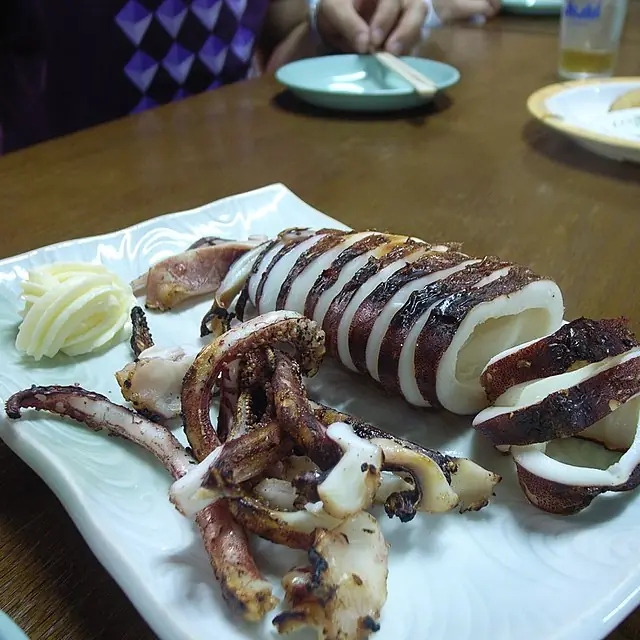
Thin flour-and-dashi batter mixed with chopped squid, pressed between two scalding iron plates and cooked in 90 seconds to a chewy, savoury pancake. The Hanshin department store snack park's flagship dish.
Where: Kuromon Ichiba Market, Dotonbori Takoyaki Juhachiban, Aizuya Takoyaki Namba
Price: ¥200-400
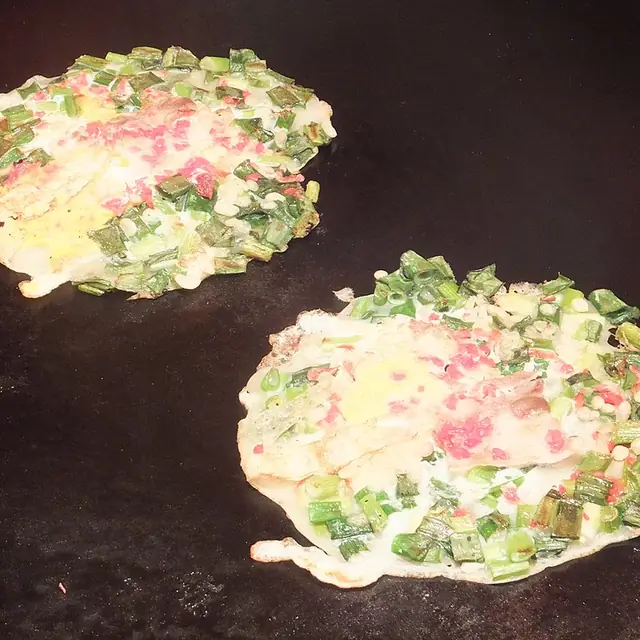
Thin Osaka pancake stacked heavily with finely sliced naga-negi spring onion, often filled with sliced beef or squid, brushed with soy and Worcestershire and folded. The lighter, scallion-led cousin of okonomiyaki.
Where: Dotonbori Imai Honten, Kadoya Shokudo
Price: ¥800-1500
Osaka okonomiyaki layered over a bed of yakisoba noodles on the griddle, capped with egg and finished with okonomi sauce, mayonnaise and bonito flakes. Heavier and more carbohydrate-dense than plain okonomiyaki.
Where: Okonomiyaki Mizuno, Kadoya Shokudo
Price: ¥1100-1700
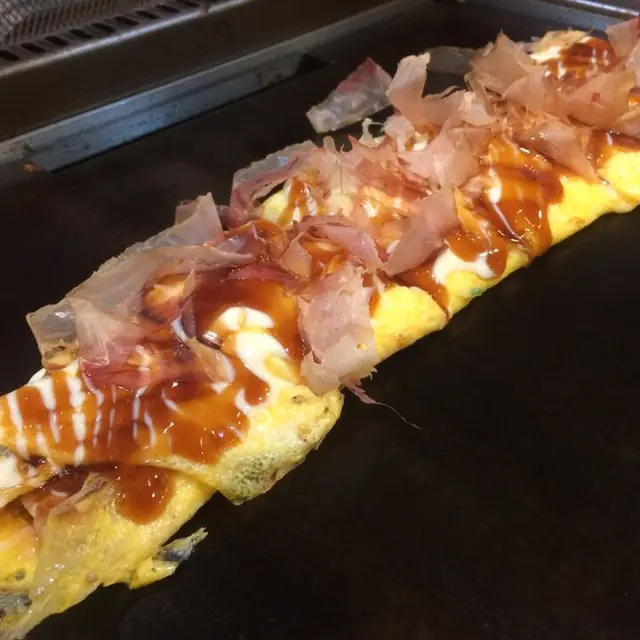
Osaka teppanyaki of grilled pork belly wrapped in a thin folded omelette, lacquered with okonomi sauce, kewpie mayonnaise and bonito flakes. The classic okonomiya bar snack while the main pancake cooks.
Where: Okonomiyaki Mizuno, Teppan Sakaba Hiro
Price: ¥700-1100
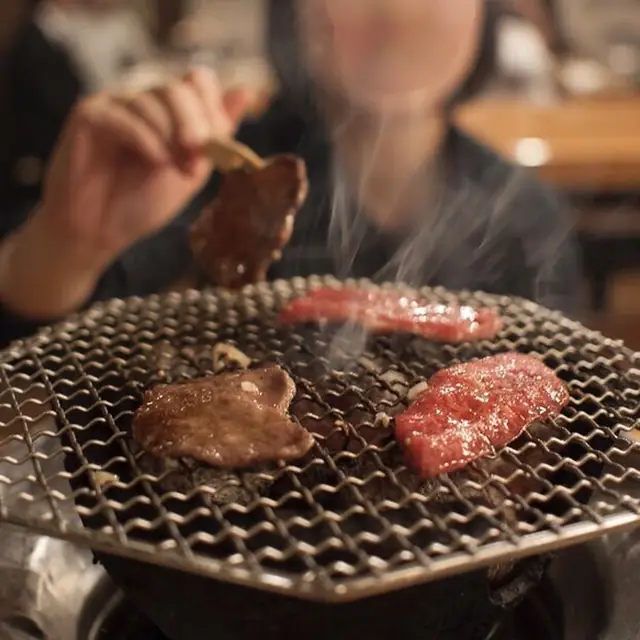
Charcoal-grilled marinated beef and offal eaten table-side, the canonical Korean-Japanese Osaka meal. The Tsuruhashi district has the country's densest concentration of family-run yakiniku rooms.
Where: Tsuruhashi Fugetsu Namba, Tsuruhashi Korean Back Alleys, Tsuruhashi Koreatown Market
Price: ¥3000-6000
Whole snow-crab legs and matsuba crab meat simmered table-side in a light kombu-and-soy broth with leek, mushroom and tofu. Osaka's winter big-occasion meal.
Where: Kani Doraku Dotonbori Honten
Price: ¥6000-15000
Daikon, eggs, konnyaku, fishcakes and beef tendon slow-simmered in a light dashi-soy broth. Osakans call it kanto-daki to acknowledge the Tokyo origin while serving a lighter Kansai version.
Where: Takoume Honten, Hozenji Yokocho Izakaya Strip
Price: ¥800-2500
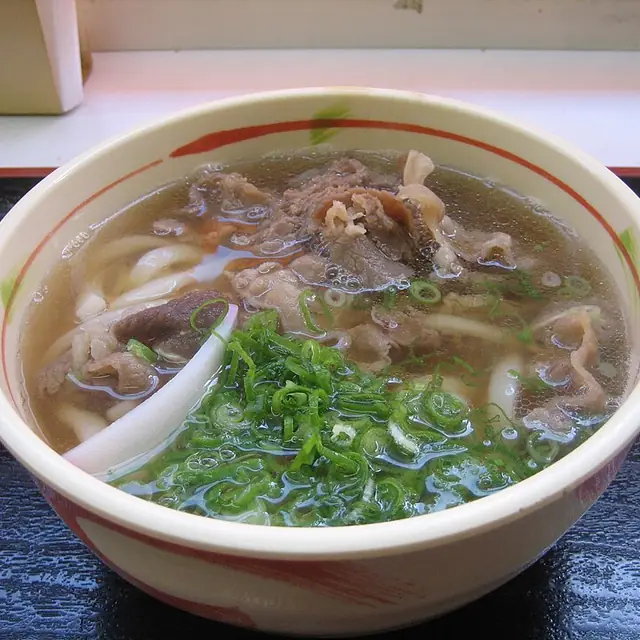
Plump Osaka wheat udon in a light dashi-soy broth, topped with sweet soy-simmered sliced beef and spring onion. The standing-soba-and-udon shop staple of central Osaka.
Where: Dotonbori Imai Honten, Matsuba Sohonten
Price: ¥800-1300
Ketchup-seasoned chicken rice wrapped in a soft folded omelette, finished with a stripe of tomato sauce or demi-glace. Yoshoku (Japanese-Western) comfort food, invented in Osaka and now national.
History: Omurice was invented at Hokkyokusei (North Star) in Shinsaibashi in 1925 by founder Shigeo Kitahashi, who wrapped ketchup-mixed chicken rice in a thin omelette for a regular customer with a weak stomach (the restaurant itself had opened in 1922). The dish became Hokkyokusei's signature; the restaurant still serves it the same way at the original Shinsaibashi branch. The dish spread nationally through Showa-era yoshoku diners.
Where to try it: Hokkyokusei Shinsaibashi, Kadoya Shokudo, Dotonbori Imai Honten
Watch out for: Egg, Soy, Dairy
Beef tendon and konjac simmered for hours in a sweet white miso, mirin and dashi broth until the tendon collapses to gelatinous tenderness. The Shinsekai dive-bar staple, served on skewers with a beer.
History: Doteyaki originated in Osaka around 1920 as cheap-cut hot food for working-class drinkers. The name comes from doteni (cooked bank), referring to the way miso paste was piled at the edge of an iron pan as the broth thickened. The Shinsekai district holds the city's most committed doteyaki bars, Daruma's Shinsekai branches included.
Where to try it: Daruma Shinsekai Honten, Kushikatsu Daruma Shinsekai, Daruma Kushikatsu Standing Counter Shinsekai
Watch out for: Soy
Thin flour-and-dashi batter mixed with chopped squid, pressed between two scalding iron plates and cooked in 90 seconds to a chewy, savoury pancake. The Hanshin department store snack park's flagship dish.
History: Osaka-style ikayaki was born around 1950 at the Momodani Yakiya Kaiyukan and became a city-wide phenomenon when Hanshin Department Store's Snack Park opened a counter in 1957. The high-pressure twin-iron-plate technique is the modern signature. Hanshin's daily queue still moves 5,000 ikayaki on busy days.
Where to try it: Kuromon Ichiba Market, Dotonbori Takoyaki Juhachiban, Aizuya Takoyaki Namba
Watch out for: Gluten, Shellfish, Soy, Egg
Thin Osaka pancake stacked heavily with finely sliced naga-negi spring onion, often filled with sliced beef or squid, brushed with soy and Worcestershire and folded. The lighter, scallion-led cousin of okonomiyaki.
History: Negiyaki was trademarked in 1994 by Yamamoto, a Yodogawa-ku okonomiya in Osaka that had served the scallion-led pancake since 1965. The hostess invented it to feed her children, lighter on flour and heavier on naga-negi than okonomiyaki; customers asked for it on the menu and it stayed. Negiyaki spread across Kansai by the 2000s; Kobe pairs it with the local Doro sauce, while Osaka's defining version is still folded thinner and brushed with soy plus Worcestershire.
Where to try it: Dotonbori Imai Honten, Kadoya Shokudo
Watch out for: Gluten, Egg, Soy
Osaka okonomiyaki layered over a bed of yakisoba noodles on the griddle, capped with egg and finished with okonomi sauce, mayonnaise and bonito flakes. Heavier and more carbohydrate-dense than plain okonomiyaki.
History: Modan-yaki appeared in postwar Osaka okonomiyaki houses as a stretching of the basic dish, layering cheap yakisoba noodles under the batter to feed more diners. The name combines the English modern with the Japanese yaki; by the 1970s every okonomiya in the city offered a modan variant, and it is now the canonical add-on order for Osaka griddle dining.
Where to try it: Okonomiyaki Mizuno, Kadoya Shokudo
Watch out for: Gluten, Egg, Soy, Fish
Osaka teppanyaki of grilled pork belly wrapped in a thin folded omelette, lacquered with okonomi sauce, kewpie mayonnaise and bonito flakes. The classic okonomiya bar snack while the main pancake cooks.
History: Tonpeiyaki took shape on the teppan counters of Osaka okonomiya in the 1950s as the pre-meal nibble customers ordered while the main okonomiyaki was on the griddle. Ton (pork) plus pei (a Chinese-style cooking suffix) plus yaki (grilled): the name reflects the Kansai mid-century habit of mashing food vocabularies together. It remains the canonical Osaka bar-stool starter.
Where to try it: Okonomiyaki Mizuno, Teppan Sakaba Hiro
Watch out for: Egg, Soy, Fish
Charcoal-grilled marinated beef and offal eaten table-side, the canonical Korean-Japanese Osaka meal. The Tsuruhashi district has the country's densest concentration of family-run yakiniku rooms.
History: Tsuruhashi grew up around Osaka's Korean diaspora after the 1923 Kanto earthquake displaced workers and again after 1945. The black-market food stalls under the JR rail line became a permanent Korean-Japanese quarter; yakiniku as a sit-down genre was formalised here in the 1950s. The Tsuruhashi tradition keeps the meat lightly marinated and the offal varieties wider than the Tokyo branches that followed.
Where to try it: Tsuruhashi Fugetsu Namba, Tsuruhashi Korean Back Alleys, Tsuruhashi Koreatown Market
Watch out for: Soy, Sesame
Whole snow-crab legs and matsuba crab meat simmered table-side in a light kombu-and-soy broth with leek, mushroom and tofu. Osaka's winter big-occasion meal.
History: Kani Doraku opened its first Dotonbori room in 1962 with the giant moving crab sign that has since become an Osaka landmark, and codified kani-suki as the city's winter banquet. Snow crab (zuwai-gani) and matsuba-gani from the Sea of Japan run November to March; Osaka diners eat the legs as sashimi first, then drop the remaining meat into the simmering pot.
Where to try it: Kani Doraku Dotonbori Honten
Watch out for: Crustaceans, Soy
Daikon, eggs, konnyaku, fishcakes and beef tendon slow-simmered in a light dashi-soy broth. Osakans call it kanto-daki to acknowledge the Tokyo origin while serving a lighter Kansai version.
History: Oden arrived in Osaka from Tokyo in the Edo era; Osakans renamed it kanto-daki (cooked-in-the-Kanto-style) and over a century thinned the broth to the lighter dashi-soy base canonical to Kansai. Takoume Honten in Dotonbori, founded 1844, is Japan's oldest oden restaurant and is widely cited as the city's defining shop.
Where to try it: Takoume Honten, Hozenji Yokocho Izakaya Strip
Watch out for: Soy, Fish, Egg
Plump Osaka wheat udon in a light dashi-soy broth, topped with sweet soy-simmered sliced beef and spring onion. The standing-soba-and-udon shop staple of central Osaka.
History: Dotonbori Imai opened in 1946 in the bombed-out theatre district as an udon-suki house and helped define Osaka's lighter dashi-led udon broth, distinct from the soy-darker Tokyo style. Niku-udon, the beef variant introduced when sugared sliced beef became a workers' lunch in the 1950s, is now standard across every Osaka udon shop.
Where to try it: Dotonbori Imai Honten, Matsuba Sohonten
Watch out for: Gluten, Soy, Fish
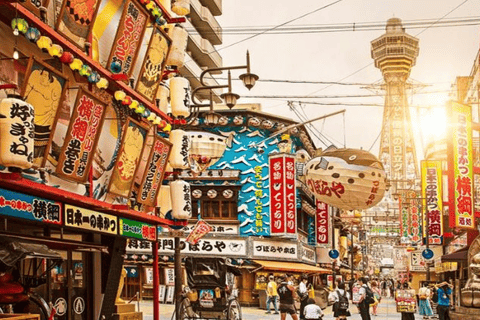
Guided tour · 3 hours
The most popular food tour in Osaka 7 years straight! Discover 15 dishes at 5 local eateries & 3 drinks. Local foodie experts will take you to the whole range: Tachino...

Guided tour · 3 hours
Discover incredible Osaka on a group tour (meet in Namba) or private tour (meet at central hotel). Explore day or night and see cobblestone streets, billboards, seafoo...
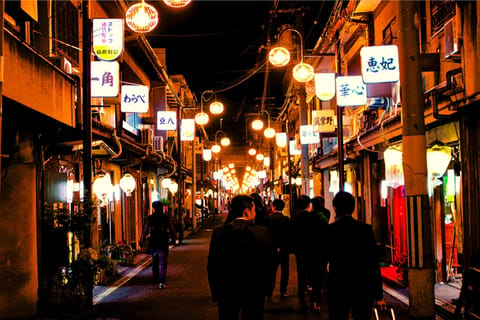
Guided tour · 3h 30m
Get an unfiltered understanding of how Osaka really functions in the abandoned buildings area, retro zone, alleys, redlight district, gambling dens, and more.
Osaka's signature dishes include Takoyaki, Kushikatsu, Okonomiyaki, Kitsune Udon, Fugu (Pufferfish). See our signature dishes chapter for where to eat each.