Signature dishes
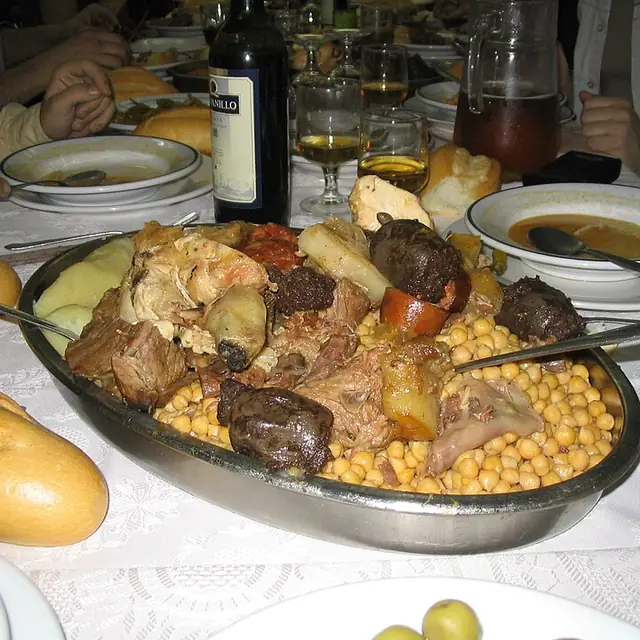
Cocido madrileno is Madrid's defining stew: chickpeas, slow-cooked beef, chicken, chorizo and morcilla simmered for hours, served as three sequential courses (broth, chickpeas and vegetables, then meats) in a single pot.
Where: Lhardy, Taberna La Bola, Malacatin, Casa Ciriaco, La Carmencita
Price: €22-35
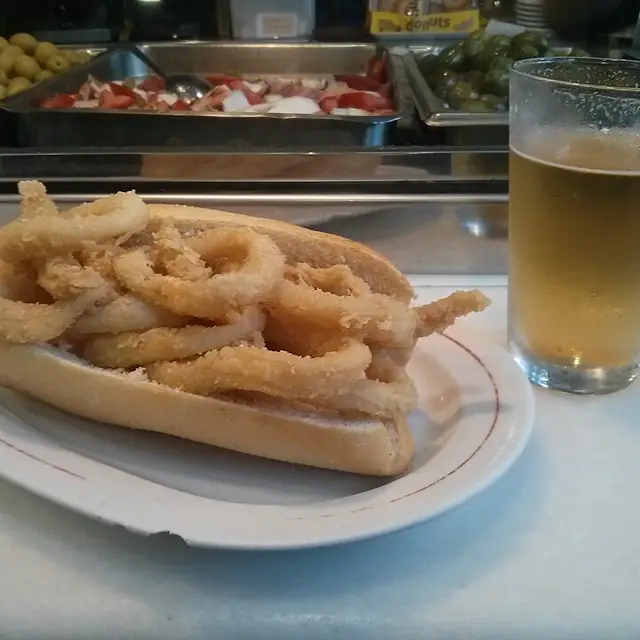
The bocadillo de calamares is Madrid's defining sandwich: battered squid rings on a fresh bread roll, a slice of lemon on the side, eaten standing at a Plaza Mayor counter at 13:00 with a cana.
Where: Bar La Ideal, Casa Puerto Rico, Confiteria La Campana
Price: €5-6.50
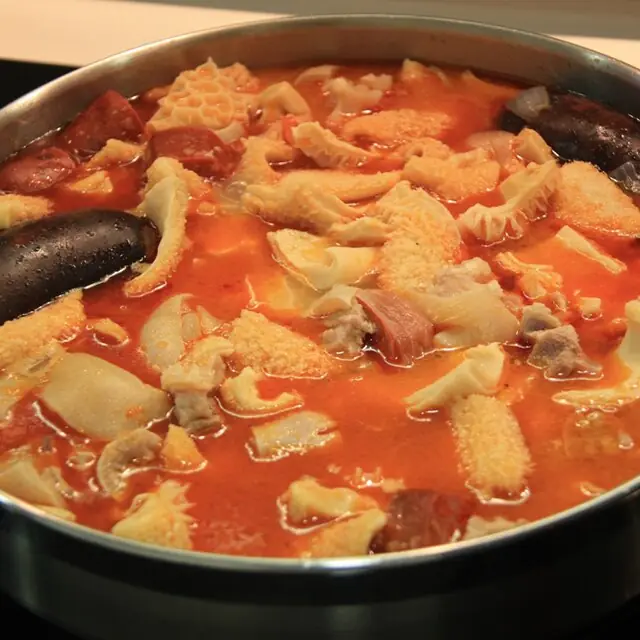
Callos a la madrilena is Madrid's offal headline: tripe slow-cooked with chorizo, morcilla, ham hock and a spiced tomato base, served bubbling in a clay pot with crusty bread.
Where: Casa Lucio, Lhardy, Casa Ciriaco, Casa Toni, Taberna Antonio Sanchez
Price: €12-18
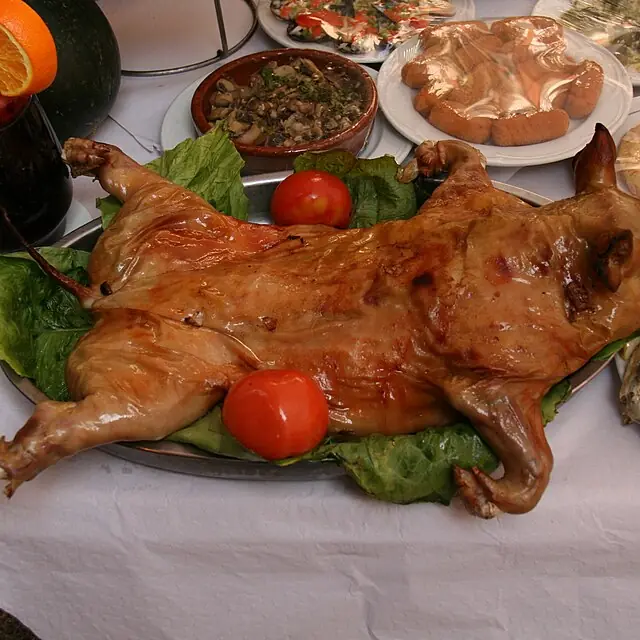
Cochinillo asado is the Madrid asador's headline: a 21-day-old suckling pig roasted whole in a wood-fired oven, the skin crackling and the meat carved with a plate edge to prove its tenderness.
Where: Sobrino de Botin, Posada de la Villa, Los Galayos, Casa Paco, Casa Lucio
Price: €28-38
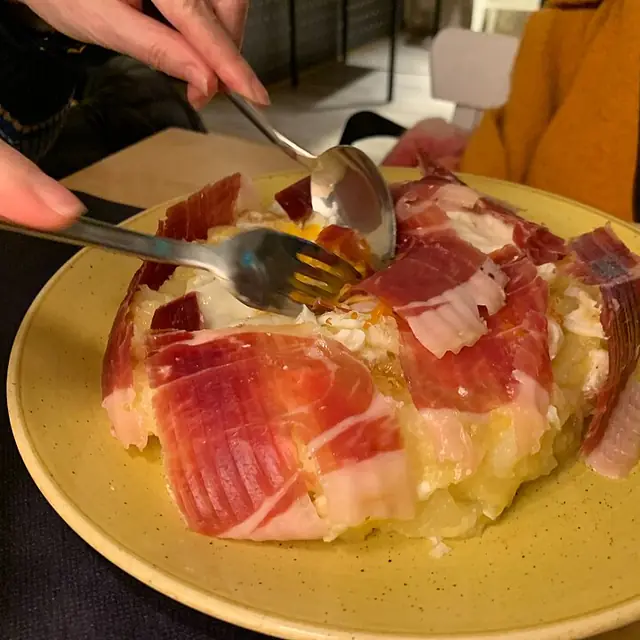
Huevos rotos is Madrid's broken-egg dish: fried eggs over thick fried potatoes, served with chorizo or jamon iberico on top, the yolks broken by the spoon to coat the potatoes with golden yellow.
Where: Casa Lucio, Sobrino de Botin, Casa Mono, Casa Revuelta
Price: €14-22
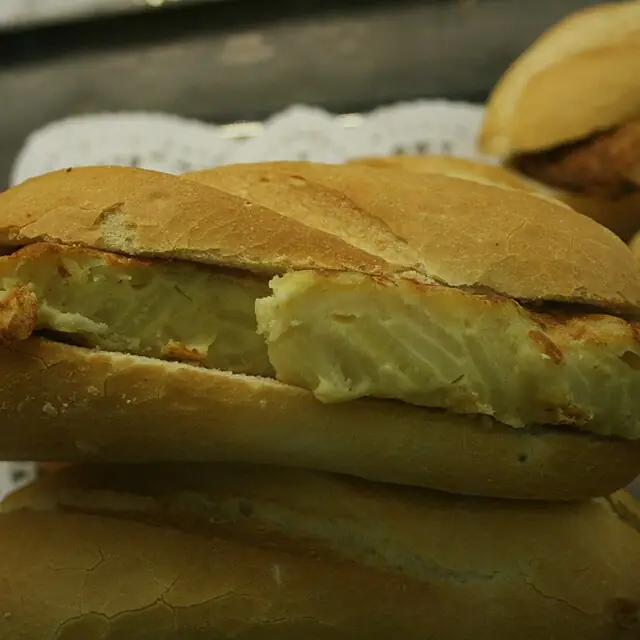
Tortilla de patatas is Spain's defining egg dish and Madrid's daily breakfast pincho: a thick, juicy potato-and-egg cake (with or without onion), sliced from the pan and eaten at the counter with a cana.
Where: Casa Dani, Sacha, Bodega de la Ardosa, Casa Ciriaco, Celso y Manolo
Price: €2-12
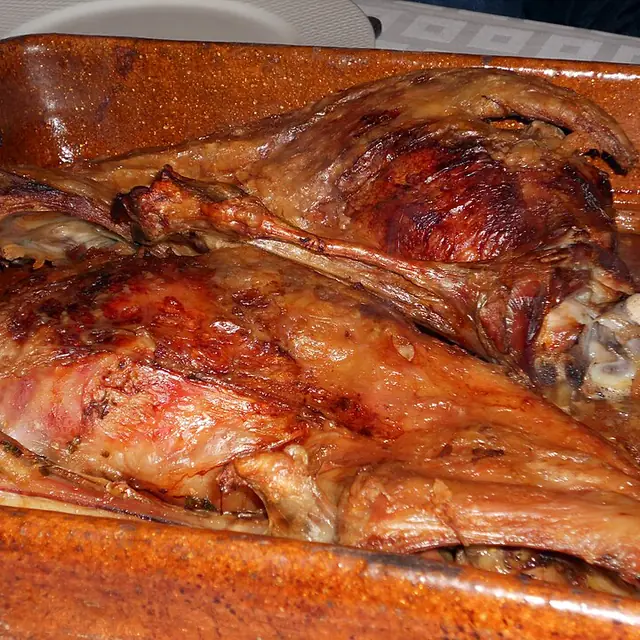
Cordero asado is the Castilian roast-lamb tradition Madrid inherited: a 25-day-old milk-fed lamb (lechazo) roasted in a wood-fired clay oven, served with patatas a lo pobre and a green salad.
Where: Sobrino de Botin, Los Galayos, Posada de la Villa, Casa Paco
Price: €28-34

Churros con chocolate is Madrid's morning and after-midnight order: long ridged dough sticks fried golden and dunked into a thick hot chocolate, often eaten at 03:00 on the way home from a night out.
Where: Chocolateria San Gines, La Mallorquina, Cafe de Oriente
Price: €4-7
Gallinejas y entresijos is Madrid's working-quarter offal cheap eat: lamb intestine and lamb-belly fat, deep-fried until crisp, served with patatas and salt, an old-Madrid taberna order.
Where: Bar El Jamon, Casa Toni, Casa Amadeo Los Caracoles
Price: €6-10
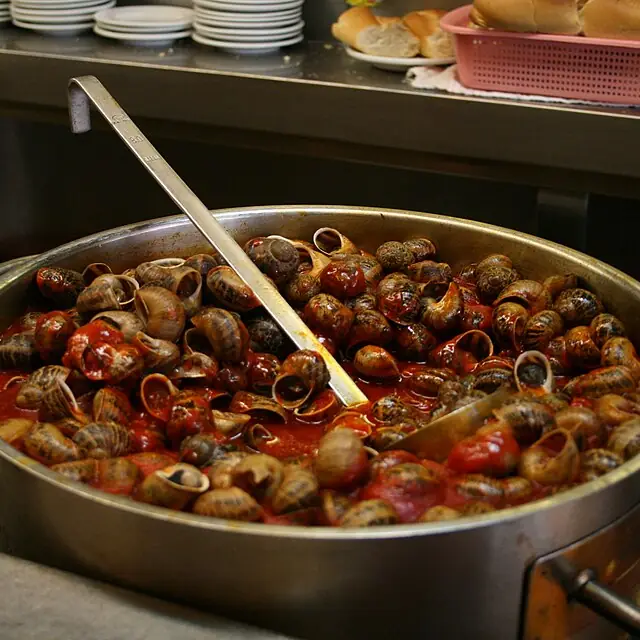
Caracoles a la madrilena is Madrid's spicy snail order, traditional Sunday rastro lunch: snails simmered in a chorizo and tomato broth with cayenne and ham, served by the racion with bread for sopping.
Where: Casa Amadeo Los Caracoles, Bodegas Rosell
Price: €10-14
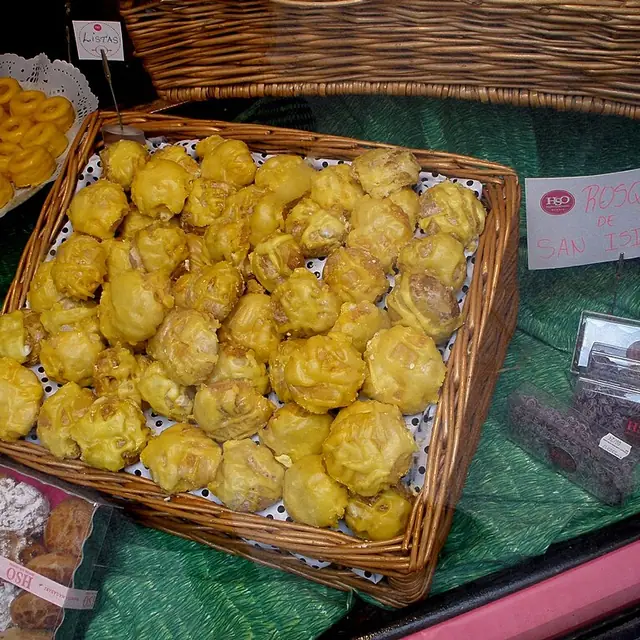
Rosquillas de San Isidro are Madrid's May ring biscuits, sweet and lemon-glazed (listas) or matte and aniseed (tontas), peaking on May 15, the feast of the city's patron saint.
Where: La Mallorquina, Horno de San Onofre, Antigua Pasteleria del Pozo
Price: €10-14 per box
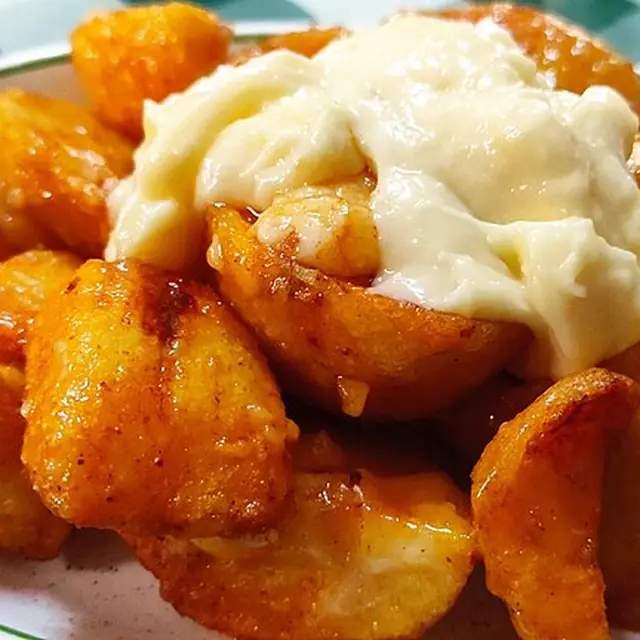
Patatas bravas is Spain's most-ordered tapa and Madrid's version (with a smoked-paprika and cayenne sauce, no tomato base, no aioli) defines the canonical brava: thick-cut fried potatoes with a spicy red sauce.
Where: Casa Toni, El Doble, Estado Puro, Bodega de la Ardosa
Price: €6-9
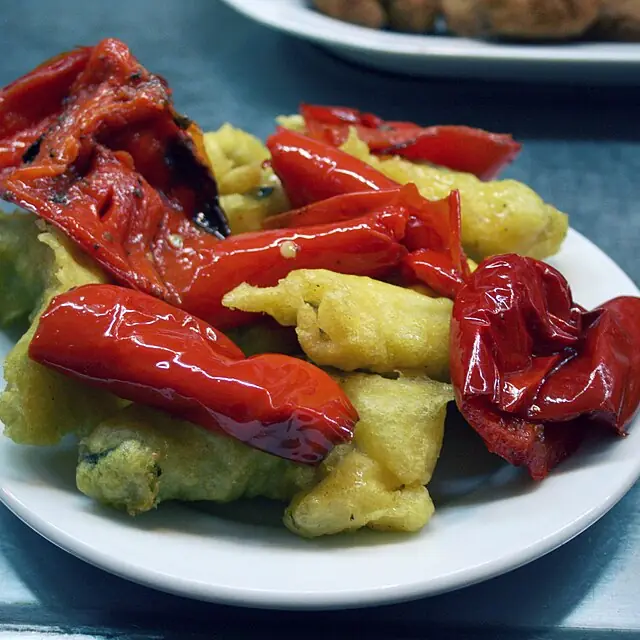
Battered fingers of salt cod, deep-fried until crisp and finished with a strip of roasted red pepper across the top, the militiaman's red sash. The Madrid Easter and Lent classic.
Where: Casa Labra, Bodega de la Ardosa
Price: €2-4 per piece
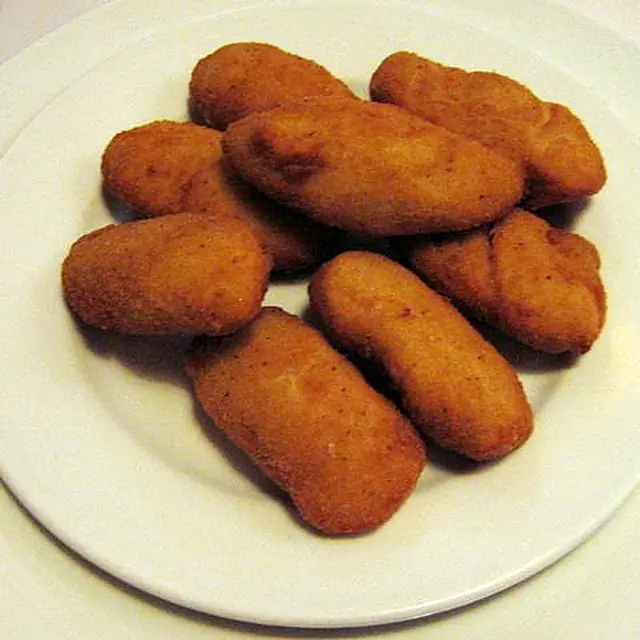
Cylinders of cold bechamel rich with diced jamón ibérico, breadcrumbed and deep-fried to a crackling shell. Madrid's most-ordered tapa, the test of any tasca.
Where: Sala de Despiece, Casa Mariano, La Tape
Price: €2-4 each
Cocido madrileno
Cocido madrileno is Madrid's defining stew: chickpeas, slow-cooked beef, chicken, chorizo and morcilla simmered for hours, served as three sequential courses (broth, chickpeas and vegetables, then meats) in a single pot.
History: The cocido madrileno descends from the medieval adafina, a Sephardic Jewish Saturday stew of chickpeas and meat slow-cooked overnight to circumvent the Sabbath cooking prohibition. After the 1492 expulsion of Jewish residents, the dish was adopted by Castilian Christian cooks, with the pork additions (chorizo, morcilla, tocino) marking the lack of Jewish observance. By the 18th century, the cocido had become the city's defining stew, eaten at boarding houses, taverns and the royal court alike. The three-volcado service developed in the 19th-century working-class taberna. Lhardy serves the canonical version since 1839; Taberna La Bola cooks individual pots over charcoal since 1870.
Where to try it: Lhardy, Taberna La Bola, Malacatin, Casa Ciriaco, La Carmencita
Watch out for: None typical
Bocadillo de calamares
The bocadillo de calamares is Madrid's defining sandwich: battered squid rings on a fresh bread roll, a slice of lemon on the side, eaten standing at a Plaza Mayor counter at 13:00 with a cana.
History: The bocadillo de calamares emerged in Madrid in the 1950s, when Galician and Cantabrian migrants brought their squid traditions to the city; the Madrileno taberneros turned the fried calamares into a sandwich for the standing-room counter trade. The dish became canonical in the bars around Plaza Mayor, particularly along Calle Botoneras and Calle Postas. The squid is dredged in flour (no batter beyond), fried in olive oil at high heat for 90 seconds, and slid hot into a fresh roll. Lemon is essential; mayonnaise is the modern liberal touch. The Plaza Mayor counters (Bar La Ideal, Casa Puerto Rico, Casa Jose) still anchor the tradition; the dish remains under 6 euros at every working counter.
Where to try it: Bar La Ideal, Casa Puerto Rico, Confiteria La Campana
Watch out for: Gluten, Shellfish
Callos a la madrilena
Callos a la madrilena is Madrid's offal headline: tripe slow-cooked with chorizo, morcilla, ham hock and a spiced tomato base, served bubbling in a clay pot with crusty bread.
History: Callos a la madrilena emerged in the 19th-century working-class tabernas of La Latina and Lavapies. The dish takes cheap cuts (beef tripe, ham hock, pig's foot) and turns them into a slow-cooked stew with the Spanish offal canon (chorizo, morcilla). The first written Madrileno recipe appeared in Angel Muro's 1894 El Practicon cookbook. The dish became a winter staple; Casa Lucio, Lhardy and Casa Ciriaco all serve canonical versions. The trick is the cleaning: tripe must be soaked, scrubbed and parboiled multiple times before the slow-cook stage. Modern Madrid kitchens like Sala de Despiece and Casa Mono still serve callos as a winter signature.
Where to try it: Casa Lucio, Lhardy, Casa Ciriaco, Casa Toni, Taberna Antonio Sanchez
Watch out for: None typical
Cochinillo asado
Cochinillo asado is the Madrid asador's headline: a 21-day-old suckling pig roasted whole in a wood-fired oven, the skin crackling and the meat carved with a plate edge to prove its tenderness.
History: Cochinillo asado is a Castilian tradition that became Madrid's defining roast through the wood-oven asadores of the Centro and La Latina. Sobrino de Botin near Plaza Mayor has roasted cochinillo segoviano in the same 1725 wood oven since its founding, making it the Guinness-certified oldest restaurant in the world. The pig is 21 days old, 4.5 kilos at slaughter, marinated in lard, white wine and salt, then roasted in clay dishes in the wood oven for 90 minutes. The canonical service: the dining-room chef carves the pig with the edge of a ceramic plate (no knife), then smashes the plate on the floor to prove the skin's crispness. Ernest Hemingway named it as one of his favourite Madrid meals.
Where to try it: Sobrino de Botin, Posada de la Villa, Los Galayos, Casa Paco, Casa Lucio
Watch out for: None typical
Huevos rotos
Huevos rotos is Madrid's broken-egg dish: fried eggs over thick fried potatoes, served with chorizo or jamon iberico on top, the yolks broken by the spoon to coat the potatoes with golden yellow.
History: Huevos rotos became canonical at Casa Lucio on Cava Baja in 1974, when chef Lucio Blazquez served the dish to a long roster of Spanish royalty, presidents and bullfighters. The recipe is simple: thick-cut potatoes fried in olive oil to gold-brown, three fried eggs cracked on top, the yolks broken with a wooden spoon at the table. The dish spread through La Latina tabernas in the 1980s. Variations now include chorizo Iberico, jamon iberico, gulas (baby eel substitute) or shavings of black truffle on top. The order ritual: when the waiter asks if you want them "rotos" (broken), the answer is always yes.
Where to try it: Casa Lucio, Sobrino de Botin, Casa Mono, Casa Revuelta
Watch out for: Egg
Tortilla de patatas
Tortilla de patatas is Spain's defining egg dish and Madrid's daily breakfast pincho: a thick, juicy potato-and-egg cake (with or without onion), sliced from the pan and eaten at the counter with a cana.
History: Tortilla de patatas may have originated in Navarra in 1817 with general Tomas de Zumalacarregui during the Carlist Wars, but Madrid adopted it as its working-day breakfast and tapa by the early 20th century. The two-camp debate (con cebolla vs sin cebolla, with or without onion) runs the country. The Madrid version is thick, very juicy in the centre (poco hecha), and the canonical Madrid eg slice is Casa Dani's tortilla at Mercado de la Paz, where the cake is cooked to order daily and a pincho still costs 2 euros. Sacha Hormaechea introduced the tortilla vaga (lazy tortilla, undercooked and topped with caviar) at his Chamartin bistro; it became a Madrid modernist signature.
Where to try it: Casa Dani, Sacha, Bodega de la Ardosa, Casa Ciriaco, Celso y Manolo
Watch out for: Egg
Cordero asado
Cordero asado is the Castilian roast-lamb tradition Madrid inherited: a 25-day-old milk-fed lamb (lechazo) roasted in a wood-fired clay oven, served with patatas a lo pobre and a green salad.
History: Cordero asado is the Castilian shepherding tradition that came to Madrid with the 17th-century livestock trade. The milk-fed lechazo (25 days old, 4 to 6 kilos at slaughter) is the canonical roast, taken from the rebano during the spring weaning season. The lamb is rubbed with lard and salt, placed in clay roasting dishes over a layer of potatoes, then slow-roasted in wood-fired clay ovens for 90 minutes. Sobrino de Botin's 1725 oven still produces canonical cordero alongside its more famous cochinillo. Los Galayos in Plaza Mayor has roasted cordero since 1894. The order tradition: 1/4 of a lamb feeds one person, 1/2 feeds two.
Where to try it: Sobrino de Botin, Los Galayos, Posada de la Villa, Casa Paco
Watch out for: None typical
Churros con chocolate
Churros con chocolate is Madrid's morning and after-midnight order: long ridged dough sticks fried golden and dunked into a thick hot chocolate, often eaten at 03:00 on the way home from a night out.
History: Churros may have originated with Spanish shepherds high in the sierras, who fried dough in animal fat over wood fires. The Madrid tradition centres on Chocolateria San Gines (1894), the 24-hour churreria off Calle Mayor where Lorca, Hemingway and Picasso took their post-cabaret breakfast at 03:00. The dough is a simple flour-and-water choux piped through a star-tip nozzle into bubbling oil at 190C, fried in batches for 90 seconds. The hot chocolate is thick (whisked with cornstarch) and served in heated cups for dunking. The Madrid order: 6 churros and a chocolate (4.30 euros at San Gines in 2026), eaten standing at the marble counter.
Where to try it: Chocolateria San Gines, La Mallorquina, Cafe de Oriente
Watch out for: Gluten, Dairy
Gallinejas y entresijos
Gallinejas y entresijos is Madrid's working-quarter offal cheap eat: lamb intestine and lamb-belly fat, deep-fried until crisp, served with patatas and salt, an old-Madrid taberna order.
History: Gallinejas (fried lamb intestine) and entresijos (fried lamb-belly fat) emerged in the 19th-century working-class taberna scene of Lavapies and Embajadores, where the cheapest cuts of lamb were turned into a hot cheap eat for the working day. The dish was canonized at the centenary freidurias of Embajadores. The trick is in the cleaning and parboiling: the intestine must be soaked in vinegar, scrubbed and parboiled multiple times before frying. The dish became less common in the 1980s as cheap meat cuts dropped in price, but the few remaining counters still serve it as Madrid's most authentic working-quarter offal experience.
Where to try it: Bar El Jamon, Casa Toni, Casa Amadeo Los Caracoles
Watch out for: None typical
Caracoles a la madrilena
Caracoles a la madrilena is Madrid's spicy snail order, traditional Sunday rastro lunch: snails simmered in a chorizo and tomato broth with cayenne and ham, served by the racion with bread for sopping.
History: Caracoles a la madrilena descends from the 19th-century rastro market tradition, where Sunday vendors would slow-cook batches of snails in copper pots for the after-market crowd at Lavapies. The dish became canonical at Casa Amadeo Los Caracoles on Plaza Cascorro, opened in 1942 by Amadeo Lazaro, who still uses a 12-spice recipe passed through three family generations. The snails are slow-purged for 48 hours in water with rosemary and salt to clean them, then simmered for two hours with chorizo, jamon, tomato, paprika and cayenne. The dish is eaten on Sundays at La Latina taberna counters between 12:00 and 16:00; outside Sunday it is rare on Madrid carte.
Where to try it: Casa Amadeo Los Caracoles, Bodegas Rosell
Watch out for: None typical
Rosquillas de San Isidro
Rosquillas de San Isidro are Madrid's May ring biscuits, sweet and lemon-glazed (listas) or matte and aniseed (tontas), peaking on May 15, the feast of the city's patron saint.
History: Rosquillas de San Isidro descend from the medieval Castilian rosquilla tradition, with the Madrid version becoming canonical in the 18th century. Four types exist: tontas (matte, aniseed), listas (lemon-glazed), de Santa Clara (white meringue) and francesas (sugar-dusted). The biscuits appear in Madrid bakeries from late April through mid-May, peaking on May 15, the feast of San Isidro Labrador. The Pradera de San Isidro picnic on May 15 still draws thousands of locals carrying boxes of rosquillas, tortilla, empanada and a bottle of Valdepenas. La Mallorquina on Puerta del Sol and Horno de San Onofre produce the city's reference rosquillas.
Where to try it: La Mallorquina, Horno de San Onofre, Antigua Pasteleria del Pozo
Watch out for: Gluten, Egg, Dairy
Patatas bravas
Patatas bravas is Spain's most-ordered tapa and Madrid's version (with a smoked-paprika and cayenne sauce, no tomato base, no aioli) defines the canonical brava: thick-cut fried potatoes with a spicy red sauce.
History: Patatas bravas may have originated at Casa Pellico in Madrid's Lavapies in the 1950s, with the smoked-paprika and cayenne sauce that gave the dish its name. The Madrid version (no tomato in the sauce, no aioli) differs from the Barcelona variant (with tomato, often with aioli on top). The dish became canonical across Spanish tabernas in the 1970s. Estado Puro by Paco Roncero serves a deconstructed version with airy potato spheres; Sala de Despiece serves a butcher-counter version with bone marrow. The classic Madrid version is at Casa Toni, El Doble and any Mahou taberna where a racion of bravas costs 6 to 8 euros and the salsa brava arrives in a separate ramekin.
Where to try it: Casa Toni, El Doble, Estado Puro, Bodega de la Ardosa
Watch out for: None typical
Soldaditos de Pavía
Battered fingers of salt cod, deep-fried until crisp and finished with a strip of roasted red pepper across the top, the militiaman's red sash. The Madrid Easter and Lent classic.
History: Soldaditos de Pavía were named for the Pavia cavalry uniform of General Pavia, who staged the Spanish coup of 1874; the red pepper strip across the golden batter mimics the regiment's sash. Casa Labra on Calle Tetuan, founded in 1860, is the canonical Madrid reference; the bar still serves them at the same standing counter where the Spanish Socialist Party was founded in 1879. The dish appears across Madrid tabernas during Lent.
Where to try it: Casa Labra, Bodega de la Ardosa
Watch out for: Fish, Gluten, Egg
Croquetas de jamón
Cylinders of cold bechamel rich with diced jamón ibérico, breadcrumbed and deep-fried to a crackling shell. Madrid's most-ordered tapa, the test of any tasca.
History: Spanish croquetas evolved from French croquettes brought to Madrid courts in the 19th century; Spanish cooks deepened the bechamel and folded in ham, the bones from which give a long-simmered stock. Javier Bonet's Sala de Despiece in Chamberi (originally on Ponzano, moved to Alonso Cano in 2024) helped redefine the modern small-batch Madrid tapa; older tabernas at Casa Mariano, La Tape and dozens of vermuterias serve the canonical bar croqueta daily.
Where to try it: Sala de Despiece, Casa Mariano, La Tape
Watch out for: Gluten, Dairy, Egg