
The plates that define Kyoto: what they are, where they came from, and where to eat the canonical version.
Signature dishes
-
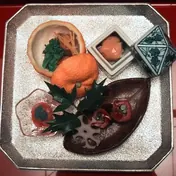
Kaiseki ★ 4.9
Kyoto's defining haute-cuisine form, a multi-course meal evolved from the tea ceremony with strict seasonality and lacquer-tray service since the 17th century.
Where to try it: Kikunoi Honten, Hyotei, Kitcho Arashiyama Honten, Mizai, Gion Sasaki, Gion Nishikawa
Price: JPY 22,000-50,000
Kaiseki crystallised in Kyoto in the Edo era around the chanoyu tea ceremony and the city's tea houses, formalising course progression, vegetable focus and seasonal naming. The form spread nationally through Kyoto's ryotei from the late 19th century onward and earned its modern definition through Hyotei from 1837 and Kikunoi from 1912. The 2009 arrival of the Michelin Guide cemented Kyoto's status; today the city counts the highest per-capita three-star kaiseki density outside Tokyo.
Watch out for: Fish, Soy
-
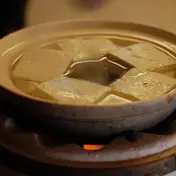
Yudofu ★ 4.8
Kyoto's monastic hot-pot of silken tofu simmered gently in kombu dashi, served with dipping sauce and seasonal accompaniments at Nanzen-ji temple kitchens.
Where to try it: Nanzenji Junsei, Nanzenji Sando Kikusui, Toseian, Tousuiro Kiyamachi
Price: JPY 2,200-4,000
Yudofu traces to the Zen monastic kitchens of Nanzen-ji and Daitoku-ji in Kyoto, where vegetarian shojin-ryori made tofu the centrepiece of every meal. Sohonke Yudofu Okutan has been serving the dish at Nanzen-ji's gate since 1635, making it one of Japan's oldest continuously operating restaurants. The Kyoto-style preparation, using soft silken tofu in a clear kombu broth, became the canonical form against which Tokyo's harder cotton-tofu variants are still compared.
Watch out for: Soy
-
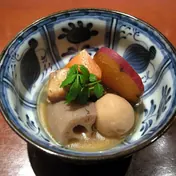
Obanzai ★ 4.7
Kyoto's home-style daily cooking, a set of simmered Kyo-yasai vegetable and tofu plates eaten as the everyday counterpart to ryotei kaiseki.
Where to try it: Menami, Mamehachi, AWOMB Karasuma Honten, Kotowari, Nomura Kyoto
Price: JPY 1,200-3,500
Obanzai is Kyoto's everyday domestic cooking, codified through the city's machiya counters from the late Edo period and named in the Meiji era. The form prizes Kyo-yasai (Kyoto's local heritage vegetables), dashi-based seasoning and visual restraint. Menami on Kiyamachi has served the canonical obanzai set since 1958; today the form anchors a downtown counter tradition where lunch under 1,500 yen still buys five Kyoto-vegetable plates with rice.
Watch out for: Soy, Fish
Book food experiences in Kyoto


-
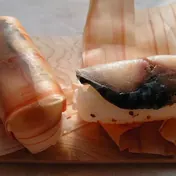
Saba-zushi ★ 4.6
Kyoto's pressed-mackerel sushi, mountain-cured saba on vinegar rice wrapped in kelp, eaten as a Gion takeaway and matsuri food since the Heian era.
Price: JPY 1,500-3,500
Saba-zushi traces to medieval Kyoto, when salt-packed mackerel from the Sea of Japan crossed the Saba Kaido (Mackerel Highway) from Obama in Fukui to the imperial capital. The fish arrived just-salted enough to age into a delicacy. Izuju has been pressing saba-zushi opposite Yasaka Shrine in Gion since 1892, and the dish remains the Gion-festival takeaway that locals queue for. Eaten cold from the bamboo wrap, with a slice of kelp pressed under the rice.
Watch out for: Fish, Soy
-
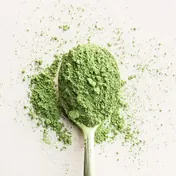
Matcha ★ 4.9
Stone-ground powdered green tea, whisked with hot water in a tea bowl. Kyoto's tea merchants have refined matcha grades since the 13th century.
Where to try it: Ippodo Kaboku Tea Room, Gion Tsujiri, Marukyu Koyamaen Nishinotoin, Yugen Kyoto, Nakamura Tokichi Kyoto Station, Kagizen Yoshifusa
Price: JPY 800-2,500
Matcha entered Japan from Song China in 1191 through the Zen monk Eisai, who planted the first tea seeds at Kosanji Temple in Kyoto's northwest. The Uji region south of Kyoto became Japan's matcha heartland; tea merchants Ippodo (founded 1717), Marukyu Koyamaen (founded 1704) and Nakamura Tokichi (founded 1854) still grade and grind the country's reference matcha. The modern matcha-cafe wave starting at Tsujiri Gion in the 1990s exported Kyoto matcha-as-dessert globally.
-
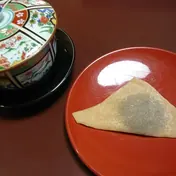
Yatsuhashi ★ 4.5
Kyoto's cinnamon-and-rice sweet, sold both baked-crisp and raw as soft nama-yatsuhashi filled with red-bean paste. The city's most-photographed souvenir.
Where to try it: JR Kyoto Isetan Depachika, Daimaru Kyoto Depachika, Porta Underground Shopping
Price: JPY 300-1,500
Yatsuhashi takes its name from a 17th-century Kyoto composer of the koto, Yatsuhashi Kengyo. The original baked-crisp form dates to the 1680s in Higashiyama. The soft, cinnamon-dusted nama-yatsuhashi filled with sweet azuki paste is the 20th-century evolution, codified by Honke Nishio and Otabe in the 1960s. Today every souvenir tier of Kyoto Station Porta basement is stacked with yatsuhashi boxes in cinnamon, matcha, sakura and yuzu variants.
Watch out for: Wheat
-
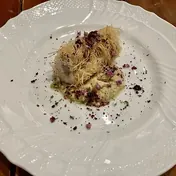
Hamo ★ 4.7
Pike conger eel, the summer fish of Kyoto. Bone-cut into chrysanthemum petals, quick-poached and served with plum vinegar at the city's kaiseki rooms.
Where to try it: Kikunoi Honten, Hyotei, Gion Sasaki
Price: JPY 4,000-15,000
Hamo arrives in Kyoto from June to August across the Awaji Strait. The fish has hundreds of tiny bones, so Kyoto chefs developed honegiri, a slicing technique that cuts each fillet at millimetre intervals without severing the skin. The bones soften when quick-poached; the flesh flowers open like a chrysanthemum. The dish became the summer marker of Gion Matsuri, served at every ryotei in July alongside ume-su plum vinegar. Hyotei and Kikunoi serve the canonical version.
Watch out for: Fish
-
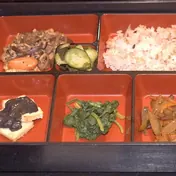
Shojin-ryori ★ 4.6
Buddhist monastic vegetarian cuisine, no meat, fish or strong aromatics, served at Tenryu-ji, Daitoku-ji and Myoshin-ji temple kitchens since the 12th century.
Where to try it: Shigetsu, Izusen Daiji-in
Price: JPY 4,000-8,000
Shojin-ryori arrived in Kyoto with the Rinzai Zen sect in the 12th century. The 1191 introduction of powdered green tea by Eisai and the founding of Tenryu-ji in 1339 anchored the cuisine; the form codified the use of seasonal vegetables, dashi (kombu and shiitake), tofu, yuba and sesame as a substitute for animal proteins. Today Shigetsu inside Tenryu-ji and Izusen Daiji-in at Daitoku-ji serve the canonical seven-bowl meals; Ajiro Honten holds the city's longest-running Michelin recognition for the form.
Watch out for: Soy, Wheat, Sesame
-
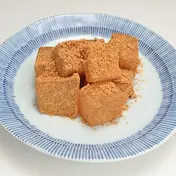
Warabi-mochi ★ 4.4
Cold bracken-starch mochi dusted in kinako and drizzled with kuromitsu, the city's summer wagashi sold cup-by-cup at Nishiki Market and tea houses.
Where to try it: Warabimochi Kamakura Kyoto, Kagizen Yoshifusa, Demachi Futaba
Price: JPY 400-1,200
Warabi-mochi has roots in Heian-era Kyoto, originally made from wild-foraged warabi (bracken fern) starch, expensive enough that Emperor Daigo (897-930) was said to favour it. The modern Nishiki Market form, sold cup-by-cup dusted in kinako roasted soybean and drizzled with kuromitsu syrup, codified in the Showa era. Counter stands at Nishiki Market still press fresh warabi-mochi by the cup; the form is now Kyoto's most-photographed summer snack.
-
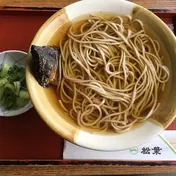
Nishin Soba ★ 4.4
Buckwheat noodles in hot dashi topped with a slow-simmered herring fillet, a Kyoto specialty born when sea fish was salted and dried for the inland capital.
Where to try it: Kawamichi-ya Kosho-an
Price: JPY 1,200-2,000
Nishin soba was created at Matsuba on Shijo Street in Kyoto in 1882, when chef Tokichi Matsuno paired buckwheat noodles with simmered herring brought salted up the Saba Kaido. Pre-railway Kyoto had limited fresh fish access, so dried Hokkaido herring (mi-bo-shi) was soaked, then slowly braised with mirin, sake and sugar over hours until the bones softened. The dish became the city's reference dashi bowl, and remains the canonical Kyoto soba order on the menu of every traditional soba house.
Watch out for: Fish, Wheat, Soy
-

Yuba ★ 4.5
Tofu skin lifted from boiling soymilk, served as sashimi, rolled in dashi or wrapped around vegetables. A Kyoto Higashiyama specialty since the 1600s.
Where to try it: Nanzenji Junsei, Toseian, Tousuiro Kiyamachi, Shigetsu, Fuka Nishiki
Price: JPY 1,500-4,000
Yuba arrived in Kyoto from Song China in the 12th century with the same Buddhist monks who introduced matcha and shojin-ryori. The Higashiyama tofu houses around Nanzen-ji codified yuba-making, lifting the surface skin off heated soymilk one sheet at a time. The dish anchors every shojin-ryori menu in the city; fresh yuba sashimi (eaten with soy and a touch of wasabi) and yuba rolls in dashi are the two canonical preparations. Sohonke Yudofu Okutan has served yuba since 1635.
Watch out for: Soy
-
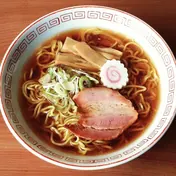
Kyoto-style Shoyu-Tonkotsu Ramen ★ 4.7
Kyoto's contribution to ramen: a balanced shoyu-tonkotsu broth blending soy sauce with pork-bone richness, served with straight noodles and Kujo green onions.
Where to try it: Honke Daiichi Asahi, Shinpuku Saikan Honten, Menya Inoichi, Tentenyu Shijo-Karasuma
Price: JPY 900-1,400
Kyoto's ramen style emerged after World War II at counters near Kyoto Station, codified by Honke Daiichi Asahi from 1947. The bowl blends dark soy with a clear pork-bone broth, lighter than Hakata tonkotsu but richer than Tokyo's pure shoyu. Straight, slightly thick noodles and a topping of finely-sliced Kujo green onions distinguish the form. Today three branches define the city's reference: Honke Daiichi Asahi for the original, Shinpuku Saikan for the blackest broth and Menya Inoichi for the modern Bib Gourmand take.
Watch out for: Wheat, Soy, Pork
-
Kawayuka River Dining ★ 4.6
Kyoto's seasonal riverside-deck dining, from May to September, when restaurants from Pontocho to Kibune build tatami platforms over the Kamogawa.
Where to try it: Pontocho Izumoya, Robin Pontocho, Kikunoi Roan, Tousuiro Kiyamachi
Price: JPY 8,800-22,000
Kawayuka river-deck dining traces to the Edo period, when Kyoto's wealthy merchant class built temporary summer platforms on the Kamogawa banks to escape the city's humid summer. Restaurants from Pontocho westward formalised the practice into a tourism-industry season. From May 1 to September 30, 90 Kamogawa-side restaurants set up tatami platforms over the river; Kibune in the northern mountains runs the related kawadoko, decks built directly over a cold mountain stream. The seasonal form is the city's defining summer dining ritual.
Watch out for: Fish, Soy, Wheat
-
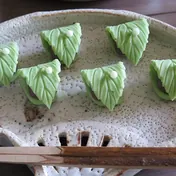
Wagashi ★ 4.8
Kyoto's seasonal Japanese sweets, shaped to match the tea ceremony and the changing flowers, codified at Kagizen Yoshifusa since the 18th century.
Where to try it: Kagizen Yoshifusa, Demachi Futaba, Marukyu Koyamaen Nishinotoin, Demachi Futaba Mame-Mochi
Price: JPY 250-800
Wagashi crystallised in Kyoto around the tea ceremony in the 17th and 18th centuries. The form prioritised seasonal shape, colour and ingredient over sweetness; nerikiri sculpted-bean sweets, kashiwa-mochi spring leaves, mizu-yokan summer jellies, and Demachi Futaba's mame-mochi all read the calendar. Kagizen Yoshifusa from the 1700s, Sasaya Iori from 1716, and Kanshundo from 1865 are the city's reference wagashi makers. Today Kyoto wagashi is the country's reference form, supplying the imperial tea houses and the city's matcha-and-sweet sets.
-
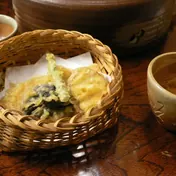
Kyoto Tempura ★ 4.5
Light-batter tempura in the Kyoto tradition, fried piece-by-piece at a counter and served immediately with seasonal Kyo-yasai vegetables and salt or tentsuyu dashi.
Where to try it: Tempura Tenyu, Tempura Endo Yasaka, Kyo Tominokoji Yoshikawa, Tempura Yoshikawa Counter
Price: JPY 6,600-22,000
Tempura arrived in Japan with Portuguese Jesuits in the 16th century, but Kyoto's chefs reshaped it for kaiseki service in the Edo era. The Kyoto form uses a lighter, less-eggy batter than Tokyo's and prioritises Kyo-yasai vegetables (sweetcorn, takenoko, kamonasu) alongside seafood. Tempura Yoshikawa from 1952 and Tempura Tenyu inside the Tawaraya ryokan (founded in the 1700s) codified the modern Kyoto counter form, with one Michelin star each. Tempura Endo Yasaka in a converted Gion teahouse runs the tourist-facing flagship.
Watch out for: Wheat, Egg, Shellfish
-
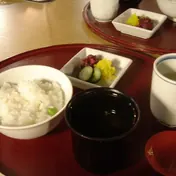
Kyoto Tsukemono Pickles ★ 4.4
Kyoto's pickle tradition, including shibazuke (red-perilla aubergine), senmaizuke (paper-thin turnip) and suguki (slow-fermented turnip), sold at Nishiki Market.
Where to try it: Nishiki Market, Nishiki Market Pickle Stalls, Daimaru Kyoto Depachika
Price: JPY 500-2,500
Pickled vegetables (tsukemono) have anchored Kyoto's plate for over 1,000 years, born of the city's inland location and the need to preserve summer Kyo-yasai for winter. Three regional specialties define the form: shibazuke from Ohara village, salted aubergine with red shiso; senmaizuke, paper-thin Shogoin turnip pressed with kombu and rice vinegar; and suguki, a slow-fermented turnip from Kamigamo. All three are sold at Nishiki Market and at Tsuchinoko-mura in Ohara, alongside dozens of seasonal variants.
Signature Dishes in Kyoto, FAQ
What food is Kyoto known for?
Kyoto's signature dishes include Kaiseki, Yudofu, Obanzai, Saba-zushi, Matcha. See our signature dishes chapter for where to eat each.