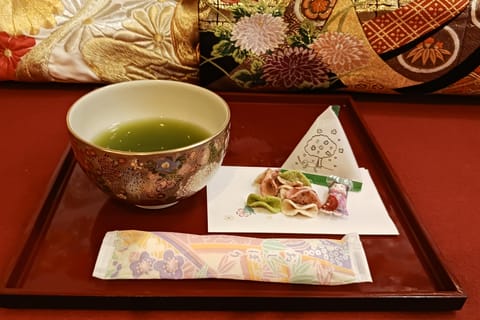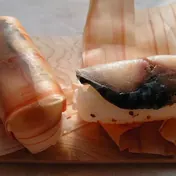
Tofu skin lifted from boiling soymilk, served as sashimi, rolled in dashi or wrapped around vegetables. A Kyoto Higashiyama specialty since the 1600s.
Yuba arrived in Kyoto from Song China in the 12th century with the same Buddhist monks who introduced matcha and shojin-ryori. The Higashiyama tofu houses around Nanzen-ji codified yuba-making, lifting the surface skin off heated soymilk one sheet at a time. The dish anchors every shojin-ryori menu in the city; fresh yuba sashimi (eaten with soy and a touch of wasabi) and yuba rolls in dashi are the two canonical preparations. Sohonke Yudofu Okutan has served yuba since 1635.
5 editor picks for Yuba in Kyoto, ranked by editorial score. All Kyoto signature dishes · Yuba across every city.
Shigetsu ★ 4.5
arashiyama · Ukyo-ku, Kyoto 616-8385, Japan
Bib Gourmand-listed shojin-ryori inside Tenryu-ji's precinct in Arashiyama. Three-course set lunches eaten facing the temple's Sogen garden.
Tousuiro Kiyamachi ★ 4.4
pontocho · Nakagyo-ku, Kyoto 604-8014, Japan
Tofu-kaiseki on a Kamogawa riverside terrace, hidden down a narrow Kiyamachi alley in a preserved Taisho-era townhouse just steps from Pontocho.
Nanzenji Junsei ★ 4.3
northern-higashiyama · Sakyo-ku, Kyoto 606-8437, Japan
A long-running garden-side yudofu room beside Nanzen-ji, set on a 1,200-tsubo strolling-garden plot in Kyoto that changes with every season.
Toseian ★ 4.2
kamigyo-nishijin · Kamigyo-ku, Kyoto 602-8378, Japan
A Nishijin yudofu room set in a former silk-warehouse machiya, opened in the 1970s. Quiet, courtyard-view tatami; locals know the Matsu Gozen set.
Fuka Nishiki ★ 4.0
nishiki-market · Nakagyo-ku, Kyoto 604-8055, Japan
Fu Ka's yuba and fu skewer stand at Nishiki Market in Kyoto. Soybean-skin and wheat-gluten skewers in dashi, gluten-free yuba options at the same counter.