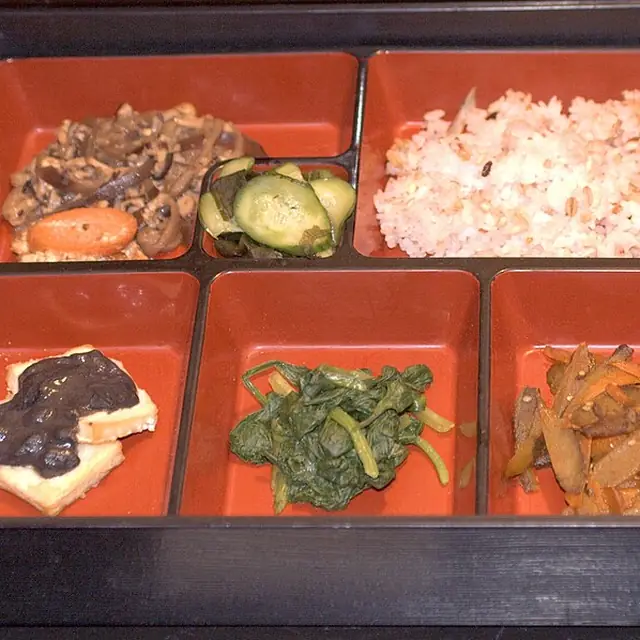


Buddhist monastic vegetarian cuisine, no meat, fish or strong aromatics, served at Tenryu-ji, Daitoku-ji and Myoshin-ji temple kitchens since the 12th century.
Shojin-ryori arrived in Kyoto with the Rinzai Zen sect in the 12th century. The 1191 introduction of powdered green tea by Eisai and the founding of Tenryu-ji in 1339 anchored the cuisine; the form codified the use of seasonal vegetables, dashi (kombu and shiitake), tofu, yuba and sesame as a substitute for animal proteins. Today Shigetsu inside Tenryu-ji and Izusen Daiji-in at Daitoku-ji serve the canonical seven-bowl meals; Ajiro Honten holds the city's longest-running Michelin recognition for the form.