How Kyoto came to eat the way it does: the people, migrations and accidents that shaped the plate.
Key eras
-
Heian court yusoku-ryori (794-1185)
Kyoto became Japan's imperial capital in 794 and held it for over a thousand years. Yusoku-ryori, the formal court cuisine of the Heian aristocracy, codified the lacquer-tray service, dashi base and seasonal naming conventions that still anchor every kaiseki menu in the city today.
Taste it todayKaiseki -
Zen monastic shojin-ryori (1191 onward)
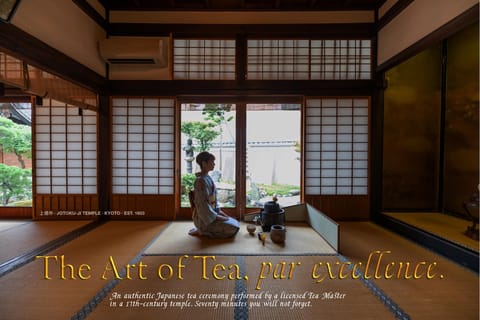
The Rinzai Zen monk Eisai introduced powdered green tea from Song China to Kyoto in 1191, and the great Zen temple complexes of Tenryu-ji, Daitoku-ji and Myoshin-ji codified shojin-ryori, the meatless monastic cooking that still defines Kyoto's vegetable hand and the original technique behind yuba and dengaku tofu.
Taste it todayShojin-ryori -
Edo-era kaiseki and machiya counters (1603-1868)
Edo-era Kyoto saw the kaiseki form crystallise around the tea ceremony, with Hyotei serving tea-house gozen at Nanzen-ji from 1837 and many soba houses opening alongside. Machiya townhouses lined Sanjo and Pontocho with counters; obanzai home cooking became a parallel public grammar.
-
Meiji modernisation (1868-1912)
After the 1868 capital move to Tokyo, Kyoto turned culinary heritage into a tourist industry. Kikunoi opened in 1912; Smart Coffee opened in 1932 as the first kissaten; Sizuya started baking carnet rolls in 1948. The city built parallel modern and traditional food cultures.
-
Michelin era (2009 onward)
The Michelin Guide arrived in Kyoto-Osaka with its 2009 edition, and Kyoto immediately ranked as one of the world's most-starred cities per capita. The guide formalised what Kyoto already knew, and the modern wave followed in machiya pizzerias and tasting counters.
Immigrant influences
- Chinese Zen Buddhists (12th century)
- Powdered green tea, the basis of matcha culture, and the foundational shojin-ryori vegetable-and-dashi grammar that Tenryu-ji and Daitoku-ji still use.
- Korean residents (Showa era)
- Yakiniku culture in north-Kyoto neighbourhoods including the Sanjo Shotengai cluster around Hiro, and the city's Korean BBQ scene.
- Israeli and European baristas (2000s)
- Aged-sake (koshu) revival at Yoramu, third-wave coffee at Weekenders and % Arabica, and the modern wagashi-and-tea pairing programmes.
Signature innovations
- Kaiseki: the modern multi-course tea-ceremony ryotei mealTaste it todayKaiseki
- Shojin-ryori: codified Buddhist vegetarian cuisineTaste it todayShojin-ryori
- Yudofu: hot-pot tofu as a temple food, codified at Nanzen-jiTaste it todayYudofu
- Obanzai: home-style daily set-meal cookingTaste it todayObanzai
- Wagashi: seasonal Japanese sweets shaped to match the tea ceremonyTaste it todayWagashi
- Yatsuhashi: Kyoto's cinnamon-and-rice sweet, exported nationallyTaste it todayYatsuhashi
- Saba-zushi: mountain-cured pressed-mackerel sushi, a Kyoto codificationTaste it todaySaba-zushi
- Yuba: tofu skin lifted from boiling soymilk, a Higashiyama specialty
- Kawayuka: summer riverside-deck dining on the Kamogawa
Book food experiences in Kyoto