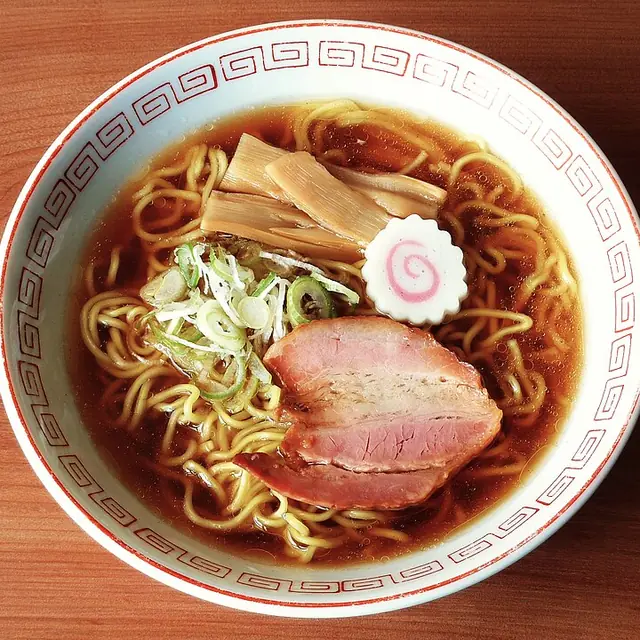
Kyoto's contribution to ramen: a balanced shoyu-tonkotsu broth blending soy sauce with pork-bone richness, served with straight noodles and Kujo green onions.
Kyoto's ramen style emerged after World War II at counters near Kyoto Station, codified by Honke Daiichi Asahi from 1947. The bowl blends dark soy with a clear pork-bone broth, lighter than Hakata tonkotsu but richer than Tokyo's pure shoyu. Straight, slightly thick noodles and a topping of finely-sliced Kujo green onions distinguish the form. Today three branches define the city's reference: Honke Daiichi Asahi for the original, Shinpuku Saikan for the blackest broth and Menya Inoichi for the modern Bib Gourmand take.
4 editor picks for Kyoto-style Shoyu-Tonkotsu Ramen in Kyoto, ranked by editorial score. All Kyoto signature dishes · Kyoto-style Shoyu-Tonkotsu Ramen across every city.
Honke Daiichi Asahi ★ 4.5
kyoto-station · Shimogyo-ku, Kyoto 600-8214, Japan
The reference shoyu-tonkotsu ramen of Kyoto, served from before dawn since 1947. Five-minute walk from Kyoto Station, queues form by 11:00 daily.
Menya Inoichi ★ 4.5
karasuma-kawaramachi · Shimogyo-ku, Kyoto 600-8043, Japan
A Michelin Bib Gourmand ramen counter three minutes from Kawaramachi Station. Light dashi broth, white soy and a chashu that earns its queue.
Shinpuku Saikan Honten ★ 4.3
kyoto-station · Shimogyo-ku, Kyoto 600-8216, Japan
A 1938-founded ramen counter near Kyoto Station, famous for its jet-black soy-sauce broth and chewy noodles. Side yakimeshi is half the order.
Tentenyu Shijo-Karasuma ★ 4.2
karasuma-kawaramachi · Nakagyo-ku, Kyoto 604-8164, Japan
A chicken-paitan ramen counter on Karasuma in Kyoto. House-raised Kyotamba bird boiled to a milky broth and finished with bright grated yuzu skin.