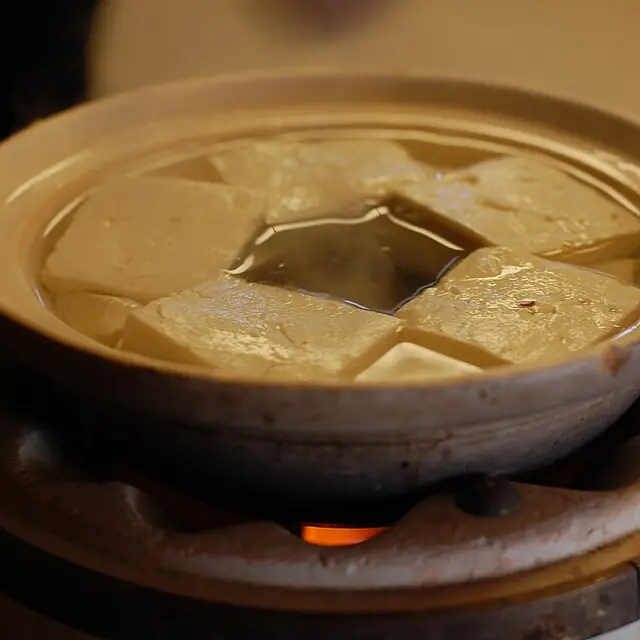
Kyoto's monastic hot-pot of silken tofu simmered gently in kombu dashi, served with dipping sauce and seasonal accompaniments at Nanzen-ji temple kitchens.

Yudofu traces to the Zen monastic kitchens of Nanzen-ji and Daitoku-ji in Kyoto, where vegetarian shojin-ryori made tofu the centrepiece of every meal. Sohonke Yudofu Okutan has been serving the dish at Nanzen-ji's gate since 1635, making it one of Japan's oldest continuously operating restaurants. The Kyoto-style preparation, using soft silken tofu in a clear kombu broth, became the canonical form against which Tokyo's harder cotton-tofu variants are still compared.

Where to eat Yudofu in Kyoto

4 editor picks for Yudofu in Kyoto, ranked by editorial score. All Kyoto signature dishes · Yudofu across every city.

Book food experiences in Kyoto

See all 2123 food experiences in Kyoto

Make it at home

Serves 230 minEasy

Ingredients

  • 400g silken tofu, cut into 4cm cubes
  • 10g kombu kelp, one strip
  • 600ml cold water
  • 60ml light soy sauce, 30ml mirin, 15g katsuobushi for the dipping sauce
  • Grated ginger, sliced scallions, shaved katsuobushi to serve

Method

  1. Cold-soak the kombu in 600ml water in a clay pot or donabe for 30 minutes.
  2. For the dipping sauce, combine soy, mirin and 100ml of the kombu water, bring to a simmer, add katsuobushi, steep for 5 minutes and strain.
  3. Heat the kombu pot on a tabletop burner to a gentle 80C; do not boil.
  4. Add the tofu cubes when the broth shows steam; warm for 3 to 4 minutes until the centre is hot.
  5. Lift each cube with a slotted spoon to small bowls, ladle a spoon of dipping sauce, top with ginger, scallions and katsuobushi.
  6. Eat hot; refill the pot with tofu as you go.

Editor tip. Never let the broth boil; you want silken curd, not rubbery cubes. Stop the heat the moment the surface trembles.

Common allergens: Soy.