Signature dishes
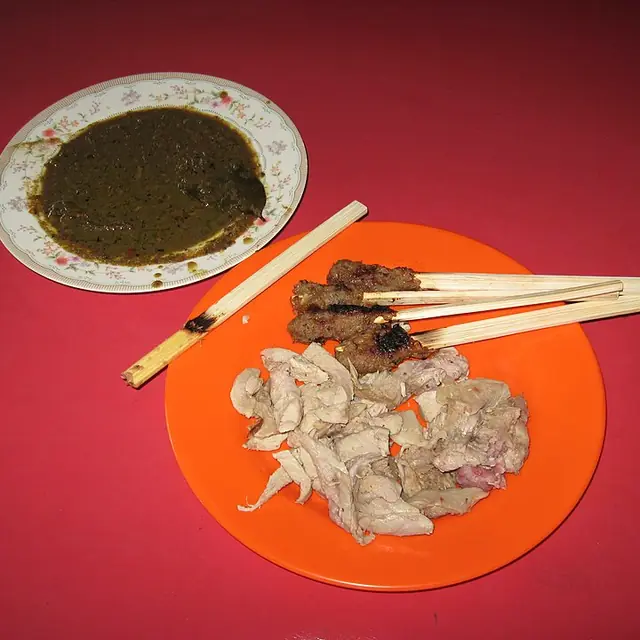
A young pig stuffed with turmeric, chilli, garlic and ginger and turned over a fire until the skin cracks, served as a rice plate with lawar, crackling and pork broth.
Where: Warung Babi Guling Pande Egi, Warung Babi Guling Ibu Oka 3, Warung Babi Guling Pak Malen, Warung Babi Guling Sari Dewi Pak Dobil
Price: IDR 25,000-65,000
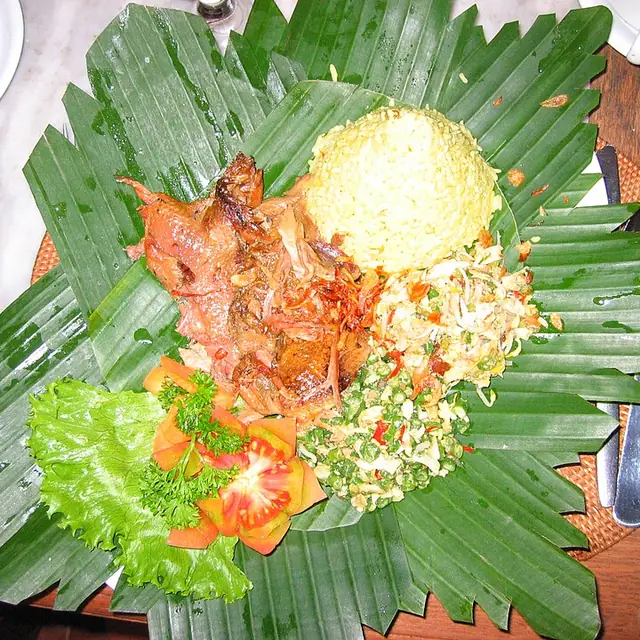
Chicken or duck smothered in basa genep spice paste, wrapped in banana leaf and cooked slowly until the meat falls from the bone, then eaten with rice and sambal matah.
Where: Nasi Ayam Kedewatan Ibu Mangku (Ubud), Warung Mek Juwel, Nasi Bali Men Weti, Warung Indonesia (Kuta)
Price: IDR 25,000-50,000
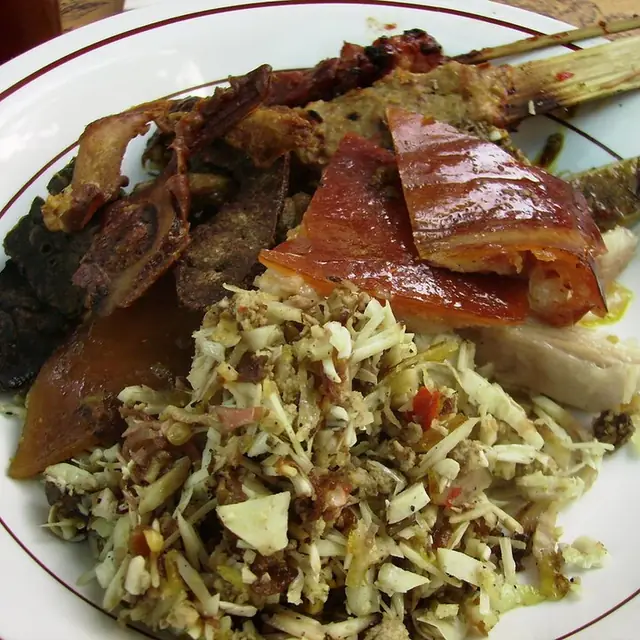
A chopped Balinese salad of green beans or young jackfruit, grated coconut and minced pork or chicken in basa genep, eaten with rice, red when blood is mixed in and white when not.
Where: Warung Men Latri, Babi Guling Dodo (Jalan Abimanyu), Nasi Banjar Mbok Mang
Price: IDR 25,000-50,000
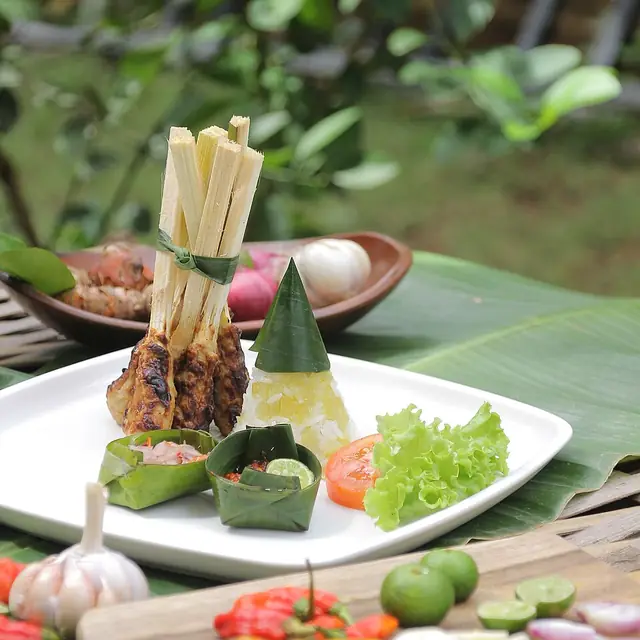
Minced fish, chicken or pork mixed with grated coconut and spice paste, wound around lemongrass or flat bamboo and grilled over charcoal, eaten without peanut sauce.
Where: Warung Ari, Warung Muslim Sate Lilit Pekambingan, Warung Sari Alit, Made's Warung (Seminyak)
Price: IDR 1,000-1,700 per skewer
Steamed rice with small portions of shredded chicken, sate lilit, urap vegetables, tofu, tempeh, egg and sambal, the standard Balinese warung meal from breakfast to dinner.
Where: Warung Wardani, Nasi Bali Men Weti, Made's Warung (Seminyak), Nasi Banjar Mbok Mang
Price: IDR 25,000-45,000
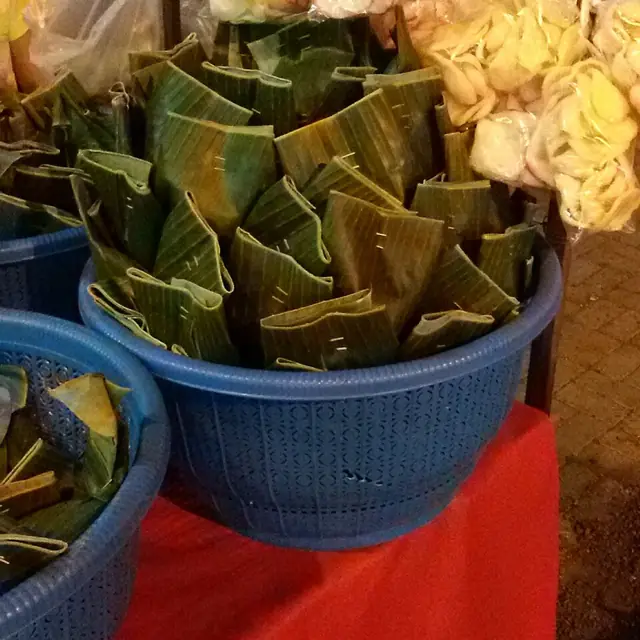
A palm-sized banana-leaf parcel of rice with shredded chicken, fried noodles or tempeh, egg and sambal, sold on Denpasar pavements in the evening for about IDR 10,000.
Where: Nasi Jinggo Diponegoro, Warung Nasi Jinggo Bu Agus, Nasi Jinggo Thamrin Ibu Agung Pemecutan
Price: IDR 5,000-10,000 a parcel
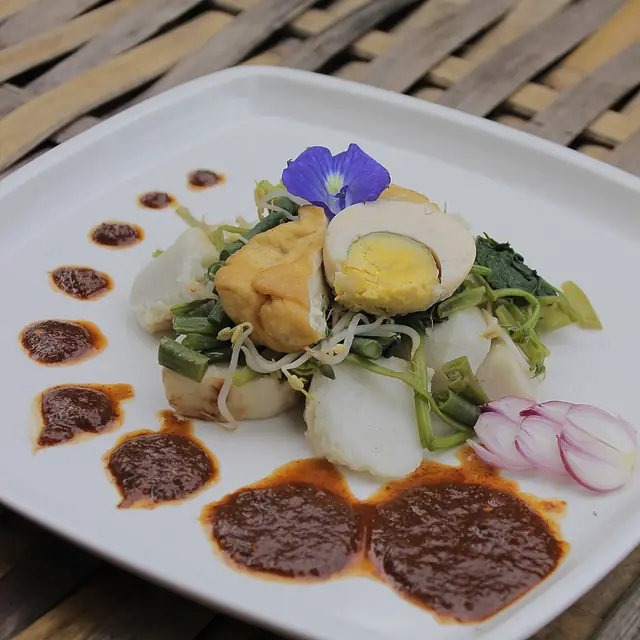
Rice cake, blanched vegetables and fried tofu dressed in a peanut sauce ground to order with chilli, kencur and lime, a Balinese cousin of gado-gado and pecel.
Where: Warung Dot Lalah, Warung De Rujak, Warung Men Runtu, Art Cafe Bumbu Bali
Price: IDR 8,000-15,000
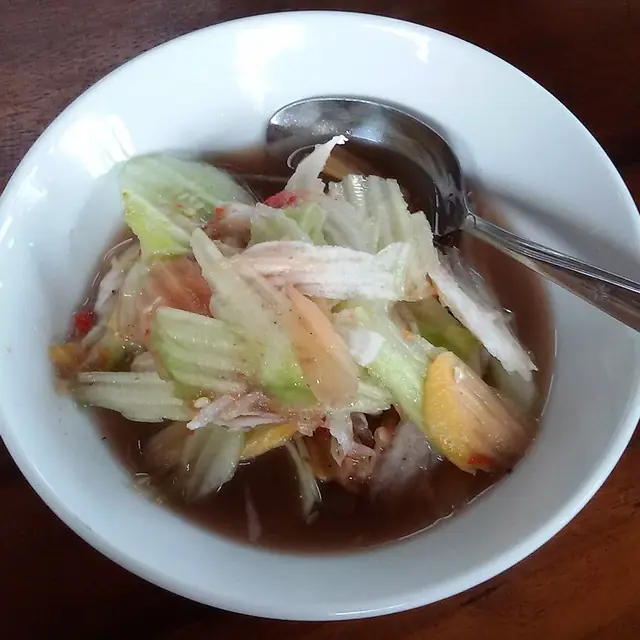
Slices of unripe mango, papaya, salak and other fruit in a salty, spicy, slightly sour broth of boiled pindang fish, pounded with chilli and shrimp paste.
Where: Warung Men Runtu, Warung Dot Lalah, Warung De Rujak
Price: IDR 10,000-20,000
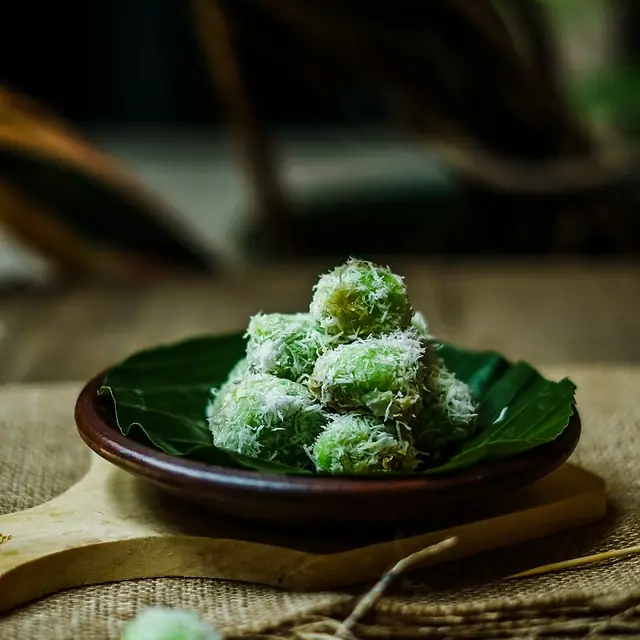
Oval glutinous-rice balls filled with liquid palm sugar, boiled and rolled in grated coconut, made in Gianyar town since 1980 and sold by the bag.
Where: Warung Klepon Gianyar
Price: IDR 10,000 for ten
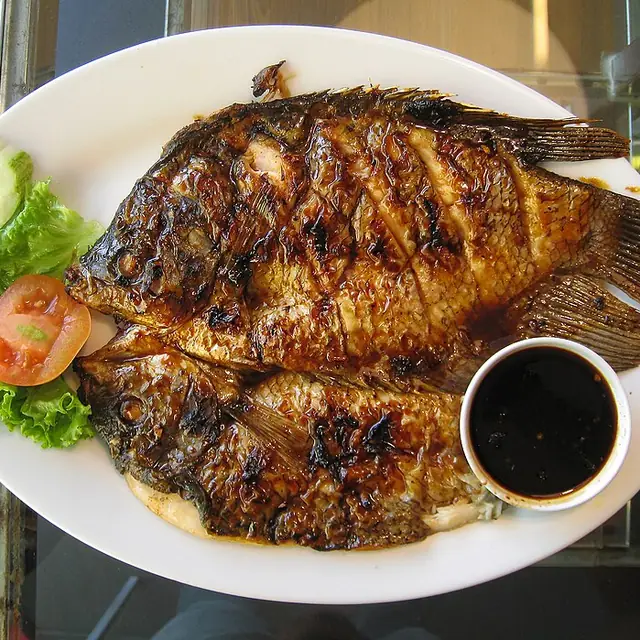
Fresh snapper, prawns, clams and squid grilled over a coconut-husk fire on the sand at Jimbaran, served with rice, sambal and a young coconut.
Where: Menega Cafe, Kayumanis Resto (Jimbaran), Kedonganan Fish Market
Price: IDR 90,000-140,000 per kg
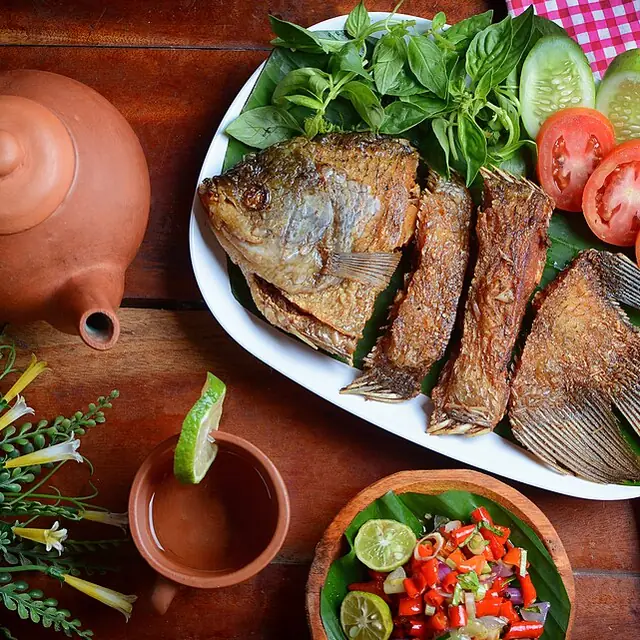
A raw relish of thinly sliced shallot, lemongrass, chilli and lime leaf dressed with hot coconut oil, spooned over grilled fish, chicken, sate lilit and rice plates.
Where: Warung Mek Juwel, Nasi Bali Men Weti, Nasi Banjar Mbok Mang
Price: IDR 25,000-50,000 for a plate that includes it
Black glutinous rice simmered into a soft pudding with palm sugar and pandan, called bubuh injin in Balinese and served with a drizzle of salted coconut cream.
Where: Art Cafe Bumbu Bali
Price: Part of a IDR 840,000++ rijsttafel for two
Babi guling
A young pig stuffed with turmeric, chilli, garlic and ginger and turned over a fire until the skin cracks, served as a rice plate with lawar, crackling and pork broth.
History: Babi guling, be guling in Balinese, is a piglet roasted whole while it is turned over a fire, its belly packed with spices and vegetables such as cassava leaves; guling means to roll or turn. It started as food for temple ceremonies and family rites, and the Gianyar area around Ubud is counted among the best places for it. Specialist warungs now sell it daily as a rice plate with lawar, crackling, urutan sausage and pork soup. It is pork (babi means pig), and the crackling often sells out by early afternoon.
Where to try it: Warung Babi Guling Pande Egi, Warung Babi Guling Ibu Oka 3, Warung Babi Guling Pak Malen, Warung Babi Guling Sari Dewi Pak Dobil
Betutu
Chicken or duck smothered in basa genep spice paste, wrapped in banana leaf and cooked slowly until the meat falls from the bone, then eaten with rice and sambal matah.
History: Betutu is the Balinese word for a spice mixture of shallots, garlic, turmeric, ginger, galangal, candlenuts, chillies and shrimp paste, and it names the dish: ayam betutu is chicken, bebek betutu duck. Regional styles differ: the bird is stuffed with spices in Klungkung and Karangasem and wrapped in plantain leaf in Gianyar. Cooks traditionally buried the wrapped bird in a pit of embers, up to 24 hours for a duck. Nasi Ayam Kedewatan, near Ubud, has sold betutu chicken rice since 1963.
Where to try it: Nasi Ayam Kedewatan Ibu Mangku (Ubud), Warung Mek Juwel, Nasi Bali Men Weti, Warung Indonesia (Kuta)
Watch out for: Peanuts, Shellfish
Lawar
A chopped Balinese salad of green beans or young jackfruit, grated coconut and minced pork or chicken in basa genep, eaten with rice, red when blood is mixed in and white when not.
History: Lawar has roots in ritual food, and Balinese families make it for ceremonies; on Penampahan, the day before Galungan, it is cooked from the pigs and chickens killed that morning, with satay and soup. Groups of men traditionally chop the meat and spices together, a task called mebat. Red lawar has blood mixed in and white lawar has none. Because of its coconut and fat, lawar spoils easily and keeps about half a day, which is why warungs sell it in the morning, beside babi guling or on its own as nasi lawar.
Where to try it: Warung Men Latri, Babi Guling Dodo (Jalan Abimanyu), Nasi Banjar Mbok Mang
Watch out for: Shellfish
Sate lilit
Minced fish, chicken or pork mixed with grated coconut and spice paste, wound around lemongrass or flat bamboo and grilled over charcoal, eaten without peanut sauce.
History: Lilit means to wrap, and that is the method: spiced mince is wound round a lemongrass stalk or flat bamboo stick rather than threaded in cubes. Sate lilit began in Klungkung as food for religious ceremonies, made by men from pork and sea fish. Fish is still favoured in fishing villages such as Kusamba, and Denpasar's Muslim-run warungs grill halal versions of fish, chicken or beef. Its yellow colour comes from turmeric in the basa genep.
Where to try it: Warung Ari, Warung Muslim Sate Lilit Pekambingan, Warung Sari Alit, Made's Warung (Seminyak)
Watch out for: Fish
Nasi campur Bali
Steamed rice with small portions of shredded chicken, sate lilit, urap vegetables, tofu, tempeh, egg and sambal, the standard Balinese warung meal from breakfast to dinner.
History: Nasi campur means mixed rice, a plate with small portions of several dishes, and the Balinese version, nasi campur Bali or simply nasi Bali, is probably the best known abroad. Its taste comes from basa genep, and a pork warung may add lawar and babi guling. It is not the rijsttafel, the colonial banquet of many dishes that Art Cafe Bumbu Bali now reworks as a Balinese spread for two. Nasi Bali Men Weti has fed Sanur since the 1970s, and Made's Warung began as a Kuta roadside stall in 1969.
Where to try it: Warung Wardani, Nasi Bali Men Weti, Made's Warung (Seminyak), Nasi Banjar Mbok Mang
Watch out for: Egg, Fish, Peanuts, Shellfish, Soy
Nasi jinggo
A palm-sized banana-leaf parcel of rice with shredded chicken, fried noodles or tempeh, egg and sambal, sold on Denpasar pavements in the evening for about IDR 10,000.
History: Nasi jinggo dates to the 1980s, when a Javanese husband-and-wife team began selling the parcels as a late-night snack on Jalan Gajah Mada in Denpasar, beside the 24-hour Kumbasari market. The name is uncertain: one theory is jeng go, Hokkien for 1,500, the old price in rupiah; another links it to the 1966 film Django. The parcels are small, so buyers often order two, and they also appear at ceremonies. Denpasar's pavement sellers, such as Nasi Jinggo Diponegoro, open at 19:00 and trade into the night.
Where to try it: Nasi Jinggo Diponegoro, Warung Nasi Jinggo Bu Agus, Nasi Jinggo Thamrin Ibu Agung Pemecutan
Watch out for: Egg, Gluten, Shellfish, Soy
Tipat cantok
Rice cake, blanched vegetables and fried tofu dressed in a peanut sauce ground to order with chilli, kencur and lime, a Balinese cousin of gado-gado and pecel.
History: Tipat is the Balinese word for ketupat, and cantok means grinding in a mortar, which describes how the peanut sauce is made to order. The dish is akin to Javanese pecel and Jakarta's gado-gado, and in Bali the sauce is sharpened with petis, lime and kencur. It is a common street food, sold in Denpasar warungs from about IDR 8,000 to 15,000. Warung Dot Lalah serves a version with noodles, tipat cantok mie, and Art Cafe Bumbu Bali lists ketipat cantok on its vegetarian rijsttafel.
Where to try it: Warung Dot Lalah, Warung De Rujak, Warung Men Runtu, Art Cafe Bumbu Bali
Watch out for: Peanuts, Shellfish, Soy
Rujak kuah pindang
Slices of unripe mango, papaya, salak and other fruit in a salty, spicy, slightly sour broth of boiled pindang fish, pounded with chilli and shrimp paste.
History: Rujak is a fruit salad of Javanese origin, its name from an Old Javanese word for chopping into small pieces. Bali's version dresses the fruit with a broth of boiled tongkol, a small tuna, pounded with chilli, salt and shrimp paste. Fruit rujak with pindang broth is hard to find outside Bali, and Warung Men Runtu in Sanur is one of its best-known sellers. Denpasar warungs often sell it beside rujak bulung, a seaweed rujak, and tipat cantok.
Where to try it: Warung Men Runtu, Warung Dot Lalah, Warung De Rujak
Watch out for: Fish, Shellfish
Klepon Gianyar
Oval glutinous-rice balls filled with liquid palm sugar, boiled and rolled in grated coconut, made in Gianyar town since 1980 and sold by the bag.
History: Klepon is spread across maritime Southeast Asia: it appears in the Javanese Serat Centhini of 1814, and Balinese and Bugis-Makassar communities use it in ritual offerings. Gianyar's version has its own shape. It is slightly oval because the palm sugar goes in as a liquid before boiling, not as a solid piece as in Javanese klepon. Klepon Gianyar 1980 began after a provincial cooking contest, and its maker was later invited to Jakarta to serve state guests.
Where to try it: Warung Klepon Gianyar
Ikan bakar Jimbaran
Fresh snapper, prawns, clams and squid grilled over a coconut-husk fire on the sand at Jimbaran, served with rice, sambal and a young coconut.
History: Jimbaran is a fishing village on the neck of the Bukit peninsula, and its beach is a seafood destination where diners pick live seafood that is grilled at once, generally over coconut husks rather than charcoal. Boats land the catch from about 04:00 to 06:00 at Kedonganan fish market, red snapper sells for about IDR 90,000 to 140,000 a kilo, and grill stalls nearby charge IDR 20,000 to 30,000 a kilo to cook it. At Menega Cafe, which Honeycombers calls perhaps Jimbaran's most famous beachfront restaurant, the set is a lobster, a seasonal fish, six clams and six calamari skewers.
Where to try it: Menega Cafe, Kayumanis Resto (Jimbaran), Kedonganan Fish Market
Watch out for: Fish, Shellfish
Sambal matah
A raw relish of thinly sliced shallot, lemongrass, chilli and lime leaf dressed with hot coconut oil, spooned over grilled fish, chicken, sate lilit and rice plates.
History: Matah is Balinese for raw, and sambal matah is the island's raw sambal, made from garlic, shallots, chillies, lime and lemongrass mixed with coconut oil. Chilli itself reached the archipelago from the Americas in the 16th century, replacing the long pepper that earlier relishes relied on. It is Bali's own sambal and a staple beside any Balinese dish. Nasi Banjar Mbok Mang puts it on its nasi campur plate, and Warung Mek Juwel serves it with ayam betutu.
Where to try it: Warung Mek Juwel, Nasi Bali Men Weti, Nasi Banjar Mbok Mang
Watch out for: Shellfish
Bubur injin
Black glutinous rice simmered into a soft pudding with palm sugar and pandan, called bubuh injin in Balinese and served with a drizzle of salted coconut cream.
History: Bubur ketan hitam, black sticky rice porridge, is called bubuh injin in Bali: black glutinous rice cooked with coconut milk and palm sugar and eaten as a dessert. Art Cafe Bumbu Bali in Nusa Dua lists bubuh injin, creamed black rice, among the desserts of both its Balinese and vegetarian rijsttafel, beside Balinese cakes, dadar guling coconut pancakes and jaja batun bedil dumplings in palm sugar sauce.
Where to try it: Art Cafe Bumbu Bali
Watch out for: Coconut