Jaipur's signature dishes grow out of a dry-country pantry and a large vegetarian tradition. Gram flour, dried lentil dumplings, and dried ker berries and sangri pods stood in for fresh vegetables, as Slurrp explains for each, and Wikipedia cites a 2014 survey that put Rajasthan at 74.9 percent vegetarian, which it calls the most vegetarian state in India. This guide covers fourteen dishes, each with its history, where to eat it in the city and a recipe for home.
The meal at the centre is dal baati churma, usually part of a thali with gatte ki sabzi, ker sangri and kadhi. Condé Nast Traveller India lists those dishes together, and notes that a non-vegetarian thali adds laal maas, the mutton curry coloured by Mathania chillies. Time Out singles out the papad mangodi sabzi at Spice Court as a home dish that barely ever reaches a restaurant menu.
Mornings belong to the walled city. Condé Nast Traveller India's Jaipur writers describe golden kachoris bubbling in big black woks and a handful of kachori shops at most intersections. Pyaaz kachori is the standard order, with the sweet mawa kachori, the Jodhpur-born mirchi vada and Sampat's aloo kachori, fried with the potato skin on, close behind.
The sweet counter follows the calendar. Ghewar is the sweet of Teej and Raksha Bandhan, pheeni is exchanged at the January kite festival, and through the rest of the year the shops sell rabri, kulfi and lassi in clay kulhads. Time Out sums up Jaipur's food in three words: spicy, indulgent and messy.
Signature dishes
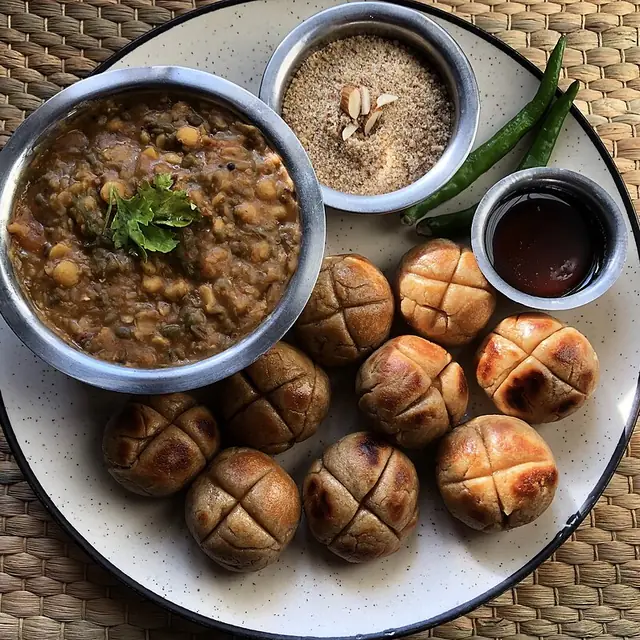
Lentils, hard baked wheat rolls and a sweet crumble of ghee and sugar, eaten together; in Jaipur it anchors the Rajasthani thali and is cooked from dhabas to hotels.
Where: Santosh Bhojnalaya, Thali and More (C-Scheme), Laxmi Misthan Bhandar (LMB), Handi Restaurant, Chokhi Dhani
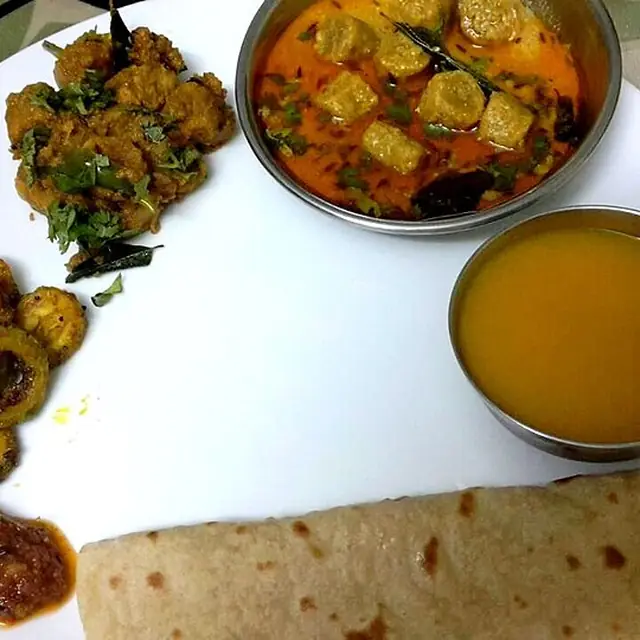
Boiled gram-flour dumplings simmered in a spiced yoghurt gravy, a vegetarian staple of the Rajasthani thali that Jaipur's heritage restaurants and dhabas both cook.
Where: Spice Court, 1135 AD, Chokhi Dhani
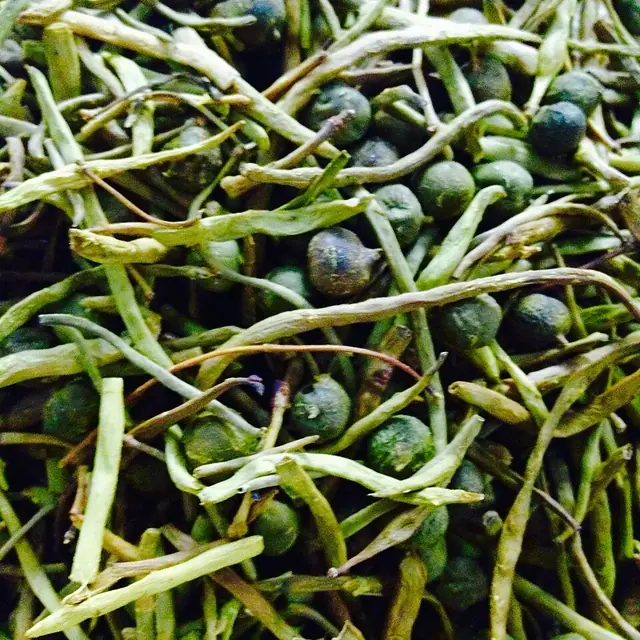
Dried desert berries and khejri tree pods, soaked, boiled and cooked with spices or yoghurt into a tangy, pickle-like side dish served as part of the Rajasthani thali.
Where: Cafe Kothi, Spice Court, Thali and More (C-Scheme)
Mutton cooked in yoghurt, garlic and dried red Mathania chillies until the gravy turns deep red, eaten in Jaipur with bajra roti, naan or rumali roti.
Where: Handi Restaurant, Spice Court, Once Upon A Time At The Bagh, Niros, The Forresta Kitchen & Bar
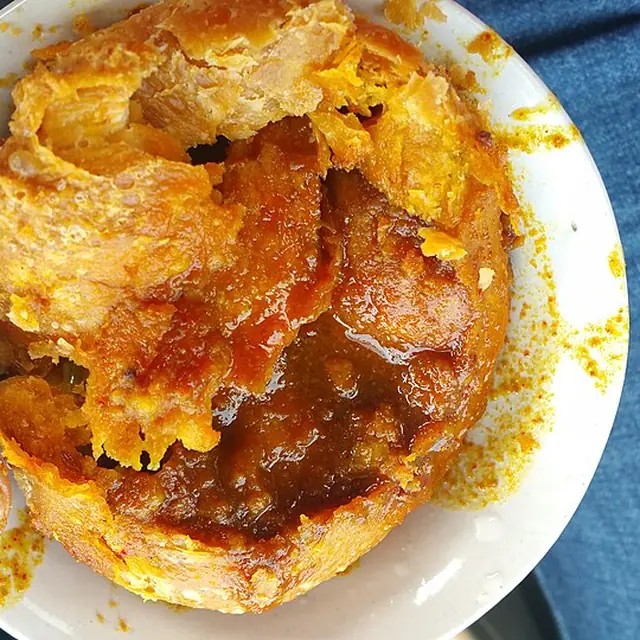
A flaky, deep-fried pastry stuffed with spiced onion and eaten hot with tamarind and coriander chutneys, the standard Jaipur breakfast snack from dawn onwards.
Where: Rawat Mishthan Bhandar, Sodhani Sweets (Bapu Nagar), Samrat Restaurant, Sampat Namkeen Bhandar
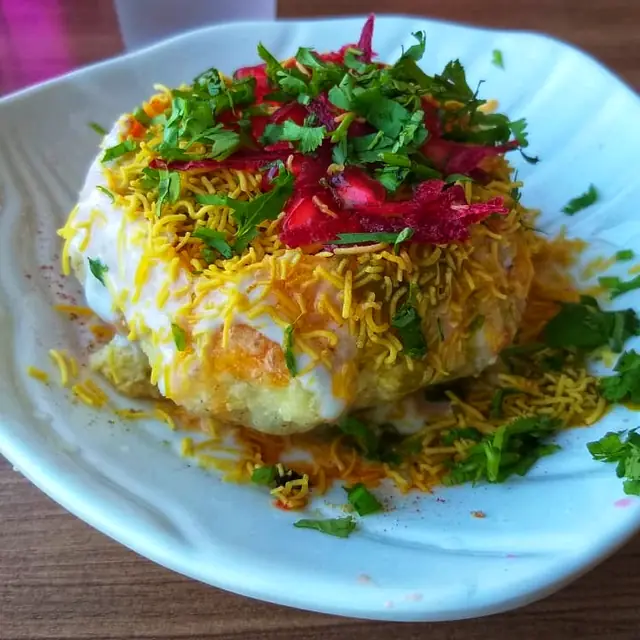
A sweet kachori stuffed with mawa and dry fruit and dipped in sugar syrup, sold at Jaipur's sweet shops beside the savoury onion version and eaten hot.
Where: Rawat Mishthan Bhandar, Laxmi Misthan Bhandar (LMB), Sodhani Sweets (Bapu Nagar)

A long green chilli stuffed with spiced potato, coated in gram-flour batter and deep-fried, a rainy-season snack from Jodhpur that Jaipur's stalls and food courts also sell.
Where: Samrat Restaurant, Masala Chowk
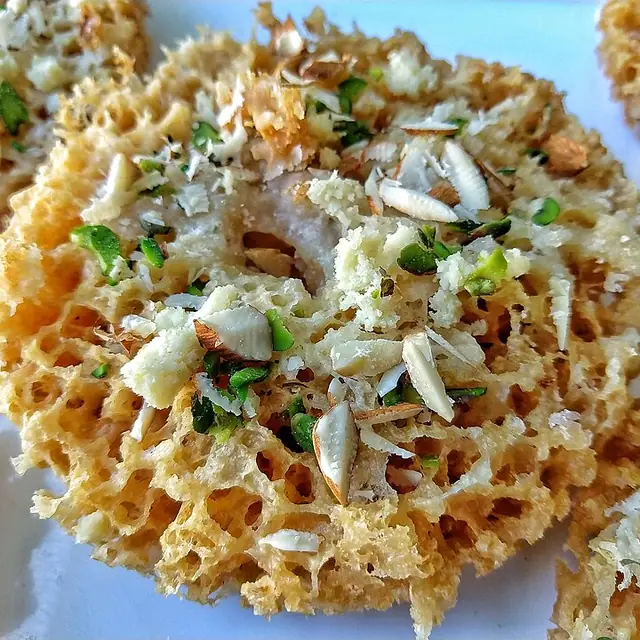
A disc of fried batter with a honeycomb texture, soaked in sugar syrup and often topped with rabri or mawa, made by Jaipur's sweet shops around Teej and Gangaur.
Where: Sambhar Fini Wala, Laxmi Misthan Bhandar (LMB), Sodhani Sweets (Bapu Nagar), Rawat Mishthan Bhandar, Dzurt Patisserie
Flaky fried strands of dough as fine as vermicelli, eaten dipped in hot sugar syrup or soaked in warm saffron milk, and exchanged at Jaipur's January kite festival.
Where: Sambhar Fini Wala
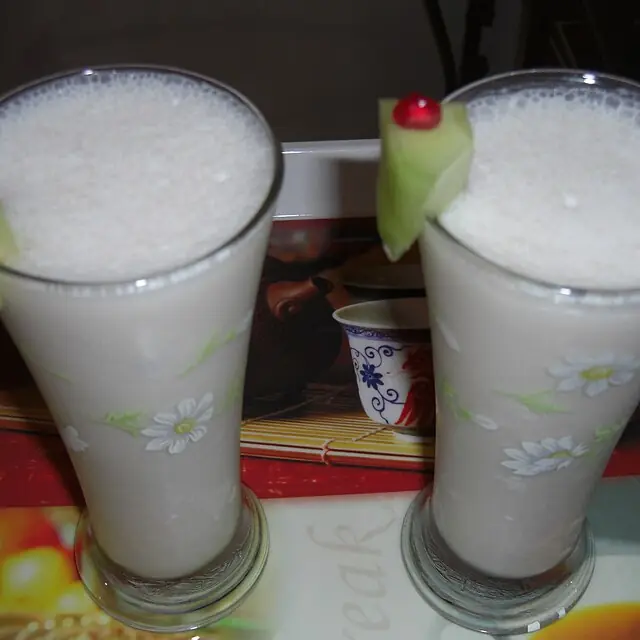
A thick, chilled yoghurt drink served in a clay kulhad under a layer of malai; Jaipur's MI Road has a long-running lassi shop and its sweet shops pour it too.
Where: Lassiwala (MI Road), Sodhani Sweets (Bapu Nagar)
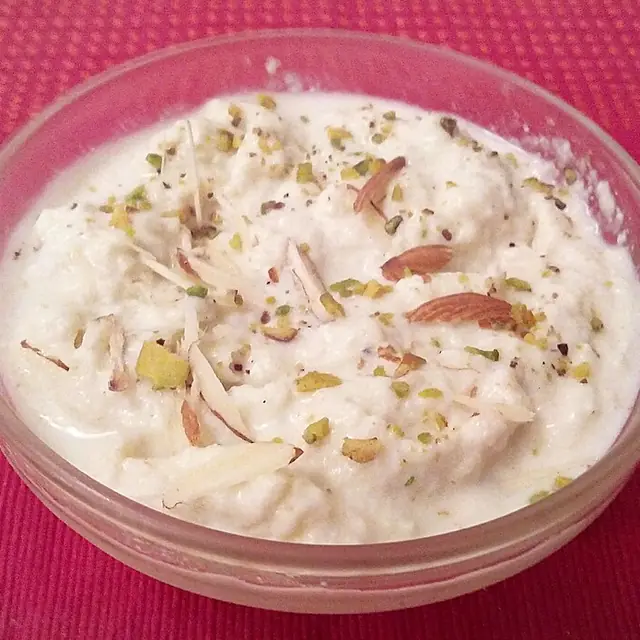
Milk simmered for hours until dense, with layers of cream folded in, then chilled and finished with cardamom and nuts; the sweet that gives Mahaveer Rabri Bhandar its name.
Where: Mahaveer Rabri Bhandar (Chandpole)
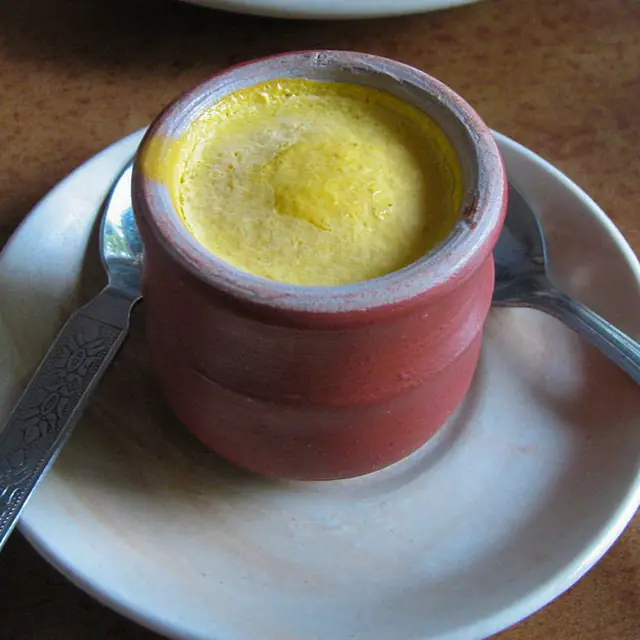
A dense frozen milk dessert flavoured with saffron, pistachio or cardamom and set in moulds without churning; Jaipur's old-city kulfi shops stay open late.
Where: Pandit Kulfi, Ramchandra Kulfi Bhandar
Sun-dried moong dal dumplings cooked with papad into a sabzi, a home dish of Rajasthan that Time Out says barely ever reaches a restaurant menu.
Where: Spice Court
A thick multigrain flatbread rich with ghee, eaten in Jaipur's old city crushed under aloo pyaz sabzi and a blazing red garlic chutney, as Mahaveer serves it.
Where: Mahaveer Rabri Bhandar (Chandpole)
Dal baati churma
Lentils, hard baked wheat rolls and a sweet crumble of ghee and sugar, eaten together; in Jaipur it anchors the Rajasthani thali and is cooked from dhabas to hotels.
History: Baati is a hard wheat-flour roll baked over coals or in an oven and finished in ghee, served with dal and churma, a sweet made by crushing baked dough with ghee and sugar or jaggery. Wikipedia says information on the dish's origins is scarce and the tale of soldiers baking dough in sand is anecdotal. Condé Nast Traveller India's Jaipur contributors split on style: one family mixes baati, dal and churma on the plate, another praises a Sindhi Camp dhaba for baatis fried crisp.
Where to try it: Santosh Bhojnalaya, Thali and More (C-Scheme), Laxmi Misthan Bhandar (LMB), Handi Restaurant, Chokhi Dhani
Watch out for: Gluten, Dairy
Gatte ki sabzi
Boiled gram-flour dumplings simmered in a spiced yoghurt gravy, a vegetarian staple of the Rajasthani thali that Jaipur's heritage restaurants and dhabas both cook.
History: Slurrp ties gatte ki sabzi to the dry Rajasthani kitchen, where scarce fresh vegetables pushed cooks towards gram flour: a spiced dough is rolled into cylinders, boiled, sliced and sometimes fried, then simmered in yoghurt gravy. It adds that the dish is cooked for Teej and Raksha Bandhan as well as family gatherings. Jaipur kitchens vary it: Time Out praises a Jodhpuri gatta curry at 1135 AD, and Spice Court makes a Govind Gatta stuffed with spicy khoya.
Where to try it: Spice Court, 1135 AD, Chokhi Dhani
Watch out for: Dairy
Ker sangri
Dried desert berries and khejri tree pods, soaked, boiled and cooked with spices or yoghurt into a tangy, pickle-like side dish served as part of the Rajasthani thali.
History: Ker are small berries and sangri the long pods of the khejri tree, both dried so they keep for months. Slurrp says the pair is soaked and cooked with red chilli and raw mango or yoghurt, that it was a year-round source of nutrition when fresh produce was scarce, and that the khejri's deep roots suit the dry country. Condé Nast Traveller India lists ker sangri in the traditional thali beside gatte ki sabzi, and Cafe Kothi in Civil Lines serves it with dal baati churma.
Where to try it: Cafe Kothi, Spice Court, Thali and More (C-Scheme)
Watch out for: Dairy
Laal maas
Mutton cooked in yoghurt, garlic and dried red Mathania chillies until the gravy turns deep red, eaten in Jaipur with bajra roti, naan or rumali roti.
History: Laal maas means red meat, and its colour comes from Mathania chillies. Wikipedia reports a chef's account that it was traditionally made with wild game such as boar or deer, the chillies covering the gamey smell, and that tender mutton is used today; the gravy is eaten with wheat chapatis in summer and bajra in winter. In Jaipur, Curly Tales says Handi cooks it over a clay oven, and Time Out pairs Spice Court's with butter naan.
Where to try it: Handi Restaurant, Spice Court, Once Upon A Time At The Bagh, Niros, The Forresta Kitchen & Bar
Watch out for: Dairy
Pyaaz kachori
A flaky, deep-fried pastry stuffed with spiced onion and eaten hot with tamarind and coriander chutneys, the standard Jaipur breakfast snack from dawn onwards.
History: Kachori is a deep-fried stuffed pastry that Wikipedia places in the Marwar region of Rajasthan, and Lifestyle Asia says food historians trace the onion version to Marwar, probably Jodhpur, before Jaipur made it its own. Condé Nast Traveller India calls Rawat Misthan Bhandar's flatter and larger than usual, with onion, garlic and tangy potato in the filling; Rawat's own site says it was founded in 1972. Lifestyle Asia finds Samrat's smaller than Rawat's but stronger on spice.
Where to try it: Rawat Mishthan Bhandar, Sodhani Sweets (Bapu Nagar), Samrat Restaurant, Sampat Namkeen Bhandar
Watch out for: Gluten
Mawa kachori
A sweet kachori stuffed with mawa and dry fruit and dipped in sugar syrup, sold at Jaipur's sweet shops beside the savoury onion version and eaten hot.
History: Mawa kachori is the sweet cousin of the onion kachori: Wikipedia's entry on Rajasthani cuisine describes it as a kachauri stuffed with mawa, reduced milk. Condé Nast Traveller India's contributor praises Rawat Misthan Bhandar's, doused in sugar syrup with a hint of cardamom and dried fruit inside, best eaten straight from the kadhai. Travel + Leisure Asia lists it at LMB and Sodhani, and Outlook Traveller Eats calls Rawat's the best thing on that shop's menu.
Where to try it: Rawat Mishthan Bhandar, Laxmi Misthan Bhandar (LMB), Sodhani Sweets (Bapu Nagar)
Watch out for: Gluten, Dairy, Tree nuts
Mirchi vada
A long green chilli stuffed with spiced potato, coated in gram-flour batter and deep-fried, a rainy-season snack from Jodhpur that Jaipur's stalls and food courts also sell.
History: Wikipedia calls mirchi bada a vegetarian fast food native to Jodhpur: a green chilli stuffed with spices and mashed potato, wrapped in gram-flour batter, fried until golden and served hot, occasionally with mint and tamarind chutney, and eaten most in the rainy season. In Jaipur, Curly Tales describes Samrat's as huge green chillies stuffed with masala potato and fried golden, and Slurrp lists mirchi bada among the snacks at the Masala Chowk food court.
Where to try it: Samrat Restaurant, Masala Chowk
Ghewar
A disc of fried batter with a honeycomb texture, soaked in sugar syrup and often topped with rabri or mawa, made by Jaipur's sweet shops around Teej and Gangaur.
History: Ghewar is a disc-shaped Rajasthani sweet with a honeycomb texture, made from ghee, flour and sugar syrup. Wikipedia ties it to the month of Shravana, Teej and Raksha Bandhan, and says it is gifted to newly married daughters on Sinjara, the day before Gangaur and Teej, and that LMB introduced chhena ghevar in 1961. Condé Nast Traveller India's contributors buy it for the Gangaur and Teej processions, and Travel + Leisure Asia says ghevar is available at almost all top sweet shops in Jaipur.
Where to try it: Sambhar Fini Wala, Laxmi Misthan Bhandar (LMB), Sodhani Sweets (Bapu Nagar), Rawat Mishthan Bhandar, Dzurt Patisserie
Watch out for: Gluten, Dairy, Tree nuts
Pheeni
Flaky fried strands of dough as fine as vermicelli, eaten dipped in hot sugar syrup or soaked in warm saffron milk, and exchanged at Jaipur's January kite festival.
History: Pheni is a fine fried vermicelli-like sweet made from flour or semolina dough stretched into many thin layers; Wikipedia says the name comes from the Sanskrit phenaka, a layered pastry, and that sutarfeni, the nest-shaped Rajasthani form, is served ready-made. Time Out says Jaipur gifts pheeni to friends and family during the January kite festival, with warm saffron milk or dipped in hot syrup with pistachios at Sambhar Fini Wala, a shop it dates to 1966.
Where to try it: Sambhar Fini Wala
Watch out for: Gluten, Dairy, Tree nuts
Lassi
A thick, chilled yoghurt drink served in a clay kulhad under a layer of malai; Jaipur's MI Road has a long-running lassi shop and its sweet shops pour it too.
History: Wikipedia says lassi is a yoghurt drink that originated in Punjab and is traditionally served in a clay cup. In Jaipur, writer Yash Dixit dates the original Lassiwala at 312 MI Road to 1944 and warns that the shops either side use the same name. Curly Tales calls its makhaniya lassi thick as yoghurt with a cloud of malai on top, and Time Out suggests washing down the pyaz kachori at Sodhani with a tall kulhad lassi.
Where to try it: Lassiwala (MI Road), Sodhani Sweets (Bapu Nagar)
Watch out for: Dairy
Rabri
Milk simmered for hours until dense, with layers of cream folded in, then chilled and finished with cardamom and nuts; the sweet that gives Mahaveer Rabri Bhandar its name.
History: Rabri is made by simmering milk for a long time and folding in the cream skin that forms on top, which gives laccha rabri its layers. Wikipedia finds a mention of rabdi in the Chandimangala of the early 1400s. In Jaipur, Time Out describes Mahaveer Rabri Bhandar as a hole-in-the-wall shop nationally known for its aloo pyaz sabzi and run by the fourth generation of the family, and recommends finishing with laccha rabdi; Travel + Leisure Asia calls the shop's rabri thick enough to stand on its own.
Where to try it: Mahaveer Rabri Bhandar (Chandpole)
Watch out for: Dairy, Tree nuts
Kulfi
A dense frozen milk dessert flavoured with saffron, pistachio or cardamom and set in moulds without churning; Jaipur's old-city kulfi shops stay open late.
History: Wikipedia traces kulfi to 16th-century Mughal Delhi and gives the name as Persian for covered cup, though historian Charmaine O'Brien suggests it evolved in Persia or Samarkand. It is milk slow-cooked until thick, then frozen in sealed moulds without churning. One Condé Nast Traveller India contributor writes that their father went to Pandit Kulfi on Hawa Mahal Road as a child, when it was still a pushcart, and Outlook Traveller Eats names kesar and rabri kulfi there, with Ramchandra Kulfi Wala in Tripolia Bazar as close competition.
Where to try it: Pandit Kulfi, Ramchandra Kulfi Bhandar
Watch out for: Dairy, Tree nuts
Papad mangodi
Sun-dried moong dal dumplings cooked with papad into a sabzi, a home dish of Rajasthan that Time Out says barely ever reaches a restaurant menu.
History: Mangodi are sun-dried dumplings of soaked, ground moong dal, shaped into small nuggets and dried in the sun; Slurrp calls them an alternative to fresh vegetables when those are scarce. Time Out says the papad mangodi sabzi barely ever makes it to a restaurant menu, and calls Spice Court's as good as a resident's home version.
Where to try it: Spice Court
Watch out for: Dairy
Tikkad
A thick multigrain flatbread rich with ghee, eaten in Jaipur's old city crushed under aloo pyaz sabzi and a blazing red garlic chutney, as Mahaveer serves it.
History: Wikipedia lists tikkad among Rajasthan's pan-cooked breads, a blend of flours and vegetables, and describes bejad roti as wheat mixed with jowar and gram flour. Time Out says the thali at Mahaveer Rabri Bhandar comes with a multigrain roti called tikkad, which you crush and pour the aloo pyaz sabzi over before topping it with red garlic chutney.
Where to try it: Mahaveer Rabri Bhandar (Chandpole)
Watch out for: Gluten, Dairy