Key eras
1727, a planned trading city
Sawai Jai Singh II founded Jaipur on 18 November 1727, moving his capital from Amer to a walled city laid out on a plan. The Local Food Club says artisans, traders and other communities were invited to settle there so the city could work as a commerce hub, which put several communities' cooking into one set of markets.
1936 to 1972, the shops that still trade
Time Out dates Sampat Namkeen Bhandar to 1936, Sodhani Sweets to 1954 and Sambhar Fini Wala to 1966; Yash Dixit dates Lassiwala to 1944, and Rawat Misthan Bhandar says it was founded in 1972. Wikipedia records LMB introducing chhena ghevar in 1961.
1947 onwards, new communities in the walled city
After Partition in 1947, the Local Food Club says, communities from neighbouring states migrated into the walled city and brought their ingredients, dishes and cooking techniques, which became part of everyday Jaipur food. Its December 2025 street-food walk through Kishanpol Bazaar, Chaura Raasta and Choti Chaupar traced those layers.
2014 to 2018, specialty coffee
Condé Nast Traveller India dates Jaipur's specialty coffee scene to 2014, when Curious Life Coffee Roasters began roasting in-house, followed by Alchemist Coffee Company in 2018. In 2026 it reports that the last two years turned that groundwork into a visible cafe culture, still a minority pursuit next to chai.
2019, a World Heritage City
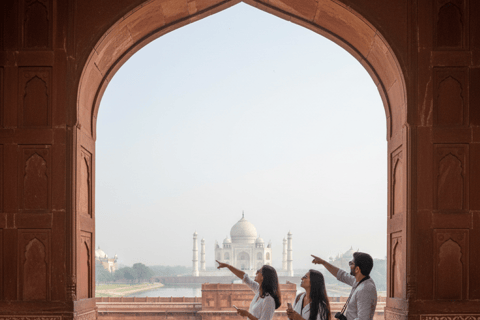
Jaipur was placed on the World Heritage Cities list on 6 July 2019, and Amer Fort, Hawa Mahal and Jantar Mantar are listed as its three World Heritage sites. Restaurants now trade inside the monuments: 1135 AD at Amer Fort, and The Sarvato at the City Palace, whose Rajasthani tasting menu runs from September to April.
2021, the chaupati experiment
In November 2021 the Rajasthan Housing Board opened food courts called chaupatis at Mansarovar and Pratap Nagar, hoping to repeat the success of Masala Chowk at Ram Niwas Bagh. The Times of India later reported that 28 of their 50 shops had closed, blaming high rents and uneven food quality.