Key eras
1487, Bavarian Beer Purity Law
Albrecht IV of Bavaria signed the first Munich Reinheitsgebot in 1487, restricting beer ingredients to water, barley and hops. The Bavaria-wide Purity Law followed in 1516. Munich's beer culture, the city's defining export, was codified before any other German beer-making city followed.
1589, the foundation of Hofbräuhaus
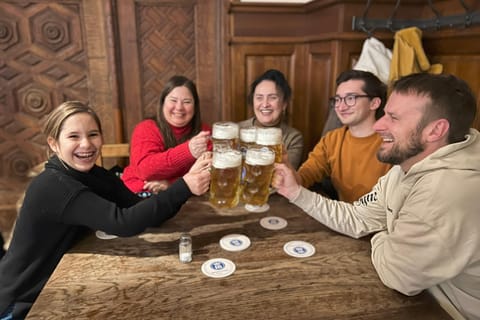
Bavarian Duke Wilhelm V founded the Staatliches Hofbräuhaus at Munich's Platzl in 1589 to brew beer for the court. The Hofbräuhaus opened to the public in 1828 and remains in operation today; the Schwemme ground-floor hall seats 1,000 guests on long communal tables.
1810, the first Oktoberfest
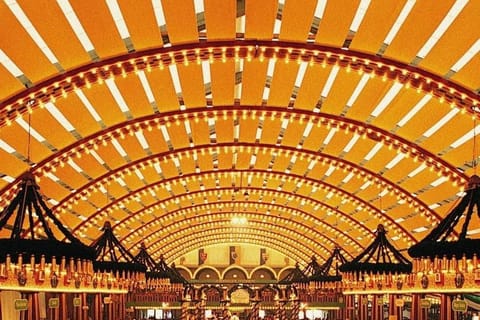
The wedding of Crown Prince Ludwig of Bavaria to Therese of Saxe-Hildburghausen on 12 October 1810 was celebrated on the meadow now called the Theresienwiese. The horse race, repeated annually, evolved into Oktoberfest, the world's largest folk festival, now drawing 6+ million visitors each September.
1857, Weisswurst as a Munich classic
Munich butcher Sepp Moser is credited with the invention of Weisswurst on 22 February 1857 at the Gasthaus Zum Ewigen Licht near Marienplatz, supposedly running out of pig casings and improvising with veal. The white sausage, eaten with sweet mustard and a Brezn before noon, is now the city's pre-noon ritual.
1970s, the Turkish wave
Turkish guest workers arriving from the 1960s through the 1970s built the Westend district's dense doener and kebab scene; Munich's Schwanthalerhöhe is one of Germany's strongest Turkish-food neighbourhoods today, with Westends Best Döner among the city's most-cited counters.
2022, JAN at three stars
Jan Hartwig opened his eponymous restaurant on Munich's Luisenstrasse in May 2022 and earned three Michelin stars within six months, a record-breaking ascent. With Tohru Nakamura at three stars from 2023 and Komu at two from 2024, Munich now matches Berlin for top-tier dining rooms.