Signature dishes
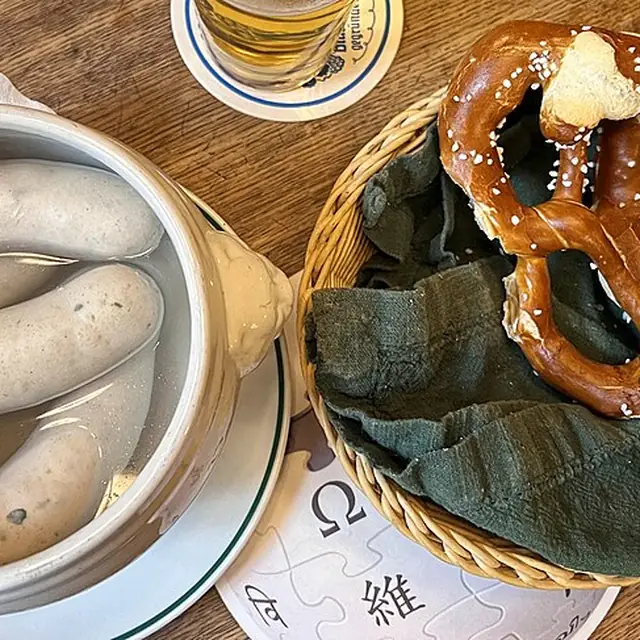
Veal and pork sausage poached in water, served with sweet mustard, a Brezn and a Weissbier. Eaten before noon by tradition. Munich's pre-noon ritual since 1857.
Where: Schneider Bräuhaus, Wurststandl Teltschik, Hofbräuhaus am Platzl, Augustiner-Stammhaus
Price: €4-9 for a pair
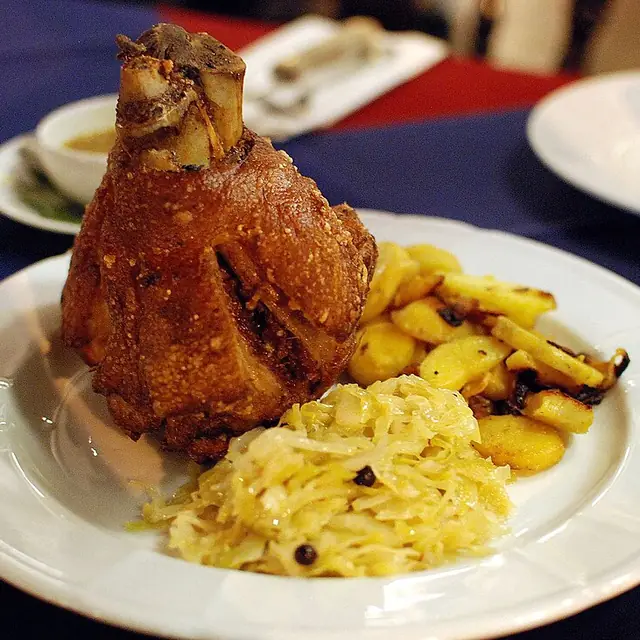
Roast pork knuckle with crackling skin and tender meat, served with potato dumplings, red cabbage and dark gravy. The defining Bavarian beer-hall plate.
Where: Hofbräuhaus am Platzl, Augustiner Klosterwirt, Andechser am Dom, Paulaner am Nockherberg, Hofbräukeller
Price: €18-26
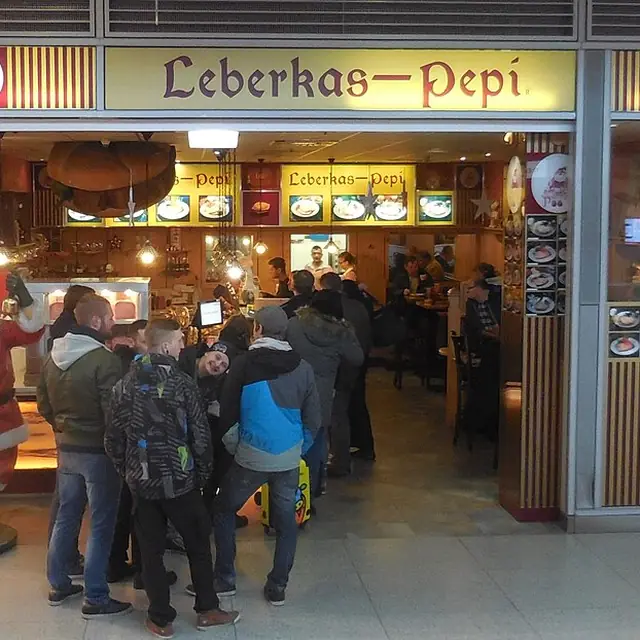
Finely minced beef and pork loaf, baked in a tin, served sliced hot or cold in a soft roll (Leberkäsweckl). Munich's classic mid-morning street snack.
Where: Vinzenzmurr Marienplatz, Wurststandl Teltschik, Hofbräuhaus am Platzl
Price: €3-6
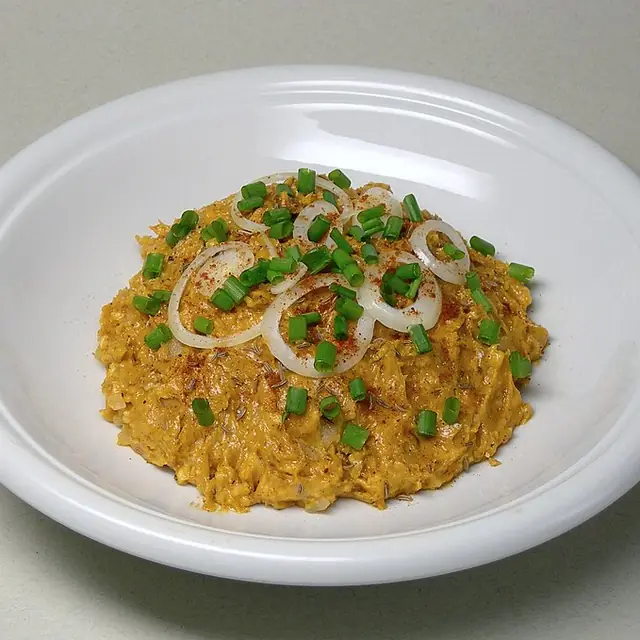
Bavarian beer-garden cheese spread: ripe Camembert mashed with butter, paprika, onion and caraway. Served with radishes, pretzels and Brezn.
Where: Hofbräuhaus am Platzl, Augustiner Klosterwirt, Augustiner-Stammhaus, Hofbräukeller
Price: €6-12
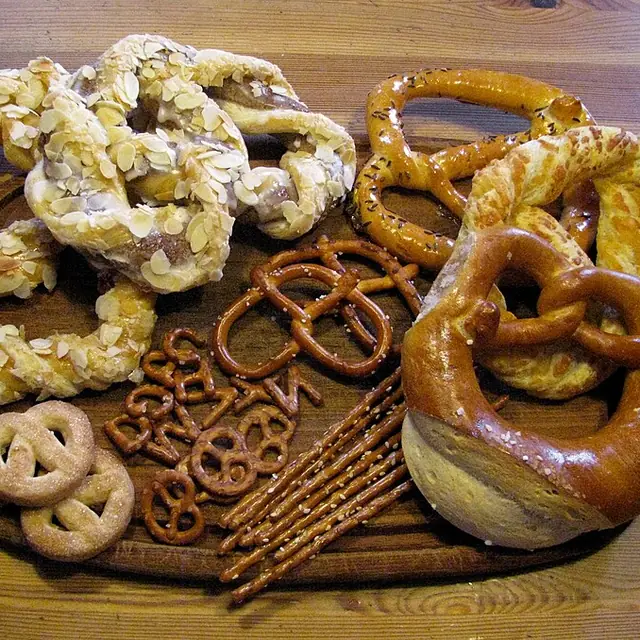
Lye-dipped pretzel with a dark mahogany crust and a soft, salty interior. Munich's universal accompaniment to beer, Weisswurst and Obatzda. Eaten warm from breakfast through last beer call.
Where: Hofpfisterei, Rischart, Julius Brantner Brothandwerk, Privat-Bäckerei Wimmer
Price: €1-3
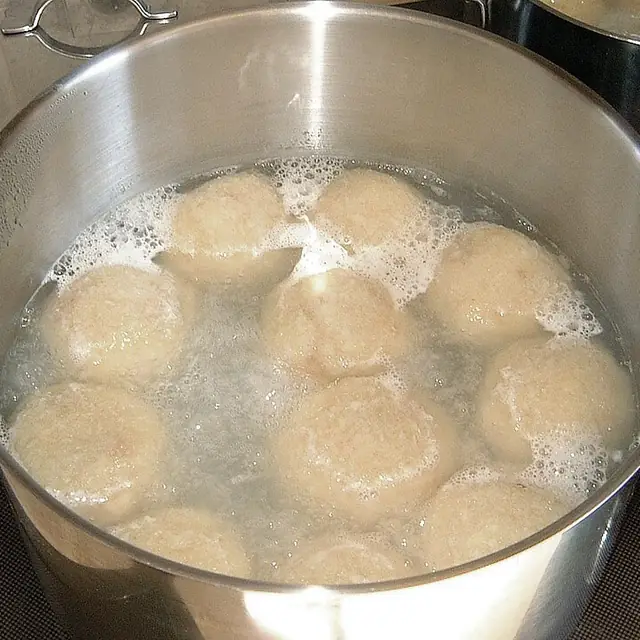
Bread or potato dumplings, served as a side to roast meats or as a main with mushroom or plum filling. The Bavarian carbohydrate of choice, anchoring every Wirtshaus Sunday roast plate.
Where: Wirtshaus in der Au, Andechser am Dom, Augustiner-Stammhaus, Spatenhaus an der Oper
Price: €8-16 as a side or main
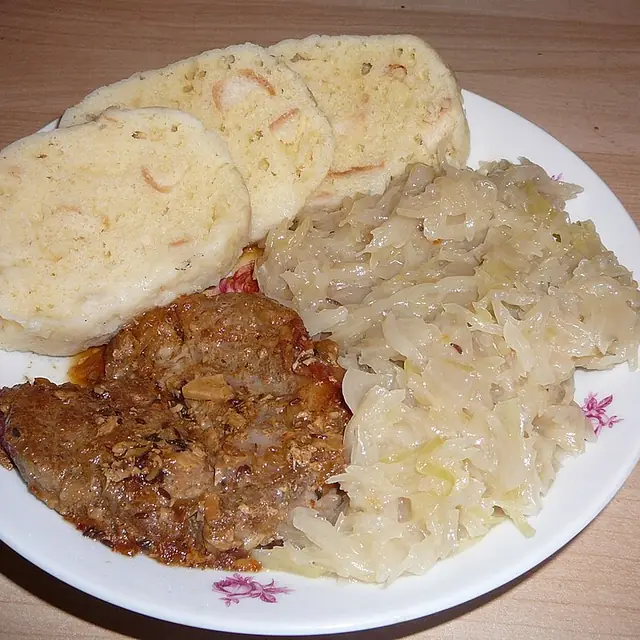
Bavarian roast pork shoulder with crackling crackling, served with Knödel and a dark beer-and-caraway gravy. The Sunday-lunch Wirtshaus classic across Munich, paired with a Maß of Helles.
Where: Augustiner-Stammhaus, Hofbräukeller, Wirtshaus Ayinger am Platzl, Spatenhaus an der Oper
Price: €15-22
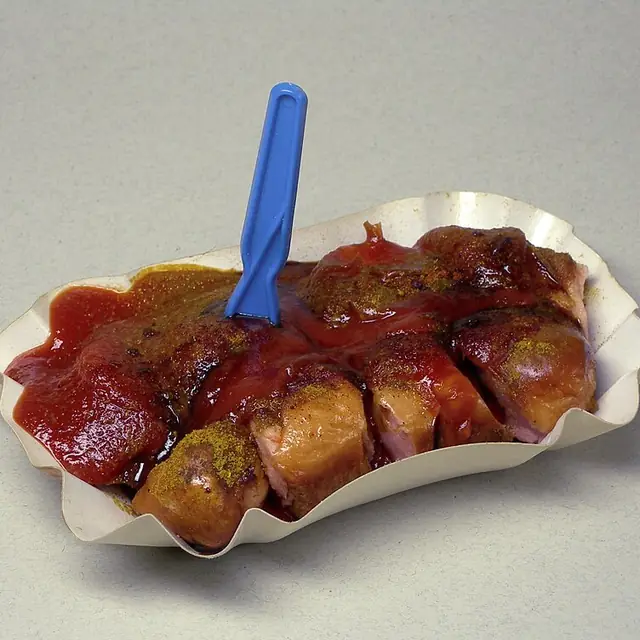
Sliced bratwurst topped with curry-spiced tomato sauce, served with fries or a roll. The classic Munich after-midnight street snack, born in 1949 Berlin and adopted across every German city.
Where: Bergwolf, Vinzenzmurr Marienplatz, Wurststandl Teltschik
Price: €5-8
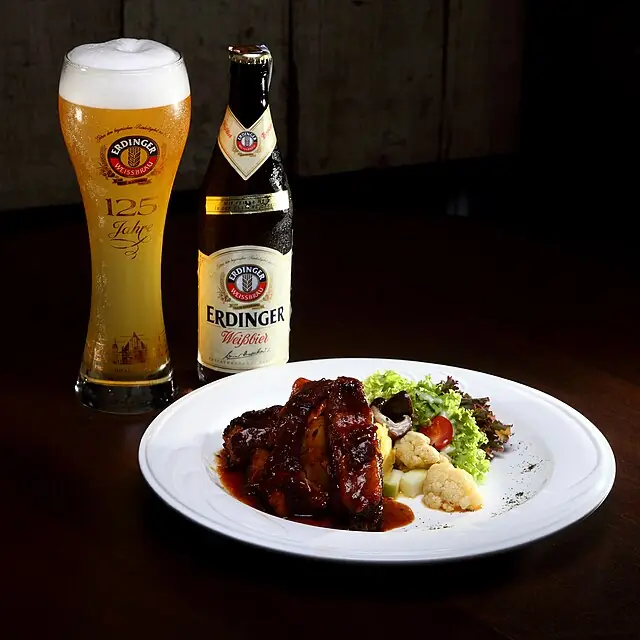
Cloudy, yeasty top-fermented wheat beer, typically 50 percent wheat, served in a tall vase glass with a lemon slice (optional). The Bavarian breakfast beer.
Where: Schneider Bräuhaus, Hofbräuhaus am Platzl, Augustiner Klosterwirt, Spaten-Franziskaner-Bräu
Price: €4-6 per half-litre
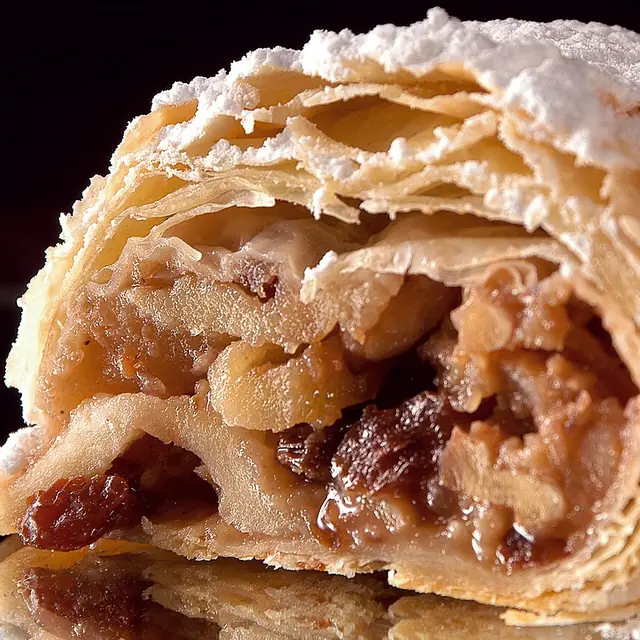
Bavaria's landmark dessert: paper-thin pulled strudel dough wrapped around sliced apples, raisins, breadcrumbs and cinnamon sugar. Baked crisp, dusted with icing sugar, served warm with vanilla sauce and ice cream.
Where: Café Frischhut (Schmalznudel), Rischart, Spatenhaus an der Oper, Privat-Bäckerei Wimmer
Price: €5-9 a slice
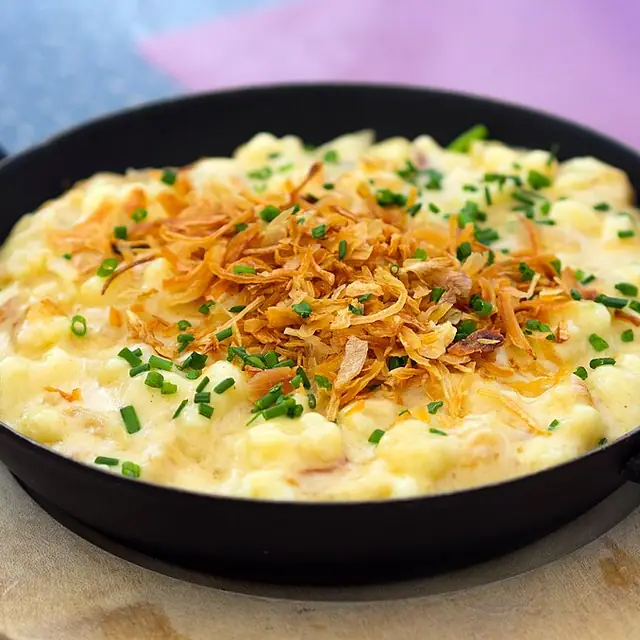
Bavarian Allgäu cheese noodles: irregular hand-shaped soft egg-pasta drops layered with grated Bergkäse cheese and topped with deeply caramelised onions, baked until the cheese is molten and the top crust is golden.
Where: Andechser am Dom, Augustiner-Stammhaus, Wirtshaus in der Au, Spatenhaus an der Oper
Price: €14-22
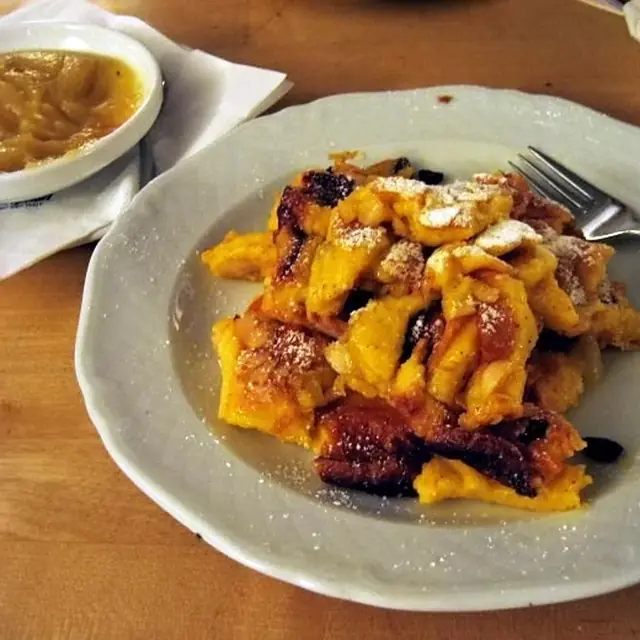
Bavarian and Austrian fluffy torn pancake: thick eggy batter cooked in butter, torn into caramelised pieces, dusted in icing sugar and served warm with stewed plums. The Alpine dessert named for Emperor Franz Josef.
Where: Café Frischhut (Schmalznudel), Spatenhaus an der Oper, Andechser am Dom, Rischart
Price: €10-16
Weisswurst
Veal and pork sausage poached in water, served with sweet mustard, a Brezn and a Weissbier. Eaten before noon by tradition. Munich's pre-noon ritual since 1857.
History: Invented by Munich butcher Sepp Moser on 22 February 1857 at the Gasthaus Zum Ewigen Licht near Marienplatz, supposedly when he ran out of pig casings for Bratwurst and improvised with thinner veal casings. The white colour comes from poaching rather than grilling. The pre-noon-only tradition stems from the original lack of refrigeration: sausages made at dawn had to be eaten before the church bells rang midday.
Where to try it: Schneider Bräuhaus, Wurststandl Teltschik, Hofbräuhaus am Platzl, Augustiner-Stammhaus
Watch out for: Gluten (from pretzel), Sulphites (optional in sausage)
Schweinshaxe
Roast pork knuckle with crackling skin and tender meat, served with potato dumplings, red cabbage and dark gravy. The defining Bavarian beer-hall plate.
History: Schweinshaxe descends from southern German rural pork-butchery traditions; the knuckle, the working part of the leg, is cured then slow-roasted to render fat and crisp the skin. The Munich beer-hall version, plated with semolina or bread Knödel and braised red cabbage, was codified by the Wirtshaus tradition in the late 19th century and became the canonical Hofbräuhaus order.
Where to try it: Hofbräuhaus am Platzl, Augustiner Klosterwirt, Andechser am Dom, Paulaner am Nockherberg, Hofbräukeller
Watch out for: None
Leberkäs
Finely minced beef and pork loaf, baked in a tin, served sliced hot or cold in a soft roll (Leberkäsweckl). Munich's classic mid-morning street snack.
History: Leberkäs (literally liver-cheese, though it contains neither in the Bavarian version) is a Bavarian and Austrian baked meat loaf made of seasoned ground beef and pork. The Munich version omits liver entirely. Served thick-sliced in a soft roll with sweet mustard, the Leberkäsweckl became the city's classic working-class lunch by the early 20th century, sold from every butcher counter.
Where to try it: Vinzenzmurr Marienplatz, Wurststandl Teltschik, Hofbräuhaus am Platzl
Watch out for: Gluten (from roll), Mustard
Obatzda
Bavarian beer-garden cheese spread: ripe Camembert mashed with butter, paprika, onion and caraway. Served with radishes, pretzels and Brezn.
History: Obatzda was invented in 1920 by Katharina Eisenreich at the Bräustüberl Weihenstephan in Freising, using overripe Camembert that could not be served as a cheese course. The mixture, spiced with paprika and caraway, became a standard beer-garden Brotzeit (snack plate) item across Bavaria and is now sold at every Munich beer-garden and Wirtshaus.
Where to try it: Hofbräuhaus am Platzl, Augustiner Klosterwirt, Augustiner-Stammhaus, Hofbräukeller
Watch out for: Dairy
Brezn (Bavarian pretzel)
Lye-dipped pretzel with a dark mahogany crust and a soft, salty interior. Munich's universal accompaniment to beer, Weisswurst and Obatzda. Eaten warm from breakfast through last beer call.
History: The pretzel, derived from monastic baking of the early Middle Ages, took its Bavarian form (Brezn) by the 19th century, with the distinctive lye dip giving the dark crust. Munich's Brezn is wider and softer than the northern Pretzel; it sits at every breakfast table, every beer-garden counter, and accompanies every Weisswurst order in the city.
Where to try it: Hofpfisterei, Rischart, Julius Brantner Brothandwerk, Privat-Bäckerei Wimmer
Watch out for: Gluten
Knödel (Bavarian dumplings)
Bread or potato dumplings, served as a side to roast meats or as a main with mushroom or plum filling. The Bavarian carbohydrate of choice, anchoring every Wirtshaus Sunday roast plate.
History: Knödel are the Alpine answer to pasta or rice, made from stale bread (Semmelknödel), grated potato (Kartoffelknödel) or both. Bavarian recipes date to at least the 17th century. Munich's Wirtshaus tradition uses Knödel as the universal side for Schweinsbraten and Schweinshaxe, with sweet plum Knödel (Zwetschgenknödel) as a seasonal autumn dessert.
Where to try it: Wirtshaus in der Au, Andechser am Dom, Augustiner-Stammhaus, Spatenhaus an der Oper
Watch out for: Gluten, Egg, Dairy
Schweinsbraten
Bavarian roast pork shoulder with crackling crackling, served with Knödel and a dark beer-and-caraway gravy. The Sunday-lunch Wirtshaus classic across Munich, paired with a Maß of Helles.
History: Schweinsbraten descends from Bavarian rural slow-roasting traditions, where the cheaper pork shoulder was cooked low and slow with beer and caraway. The Munich Wirtshaus version, plated with a bread Knödel and a dark beer gravy, became the canonical Sunday-lunch order during the 19th century; the Augustiner-Stammhaus version, served since 1829, is the city's longest-running iteration.
Where to try it: Augustiner-Stammhaus, Hofbräukeller, Wirtshaus Ayinger am Platzl, Spatenhaus an der Oper
Watch out for: Gluten (in gravy)
Currywurst
Sliced bratwurst topped with curry-spiced tomato sauce, served with fries or a roll. The classic Munich after-midnight street snack, born in 1949 Berlin and adopted across every German city.
History: Currywurst was invented in Berlin in 1949 by Herta Heuwer; the Munich version arrived in the post-war years and became a staple of the city's late-night Imbiss scene by the 1970s. Bergwolf in Glockenbachviertel is the city's most-cited counter, with weekend hours until 04:00 and a vegan option on the carte since 2010.
Where to try it: Bergwolf, Vinzenzmurr Marienplatz, Wurststandl Teltschik
Watch out for: Mustard, Gluten (in roll)
Weissbier (Bavarian wheat beer)
Cloudy, yeasty top-fermented wheat beer, typically 50 percent wheat, served in a tall vase glass with a lemon slice (optional). The Bavarian breakfast beer.
History: Wheat beer was a royal monopoly in Bavaria from 1602 to 1798, when only the Wittelsbach court could brew it; Schneider Weisse in the Tal acquired the brewing licence in 1872 and remains Germany's oldest wheat-beer brewery. Weihenstephan in Freising, north of Munich, has brewed wheat beer continuously since 1040 and is the world's oldest brewery.
Where to try it: Schneider Bräuhaus, Hofbräuhaus am Platzl, Augustiner Klosterwirt, Spaten-Franziskaner-Bräu
Watch out for: Gluten
Apfelstrudel
Bavaria's landmark dessert: paper-thin pulled strudel dough wrapped around sliced apples, raisins, breadcrumbs and cinnamon sugar. Baked crisp, dusted with icing sugar, served warm with vanilla sauce and ice cream.
History: Apfelstrudel traces back to 17th-century Habsburg Vienna, where the strudel dough-pulling technique arrived via Hungarian and Turkish baking traditions during the Ottoman-Habsburg wars. The Bavarian Munich version codified through the 19th century when the city was deeply tied to the Austrian court and bourgeois cafes adopted the dish; today it stands alongside Sachertorte and Kaiserschmarrn as the German-speaking Alpine dessert. The hand-pulled dough must stretch to newspaper-print transparency. Cafe Frischhut and Cafe Luitpold serve the canonical Munich versions.
Where to try it: Café Frischhut (Schmalznudel), Rischart, Spatenhaus an der Oper, Privat-Bäckerei Wimmer
Watch out for: Gluten, Dairy, Egg, Nuts
Käsespätzle
Bavarian Allgäu cheese noodles: irregular hand-shaped soft egg-pasta drops layered with grated Bergkäse cheese and topped with deeply caramelised onions, baked until the cheese is molten and the top crust is golden.
History: Spätzle (German for little sparrows) are soft egg dumplings made by pressing a wet batter through a perforated tool directly into boiling water. They have been a Swabian and Bavarian staple since at least the 18th century, with documented home recipes dating to 1725. The Käsespätzle variation, layered with cheese and caramelised onions, emerged in the Allgäu region of southern Bavaria and the Austrian Vorarlberg in the 19th century. Today Käsespätzle is a Munich Gaststätte standard, particularly in winter; Augustiner-Stammhaus and Wirtshaus in der Au run versions year-round.
Where to try it: Andechser am Dom, Augustiner-Stammhaus, Wirtshaus in der Au, Spatenhaus an der Oper
Watch out for: Gluten, Dairy, Egg
Kaiserschmarrn
Bavarian and Austrian fluffy torn pancake: thick eggy batter cooked in butter, torn into caramelised pieces, dusted in icing sugar and served warm with stewed plums. The Alpine dessert named for Emperor Franz Josef.
History: Kaiserschmarrn translates to Emperor's Mess, in reference to Habsburg Emperor Franz Josef I (1830 to 1916), with several apocryphal origin stories: one says it was an accident when a cook tore the imperial pancake; another claims a peasant farmer's variant the emperor preferred over palace food. The dish became codified through the late 19th-century cafe culture of Vienna, Munich and Salzburg as a substantial late-afternoon snack. The Munich Bavarian version is light eggy batter (whites whipped separately and folded in), often with rum-soaked raisins, torn rather than flipped.
Where to try it: Café Frischhut (Schmalznudel), Spatenhaus an der Oper, Andechser am Dom, Rischart
Watch out for: Gluten, Dairy, Egg