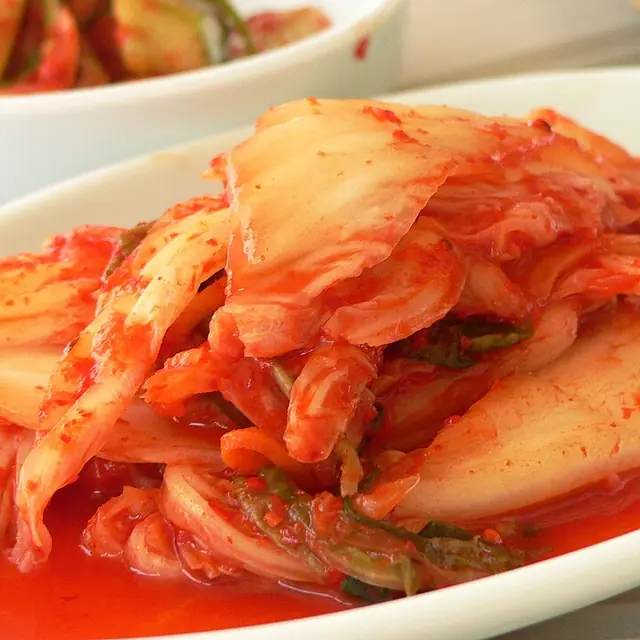


Napa cabbage salted, slathered in red chilli paste with garlic, ginger, fish sauce and salted shrimp, then fermented to a brightly sour-spicy crunch. Eaten with every Korean meal and the heart of Seoul's banchan culture.
Kimchi traces to at least the Three Kingdoms period (1st century BCE) as a method to preserve vegetables for Korean winters. The spicy red baechu version we know today only emerged after Portuguese traders introduced chillies via Japan in the 17th century; before that, kimchi was salt-only. Seoul households still hold kimjang (the autumn collective making of winter kimchi) in November; UNESCO inscribed kimjang as Intangible Cultural Heritage in 2013. Kimchi varieties exceed 200, but baechu kimchi is the Seoul default; the city's flavour leans slightly less spicy and slightly sweeter than Jeolla or Busan versions.