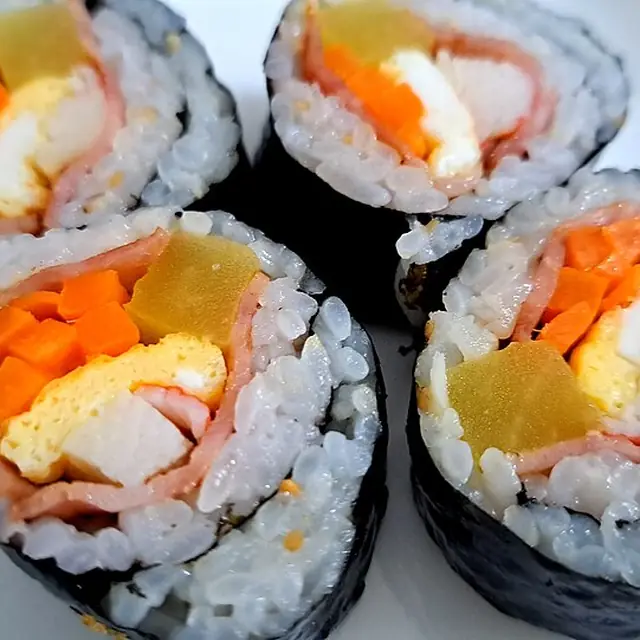


Gimbap is Korean seaweed rice rolls filled with vegetables, egg, and cured meats, sliced into rounds. Gwangjang Market's mayak gimbap is the purest form.
Gimbap (literally seaweed rice) developed in the Japanese colonial period (1910-1945), with visible influence from Japanese maki sushi in the rolling technique. However, Korean gimbap diverged significantly: the rice is dressed with sesame oil (not vinegar), the fillings are cooked (not raw), and the dish is eaten as a portable lunch or snack rather than a restaurant meal. Mayak gimbap, tiny thin rolls served at Gwangjang Market, are made with minimal filling and served with a mustard and soy dipping sauce. The word mayak (narcotic) refers to how addictively compelling the simple roll is, not to any actual ingredient.