

The plates that define Seoul: what they are, where they came from, and where to eat the canonical version.
Signature dishes
-
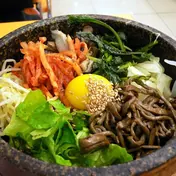
Bibimbap ★ 4.8
Bibimbap is Seoul's most definitive dish: steamed rice topped with seasoned vegetables, a raw or fried egg, and gochujang paste, mixed at the table.
Where to try it: Insa Dodam, Insadong Geu Jib, EID Halal Korean Food
Price: ₩10,000-20,000
Bibimbap is documented in Korean records as early as the Joseon dynasty (1392-1897), when it was served to the royal court as a way of combining leftover banchan with rice. Jeonju in North Jeolla Province developed the most celebrated regional version, using Jeonju-style gochujang and rice cooked in beef bone broth, topped with raw beef yukhoe and gingko nuts. The dolsot (stone pot) version, which creates a crisped rice crust at the base, became popular in the 20th century. Today, bibimbap is served from the simplest counter restaurants to Michelin-starred rooms, each interpreting the same structure of rice, protein, vegetables and paste.
Watch out for: Egg, Sesame, Soy in gochujang
-
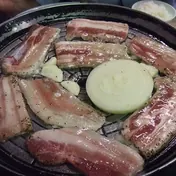
Samgyeopsal ★ 4.7
Samgyeopsal is thick-cut pork belly grilled at the table over charcoal or gas, wrapped in perilla leaf with garlic, ssamjang and doenjang paste.
Where to try it: Ungteori Saenggogi Hongdae
Price: ₩16,000-29,000 per person
Samgyeopsal (literally three-layer flesh) refers to the three layers of fat and meat visible in a thick-cut pork belly slice. It became a staple of Korean restaurant culture in the 1980s when refrigeration made fresh pork belly widely available outside rural areas. The dish is inseparable from the social ritual of the Korean grill table: small gas burners or charcoal grills built into every table, shared with a group, the meat cut with scissors when cooked. Jeju Island's heuk dwaeji (black pork) produces a particularly celebrated samgyeopsal: the Jeju black pig, a heritage breed, has higher fat marbling and a distinctive flavour compared to mainland pork.
Watch out for: Sesame in dipping sauce, Soy in ssamjang
-
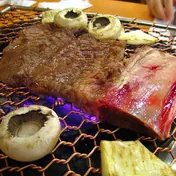
Galbi (Grilled Short Ribs) ★ 4.7
Galbi is marinated beef short ribs grilled over charcoal. The best versions use top-graded hanwoo cattle, butchered in-house and cut thick to the bone.
Where to try it: Byeokje Galbi, Maple Tree House
Price: ₩33,000-65,000 per person
Galbi (short ribs) has been part of Korean food culture since at least the Goryeo dynasty, when beef became associated with ceremonial and celebration food. The marinade of soy sauce, Asian pear, garlic, ginger, sesame oil and sugar is a Joseon-era development recorded in court cooking texts. Suwon in Gyeonggi Province is historically associated with the most generous galbi cut: the claim is that Suwon galbi is cut longer and thicker than anywhere else in Korea. The post-war premium galbi tradition was codified by restaurants like Byeokje Galbi, which began sourcing top 1% graded hanwoo cattle and doing in-house butchery in the 1980s.
Watch out for: Soy in marinade, Sesame in marinade
Book food experiences in Seoul


-
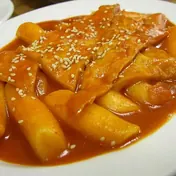
Tteokbokki ★ 4.5
Tteokbokki are chewy rice cake tubes cooked in a gochujang-based sauce: sweet, spicy and sticky. Seoul's most eaten street food since the 1950s.
Where to try it: Sindang Tteokbokki Town, Myeongdong Street Food Alley, Jongno 3-ga Pojangmacha Street
Price: ₩4,000-10,000
The modern spicy tteokbokki (gochujang-sauced rice cakes) was invented by Ma Bok-rim in Sindang-dong, Seoul, in 1953 after the Korean War. The original Joseon dish was entirely different: a non-spicy preparation using soy sauce, beef and vegetables, eaten by the royal court. Ma Bok-rim's gochujang version was a post-war reinvention that spread from Sindang-dong across the city and then the country. Sindang-dong Tteokbokki Town still operates today, a cluster of restaurants each claiming the original recipe. Variations now include rabokki (with ramen), cheese tteokbokki, and cream-based versions.
Watch out for: Gluten in tteok (rice cake may contain wheat), Sesame
-
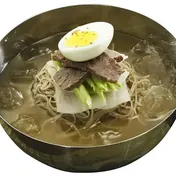
Naengmyeon (Cold Noodles) ★ 4.6
Naengmyeon are cold noodles served in ice-cold bone broth (mul) or in a spicy vinegar sauce (bibim). Pyongyang style uses buckwheat; Hamheung uses starch.
Where to try it: Woo Lae Oak, Ojangdong Hamheung Naengmyeon
Price: ₩13,000-23,000
Naengmyeon originates from North Korean cities: Pyongyang developed the mul (broth) version using buckwheat noodles in clear hanwoo bone broth, while Hamheung developed the bibim (mixed) version using potato or sweet potato starch noodles in a spicy sweet sauce. After the 1945 partition and the Korean War, North Korean refugees carried both recipes to Seoul. Restaurants like Woo Lae Oak (founded 1946) were established by North Korean families and kept the Pyongyang tradition alive. Naengmyeon is eaten year-round in Korea but is especially consumed in summer as a cooling dish.
Watch out for: Buckwheat (wheat-free alternative available in Hamheung starch version), Egg in garnish
-
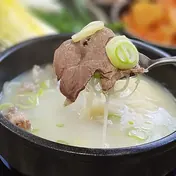
Seolleongtang (Ox Bone Soup) ★ 4.7
Seolleongtang is a milky-white broth made by boiling ox bones for 17-24 hours. Served with sliced brisket, rice and wheat noodles, seasoned with salt.
Where to try it: Hadongkwan, Imun Seolnongtang, Dongdaemun Bonga Seolleongtang
Price: ₩10,000-18,000
Seolleongtang is one of the oldest documented Korean dishes, with records dating to the Joseon dynasty when it was served at royal court banquets. The milky-white colour comes from extended boiling of ox leg bones and trotters, which emulsifies the fat and collagen into the broth. Hadongkwan in Myeongdong has been serving seolleongtang since 1939 and is listed in the Michelin Guide. Imun Seolnongtang, established in 1904, claims to be the oldest continuously operating restaurant in South Korea. The dish is eaten for breakfast through to late evening, and many establishments operate 24 hours.
Watch out for: Wheat (noodles), Dairy analogue from bone collagen (not true dairy)
-
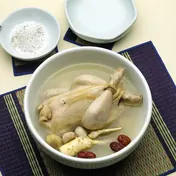
Samgyetang (Ginseng Chicken Soup) ★ 4.6
Samgyetang is a whole young chicken stuffed with glutinous rice, ginseng root, garlic, and jujube, slow-simmered in a clear medicinal broth until tender.
Where to try it: Tosokchon Samgyetang
Price: ₩20,000-29,000
Samgyetang (ginseng chicken soup) is a dish rooted in the Korean concept of iyeol chiyeol, treating heat with heat: eating a hot soup in the hottest days of summer to restore vitality lost through sweating. It is traditionally eaten on the three bok days of the Korean lunar calendar, the hottest days of summer. The dish uses a whole poussin (young chicken) stuffed with glutinous rice, ginseng root, garlic, and dried jujube dates. Tosokchon in Seoul, set in a cluster of traditional hanok buildings near Gyeongbokgung Palace, has become the most visited samgyetang restaurant in the city.
Watch out for: None significant (naturally gluten-free if no soy used)
-
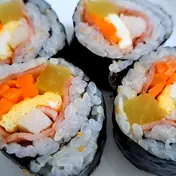
Gimbap (Seaweed Rice Rolls) ★ 4.5
Gimbap is Korean seaweed rice rolls filled with vegetables, egg, and cured meats, sliced into rounds. Gwangjang Market's mayak gimbap is the purest form.
Where to try it: Gwangjang Market Bindaetteok Stalls, Maru Jayeonsik Kimbap
Price: ₩4,000-9,000
Gimbap (literally seaweed rice) developed in the Japanese colonial period (1910-1945), with visible influence from Japanese maki sushi in the rolling technique. However, Korean gimbap diverged significantly: the rice is dressed with sesame oil (not vinegar), the fillings are cooked (not raw), and the dish is eaten as a portable lunch or snack rather than a restaurant meal. Mayak gimbap, tiny thin rolls served at Gwangjang Market, are made with minimal filling and served with a mustard and soy dipping sauce. The word mayak (narcotic) refers to how addictively compelling the simple roll is, not to any actual ingredient.
Watch out for: Sesame oil, Egg, Soy in dipping sauce
-
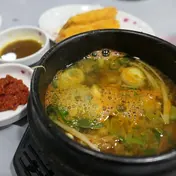
Doenjang Jjigae (Fermented Soybean Stew) ★ 4.5
Doenjang jjigae is a fermented soybean paste stew with tofu, zucchini, mushrooms, and optional shellfish. It is the daily stew of Seoul households.
Where to try it: Hadongkwan
Price: ₩7,000-13,000
Doenjang jjigae is inseparable from Korean daily eating culture. Doenjang (fermented soybean paste) has been made in Korea for at least 2,000 years, predating gochujang paste by several centuries. The jjigae (stew) format was the standard peasant food of the Joseon dynasty, using whatever vegetables and protein were available with the fermented paste as the flavour base. Korean doenjang is more complex in flavour than Japanese miso: it is fermented longer, often outdoors, and develops earthy, pungent, umami-rich characteristics that define the taste memory of Korean cooking.
Watch out for: Soy, Shellfish (optional)
-
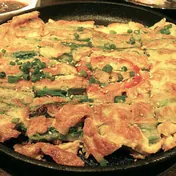
Bindaetteok (Mung Bean Pancake) ★ 4.6
Bindaetteok are thick savoury pancakes made from ground mung beans, pan-fried until crisp on the outside. The definitive version is at Gwangjang Market.
Where to try it: Gwangjang Market Bindaetteok Stalls
Price: ₩5,000-8,000
Bindaetteok has been documented in Korean cuisine since the Joseon dynasty, when it was street food sold at the Gwangjang market area in Seoul. The name means pancake for the poor, as mung beans were an inexpensive ingredient. The Gwangjang Market tradition of cooking bindaetteok on cast-iron griddles in the central food hall has been continuous since the market opened in 1905. The grinding of the mung beans to a thick batter, the addition of pork and kimchi, and the frying in a generous amount of oil until the exterior crisps while the centre remains soft remains unchanged from the Joseon preparation.
Watch out for: Sesame, Pork (traditional version)
-
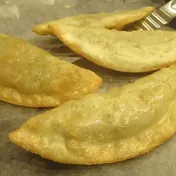
Mandu (Korean Dumplings) ★ 4.6
Hand-folded Korean dumplings filled with pork, kimchi, tofu, and Korean chive, then steamed, boiled, or pan-fried (gun-mandu). Bukchon Son Mandu is Seoul's reference dumpling shop, still hand-folding every mandu.
Where to try it: Bukchon Son Mandu, Gwangjang Market, Tongin Market, Namdaemun Market
Price: ₩6,000-12,000
Mandu arrived in Korea via Mongol military traders in the 14th century and naturalised across royal court and peasant kitchens. Bukchon Son Mandu traces back to 1953, when the Lee family brought their Hamheung dumpling recipes south to Seoul during the postwar resettlement; the original Insadong shop still hand-folds every dumpling, and the third generation now runs it with additional branches in Myeongdong, Dongdaemun, and Seongsu. Gwangjang Market dumpling stalls and Tongin Market are the cheaper street references.
Watch out for: Gluten, Soy, Sesame, Egg
-
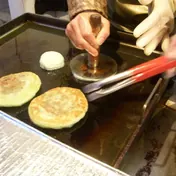
Hotteok (Sweet Stuffed Korean Pancake) ★ 4.5
Yeast-leavened pancakes pan-fried in oil and stuffed with a molten filling of brown sugar, cinnamon, and crushed peanuts. A winter street food sold from kiosks across Seoul, with Namdaemun Market the reference stall.
Where to try it: Sambodang Hotteok, Namdaemun Market Hotteok Stalls, Myeongdong Street Food Alley, Hongdae Street Food Strip, Tongin Market
Price: ₩2,000-4,000
Hotteok arrived in Korea via Chinese immigration in the late 19th century and naturalised as a winter street food by the 1920s. Sambodang Hotteok at Namdaemun Market has fried hotteok for over 40 years; the brown-sugar-cinnamon filling crystallised as the canonical version in the 1970s. Modern variations include green tea filling, ssiat (seed-filled) hotteok, and ice cream hotteok.
Watch out for: Gluten, Tree nuts (peanuts), Dairy
-
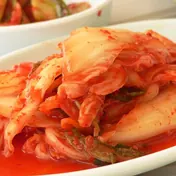
Kimchi (Baechu) ★ 4.9
Napa cabbage salted, slathered in red chilli paste with garlic, ginger, fish sauce and salted shrimp, then fermented to a brightly sour-spicy crunch. Eaten with every Korean meal and the heart of Seoul's banchan culture.
Where to try it: Tosokchon Samgyetang, Hadongkwan, Onjium
Price: ₩3,000 to ₩8,000 (banchan, free with meals)
Kimchi traces to at least the Three Kingdoms period (1st century BCE) as a method to preserve vegetables for Korean winters. The spicy red baechu version we know today only emerged after Portuguese traders introduced chillies via Japan in the 17th century; before that, kimchi was salt-only. Seoul households still hold kimjang (the autumn collective making of winter kimchi) in November; UNESCO inscribed kimjang as Intangible Cultural Heritage in 2013. Kimchi varieties exceed 200, but baechu kimchi is the Seoul default; the city's flavour leans slightly less spicy and slightly sweeter than Jeolla or Busan versions.
Watch out for: Fish, Shellfish
-
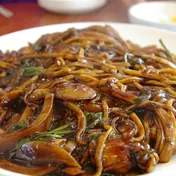
Jajangmyeon ★ 4.6
Thick chewy wheat noodles topped with glossy dark sauce of fermented black bean paste, pork, onion, zucchini and potato. Korean-Chinese comfort food and Seoul's default delivery dish.
Where to try it: Euljiro Jjajangmyeon Alleys
Price: ₩7,000 to ₩13,000
Jajangmyeon (자장면) was created in 1905 at Gonghwachun restaurant in Incheon's Chinatown by Chinese immigrants who adapted Shandong zhajiangmian to Korean tastes; the original Chinese version uses lighter wheat-bean paste, while the Korean version uses caramel-darkened chunjang, which gives the signature lacquered black colour. Seoul absorbed the dish through Korean-Chinese restaurants citywide; by the 1960s it was the default cheap delivery food. South Koreans now eat an estimated 7 million bowls a day. Black Day (April 14) is a Seoul tradition where single people gather to eat jajangmyeon and lament their single status.
Watch out for: Gluten, Soy
-
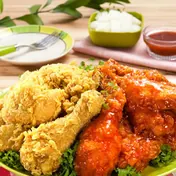
Korean fried chicken (Yangnyeom chikin) ★ 4.8
Chicken double-fried to glassy thin crackle, tossed in a sweet-spicy red sauce of gochujang, garlic, sugar and rice syrup. Eaten with cold pickled radish and Hite or Cass beer; the chimaek of Korean nightlife.
Where to try it: Hongdae Street Food Strip
Price: ₩19,000 to ₩35,000
Korean fried chicken descends from American military fried chicken introduced to Korea after 1945. The yangnyeom (seasoned) version with the sweet-spicy red glaze was invented in 1982 by Yun Jonggye at a fried-chicken shop in Daegu. Seoul mass-adopted the dish in the 1990s through chain outlets like Pelicana and BBQ Chicken. The portmanteau chimaek (chicken plus maekju, beer) describes the now-essential pairing; the 2014 K-drama My Love from the Star pushed chimaek into Asian pop-culture canon. The defining technique is the double-fry, which removes moisture from the skin and gives the see-through crackle.
Watch out for: Gluten, Soy, Sesame
-
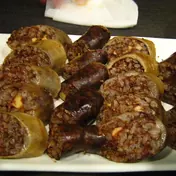
Sundae (Korean blood sausage) ★ 4.3
Pig intestine stuffed with pig blood, sweet potato glass noodles, glutinous rice and bean sprouts. Steamed, sliced into thick coins, dipped in spiced salt at Seoul markets.
Where to try it: Sindang Tteokbokki Town, Gwangjang Market, Jongno 3-ga Pojangmacha Street
Price: ₩6,000 to ₩14,000
Sundae has roots in Mongol-influenced Korean cuisine of the Goryeo dynasty (10th to 14th century), introduced through Mongol overlord rule. Originally a winter peasant dish (everything from the slaughtered pig got used), it became a street-food staple in the 20th century. Sindang-dong in Seoul, just east of Dongdaemun, is the canonical home of sundae bokkeum (sundae stir-fried with tteokbokki and gochujang); the alley dates to the 1950s. Plain steamed sundae sliced and dipped in fine salt with pepper is the older Seoul format, eaten at Gwangjang and Tongin markets.
Watch out for: Gluten
-
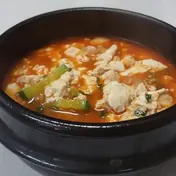
Soondubu jjigae ★ 4.6
A blistering hot stone pot of barely-set silken tofu in red gochugaru broth with clams, mushrooms or pork, finished with a raw egg cracked into the centre at the table. Seoul lunch counters serve nothing else.
Price: ₩9,000 to ₩16,000
Soondubu jjigae (순두부찌개) is one of Korea's three canonical stews alongside kimchi jjigae and doenjang jjigae. The silken-soft tofu (sundubu) tradition traces to the village of Chodang in Gangneung, where the 16th-century Joseon civil official Heo Yeop made tofu using seawater instead of brine, giving the silkier set. Seoul absorbed soondubu through Gangneung migrant cooks in the 1960s. The stone-bowl ddukbaegi serving format keeps the stew at a rolling boil for the full meal; the table-cracked raw egg poaches in the residual heat.
Watch out for: Shellfish, Soy, Egg
-
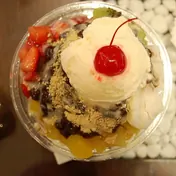
Patbingsu ★ 4.4
Mountain of finely shaved milk-ice topped with sweet red bean paste, chewy mochi cubes, condensed milk and seasonal fruit. Korean summer dessert eaten with two long spoons, shared at every Seoul cafe from June to August.
Price: ₩11,000 to ₩22,000
Patbingsu (팥빙수) descends from the Joseon-era summer ritual of shaved mountain ice with honey or red bean paste, originally a royal-court dessert. The modern Seoul format emerged in the 1950s with Japanese kakigori influence; the milk-ice version (snowflake-fine shavings of frozen milk rather than water) was popularised by Sulbing in 2013, and is now the dominant Seoul style. Beyond classic pat (red bean), modern variants include injeolmi (with roasted soybean powder), green tea, mango, and Korean melon. Eaten by mid-summer in groups of two to four, shared from one giant bowl.
Watch out for: Dairy
Signature Dishes in Seoul, FAQ
What food is Seoul known for?
Seoul's signature dishes include Bibimbap, Samgyeopsal, Galbi (Grilled Short Ribs), Tteokbokki, Naengmyeon (Cold Noodles). See our signature dishes chapter for where to eat each.