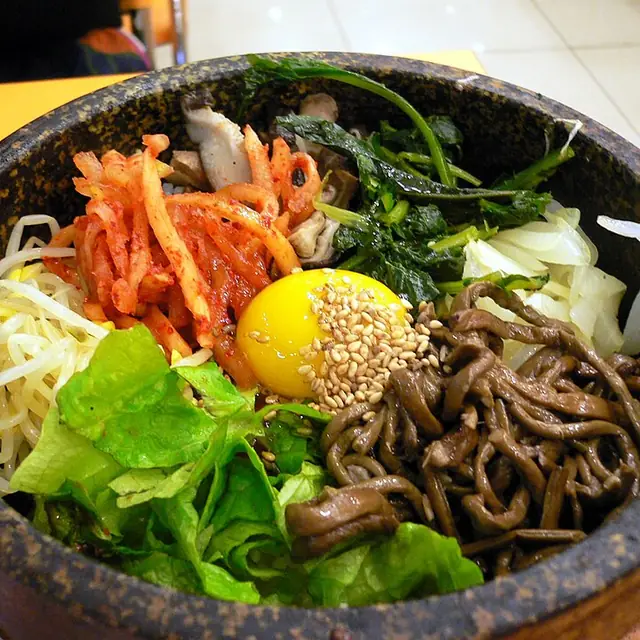
Bibimbap is Seoul's most iconic dish: steamed rice topped with seasoned vegetables, a raw or fried egg, and gochujang paste, mixed at the table.
Bibimbap is documented in Korean records as early as the Joseon dynasty (1392-1897), when it was served to the royal court as a way of combining leftover banchan with rice. Jeonju in North Jeolla Province developed the most celebrated regional version, using Jeonju-style gochujang and rice cooked in beef bone broth, topped with raw beef yukhoe and gingko nuts. The dolsot (stone pot) version, which creates a crisped rice crust at the base, became popular in the 20th century. Today, bibimbap is served from the simplest counter restaurants to Michelin-starred rooms, each interpreting the same structure of rice, protein, vegetables and paste.
3 editor picks for Bibimbap in Seoul, ranked by editorial score. All Seoul signature dishes · Bibimbap across every city.
Insa Dodam ★ 4.2
Insadong · 5-1 Insadong 16-gil, Jongno-gu, Seoul
Insa Dodam is a renovated hanok off Insadong-gil that runs a lunch-only bibimbap programme, capping bowls per day to lock in same-morning vegetable delivery from contract farms.
Insadong Geu Jib ★ 4.1
Insadong · 23 Insadong 16-gil, Jongno-gu, Seoul
Insadong Geu Jib is a hanok-style Korean restaurant set in a narrow Insa-dong alley, serving dolsot bibimbap, beef-tartare bibimbap and bulgogi-and-vegetable rolls at neighbourhood prices.
EID Halal Korean Food ★ 4.1
Itaewon and Hannam · 15 Usadan-ro 10-gil, Yongsan-gu, Seoul
EID Halal Korean Food on Usadan-ro is one of Seoul's most respected halal restaurants, operated by a Korean Muslim family serving authentic Korean cuisine.