-
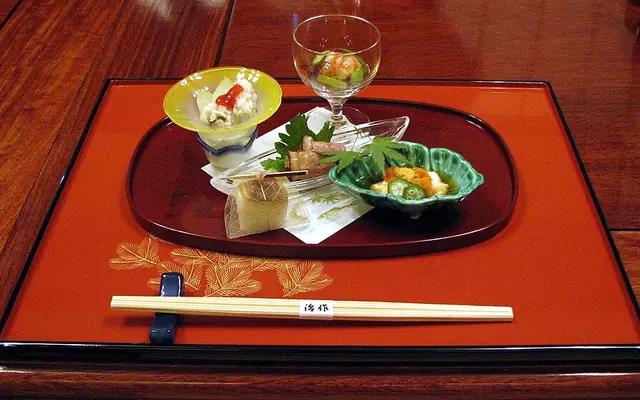
Order The seasonal multi-course kaiseki built around whatever the Genkai Sea morning catch delivered.
Yuzuru Takebayashi's Akasaka kaiseki counter in Fukuoka has run since 1993 and held a Michelin star in the 2014 and 2019 Kyushu special editions.
-
Order Miso motsunabe for two, finished with the champon noodle round.
Yamanaka invented miso motsunabe in 1984 and codified the Hakata offal hotpot.
-
Order Puripuri motsu daimanzoku course with all-you-can-eat champon noodles.
Rakutenchi Tenjin flagship: three floors, 240 horigotatsu seats, the largest motsunabe room in Kyushu.
-
Order Mizutaki course with the zosui rice-porridge close. Add the yakitori starter platter.
Mizutaki built from the Hanamidori chicken brand, raised on seaweed and herb feed in northern Kyushu and simmered six hours into a milky-white broth.
-
-
Order The TENJIN course at 6,600 yen per person: appetisers, goma saba, mizutaki, zosui, dessert.
Toriden simmers a home-bred chicken six to seven hours with water and salt; the collagen breaks down into a creamy yellow mizutaki that defines Hakata.
-
Order Omakase yakitori course with the Kuro Satsuma flight.
Mako grills Kuro Satsuma chicken from Kagoshima, raised 120 days.
-
Order The 21-piece omakase course; the chef sets the pace and pairs sake if you ask.
Torikami opened in Daimyo Garden City from Tokyo Torishiki lineage.
-
Order Two pans of tetsunabe gyoza minimum, with a Kirin draught.
The original Hakata iron-pan gyoza shop.
-
Order Yobuko squid ikizukuri at market price, followed by the goma saba.
Kawataro Nakasu runs Yobuko squid ikizukuri live from a tank, plus the Hakata goma-saba mackerel.
-
Order Miso motsunabe for two, finished with champon noodles.
The Hakata Station branch of Yamanaka miso-motsunabe original, closer to the shinkansen than the Akasaka room, with the same recipe since 1984.
-
Order Mizutaki course with the rice-porridge zosui finish.
Hanamidori at Hakata Station sits in JR Hakata City, within walking distance of the shinkansen gate.
-
Order Omakase yakitori platter plus the daikon salad.
Hachibei's Shoninbashi-dori branch is the original yakitori counter that grew into a Tokyo chain.
-
Order Kalbi bukkake udon at 780 yen, raw egg on top.
Ebisuya's flat Hakata-style udon won the 2014 Japan Udon Championship runner-up.
-
Order Mizutaki TENJIN course at 6,600 yen per person.
Toriden's Yakuin branch is quieter than the Hakata flagship and runs the same six-hour chicken broth.
-
Order Two pans of tetsunabe gyoza with a Kirin draught.
The original Hakata iron-pan gyoza, three minutes from Gion subway.
-
Order Kalbi bukkake udon at 780 yen, raw egg on top.
Ebisuya's flat Hakata-style udon won runner-up at the 2014 Japan Udon Championship.
-
Order Goboten udon with a side bowl of rice for soaking the broth.
Daichi's Hakata Station-front shop runs the city's most-talked-about goboten udon: a tower of crispy burdock-root tempura over a bowl of soft Hakata noodles.
-
Order Miso motsunabe for two with the champon noodle close.
Yamanaka invented miso-style motsunabe in 1984.
-
Order Puripuri motsu daimanzoku course with all-you-can-eat champon noodles.
Rakutenchi's Tenjin flagship: three floors and 240 horigotatsu seats, the largest motsunabe room in Kyushu.
-
Order Butabara pork-belly skewers plus the omakase chicken flight.
Hachibei's Shoninbashi branch is the original yakitori counter that grew into a Tokyo chain.
-
Order Mentaiko gohan rice set with a side of the skin-on barako.
Fukuya's mentaiko factory shop reopened July 2025 as Fukuya Aji no Mentaiko Factory.
-
Order Mentaiko rice set, with all-you-can-add mentaiko on top.
Yamaya's Canal City B1 sells mentaiko by the gram next to a small dine-in counter pouring mentaiko rice sets with miso soup and free-flow pickles.
-
Order Hire katsu set with miso soup and unlimited cabbage.
Wakou's Hakata Hankyu branch runs canonical Japanese tonkatsu: thick pork cutlet, panko crust, free cabbage and rice refills, in a department-store room.
-
Order Goboten burdock-root tempura udon with a raw egg on top.
Manda's small Tenjin counter pours a soft Hakata-style udon with the city's better goboten burdock tempura, working lunch crowds through 800-yen bowls.
-
Order Niku udon with kashiwa rice on the side.
Maki no Udon is one of Fukuoka's three big udon chains.
-
Order Yobuko squid ikizukuri at market price, then goma saba.
Kawataro's three-floor Nakasu flagship runs Yobuko squid ikizukuri live from the tank, plus the canonical Hakata goma-saba and river-view tatami rooms.
-
Order Miso motsunabe for two, finished with champon noodles.
Hakata Station branch of Yamanaka's miso-motsunabe original, closer to the shinkansen than the Akasaka room, with the same recipe since 1984.
-
Order Omakase yakitori with the Kuro Satsuma flight.
Mako's Yakuin counter grills Kuro Satsuma chicken from Kagoshima, raised 120 days.
-
Yuzuru Takebayashi's seasonal kaiseki counter in Akasaka, Fukuoka, held a Michelin star in the 2014 and 2019 Kyushu special editions before suspension.
-
A Hakata kaiseki room with two Michelin stars in the 2019 Kyushu special edition, the high-water mark of Kyushu-style kaiseki by counter.
-
Imoto's counter holds two Michelin stars from the 2019 Kyushu special edition.
-
Toriden's mizutaki course is single-product fine dining: home-bred Kyushu chicken simmered six to seven hours into a creamy yellow broth, with golden ponzu.
-
Torikami opened in Daimyo Garden City from the Tokyo Torishiki lineage.
-
Mako runs an omakase yakitori built around Kuro Satsuma chicken raised 120 days in Kagoshima.
-
Single-product mizutaki room in Imaizumi using the Hanamidori chicken raised on seaweed-and-herb feed at the operator's own northern Kyushu farm.
-
Live-tank Yobuko squid ikizukuri across three river-view floors.
-
The original 1984 Yamanaka, a warehouse building in Ohashi where miso motsunabe was first codified.
-
Hirao's seasonal tempura course works through Genkai shellfish and Kyushu vegetables across 12 to 16 dishes.
-
Try Soy-sauce motsunabe with champon noodles
Rakutenchi Tenjin so-honten runs to 24:00 with the soy-sauce motsunabe and all-you-can-eat champon noodles.
-
Try Butabara pork belly skewers
Hachibei's Shoninbashi-dori branch runs to 01:00, the late-night yakitori counter for Yakuin.
-
Yamaya Canal City B1 Dine-In in Fukuoka: Locals know the all-you-can-add mentaiko set under 1,500 yen; tourists usually only buy the retail bag.
-
Ebisuya Udon Sumiyoshi on Sumiyoshi in Hakata is the Wednesday-closed udon counter off the main grid, drawing local lunch queues that clear by 13:30.
-
Yamanaka Ohashi Honten in Fukuoka: The original 1984 Yamanaka is in Minami-ku, twenty minutes from central Hakata; tourists usually go to Akasaka.
-
Toriden Yakuin on Yakuin in Chuo-ku is the quieter mizutaki branch with the same kitchen as Hakata Hanamidori, the canonical Fukuoka chicken hot-pot table.
-
Try Kalbi bukkake udon
Ebisuya Udon's Kalbi Bukkake bowl at 780 yen was the 2014 Japan Udon Championship runner-up.
-
Try Goboten udon
Daichi no Udon goboten udon piles burdock tempura on a soft Hakata noodle bowl.
-
Try Niku udon
Maki no Udon is one of Fukuoka's three big udon chains.
-
Try Mentaiko rice set with all-you-can-add
Yamaya Canal City runs a mentaiko rice set with all-you-can-add mentaiko on top, plus miso soup and free pickles, the cheapest filling lunch on the canal.
-
Try Mentaiko French roll
Full Full's mentaiko French roll at 280 yen has been a Hakata souvenir since 2002.
-
Try Grilled umegae mochi
Kasanoya's umegae mochi at 130 yen each is one of the cheapest day-trip food orders.
-
Try Seafood and tempura rice bowls
Several Yanagibashi stalls serve ready-to-eat seafood don, tempura plates and rice balls between 600 and 1,200 yen.
-
Try Tetsunabe gyoza pan
Hakata Gion Tetsunabe's iron-pan gyoza at 900 to 1,500 yen per pan with a beer comes under 2,000 yen total.