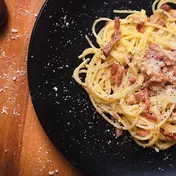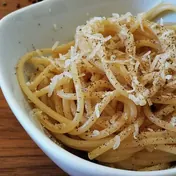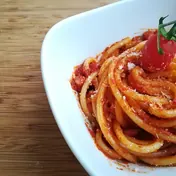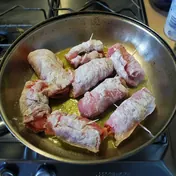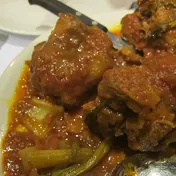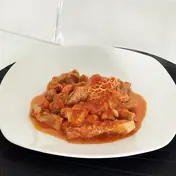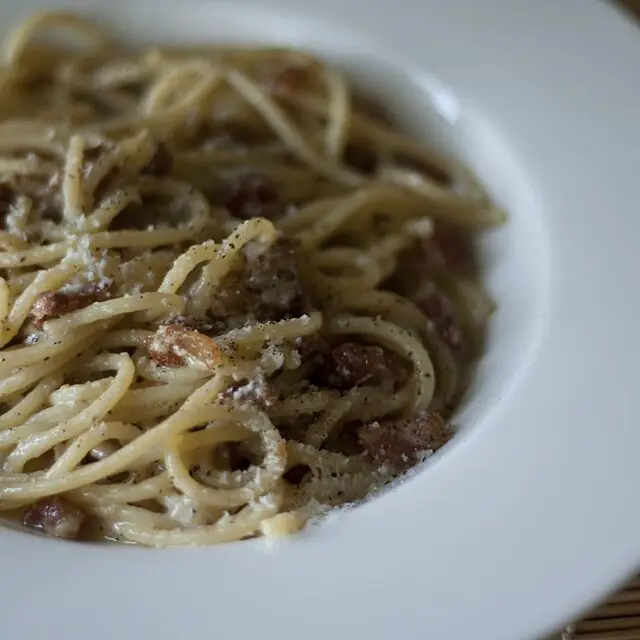
Gricia is a Lazio pasta of guanciale, pecorino romano and black pepper with no tomato, often called amatriciana bianca and served in Rome on rigatoni.

The name probably comes from the grici, the sellers of common foods in papal Rome who were called that because many came from Valtellina, then held by the Swiss canton of Grigioni; a rival theory points to Grisciano, a hamlet near Amatrice. In Amatrice the amatriciana was made without tomato until the 1960s, which is why gricia is also called amatriciana bianca. Italian Wikipedia describes it as a child of cacio e pepe and the father of amatriciana.

Where to eat Rigatoni alla gricia in Rome

6 editor picks for Rigatoni alla gricia in Rome, ranked by editorial score. All Rome signature dishes · Rigatoni alla gricia across every city.

Make it at home

Serves 222 minEasy

Ingredients

  • 200g rigatoni
  • 100g guanciale, cut into 1cm batons
  • 70g pecorino romano, finely grated
  • 1 teaspoon coarse black pepper, freshly cracked
  • Sea salt for the pasta water (a small amount; pecorino is salty)

Method

  1. Bring a pot of salted water to a boil and cook the rigatoni until 2 minutes from al dente.
  2. Cook the guanciale in a dry pan over medium heat for 6 to 8 minutes until the fat renders and the meat is crisp.
  3. Drain the pasta, reserving a cup of pasta water. Add the pasta to the guanciale pan off the heat.
  4. Add the grated pecorino and the cracked pepper, plus 3 tablespoons of pasta water. Toss vigorously to emulsify into a glossy sauce.
  5. Add pasta water tablespoon by tablespoon until the sauce coats every rigatono.
  6. Serve immediately with more pecorino and black pepper.

Editor tip. Like carbonara and cacio e pepe, gricia depends on the pasta-water-and-pecorino emulsion. Pan off the heat before adding the cheese; the residual warmth melts the pecorino without scrambling.

Common allergens: Gluten, Dairy.