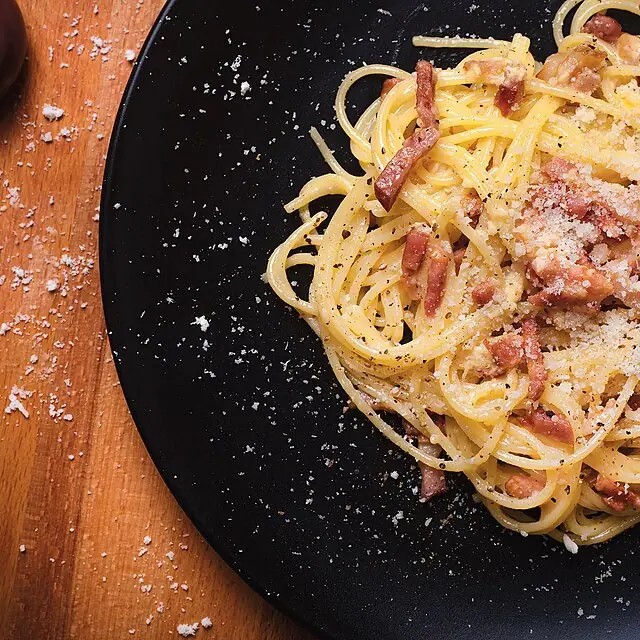
Carbonara is Rome's defining pasta: spaghetti or rigatoni tossed in a creamy emulsion of raw egg yolks, grated pecorino romano, black pepper and crisp guanciale (cured pork jowl). No cream, ever.
The carbonara took shape in Rome between 1944 and 1950, the most-told origin story crediting the Allied troops who arrived in the city with bacon and powdered eggs that Roman cooks blended with their black pepper and pecorino tradition. The first written recipe was published in La Cucina Italiana in 1954 by Renato Gualandi. From the 1960s onward, the dish replaced guanciale (cured pork jowl) for the bacon, and the rule against cream was codified by the Accademia Italiana della Cucina in 1985. Felice a Testaccio, Roscioli and Armando al Pantheon all serve canonical versions; modern fine-dining rooms like Marco Martini reinterpret the egg-and-cheese emulsion as a smoked custard.
Armando al Pantheon in Rome has cooked the four Roman pastas and the quinto quarto canon since 1961, a few steps from the Pantheon. Located in Centro Storico.
OrderCacio e pepe, coda alla vaccinara, and the abbacchio when it's on the carte.
TipBookings open exactly two months ahead on the website. Walk-up tables exist but only for lone diners and only at 12:30.
One dish,one roman tradition,master it properly.Watch the chef prepare authentic carbonara in front of you.Discover why each traditional ingredient matters.Learn the s...
Taste your way around Rome's Trastevere neighborhood on a walking tour with a local guide. Try a wide variety of Italian classics including pizza, pasta, gelato, pork,...
Explore this hidden gem neighborhood, Testaccio, home to Rome’s best eats. Take a guided tour of the traditional market, visit 8 authentic eateries, and enjoy a full l...