
Saltimbocca alla romana is thin veal topped with prosciutto and sage, pan-cooked in butter and finished with white wine; the name means jumps in the mouth.

Pellegrino Artusi gave saltimbocca alla romana as recipe 222 of La scienza in cucina e l'arte di mangiar bene in 1891, after tasting it in a trattoria in Via di Campo Marzio; his version puts half a sage leaf and a slice of ham on each small veal chop. Its origin is disputed and some say the dish came from Brescia, but it is now one of the symbol recipes of Roman cooking. Rome's tourist board describes small, thin slices of veal with prosciutto and sage held with a toothpick, lightly floured on one side, cooked briefly over high heat and finished with wine.

Where to eat Saltimbocca alla romana in Rome

4 editor picks for Saltimbocca alla romana in Rome, ranked by editorial score. All Rome signature dishes · Saltimbocca alla romana across every city.

Make it at home

Serves 220 minEasy

Ingredients

  • 4 thin veal escalopes (80g each), pounded to 4mm thickness
  • 4 thin slices of prosciutto crudo (San Daniele or Parma)
  • 4 large fresh sage leaves
  • 4 wooden toothpicks
  • 60g unsalted butter
  • 120ml dry white wine
  • Sea salt, freshly ground black pepper

Method

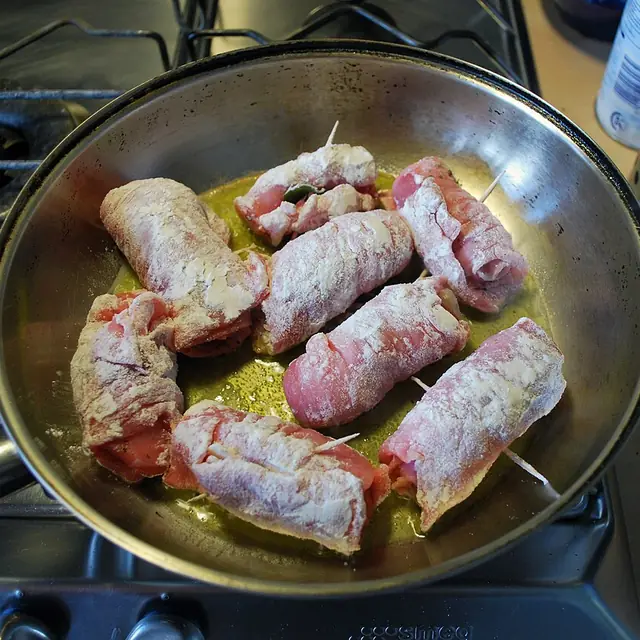
  1. Lay each escalope flat. Place a slice of prosciutto and a sage leaf on top of each. Pin the layers together with a toothpick.
  2. Season the veal side lightly with salt (the prosciutto is salty); add a generous grind of black pepper.
  3. Melt half the butter in a heavy pan over medium-high heat until foaming.
  4. Add the escalopes prosciutto-side down. Cook for 90 seconds. Flip and cook for 60 seconds more.
  5. Transfer to warm plates. Add the white wine to the pan, scrape any fond and reduce by half over high heat.
  6. Add the remaining butter, swirl off the heat to make a glossy sauce, and pour over the saltimbocca. Serve immediately.

Editor tip. Pound the veal thin, pin the sage and ham on with a toothpick, flour only the underside lightly and cook it two or three minutes over high heat without turning, then add white wine.

Common allergens: Dairy.