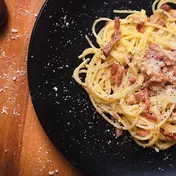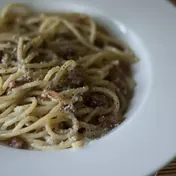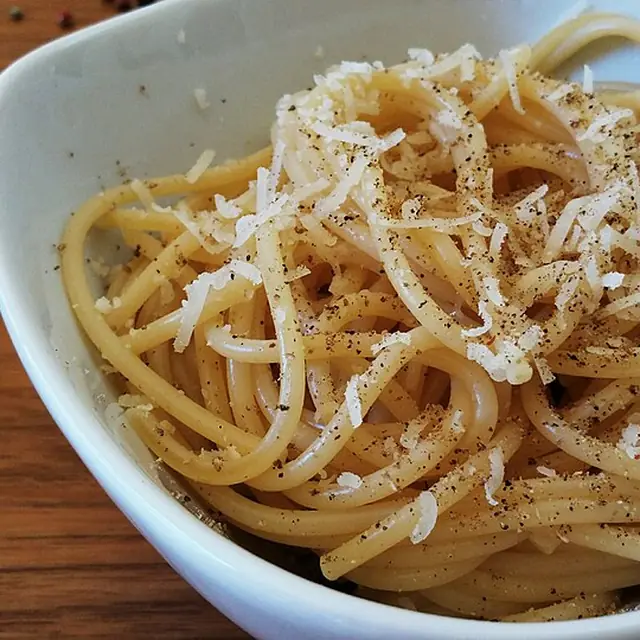

Cacio e pepe is a Lazio pasta of grated pecorino romano and black pepper on tonnarelli or spaghetti, creamed with a little hot, starchy cooking water.

Cacio e pepe means cheese and pepper in several central Italian dialects. A common story credits shepherds from the pastoral communities of Lazio, Abruzzo, Tuscany and Umbria in the 18th or 19th century, though pepper was expensive and was probably added much later. The dish is only pecorino romano, black pepper and pasta, and the cheese turns lumpy easily, so the pasta is poured into the grated cheese with a little hot cooking water so that the starch binds the sauce.


Where to eat Cacio e pepe in Rome

3 editor picks for Cacio e pepe in Rome, ranked by editorial score. All Rome signature dishes · Cacio e pepe across every city.

Make it at home

Serves 220 minIntermediate

Ingredients

  • 200g tonnarelli (or spaghetti)
  • 120g pecorino romano, very finely grated
  • 2 teaspoons whole black peppercorns, freshly ground coarse
  • Sea salt for the pasta water (use less than usual; pecorino is salty)

Method

  1. Bring a small pot of salted water to a rolling boil (use less water than usual to keep the starch concentrated). Cook the pasta until 2 minutes from al dente.
  2. Toast the cracked pepper in a dry pan over medium heat for 30 seconds until fragrant. Set aside.
  3. In a bowl, mix the grated pecorino with 4 tablespoons of starchy pasta water and the toasted pepper, stirring to a thick paste.
  4. Drain the pasta, reserving more pasta water. Add the pasta to the bowl and toss vigorously, adding pasta water tablespoon by tablespoon, until the cheese melts into a glossy emulsion that coats every strand.
  5. Serve immediately on warm plates with more black pepper on top.

Editor tip. Pecorino romano turns lumpy easily. Pour the drained pasta into the grated cheese and pepper with a little hot cooking water and toss until it is smooth; the heat melts the cheese and the starch binds it.

Common allergens: Gluten, Dairy.