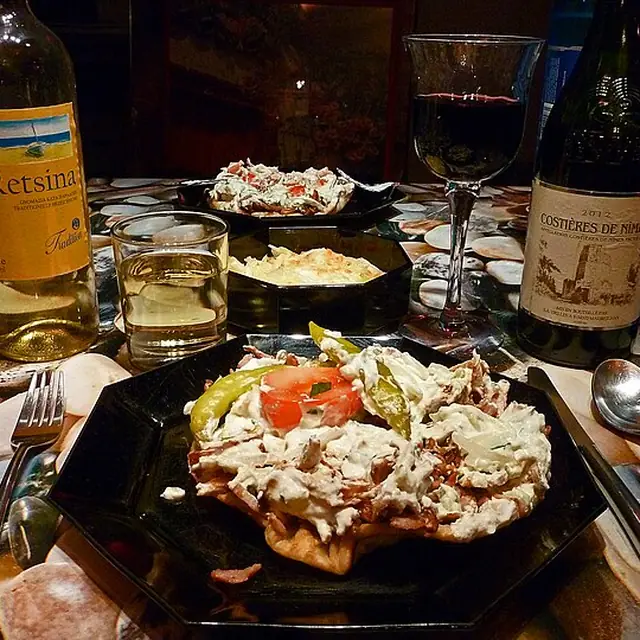
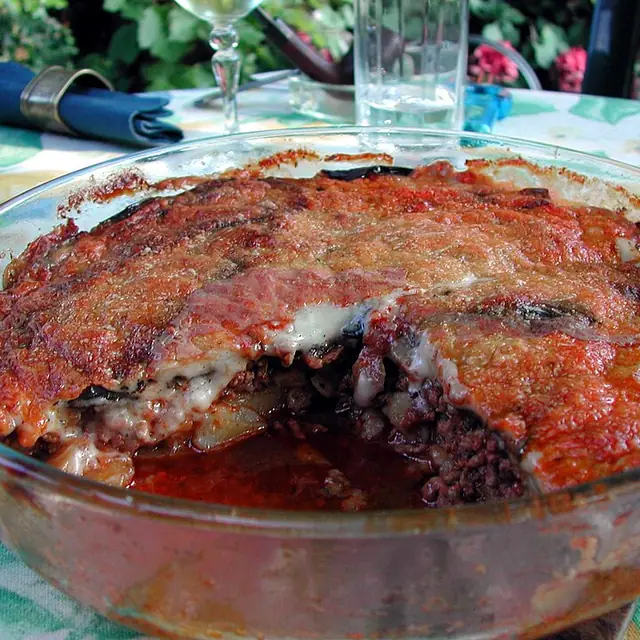
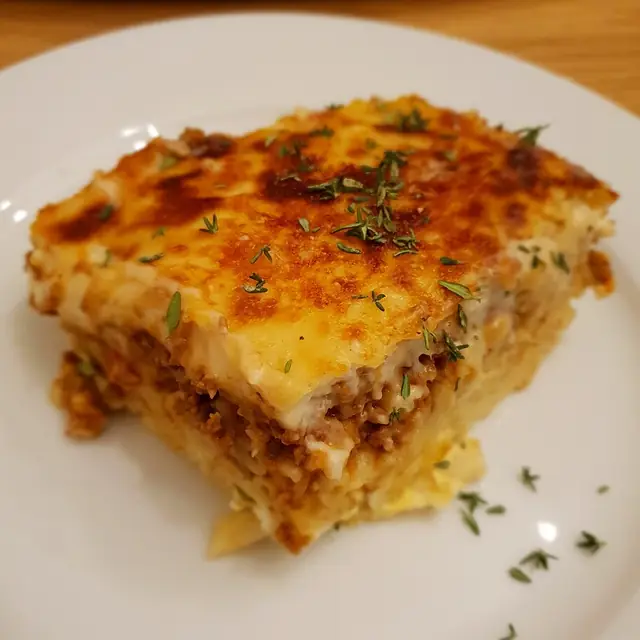
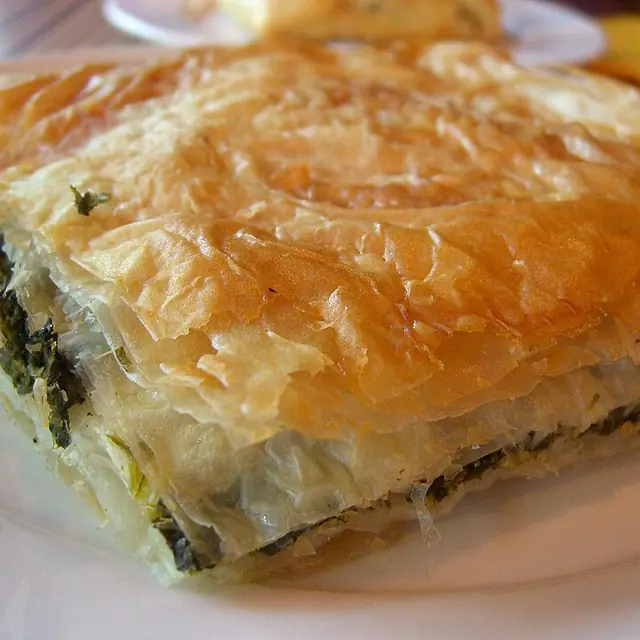
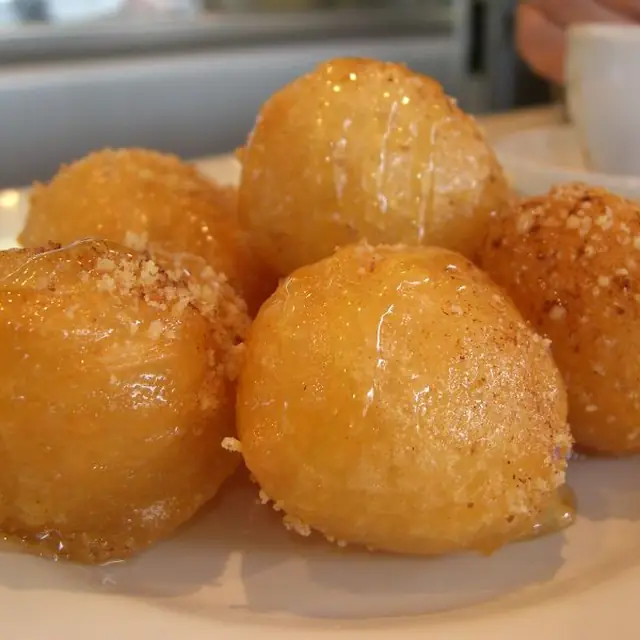
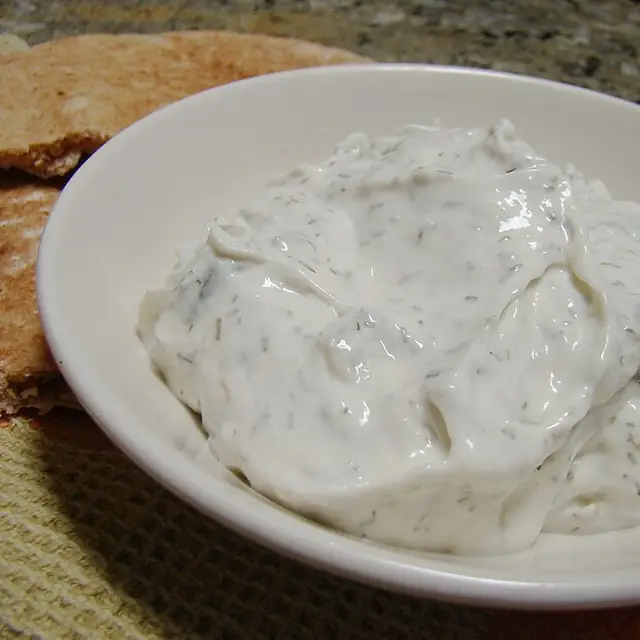
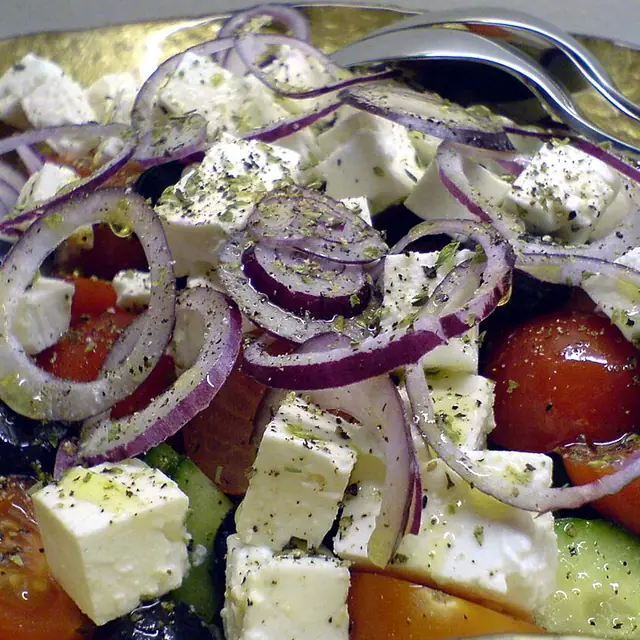
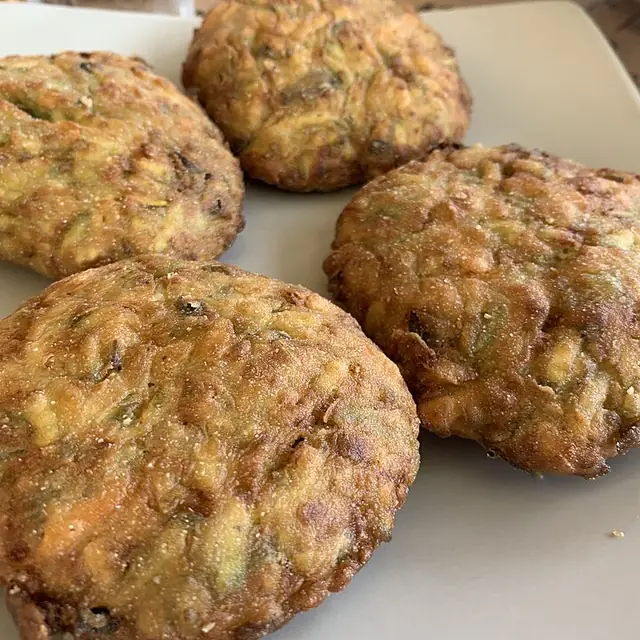
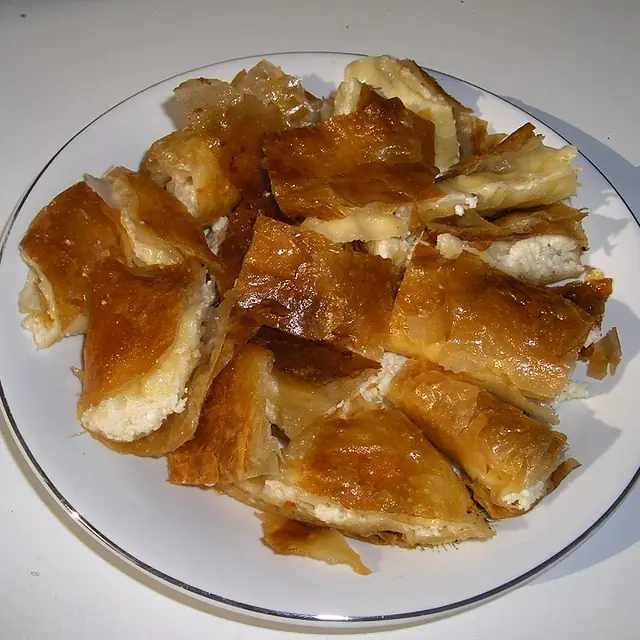
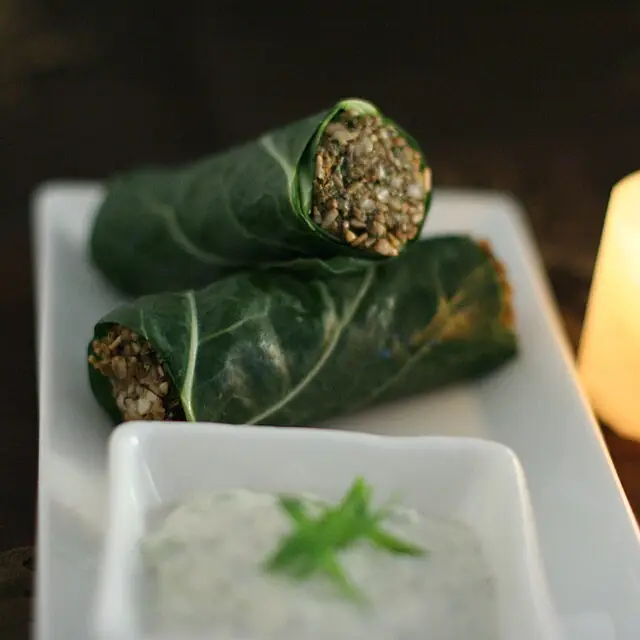
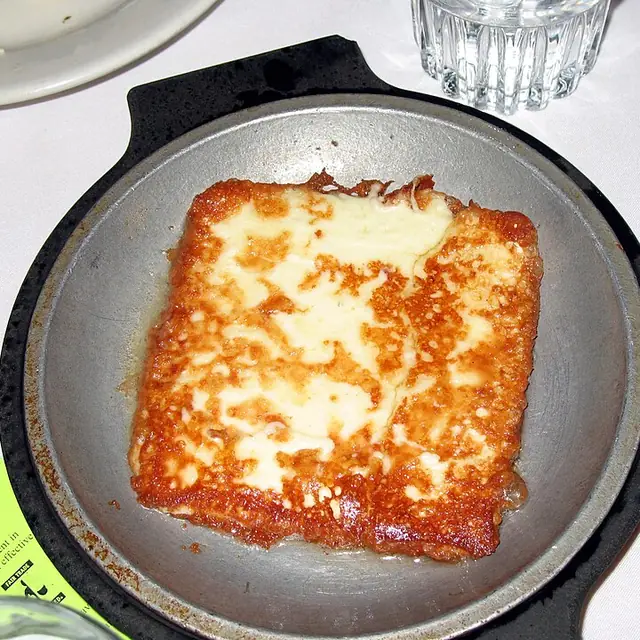
Athens is the working capital of Greek food, the city where the Mediterranean diet still operates as the daily diet, anchored by olive oil from the surrounding Attica groves, feta and graviera from the dairies, sun-ripened tomatoes, oregano and thyme, the catch from the Saronic and Aegean, and the lamb and goat from the Peloponnesian highlands. The Greek table is one of the world's longest continuous food cultures (UNESCO inscribed the Mediterranean diet as Intangible Cultural Heritage in 2010, with Greece as one of seven custodian countries), and Athens runs it across three meal formats: the souvlatzidiko (the souvlaki and gyros counter), the mageirio (the mom-and-pop neighborhood lunch room serving the day's slow-cooked Greek classics, moussaka, pastitsio, gemista, briam), and the mezedopoleio (the small-plate taverna where the meal is built from a dozen small dishes meant to share over hours, with ouzo, tsipouro or wine). The classic Athens dish list runs souvlaki pita, gyros pita, moussaka, pastitsio, spanakopita, horiatiki (the village salad with feta, tomato, cucumber, olives, onion, oregano and olive oil, never with lettuce), saganaki (the pan-fried cheese), kolokithokeftedes (the zucchini fritters), tzatziki, and loukoumades (the honey-soaked doughnut balls).
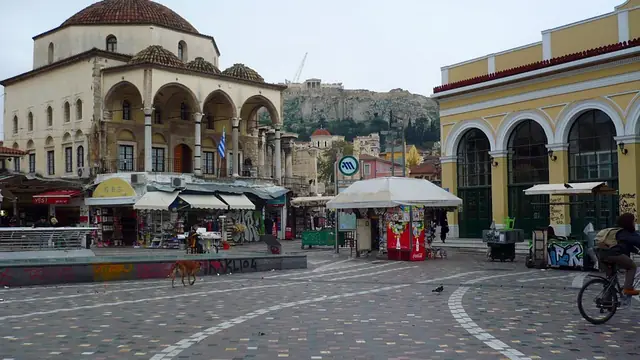
The food map runs across distinct working neighborhoods. Plaka and Monastiraki at the base of the Acropolis hold the classic touristy tavernas, but also the institutional ones (Klimataria, Bakaliarakia tou Damigou, Diporto in the next-door Psyrri). Psyrri and Monastiraki run the souvlaki and meze corridor: Bairaktaris in Monastiraki Square (since 1879, the institution), Lefteris O Politis on Plateia Theatrou (the chicken souvlaki specialist), Diporto on Sokratous (since 1887, the basement wine taverna where the menu is whatever is cooked that day, no sign, no website). Kolonaki, the upmarket commercial district north of Syntagma, holds the modern bistros and wine bars. Pagrati, east of Syntagma, runs the new-wave neighborhood scene plus the city's reference fine-dining seat: Spondi (the only Athens restaurant with two Michelin stars, since 2002, classical French-Mediterranean). Kerameikos and Metaxourgeio, the post-industrial Western neighborhoods, hold the third-wave coffee and the new-wave restaurants: Hytra (one Michelin star, modern Greek), Aleria (one star), CTC Urban Gastronomy. And the new wave of souvlaki addresses (Kostas Souvlaki on Agia Irini Square, queue from 11:00; O Telis on Evripidou, the no-frills version) anchors the under-10-euro lunch scene.
Layered above the daily diet is a modern Greek-fine-dining renaissance. Spondi (two Michelin stars, Pagrati, since 2002, the city's longest-running starred address), Hytra (one star, Kerameikos), CTC Urban Gastronomy (one star), Soil (Pagrati, new-wave farm-to-table), Aleria (Kerameikos), and The Zillers (Plaka, with the Acropolis view) anchor the upper tier. The city's wine bars, particularly in Pagrati and Kerameikos, run deep lists of Greek varietal natural wine (Assyrtiko from Santorini, Xinomavro from Naoussa, Agiorgitiko from Nemea) at prices that would make a Paris sommelier weep. The food clock runs late: breakfast and coffee 09:00-11:00, lunch 13:30-16:00, the long siesta-then-evening break, drinks from 19:00, dinner from 21:00-23:30. Locals do not eat dinner before 21:00.
Souvlaki and gyros: the city's signature plate
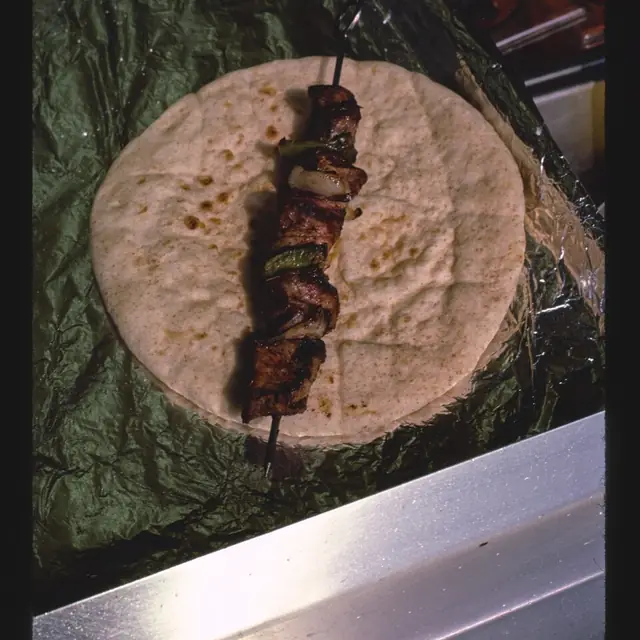
Souvlaki and gyros are the two most-eaten dishes in Greece, and Athens runs them at every street corner, almost always under 5 euros for a fully-loaded pita wrap. Souvlaki (literally little skewer) is the original term, referring to the marinated cubed-meat (pork is the most common, chicken or lamb the alternatives) grilled on a wooden or metal skewer over charcoal. Gyros (literally turn) is the vertical rotating-spit version, layered with thin-sliced marinated meat, shaved off in strips as the outer layer crisps. Both are served in a soft pita pocket with tomato, raw onion, tzatziki, paprika, and sometimes fries (the Greek pita-with-fries-inside method, debated for purity but standard in Athens). The reference addresses are Kostas Souvlaki on Agia Irini Square (the cult queue, since 1947, the city's most photographed souvlaki, queue starts at 11:00 sharp when they open, sell out by 14:30, cash only, no seating), O Telis on Evripidou (the no-frills meat-and-potato version since 1972), Bairaktaris on Monastiraki Square (since 1879, the institution, much-photographed, decent rather than the best), Lefteris O Politis on Plateia Theatrou (the chicken-souvlaki specialist), Souvlaki Hellas in Glyfada, and the modern Karamanlidika tou Fani in Psyrri for the upscale taverna version of the gyros plate.
Mageirio and mezedopoleio: the working Greek table
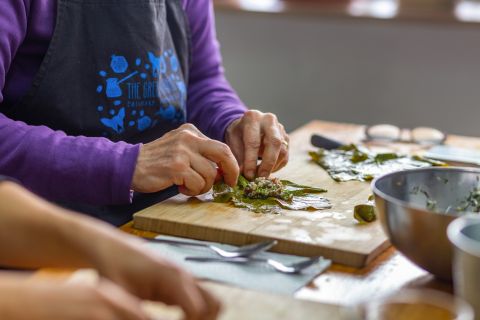
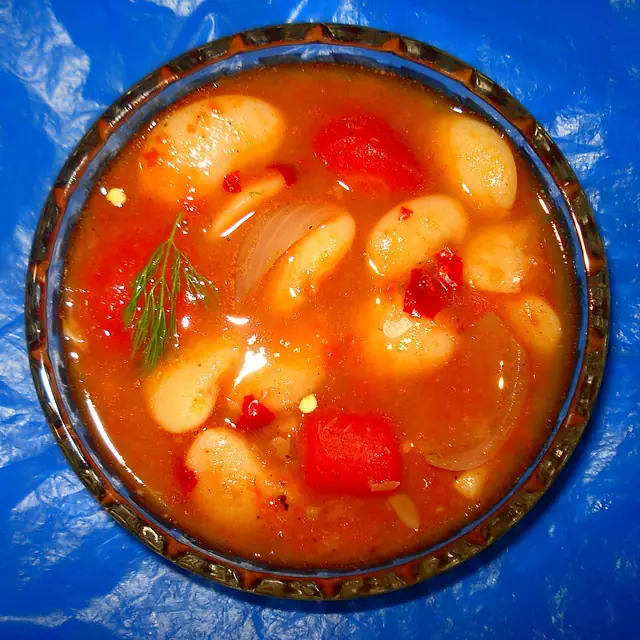
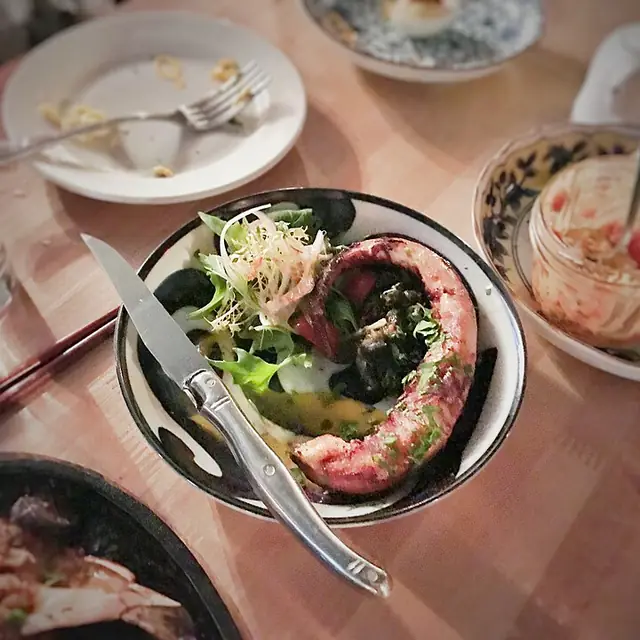
The mageirio (literally cookshop) is the neighborhood lunch room that anchors the working Greek diet, mostly family-run, serving the slow-cooked classics (moussaka, pastitsio, gemista the stuffed vegetables, briam the Mediterranean ratatouille, fasolada the bean soup, kotopita the chicken pie) from a chalk-board menu or a steam-table line. The food is cooked once each morning by the mama in the kitchen and served until the trays run out, typically between 13:00 and 16:00. The mezedopoleio (literally meze-shop) is the small-plate dinner format: a dozen or more small dishes (tzatziki, taramasalata, melitzanosalata, fava santorinis, dolmades, saganaki, kolokithokeftedes, gigantes plaki, octopus, mussels) shared over 2 to 3 hours with ouzo, tsipouro or wine. The reference mageirio addresses are Karavitis Tavern in Pagrati (since 1926, the most institutional), Klimataria in Plaka (the classic with live rebetiko music), Diporto on Sokratous (since 1887, the basement wine taverna with no menu and no website, the city's most authentic mageirio), Taverna tou Oikonomou in Ano Petralona, and Mavro Provato (the Black Sheep) in Pagrati. The reference mezedopoleia are Ta Karamanlidika tou Fani in Psyrri (the cured-meat-and-cheese specialist), Tzitzikas kai Mermigas in Syntagma (the modern accessible version), and Atlantikos in Psyrri.
The Varvakios market and the spice street
Varvakios Central Market on Athinas Street, opened 1886, is the city's working pantry: 200 stalls inside a covered iron hall divided into the meat hall (the noisy western half), the fish hall (the noisier eastern half with the morning auctions), and the surrounding produce, cheese, olive and spice stalls along Athinas, Evripidou and Sofokleous Streets. Opens Monday to Saturday, 07:00-18:00, with the most action between 09:00 and 13:00. Inside the market, the institution is Stoa Athanaton (the Hall of the Immortals), a long-running underground rebetiko taverna in the market's mezzanine that opens for late lunch with live music and family-recipe Greek classics. Evripidou Street, running east from the market, is the spice corridor: a 200-meter stretch of family-run spice shops (Bahar, Elixir, Arapian) selling Greek oregano, Cretan thyme, Aegina pistachios, mastic from Chios, sumac, Persian saffron. The Pasteur Plant and Karamanlidika tou Fani are the modern food destinations along the same street. The Kentriki Agora (the open-air central market) plus the spice street is the easy half-day food crawl from Monastiraki.
Greek wine renaissance: Assyrtiko, Xinomavro, Agiorgitiko
Greek wine has had a renaissance since the 1990s, and Athens runs the best wine bars in the country, particularly in Pagrati, Kerameikos and Metaxourgeio. The three grape varieties driving the renaissance are Assyrtiko (from Santorini's volcanic soils, the high-acid white that pairs with Aegean seafood; the producers Domaine Sigalas, Argyros and Hatzidakis are the references), Xinomavro (from Naoussa in northern Greece, the tannic late-ripening red sometimes compared to Barolo Nebbiolo; producers Kir-Yianni, Thymiopoulos and Boutari), and Agiorgitiko (from Nemea in the Peloponnese, the softer juicier red; producers Driopi, Skouras, Gaia). The reference wine bars are Heteroclito on Petraki (since 2010, the city's longest-running natural-wine bar), Materia Prima in Pagrati (the post-2015 destination), Oinoscent in Syntagma, Vintage Wine Bar and Bistro in Plaka, and By the Glass in the Embassy district. For the wine-list tasting at a meal, Soil in Pagrati and Hytra in Kerameikos run deep Greek-varietal lists with all three grapes by the glass. The day-trip wine destinations: Nemea (1.5 hours west by car, the Agiorgitiko home) and the Santorini wineries (35 minutes by flight, or 8 hours by ferry, the Assyrtiko terraces).