

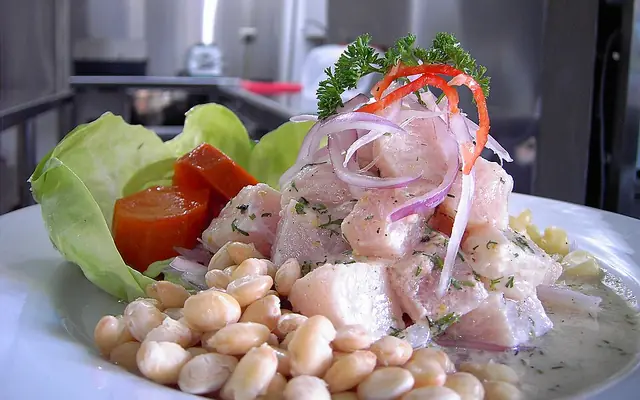
Latin American cuisine is an umbrella, not a single tradition. It covers Mexican, Central American (Guatemalan, Salvadoran, Honduran, Nicaraguan, Costa Rican, Panamanian), Caribbean Spanish-speaking (Cuban, Dominican, Puerto Rican), and South American (Colombian, Venezuelan, Ecuadorian, Peruvian, Bolivian, Chilean, Argentine, Uruguayan, Paraguayan, Brazilian) kitchens. What binds them is mostly the pre-Columbian larder: corn, beans, squash, chile, tomato, potato (in the Andean countries), cassava, cacao, plus Spanish-introduced rice, pork, beef, dairy, citrus, and wheat.
The shared grammars are easier to identify than the shared dishes. Nixtamalized corn shows up as tortillas in Mexico and Central America and as arepas in Venezuela and Colombia. Beans, almost always served with rice, anchor the protein side of most plates: black, pinto, red, kidney, depending on country. Pork is the dominant slow-meat across the region. Plantain runs from Mexico to Argentina in green-savory and ripe-sweet forms. Citrus and aji or chile sit on every table.
A pan-Latin restaurant outside Latin America is most commonly the format that travels: small plates from across the region, ceviche and tiradito alongside arepas and empanadas, mole next to moqueca, mezcal next to pisco. The format works because the larder overlaps even when the dishes don't. The risk is that the resulting menu reads as a survey rather than a kitchen, and the best pan-Latin rooms anchor in a single chef's biography rather than trying to be comprehensive.
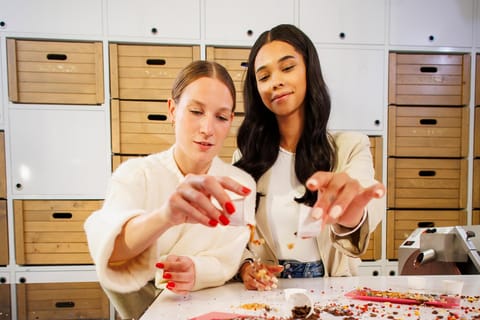
Book a food experience
Tours, tastings and classes that match this page, bookable on GetYourGuide.


Top picks
The best-scored Latin American place in each of 12 cities.
Work and Class ★ 4.8
Work and Class in Denver is Tony Maciag and Tabatha Knop's family-style Latin American room on Larimer in RiNo since 2014, a James Beard semifinalist.
OrderThe roasted half chicken with chimichurri or the steak frites.
TipWalk-in only; weekend nights hit 60-minute waits by 7 pm. The bar pours one of the city's best mezcal lists.
Norman's ★ 4.7
Norman's at the Ritz-Carlton Orlando Grande Lakes is Norman Van Aken's New World cuisine flagship, rooted in Caribbean and Latin American technique.
Book3 weeks ahead
Sarita's Pupuseria ★ 4.7
Sarita's Pupuseria is a Latin American restaurant at 317 S Broadway, Los Angeles, CA 90013.
Mago ★ 4.6
Mark Liberman's Latin American tasting room in Oakland sits on Piedmont Avenue. Michelin Recommended in 2026, with a nightly-changing Colombian-rooted menu.
SignatureChurros with chicken liver, Swordfish escabeche, Carne asada
Little Chango ★ 4.6
Little Chango is a casual Hispanic kitchen at 134 Coxe Ave in the South Slope of Asheville, cooking mounted arepas and other Latin American inspired dishes.
OrderArepas with shredded ropa vieja, plus the sides mamposteao and escabeche.
TipYou order at the counter and get a number on a playing card; add a side such as mamposteao or the avocado escabeche.
Mita's ★ 4.6
Mita's on Race Street downtown is Jose Salazar's Cincinnati Spanish-Latin fine-dining room with paella, jamon iberico, ceviches and a sherry list.
Book1 to 2 weeks ahead
Arepa Lady ★ 4.5
Arepa Lady is a Latin American restaurant at 77-17 37th Avenue in Jackson Heights, Queens.
Stagier Bar ★ 4.5
Stagier Bar is a small Santa Catalina room in Palma where a Chilean-Peruvian couple plate Latin-leaning tapas learned in the kitchens that trained them.
OrderSourdough with chimichurri butter, then whatever the couple are running that week.
TipWinter and summer schedules differ, and the kitchen takes a break in early August and again in late April.
Santanera ★ 4.4
Santanera serves Latin American dishes over wood fire across three floors in Canggu, Bali, from ceviches to grilled octopus and dry-aged grouper.
SignatureYellowfin tuna, Dry-aged grouper, Char-grilled octopus
Toro Latin Gastrobar ★ 4.4
Chef Richard Sandoval brought his Pan-Latin small plates to Beton Hala in Belgrade. Ceviche, anticuchos and cocktail bar on the Sava riverfront.
SignatureLatin small plates, Tableside guacamole
Toro Toro ★ 4.4
Toro Toro in Fort Worth is a pan-Latin steakhouse on Main Street where South American churrasco, Peruvian ceviche, and Brazilian picanha share the menu.
OrderPan-Latin churrasco, ceviche flight, Brazilian picanha with chimichurri.
TipHappy hour Monday through Thursday 16:00-19:00 offers half-price cocktails and discounted small plates at the bar.
Corto Lima ★ 4.4
Corto Lima presses its own corn tortillas downtown at Short and Upper, Jonathan Lundy's Latin American kitchen and Lexington's standing margarita champion.
SignatureHouse-made corn tortillas, Margaritas
TipNo reservations; seating is first come, first served. Closed Tuesdays, and Monday is dinner only from 17:00.
Find a place
Work and Class ★ 4.8
Work and Class in Denver is Tony Maciag and Tabatha Knop's family-style Latin American room on Larimer in RiNo since 2014, a James Beard semifinalist.
OrderThe roasted half chicken with chimichurri or the steak frites.
TipWalk-in only; weekend nights hit 60-minute waits by 7 pm. The bar pours one of the city's best mezcal lists.
Norman's ★ 4.7
Norman's at the Ritz-Carlton Orlando Grande Lakes is Norman Van Aken's New World cuisine flagship, rooted in Caribbean and Latin American technique.
Book3 weeks ahead
Sarita's Pupuseria ★ 4.7
Sarita's Pupuseria is a Latin American restaurant at 317 S Broadway, Los Angeles, CA 90013.
Mago ★ 4.6
Mark Liberman's Latin American tasting room in Oakland sits on Piedmont Avenue. Michelin Recommended in 2026, with a nightly-changing Colombian-rooted menu.
SignatureChurros with chicken liver, Swordfish escabeche, Carne asada
Parche ★ 4.6
Parche on Broadway in Uptown Oakland runs chef-owner Paul Iglesias's Colombian heritage menu. Three years running on the Michelin Guide for Oakland.
Book1 to 2 weeks ahead
Little Chango ★ 4.6
Little Chango is a casual Hispanic kitchen at 134 Coxe Ave in the South Slope of Asheville, cooking mounted arepas and other Latin American inspired dishes.
OrderArepas with shredded ropa vieja, plus the sides mamposteao and escabeche.
TipYou order at the counter and get a number on a playing card; add a side such as mamposteao or the avocado escabeche.
Mita's ★ 4.6
Mita's on Race Street downtown is Jose Salazar's Cincinnati Spanish-Latin fine-dining room with paella, jamon iberico, ceviches and a sherry list.
Book1 to 2 weeks ahead
Sobre Mesa ★ 4.5
Sobre Mesa on Franklin in Uptown Oakland runs Top Chef Nelson German's Afro-Latin cocktail lounge past midnight Friday and Saturday with DJs.
OrderRum daiquiri and the croquetas.
TipFriday and Saturday close at 12:30 a.m. with up-tempo music after 10.
Mister Oso ★ 4.5
Mister Oso in Denver is Blake Edmunds's playful Latin American room in RiNo, with masa tacos, Caribbean cocktails and a wood-grill program built around.
OrderThe octopus al pastor on a fresh blue-corn tortilla.
TipThe patio runs three rounds of seating on summer nights; the bar walks in if you arrive by 5:30 pm. The taro chips are bottomless if you ask.
Arepa Lady ★ 4.5
Arepa Lady is a Latin American restaurant at 77-17 37th Avenue in Jackson Heights, Queens.
Stagier Bar ★ 4.5
Stagier Bar is a small Santa Catalina room in Palma where a Chilean-Peruvian couple plate Latin-leaning tapas learned in the kitchens that trained them.
OrderSourdough with chimichurri butter, then whatever the couple are running that week.
TipWinter and summer schedules differ, and the kitchen takes a break in early August and again in late April.
Pig Floyd's Urban Barbakoa ★ 4.4
Pig Floyd's Urban Barbakoa on North Mills Avenue is the smokehouse with Latin-style barbecue, smoked pork tacos and Cuban-influenced sides in Mills 50.
SignatureSmoked pulled pork, Cuban smoked sandwich
Santanera ★ 4.4
Santanera serves Latin American dishes over wood fire across three floors in Canggu, Bali, from ceviches to grilled octopus and dry-aged grouper.
SignatureYellowfin tuna, Dry-aged grouper, Char-grilled octopus
Toro Latin Gastrobar ★ 4.4
Chef Richard Sandoval brought his Pan-Latin small plates to Beton Hala in Belgrade. Ceviche, anticuchos and cocktail bar on the Sava riverfront.
SignatureLatin small plates, Tableside guacamole
Toro Toro ★ 4.4
Toro Toro in Fort Worth is a pan-Latin steakhouse on Main Street where South American churrasco, Peruvian ceviche, and Brazilian picanha share the menu.
OrderPan-Latin churrasco, ceviche flight, Brazilian picanha with chimichurri.
TipHappy hour Monday through Thursday 16:00-19:00 offers half-price cocktails and discounted small plates at the bar.
Corto Lima ★ 4.4
Corto Lima presses its own corn tortillas downtown at Short and Upper, Jonathan Lundy's Latin American kitchen and Lexington's standing margarita champion.
SignatureHouse-made corn tortillas, Margaritas
TipNo reservations; seating is first come, first served. Closed Tuesdays, and Monday is dinner only from 17:00.
The Mission ★ 4.4
The Mission in Old Town Scottsdale is Matt Carter's modern Latin room, drawing on Spain, Mexico and South America in a dark stone-walled dining room.
OrderThe tableside guacamole and the slow-roasted pork shoulder; Carter won the 2024 Arizona Food Pioneer Award.
TipThe patio under the church wall is the seat to book; lunch runs daily and dinner fills the bar early.
Salmuera ★ 4.4
Salmuera is a Latin American casa del asado and mezcaleria at Rozengracht 106, in the 1600s building that was once the home and taproom of Lucas Bols.
TipThe private dining room takes groups of 8 up to 12 people by email, and the Mezcaleria & Bar stays open until late.
Mono 1 ★ ★ 4.4
Mono, opened in 2019 by Chef-owner Ricardo Chaneton, marries Latin American flavours with French techniques across 22 seats, 10 at the kitchen counter.
TipWith at least 25 hours' advance notice, the kitchen can make gluten free and vegetarian accommodations.
Manolo's Latin Bakery ★ 4.3
Manolo's Latin Bakery on east Central Avenue is the Charlotte Latin bakery and counter, with empanadas, Cuban sandwiches and a pastries case turning out.
Why locals goA small Latin bakery on Central Avenue's east stretch, with a steady regular base but easy to overlook driving Central.
TipMornings are freshest. Spanish is the working language Word-of-mouth is the only marketing.
Tako Cheena ★ 4.3
Tako Cheena on North Mills Avenue in Mills 50 is the Latin and Pan-Asian counter from the Pom Pom Diner group, with tacos, arepas and rice bowls.
SignatureKorean BBQ tacos, Pork belly arepa
Toro Latin Gastrobar (late) ★ 4.3
Toro Latin Gastrobar keeps the kitchen on at Belgrade's Beton Hala riverfront until 01:00 Friday and Saturday. Pan-Latin small plates and cocktails.
TryPan-Latin small plates, cocktails
State of Confusion ★ 4.3
State of Confusion grills Latin-leaning plates on a covered patio at 301 E Main Street in Chattanooga's Southside, with weekend brunch and late hours.
OrderAnything off the wood grill, with a mezcal cocktail.
TipThe patio is the room to sit in. Brunch runs 10:00 to 14:30 both weekend days and the kitchen serves past most Southside closes.
Irazu ★ 4.3
Irazu has served the cuisine and flavor of Costa Rica since 1990 at 1865 North Milwaukee Avenue, and offers dining, takeout, delivery and catering.
TipIrazu opens Tuesday to Saturday from 10:30am to 9pm, and hosts private dining for parties of 20 to 75.
Salt and Silver Lateinamerika ★ 4.3
Salt and Silver Lateinamerika on St Pauli Hafenstrasse in Hamburg cooks ceviche, asado and modern Latin American small plates above the Elbe.
OrderThe ceviche of the day and the wood-grilled meats.
TipBistro Crudo runs in the basement on the left; main dining room on the ground floor on the right.
Livery ★ 4.3
Livery in Indianapolis is a pan-Latin room in a restored 1890s horse livery off Mass Avenue, with a long mezcal list, ceviches and a summer rooftop.
OrderWhatever ceviche is on the day's board, the beef empanadas, a mezcal cocktail.
TipTwo floors plus the rooftop. Reserve downstairs for dinner; the rooftop is walk-in and weather-dependent.
República Empanada ★ 4.3
República Empanada in downtown Mesa bakes Arizona's widest run of South American savory empanadas, a Diners, Drive-Ins and Dives stop on 1st Avenue.
OrderA flight of empanadas across the fillings, from beef to spinach.
TipClosed Sundays; the corner room is small, so weekday lunch is the easy seat.
Asada ★ 4.3
Asada runs Latin-Asian fusion on Wade Hampton: shrimp tacos in mole, empanadas and churrasco steak, by owners Roberto (Nicaraguan) and Gina.
SignatureShrimp taco in mole, Empanadas, Churrasco steak
I Latina ★ 4.3
I Latina in Guadalajara is the Avenida Inglaterra Latin-American tasting room, a Lafayette and Providencia favourite since 2011 for ceviche and grill plates.
SignatureCeviche, Octopus, Tasting menu
Naive Kitchen + Bar ★ 4.3
Naive Kitchen in Louisville cooks vegetable-forward Latin plates from a Butchertown corner on East Washington Street, the neighbourhood's vegan-friendly room.
OrderThe seasonal grain bowl, plus a margarita with house chile salt.
TipBook on OpenTable. The bar runs a separate cocktail list with mocktail-forward options.
Arepa'z ★ 4.3
Arepa'z at Viale Cassala 9 cooks arepas on the griddle with Mediterranean flavours, open to 01:00 Tuesday to Thursday and 02:00 on Friday and Saturday.
OrderThe Reina Pepiada, an arepa of chicken salad, mayonnaise, cream and slices of avocado.
TipIt is closed on Monday, and on Sunday it serves non-stop from 12:30 to 22:00.
Empamamas ★ 4.3
Empamamas inside Heights Public Market bakes and fries empanadas across Latin American styles, from Argentine beef to Cuban chicken. The patio fills first.
OrderHalf-dozen empanadas across styles, plus chimichurri to dip.
TipEat at the picnic tables on the Riverwalk lawn; the empanadas reheat in a toaster oven later.
Manolo's Latin Bakery and Cafe ★ 4.2
Manolo's Latin Bakery on Central Avenue is the long-standing east Charlotte Latin bakery and counter, with empanadas, pastries and Cuban sandwiches in 2026.
OrderAn empanada, a Cuban sandwich and one of the pastries from the case.
TipCounter-order. Cash-easy. The case turnover means morning is the strongest time.
GRETA OTO ★ 4.2
GRETA OTO gives central Frankfurt a Latin American dining room on Thurn-und-Taxis-Platz, ceviche and Amazon-inspired plates until 22:00 daily.
OrderThe ceviche of the day, then anything from the charcoal section
TipThe all-day bar makes it a rare polished walk-in option between the Zeil and the towers; lunch is calmer than dinner.
Muchacha ★ 4.2
Muchacha runs the rooftop above the Halles du Lez until 01:00 every night, Latin sharing plates until 23:30 and a floor that dances long past midnight.
TryMexican sharing boards, tacos, ceviche
TipThe kitchen closes at 23:30 while the bar carries on, so order food before then.
Cafe Kacao ★ 4.2
Cafe Kacao on N Classen in Oklahoma City brings Guatemalan breakfast cooking: champurrado, huevos rancheros, tamales, and hearty Central American plates.
Babalu ★ 4.2
Babalu in Overton Square Memphis runs Southern cooking with Latin flair from a Madison Avenue patio, with tableside guacamole, tacos and craft cocktails.
OrderTableside guacamole, then the carnitas tacos.
TipThe patio is the seat in spring; Sunday brunch is the easier seat than weekend dinner.
The Mission Old Town ★ 4.1
The Mission Old Town in Scottsdale is chef Matt Carter's Latin dining room beside the old adobe mission, with tableside guacamole and hand-pressed tortillas.
OrderTableside guacamole, then the build-your-own pork shoulder tacos.
TipBrunch runs Saturday and Sunday from 11:00 and a limited menu is served 15:00 to 17:00 daily.
Rosa Negra ★ 4.1
Rosa Negra on Boulevard Kukulcán km 15 in Cancún is a lagoon-side Latin American grill with a resident DJ, fire shows and tableside torched Kobe beef.
OrderKobe beef torched at the table or the tomahawk steak, with a Peruvian ceviche to start.
TipBook for sunset over the lagoon if you want the view before the music and fire shows build; valet parking is available.
San Martin Bakery ★ 4.1
Richardson Latin American bakery and breakfast restaurant serving Guatemalan pan dulce, tres leches cake, tamales, and hot chocolate alongside a full.
OrderTres leches cake; Guatemalan pan dulce assortment; tamales con atole
TipThe bakery counter and restaurant operate in the same space. Come for breakfast with tamales and atole before the weekend crowd arrives.
Fonda Colombiana ★ 4.0
Fonda Colombiana serves empanadas, arepa de choclo and patacones con carne desmechada from a colourful villa on Al Mihtham Street in Al Manhal, Abu Dhabi.
OrderEmpanadas, arepa de choclo with cheese and patacones con carne desmechada, as Best Bites advises.
TipSeating runs from inside with air conditioning to outside among hammocks, and the restaurant takes reservations on WhatsApp.
Titi's Empanadas ★ 4.0
Titi's Empanadas is a Latin American empanada counter on Havemeyer Street in Williamsburg, Brooklyn, where two empanadas and a drink come to around $10.
TryTwo empanadas and a drink
TipThe Williamsburg shop opens at 09:00 every day. It is a separate shop from the East Village one, with its own hours and phone.
Cumbia ★ 4.0
Cumbia serves Colombian-inspired tapas and small plates downtown, with cheese empanadas as the most cited dish and a casual atmosphere on South 16th Street.
TryColombian-inspired tapas and cheese empanadas
Fuego at Troika Sky Dining ★ 4.0
Fuego at Troika Sky Dining grills South American plates over open flame on the 23rd floor of The Troika in KLCC, Kuala Lumpur, facing the city skyline.
OrderCharcoal-grilled meats straight off the open-flame South American grill.
TipSmart casual dress applies at the door, and the grill room serves from 18:00 to midnight every day.
Tu Casa Restaurant ★ 4.0
Tu Casa on Washington Avenue in Portland is a Salvadoran kitchen griddling pupusas of queso, chicharron and loroco to order, an East Bayside lunch favourite.
Why locals goA Salvadoran kitchen on Washington Avenue serving pupusas, baleadas and pollo encebollado outside the Old Port radar. The East Bayside Latin lunch favourite.
TipClosed Mondays. The pupusa revuelta with curtido is the easy first order.
Boteco do Brasil ★ 3.9
Boteco do Brasil is a Latin American venue at 62 Trongate, Glasgow G1 5EP, open Mon-Fri 12:00-03:00 and Sat-Sun 11:00-03:00.
TipBookings are given a 2 hours slot at the table, and large groups are asked to phone 0141 406 4561.
Che Empanadas (Transfer Co.) ★ 3.9
Che Empanadas serves handmade, Argentinian-style baked empanadas and desserts for breakfast, lunch and dinner at Transfer Co food hall and Duraleigh Corners.
TryHandmade Argentinian-style baked empanadas
Toro Toro ★ 3.8
Toro Toro runs its Sunset Brunch on Saturday afternoons at Grosvenor House in Dubai Marina, with Pan-Latin plates and churrasco cuts at the table.
OrderThe churrasco grill cuts of chicken, lamb and beef
TipThe brunch ends at 17:30; the afterparty that follows is a separate two hour drinks package.
Carino 1 ★ ★ 3.7
Carino is Chef Norman Fenton's 1 Michelin star restaurant, offering a Latin-inspired tasting menu, a chef's counter experience and a taco omakase.
OrderAguachile with Ora King salmon, or the tostada with tartare, al pastor and pineapple.
TipCarino is open Wednesday to Sunday from 6 pm to 12 am, and menu offerings may change based on season or availability.
Latin American by city
 Oakland6 places
Mago, Parche
Oakland6 places
Mago, Parche
 Charlotte3 places
Manolo's Latin Bakery, Manolo's Latin Bakery and Cafe
Charlotte3 places
Manolo's Latin Bakery, Manolo's Latin Bakery and Cafe
 Frankfurt3 places
GRETA OTO
Frankfurt3 places
GRETA OTO
 Montpellier3 places
Muchacha
Montpellier3 places
Muchacha
 Oklahoma City3 places
Cafe Kacao
Oklahoma City3 places
Cafe Kacao
 Orlando3 places
Norman's, Pig Floyd's Urban Barbakoa
Orlando3 places
Norman's, Pig Floyd's Urban Barbakoa
 Scottsdale3 places
The Mission Old Town
Scottsdale3 places
The Mission Old Town
 Abu Dhabi2 places
Fonda Colombiana
Abu Dhabi2 places
Fonda Colombiana
 Bali2 places
Santanera
Bali2 places
Santanera
 Belgrade2 places
Toro Latin Gastrobar, Toro Latin Gastrobar (late)
Belgrade2 places
Toro Latin Gastrobar, Toro Latin Gastrobar (late)
 Brooklyn2 places
Titi's Empanadas
Brooklyn2 places
Titi's Empanadas
 Chattanooga2 places
State of Confusion
Chattanooga2 places
State of Confusion
 Chicago2 places
Irazu, Carino
Chicago2 places
Irazu, Carino
 Denver2 places
Work and Class, Mister Oso
Denver2 places
Work and Class, Mister Oso
 Fort Worth2 places
Toro Toro
Fort Worth2 places
Toro Toro
 Hamburg2 places
Salt and Silver Lateinamerika
Hamburg2 places
Salt and Silver Lateinamerika
 Indianapolis2 places
Livery
Indianapolis2 places
Livery
 Lexington2 places
Corto Lima
Lexington2 places
Corto Lima
 Omaha2 places
Cumbia
Omaha2 places
Cumbia
 Phoenix2 places
The Mission, República Empanada
Phoenix2 places
The Mission, República Empanada
 Amsterdam1 place
Salmuera
Amsterdam1 place
Salmuera
 Asheville1 place
Little Chango
Asheville1 place
Little Chango
 Cancún1 place
Rosa Negra
Cancún1 place
Rosa Negra
 Cincinnati1 place
Mita's
Cincinnati1 place
Mita's
 Dallas1 place
San Martin Bakery
Dallas1 place
San Martin Bakery
 Dubai1 place
Toro Toro
Dubai1 place
Toro Toro
 Glasgow1 place
Boteco do Brasil
Glasgow1 place
Boteco do Brasil
 Greenville1 place
Asada
Greenville1 place
Asada
 Guadalajara1 place
I Latina
Guadalajara1 place
I Latina
 Hong Kong1 place
Mono
Hong Kong1 place
Mono
 Kuala Lumpur1 place
Fuego at Troika Sky Dining
Kuala Lumpur1 place
Fuego at Troika Sky Dining
 Los Angeles1 place
Sarita's Pupuseria
Los Angeles1 place
Sarita's Pupuseria
 Louisville1 place
Naive Kitchen + Bar
Louisville1 place
Naive Kitchen + Bar
 Memphis1 place
Babalu
Memphis1 place
Babalu
 Milan1 place
Arepa'z
Milan1 place
Arepa'z
 New York City1 place
Arepa Lady
New York City1 place
Arepa Lady
 Palma1 place
Stagier Bar
Palma1 place
Stagier Bar
 Portland1 place
Tu Casa Restaurant
Portland1 place
Tu Casa Restaurant
 Raleigh1 place
Che Empanadas (Transfer Co.)
Raleigh1 place
Che Empanadas (Transfer Co.)
 Tampa1 place
Empamamas
Tampa1 place
Empamamas
Regional variations
Mexico
The deepest single-country cuisine in the region. Regional kitchens (Oaxacan, Yucatecan, Puebla, Baja, central, northern) each warrant their own pillar. Modern Mexican fine dining (Pujol, Quintonil, Rosetta) leads the regional fine-dining tier.
Andean (Peru, Bolivia, Ecuador)
Potato, corn, quinoa, aji (the family of yellow Peruvian chiles), trout, alpaca, cuy. The cuisines of the high Andes evolved at altitude with cold-storage techniques (chuno freeze-dried potato) that are millennia old.
Caribbean (Cuba, Dominican Republic, Puerto Rico)
Spanish-Caribbean cooking with African influence. Sofrito, mojo, ropa vieja (Cuban), mofongo (Puerto Rican), mangu (Dominican), tostones, lechon asado. Rice and beans, plantain, pork.
Southern Cone (Argentina, Uruguay, Chile)
Beef, wine country, parrilla, Italian-immigrant pasta and pizza. Argentina and Uruguay share grilling culture; Chile adds Pacific seafood (machas, congrio, erizo) and the Mapuche larder.
Brazil and Amazonia
A continent of its own. Bahian dende-led cooking, Mineiro pork-and-beans, gaucho churrasco, Amazonian river fish and tucupi. Sao Paulo holds the largest Japanese diaspora outside Japan, which produced a major Japanese-Brazilian sub-cuisine.
Defining Latin American dishes
- Tacos al pastor
- Mexican chile-marinated pork on a vertical trompo, on a soft corn tortilla. The icon of Mexican street food.
- Ceviche
- Raw fish or shrimp cured in citrus, with regional variations: Peruvian (aji, sweet potato, corn), Mexican (tomato, avocado), Ecuadorian (often with tomato and orange juice). The unifying Pacific-coast dish.
- Arepa
- Cornmeal disc, split and stuffed (Venezuela) or thinner and topped (Colombia). The defining bread of the Caribbean-Andean north.
- Asado / churrasco / parrilla
- Wood-fire grilling. Argentine asado, Brazilian churrasco, Uruguayan parrillada, Chilean asado, all share the technique and the social ritual.
- Mole
- Mexican sauce of dozens of ingredients (chiles, nuts, seeds, spices, chocolate). Oaxaca holds seven; Puebla's poblano version is the most internationally known.
- Feijoada / locro / sancocho
- Slow-cooked legume-and-meat stews: Brazilian feijoada (black bean and pork), Argentine locro (corn, bean, pork, squash), Colombian/Dominican sancocho (root vegetable and meat). The national-stew category.
- Pabellon criollo
- Venezuelan shredded beef, black beans, rice, and fried plantain. A pan-Caribbean-South-American template (rice + beans + meat + plantain) that recurs across countries.
- Empanada
- Baked or fried turnover, with regional fillings from Argentine salteno to Chilean pino to Colombian-style. Found across every Latin American country.
- Tamale / hallaca / pamonha
- Steamed corn-dough package wrapped in leaves: Mexican tamal, Venezuelan hallaca, Brazilian pamonha, Colombian tamal tolimense. Pre-Columbian in origin, region-specific in execution.
- Dulce de leche / cajeta
- Slow-cooked sweetened milk caramel. Argentine and Uruguayan dulce de leche, Mexican cajeta (made with goat milk). The defining Latin American sweet element.
How to order
A pan-Latin restaurant should be ordered as small plates. Pick one item per major region: a ceviche or tiradito (Peruvian or Mexican), an arepa or empanada (the snack category), one beef or grilled item (asado or churrasco), one stew (mole, ropa vieja, moqueca), one rice-and-beans dish, one dessert (dulce de leche, tres leches, brigadeiro). Don't try to eat 'Latin American'; eat across the menu and notice the regional accents.
At a single-country Latin restaurant in your city, treat it as that country's cuisine specifically. A Peruvian cevicheria, a Venezuelan arepera, a Mexican taqueria, an Argentine parrilla, a Brazilian churrascaria are each distinct formats with their own rules (covered in their own pillars). The pan-Latin category is most useful as a survey; for depth, go national.
What to drink with it
Drinks are as regional as the food. Mexican mezcal and tequila. Peruvian pisco. Argentine and Chilean wine (malbec, carmenere, cabernet). Brazilian cachaca (caipirinha). Caribbean rum (Cuban, Venezuelan, Dominican). Mexican beer (Pacifico, Modelo). Brazilian beer (Brahma, Antarctica). Latin American coffee (Colombian, Brazilian, Costa Rican, Guatemalan) is the global default and the after-meal pour everywhere. Non-alcoholic options run from Mexican aguas frescas to Venezuelan papelon con limon to Brazilian guarana to Peruvian Inca Kola.
Where to eat it
Each country has its own capital. Mexico City for Mexican (and the global modern fine-dining flagship); Lima for Peruvian; Buenos Aires for Argentine; Sao Paulo for Brazilian; Caracas (historically) or Miami (now) for Venezuelan; Havana for Cuban; Bogota and Cartagena for Colombian; Quito and Guayaquil for Ecuadorian; La Paz for Bolivian; Santiago for Chilean; Asuncion for Paraguayan; Montevideo for Uruguayan. Outside Latin America, Miami and Los Angeles are the deepest pan-Latin food cities, with the largest Mexican, Cuban, Venezuelan, and Central American populations in the world outside their home countries. New York, Houston, Chicago, San Antonio, Madrid, Barcelona, and London all hold serious Latin-American restaurant scenes. Tokyo and Sydney increasingly host serious Peruvian and Brazilian rooms through diaspora chefs.
A short history
Latin American cuisines descend from the great pre-Columbian civilizations (Aztec, Maya, Inca, Tupi-Guarani, Carib), Iberian colonial cooking (1492 onward), African foodways via the Atlantic slave trade, and successive waves of European, Asian, and Middle Eastern immigration. The cooking of every Latin American country is mestizo (mixed) by structure. Several national cuisines are inscribed on UNESCO's Intangible Cultural Heritage list (Mexican, 2010), with Peruvian widely considered the next-most-internationally-respected.
Frequently asked
What does 'Latin American food' actually mean?
A geographic umbrella covering 20-plus countries with very distinct cuisines. The shared elements are pre-Columbian ingredients (corn, beans, squash, chile, tomato, potato, cacao) overlaid with Spanish, Portuguese, African, and immigrant influences. Each country's food is its own tradition; the umbrella is useful for restaurant categorization rather than for cooking style.
Is Spanish food the same as Latin American?
No. Spanish food is its own tradition (regional Iberian cooking with Moorish influence). Latin American cuisines are New World cuisines built on indigenous ingredients with Spanish (or Portuguese) colonial influence. They share some terms (chorizo, paella's rice-and-saffron heritage in Latin American arroz dishes) but are distinct.
What's the most-exciting Latin American food city right now?
Lima or Mexico City, both of which sit in the world's top fine-dining tier. Sao Paulo is the third major capital. Buenos Aires for traditional and Italian-Argentine; Bogota and Cartagena for the rise of modern Colombian; Mexico City for both modern Mexican and street-level cooking.
More cities are in research. Want Latin American covered somewhere specific? Tell us where you want to eat.