


Cincinnati eats on three foundations: chili, goetta and beer. The city's signature dish is Cincinnati chili, a Mediterranean-spiced meat sauce served over spaghetti or coneys, invented by Macedonian immigrants Tom and John Kiradjieff at the Empress chili parlor on Vine Street in 1922 and now anchored by Skyline Chili (1949), Gold Star (1965) and the JBF America's Classic winner Camp Washington Chili (1940). Goetta is the German-Cincinnati breakfast porridge of pork and pinhead oats, dominated by the Glier's brand and celebrated at the Newport Goettafest. Findlay Market in Over-the-Rhine has run since 1855, the oldest continuously operating public market in Ohio, anchoring the OTR food district along with Rhinegeist, Mellotone Beer Project and a wave of modern kitchens by Jose Salazar, Daniel Wright and David Falk. Graeter's Ice Cream has French-pot churned ice cream in Cincinnati since 1870, and LaRosa's pizza runs the regional sweet-sauce square pie. The city was a US brewing capital between the 1880s and Prohibition, and that German heritage still surfaces in Oktoberfest Zinzinnati, America's largest Oktoberfest.
Where to eat in Cincinnati
All 19 restaurants-
Sotto
-
Boca
- ★ 4.8
- Modern American
- $$$$
- Downtown
-
Salazar
- ★ 4.7
- New American
- $$$
- Downtown
-
Mita's
- ★ 4.6
- Spanish
- $$$
- Downtown
-
Pepp and Dolores
- ★ 4.5
- Italian
- $$$
- Over-the-Rhine
-
Jeff Ruby's Precinct
- ★ 4.6
- Steakhouse
- $$$$
- Columbia Tusculum
Book food experiences in Cincinnati


Food festivals coming up in Cincinnati
All Cincinnati food festivalsGoing to Germania Society Christkindlmarkt? Hotels for 6-8 Nov, from USD 141 a night.
Hotels for these datesWhere to stay in Cincinnati
All Cincinnati hotels-
 Days Inn by Wyndham Cincinnati East
Check prices
Days Inn by Wyndham Cincinnati East
Check prices
-
 Red Roof Inn Cincinnati - Sharonville
Check prices
Red Roof Inn Cincinnati - Sharonville
Check prices
-
 Travel Inn
Check prices
Travel Inn
Check prices
-
 Frontdesk - City Club Central Business District Apts
Check prices
Frontdesk - City Club Central Business District Apts
Check prices
-
 Days Inn by Wyndham Sharonville
Check prices
Days Inn by Wyndham Sharonville
Check prices
-
 Motel Beechmont
Check prices
Motel Beechmont
Check prices
-
 Comfort Inn Northeast
Check prices
Comfort Inn Northeast
Check prices
-
 Quality Inn & Suites
Check prices
Quality Inn & Suites
Check prices
-
 Hawthorn Suites by Wyndham Cincinnati Northeast/Mason
Check prices
Hawthorn Suites by Wyndham Cincinnati Northeast/Mason
Check prices
-
 Frontdesk - The Blonde Apts Downtown Cincinnati
Check prices
Frontdesk - The Blonde Apts Downtown Cincinnati
Check prices
-
 Frontdesk I Sycamore Place Apts Downtown Cincinnati
Check prices
Frontdesk I Sycamore Place Apts Downtown Cincinnati
Check prices
-
 Red Roof Inn & Suites Cincinnati North - Mason
Check prices
Red Roof Inn & Suites Cincinnati North - Mason
Check prices
Also compare
Hotels are listed by our booking partners, not picked by our editors. We earn a commission if you book, at no cost to you.
Getting there and around Cincinnati
Sold by our booking partners. We earn a commission if you book, at no cost to you.
Signature dishes in Cincinnati
All 12 dishes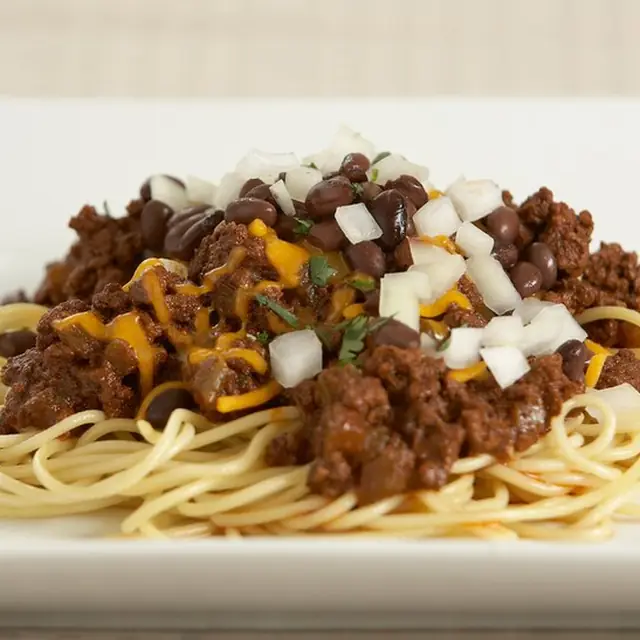
More dishes
Where to eat by neighborhood
All neighbourhoods- Over-the-Rhine42 places
- Downtown17 places
- Walnut Hills7 places
- Hyde Park7 places
- Northside6 places
- Camp Washington3 places

Also in Cincinnati: tickets for the sights


Tickets are sold by our booking partners. We earn a commission if you book, at no cost to you.
Map of Cincinnati
Every restaurant, cafe, market and bar we cover in Cincinnati, pinned. Click a pin for the page.
Everything in Cincinnati
- Restaurants
- Fine Dining
- Casual Dining
- Cafés
- Bakeries
- Coffee Roasters
- Wine Bars
- Bars
- Street Food
- Breweries
- Markets
- Food Tours
- Festivals
- Cooking Classes
- Dietary
- Budget Eats
- Signature Dishes
- Hidden Gems
- Brunch
- Late Night
- Food History
- Seasonal
- Food Day Trips
- Itineraries
- Nightlife
Plan your eating trip
When to come hungry in Cincinnati
- Peak food season
- May to October for outdoor dining and the Taste of Cincinnati Memorial Day weekend. Goettafest peaks late July and Oktoberfest Zinzinnati runs the third weekend of September. Findlay Market Opening Day Parade for the Reds kicks the spring season.
- Local dining hours
- Lunch 11:30-14:00, Dinner 17:30-22:00. Chili parlors run from 10:30-22:00 or later. Sunday morning brunch 09:00-14:00. Many independents close Sunday or Monday.
- Tipping
- 20 percent standard on full-service. Counter service 10 to 15 percent. Chili parlors and coney counters round up; bartenders 1 to 2 dollars per drink.
Read the full Cincinnati food guide
Cincinnati is the rare American food city whose signature dish doesn't look like anything else. Cincinnati chili is Mediterranean-spiced meat sauce, thin and savory with cinnamon and allspice, served over spaghetti or coneys. It was invented in 1922 by Macedonian immigrants Tom and John Kiradjieff at the Empress chili parlor next to the Empress burlesque theater on Vine Street. A century later, Skyline runs the regional fast-service chain, Gold Star runs the second one, and Camp Washington Chili in Camp Washington (open since 1940) won the James Beard America's Classic award in 2000.
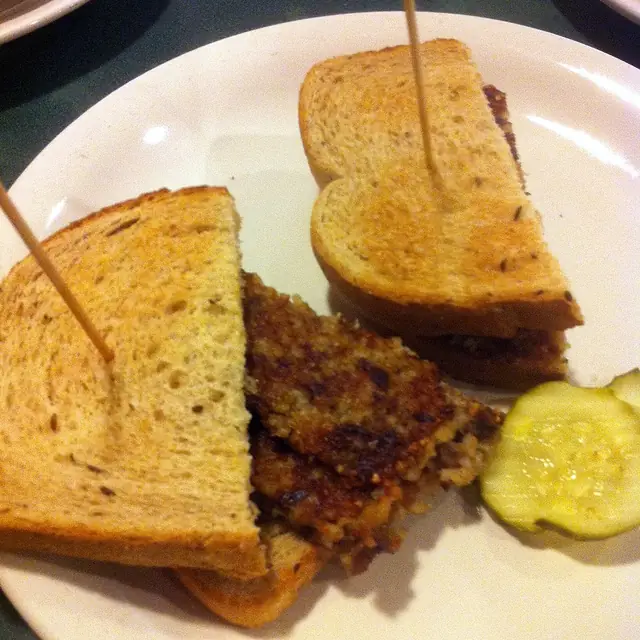
The second foundation is goetta, a breakfast porridge of pork shoulder and pinhead steel-cut oats with herbs, sliced and pan-fried. It came from the Cincinnati Germans who arrived through the 1840s and turned the West Side and Over-the-Rhine into the country's most German metro outside Milwaukee. Glier's Goetta in Covington (across the river) is the dominant brand, and the Glier's Goettafest in Newport every July is a major regional event. Order it sliced and seared alongside eggs at Sugar n' Spice or Sleepy Bee; nearly every Cincinnati breakfast room runs a goetta hash.
The third foundation is brewing. Cincinnati was one of the largest brewing centers in the United States from the 1880s until Prohibition, and the Over-the-Rhine brewery district was the densest. The 21st-century revival saw Rhinegeist take over an 1895 Christian Moerlein bottling plant in 2013, and in 2024 Mellotone Beer Project opened inside the 1850 St. Paul's German Evangelical Protestant Church (the longtime Taft's Ale House space until late 2023). MadTree in Oakley, Urban Artifact in Northside and Esoteric Brewing in Walnut Hills round out the city map.
Where Cincinnati eats: neighborhoods to know
Over-the-Rhine (OTR): the 19th-century German tenement district north of downtown, now the densest food and beverage stretch in the city. Findlay Market anchors the north end, Vine Street and Main Street run the restaurant grid (Sotto, Pleasantry, Pepp and Dolores, Salazar before its 2025 move, Senate, Abigail Street, Quan Hapa), and Rhinegeist and Mellotone anchor the brewery row. Downtown and The Banks: riverfront convention and bar district, with Boca, Jeff Ruby's Steakhouse on Vine Street and the Metropole dining room inside the 21c Museum Hotel. Walnut Hills: Eli's BBQ on Riverside Drive (the original) plus the Esoteric Brewing taproom. Hyde Park: Hyde Park Square residential upscale, BonBonerie in O'Bryonville and Graeter's flagship scoop counter. Columbia Tusculum: Jeff Ruby's Precinct steakhouse inside a 1901 police station on Delta Avenue. Northside: alternative-leaning Hamilton Avenue strip with MOTR Pub, The Comet, Northside Yacht Club and Sidewinder Coffee. Camp Washington: industrial north of OTR, with Camp Washington Chili open since 1940. Mt. Adams: hilltop neighborhood east of downtown with city overlook views. Covington and Newport (across the Ohio River in Kentucky): day-trip stretch with Carabello Coffee in Newport and Roebling Point Books and Coffee in Covington.
Cincinnati signature dishes worth crossing town for
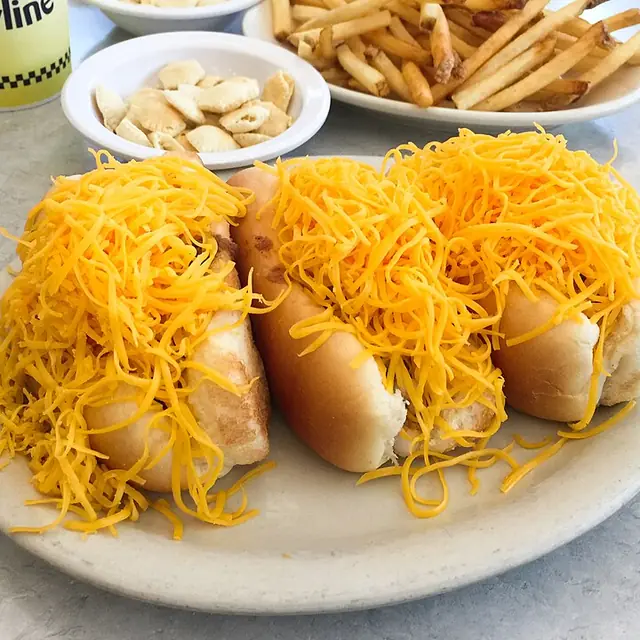
Cincinnati chili 5-way (chili, spaghetti, beans, onions, cheddar): Camp Washington Chili in Camp Washington (the JBF America's Classic winner since 1940), Skyline Chili at the Clifton flagship, Gold Star Chili across the metro. The cheese coney (a hot dog under chili, onions, mustard and shredded cheddar): every Cincinnati chili parlor runs it as a counter staple. Goetta and eggs: Sugar n' Spice in Paddock Hills, Sleepy Bee in Oakley and downtown. Graeter's French-pot ice cream (especially black raspberry chocolate chip): the Hyde Park scoop counter (founded 1870). LaRosa's square pizza with sweet sauce: regional chain founded in Cincinnati 1954, original Boudinot location in Westwood. Montgomery Inn ribs (Cincinnati-style barbecue sauce-glazed pork ribs): the Montgomery Inn Boathouse on the Ohio River. Glier's goetta: at every Cincinnati grocery. Opera cream candy: BonBonerie's opera cream torte. Beer brats and German fare: Moerlein Lager House on Joe Nuxhall Way at the riverfront.
Over-the-Rhine: the food district
Over-the-Rhine (OTR) is a National Historic Landmark district of Italianate row houses built in the 1850s to 1880s for German immigrants. It declined through the 20th century and was severely depopulated by 2000 (about 5,000 residents in a district built for 50,000). The 2003 Cincinnati Riots accelerated abandonment, and 3CDC (a public-private nonprofit) led the redevelopment from 2004 on. Restaurants drove the comeback: Senate (Daniel Wright, 2010), Bakersfield (2011, tequila-tacos), Abigail Street (Wright, 2012), Sotto (David Falk, 2012), Salazar (Jose Salazar, 2013), Pleasantry (2015), Quan Hapa (2015), Pepp and Dolores (2019). Findlay Market on Race Street has run since 1855 as the city's anchor public market. Rhinegeist Brewery moved into an 1895 Moerlein bottling building on Elm Street in 2013 and now produces over 60,000 barrels annually. Taft's Ale House opened inside the 1850 St. Paul's German Evangelical Church on Race Street in 2015 and ran there until late 2023; Mellotone Beer Project opened in the same space in November 2024. The brunch corridor along Vine and Main, plus the brewery row on Elm and Race, makes OTR the highest-density restaurant district in Cincinnati.
Brewing and goetta: the German foundation
Cincinnati's German heritage came in two waves: the post-1830 emigration from Baden, Württemberg and Bavaria, and the post-1848 political-refugee wave. By 1900, German speakers were the largest language group in the city. The brewing district peaked between 1880 and 1919 with 35-plus active breweries, including Christian Moerlein (founded 1853), John Hauck Brewing, Bellevue Brewing and others. Prohibition shut nearly all of them and most never returned. Christian Moerlein was revived in 1981 by Greg Hardman with the historic name and recipes; Rhinegeist (2013), MadTree (2013, Oakley) and Mellotone Beer Project (2024) led the modern wave. Goetta, the pork-and-pinhead-oats breakfast porridge, came from this same German foundation and was a way to stretch pork; Robert Glier started Glier's Meats in 1946 in Covington, Kentucky and became the dominant brand. Goettafest in Newport (early July and late July, two weekends) is a major regional draw. Cincinnati holds Oktoberfest Zinzinnati every third weekend of September at Sawyer Point and Yeatman's Cove on the riverfront, claimed as the largest Oktoberfest in the United States. The Moerlein Lager House on the riverfront and the Mellotone Beer Project inside the 1850 German church carry the year-round German brewing line.
Cincinnati food, FAQ
What food is Cincinnati known for?
Cincinnati's signature dishes include Cincinnati chili, Cheese coney, Goetta, Graeter's French-pot ice cream, LaRosa's square pizza. See our signature dishes chapter for where to eat each.
What are the best food neighborhoods in Cincinnati?
TableJourney editors map Cincinnati by district. Over-the-Rhine, Downtown, Walnut Hills, Hyde Park are among the strongest for food, each with its own guide.
Where should I eat fine dining in Cincinnati?
Editor picks in Cincinnati include Boca, Wildweed, Jeff Ruby's Precinct, plus the full fine dining chapter on TableJourney.
Are there food tours in Cincinnati?
TableJourney covers 6 editor-picked food tours in Cincinnati, with what each shows you and how much to budget.
Does Cincinnati have good vegetarian or vegan food?
TableJourney's Cincinnati dietary chapter covers vegan, gluten_free, kosher venues, each editor-picked with what to order and how to ask.