Signature dishes
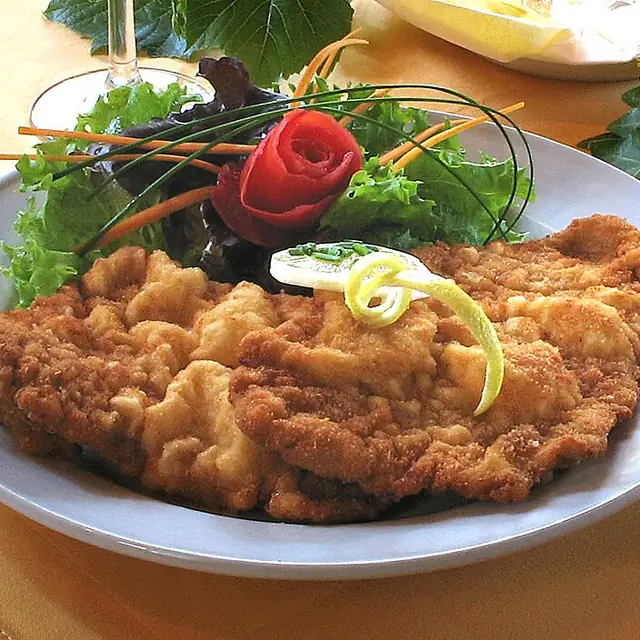
A veal cutlet hammered paper-thin, dredged in flour, beaten egg and breadcrumbs, then fried in clarified butter until the breading lifts off the meat in a golden hood.
Where: Figlmueller Wollzeile, Lugeck Figlmueller, Meissl & Schadn, Plachutta Wollzeile, Skopik & Lohn
Price: €18-32
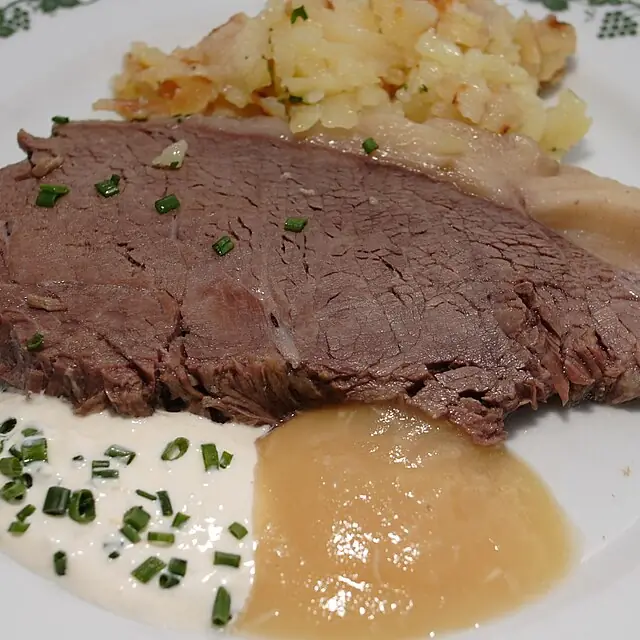
A piece of boiled beef, typically from the rump cap, slowly poached with root vegetables and served in copper pans with a clear broth, apple horseradish, chive sauce, roesti and creamed spinach.
Where: Plachutta Wollzeile, Plachutta Hietzing, Restaurant Rote Bar, Zum Schwarzen Kameel, Gasthaus Ubl
Price: €24-34
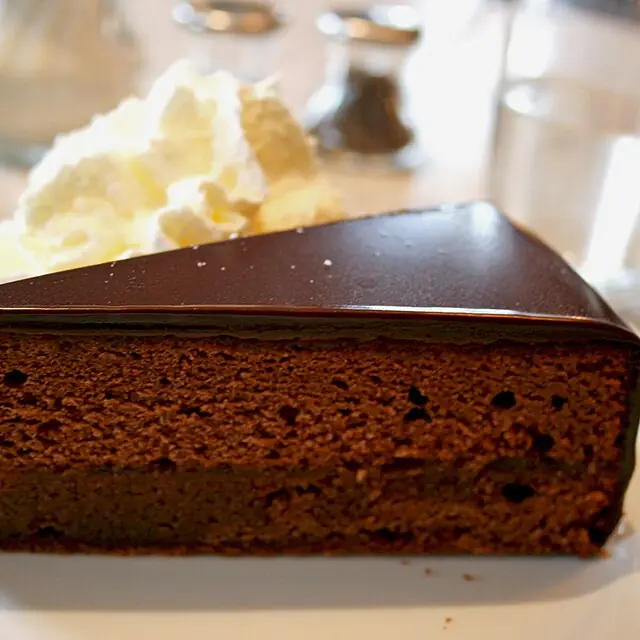
A two-layer chocolate sponge cake split with apricot jam, enrobed in a thin, glossy chocolate glaze and served with a quenelle of unsweetened whipped cream.
Where: Cafe Sacher Wien, Demel, Cafe Landtmann, Kurkonditorei Oberlaa
Price: €8-12 a slice
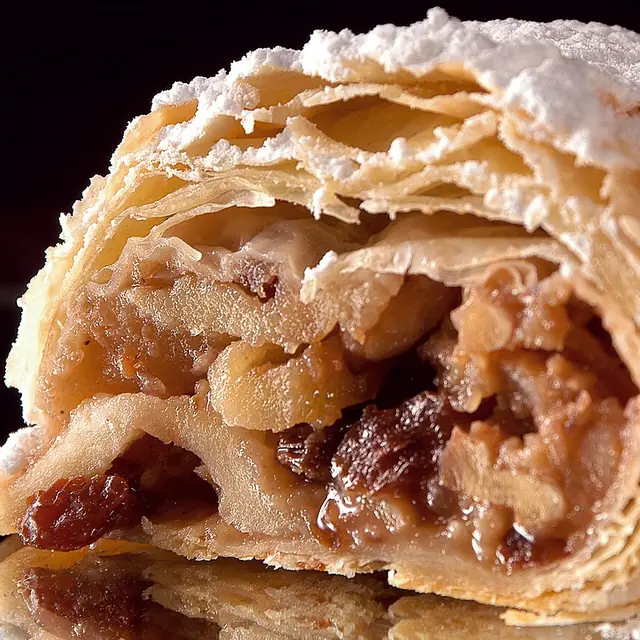
Paper-thin strudel pastry stretched until you can read newsprint through it, wrapped around grated apples, raisins, cinnamon, sugar, and toasted breadcrumbs.
Where: Demel, Cafe Landtmann, Vollpension, Cafe Sperl, Cafe Korb
Price: €6-9 a slice
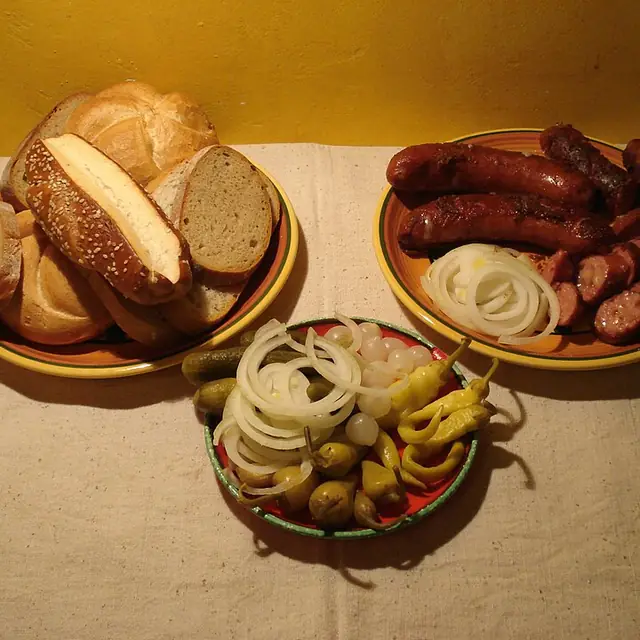
A pork sausage with cheese pockets distributed through the meat, cooked on a roller grill until the casing blisters and the cheese inside melts to a near-liquid.
Where: Bitzinger Wuerstelstand Albertina, Wuerstelstand am Hohen Markt, Wuerstelstand LEO
Price: €5-8
A beef gulasch slow-cooked with onions, sweet paprika and marjoram into a thick, dark sauce. Served with a Semmel (white roll) and a fried egg on top in the Beisl tradition, or with bread dumplings as the dinner plate.
Where: Cafe Anzengruber, Gasthaus Poeschl, Gasthaus Wolf, Plachutta Wollzeile, Glacis Beisl
Price: €14-19
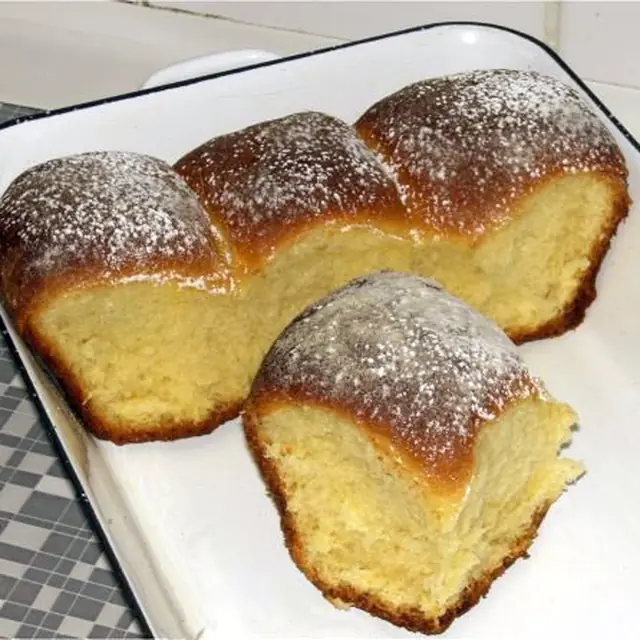
Sweet yeasted dumplings, baked together in a hot oven so they pull apart in fluffy squares, filled with apricot jam (Marillenmarmelade) and served from 20:00 onwards with vanilla sauce poured over the top.
Where: Cafe Hawelka, Cafe Landtmann, Cafe Sperl
Price: €6-9
A field-blend white wine grown and pressed from multiple grape varieties planted together in a single vineyard, then harvested and fermented as one wine.
Where: Heuriger Sirbu, Pub Klemo
Price: €4-6 a glass at a Heuriger
A whole apricot wrapped in a soft potato or quark dough, boiled, then rolled in golden butter-toasted breadcrumbs and dusted with icing sugar.
Where: Vollpension, Cafe Landtmann, Gasthaus Poeschl, Plachutta Wollzeile
Price: €8-14
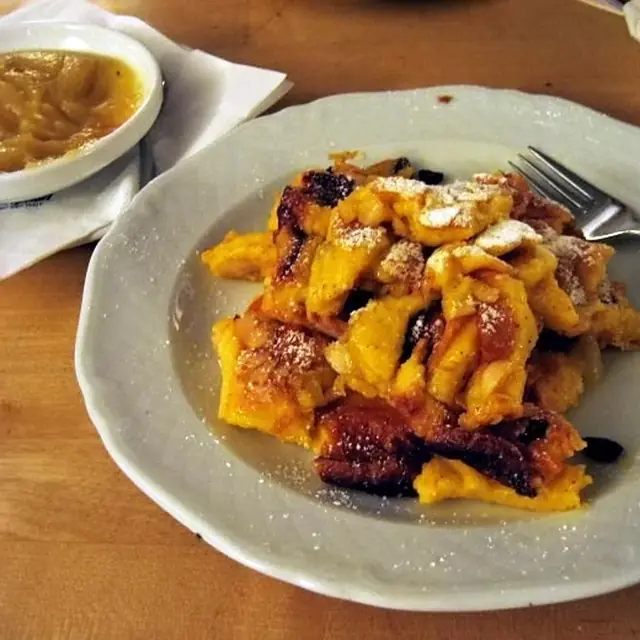
A thick, fluffy pancake torn into bite-sized pieces in the pan and caramelised with butter and sugar, served with stewed plums (Zwetschkenroester), apple sauce, or apricot compote.
Where: Lugeck Figlmueller, Figlmueller Wollzeile, Cafe Landtmann, Plachutta Wollzeile
Price: €12-18
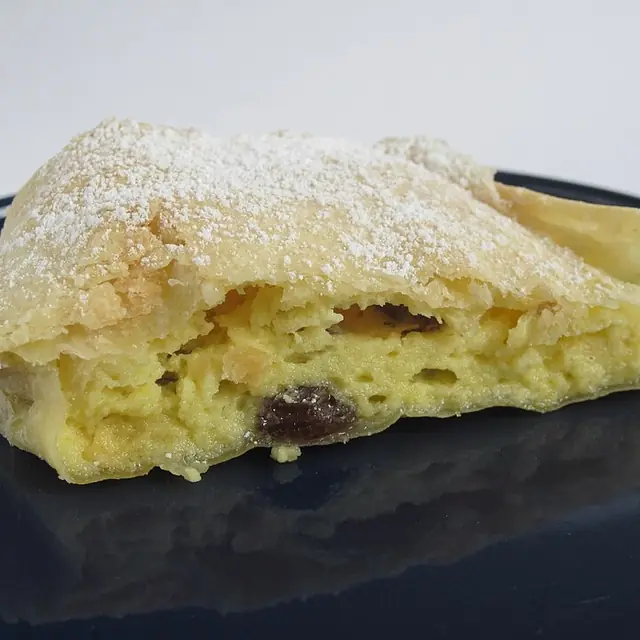
Paper-thin strudel pastry wrapped around a sweet quark filling enriched with lemon, vanilla, sour cream and raisins. Baked golden, served warm with hot vanilla sauce; rivals Apfelstrudel on every Kaffeehaus tray.
Where: Demel, Cafe Landtmann, Vollpension, Kurkonditorei Oberlaa, Cafe Sperl
Price: €6-9 a slice
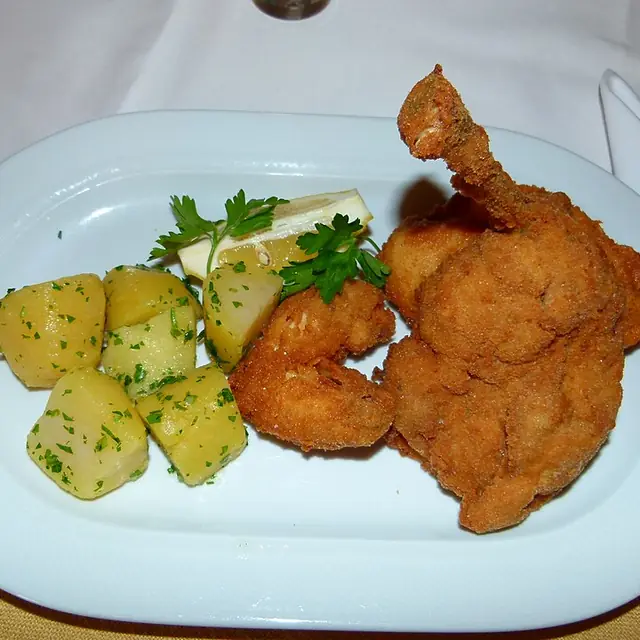
Free-range chicken jointed into eight, dredged in flour, egg and Semmelbroesel, fried in clarified butter or pork lard until the breading puffs and crisps. Served with parsley potatoes, cucumber salad and lemon.
Where: Schweizerhaus, Plachutta Wollzeile, Figlmueller Wollzeile, Lugeck Figlmueller
Price: €20-32
Wiener Schnitzel
A veal cutlet hammered paper-thin, dredged in flour, beaten egg and breadcrumbs, then fried in clarified butter until the breading lifts off the meat in a golden hood.
History: The Wiener Schnitzel is documented in Viennese cookbooks from the late 19th century but is older as a court-cuisine technique; the breaded cutlet may have travelled from northern Italy in the cotoletta alla milanese tradition. The veal version is the Austrian protected name; the pork version (Schnitzel Wiener Art) is the cheaper everyday plate. Figlmueller on Wollzeile has hammered the dish since 1905, Lugeck and Meissl & Schadn cook the veal version, Plachutta the canonical veal at Wollzeile.
Where to try it: Figlmueller Wollzeile, Lugeck Figlmueller, Meissl & Schadn, Plachutta Wollzeile, Skopik & Lohn
Watch out for: Gluten, Egg
Tafelspitz
A piece of boiled beef, typically from the rump cap, slowly poached with root vegetables and served in copper pans with a clear broth, apple horseradish, chive sauce, roesti and creamed spinach.
History: Tafelspitz was a court-cuisine dish under the Habsburgs and became a bourgeois Sunday lunch in 19th-century Vienna. Each cut of beef has its own name and use: Schulterscherzel for tenderness, Beinfleisch with the bone in, Kruspelspitz with cartilage. Plachutta opened his Wollzeile restaurant in 1986 specifically to cook the dish, with twelve cuts named on the menu. The dish remains the canonical Viennese boiled-beef tradition.
Where to try it: Plachutta Wollzeile, Plachutta Hietzing, Restaurant Rote Bar, Zum Schwarzen Kameel, Gasthaus Ubl
Sachertorte
A two-layer chocolate sponge cake split with apricot jam, enrobed in a thin, glossy chocolate glaze and served with a quenelle of unsweetened whipped cream.
History: Franz Sacher invented the Sachertorte in 1832, aged 16, while filling in as the apprentice pastry chef in Prince Metternich's kitchen. The recipe was perfected by his son Eduard at Demel before the family opened Hotel Sacher in 1876. A long legal dispute between Hotel Sacher and Demel was settled in 1963: Hotel Sacher won the right to the 'Original Sachertorte' name and the round seal; Demel uses a triangular 'Eduard-Sacher-Torte' seal to this day. Both versions are still made by hand at the respective addresses.
Where to try it: Cafe Sacher Wien, Demel, Cafe Landtmann, Kurkonditorei Oberlaa
Watch out for: Gluten, Egg, Dairy
Apfelstrudel
Paper-thin strudel pastry stretched until you can read newsprint through it, wrapped around grated apples, raisins, cinnamon, sugar, and toasted breadcrumbs.
History: Strudel pastry travelled across the Habsburg empire from the Ottoman baklava tradition, taking hold in Vienna and Budapest in the 17th and 18th centuries. The paper-thin dough is the test of every Konditorei. Vollpension on Schleifmuehlgasse bakes by grandmothers from a recipe family tradition; Demel and Cafe Landtmann both serve the classical version on a silver tray.
Where to try it: Demel, Cafe Landtmann, Vollpension, Cafe Sperl, Cafe Korb
Watch out for: Gluten, Egg, Dairy
Kaesekrainer
A pork sausage with cheese pockets distributed through the meat, cooked on a roller grill until the casing blisters and the cheese inside melts to a near-liquid.
History: The Krainer Wurst itself dates from the Slovenian-Austrian border region of Krain (Carniola). The cheese-injected Kaesekrainer was developed in the 1970s by Austrian sausage producers and quickly became the most-ordered Vienna street-food plate. The blistered casing and molten cheese earned the affectionate nickname Eitrige (the pus-y one) in Wiener slang. The Bitzinger, Hoher Markt and Leo Wuerstelstaende all cook the canonical version.
Where to try it: Bitzinger Wuerstelstand Albertina, Wuerstelstand am Hohen Markt, Wuerstelstand LEO
Watch out for: Gluten, Dairy
Wiener Gulasch (Saftgulasch)
A beef gulasch slow-cooked with onions, sweet paprika and marjoram into a thick, dark sauce. Served with a Semmel (white roll) and a fried egg on top in the Beisl tradition, or with bread dumplings as the dinner plate.
History: Gulasch travelled from the Hungarian half of the Austro-Hungarian Empire and became a defining Viennese Beisl dish by the late 19th century. The Vienna version (Saftgulasch) reduces the sauce thicker than the Hungarian original, and the Fiakergulasch adds a fried egg, frankfurter, and gherkin on top. Cafe Anzengruber's Croatian-Viennese kitchen has cooked one of the city's most-defended versions since 1949.
Where to try it: Cafe Anzengruber, Gasthaus Poeschl, Gasthaus Wolf, Plachutta Wollzeile, Glacis Beisl
Watch out for: Gluten
Buchteln
Sweet yeasted dumplings, baked together in a hot oven so they pull apart in fluffy squares, filled with apricot jam (Marillenmarmelade) and served from 20:00 onwards with vanilla sauce poured over the top.
History: Buchteln came to Vienna from the Bohemian half of the empire, becoming a late-night Wiener Mehlspeise served from the Kaffeehaus oven. Cafe Hawelka on Dorotheergasse has run the canonical version since 1939 to a recipe by Josefine Hawelka, the family kitchen turning them out fresh in the late evening from 20:00 onwards.
Where to try it: Cafe Hawelka, Cafe Landtmann, Cafe Sperl
Watch out for: Gluten, Egg, Dairy
Wiener Gemischter Satz
A field-blend white wine grown and pressed from multiple grape varieties planted together in a single vineyard, then harvested and fermented as one wine.
History: Gemischter Satz was the traditional Vienna vineyard practice for centuries: plant Gruener Veltliner, Riesling, Welschriesling and Pinot Blanc together in one plot, harvest and press in one go. The practice nearly died out in the 1980s, but the WienWein winemakers' association of Doebling and Stammersdorf growers revived it in 2006, securing a DAC protected-origin in 2013. The wine now defines Vienna's wine identity on the Heuriger pour list.
Where to try it: Heuriger Sirbu, Pub Klemo
Watch out for: Sulphites
Marillenknoedel
A whole apricot wrapped in a soft potato or quark dough, boiled, then rolled in golden butter-toasted breadcrumbs and dusted with icing sugar.
History: Marillenknoedel are a Bohemian-Viennese tradition tied to the Wachau valley's apricot season in July. The dish travels onto every Wiener Beisl carte during the summer apricot weeks. Vollpension on Schleifmuehlgasse runs the canonical home-cook version with quark dough; Steirereck's tasting menu has lifted the dish into a fine-dining course in season.
Where to try it: Vollpension, Cafe Landtmann, Gasthaus Poeschl, Plachutta Wollzeile
Watch out for: Gluten, Egg, Dairy
Kaiserschmarrn
A thick, fluffy pancake torn into bite-sized pieces in the pan and caramelised with butter and sugar, served with stewed plums (Zwetschkenroester), apple sauce, or apricot compote.
History: Kaiserschmarrn (the Emperor's mess) is said to have been served to Franz Joseph in 1854 when a humble shepherd-style pancake was offered to the imperial table. The name stuck. The dish became a Konditorei and Alpine-hut staple. Figlmueller's Lugeck and Cafe Landtmann both cook the canonical Vienna version with raisins; Kurkonditorei Oberlaa serves the Mehlspeise version with stewed plums on the side.
Where to try it: Lugeck Figlmueller, Figlmueller Wollzeile, Cafe Landtmann, Plachutta Wollzeile
Watch out for: Gluten, Egg, Dairy
Topfenstrudel
Paper-thin strudel pastry wrapped around a sweet quark filling enriched with lemon, vanilla, sour cream and raisins. Baked golden, served warm with hot vanilla sauce; rivals Apfelstrudel on every Kaffeehaus tray.
History: Topfenstrudel arrived in Vienna from Hungary via the Habsburg court kitchens, taking hold in 19th-century Kaffeehaus baking. The version at Demel still uses hand-pulled dough and fresh Austrian Topfen. Café Landtmann and Vollpension both run the Mehlspeise as a daily offer; Kurkonditorei Oberlaa serves a notable cold version with apricot sauce in summer.
Where to try it: Demel, Cafe Landtmann, Vollpension, Kurkonditorei Oberlaa, Cafe Sperl
Watch out for: Gluten, Egg, Dairy
Backhendl
Free-range chicken jointed into eight, dredged in flour, egg and Semmelbroesel, fried in clarified butter or pork lard until the breading puffs and crisps. Served with parsley potatoes, cucumber salad and lemon.
History: Backhendl was an aristocratic dish in the 18th and 19th centuries when chicken was a luxury; it became the Sunday plate of the Wiener bourgeoisie and a Heuriger staple. The Schweizerhaus in the Prater still cooks the canonical free-range version with potato salad; Plachutta runs the classical bone-in eight-piece preparation.
Where to try it: Schweizerhaus, Plachutta Wollzeile, Figlmueller Wollzeile, Lugeck Figlmueller
Watch out for: Gluten, Egg