Signature dishes
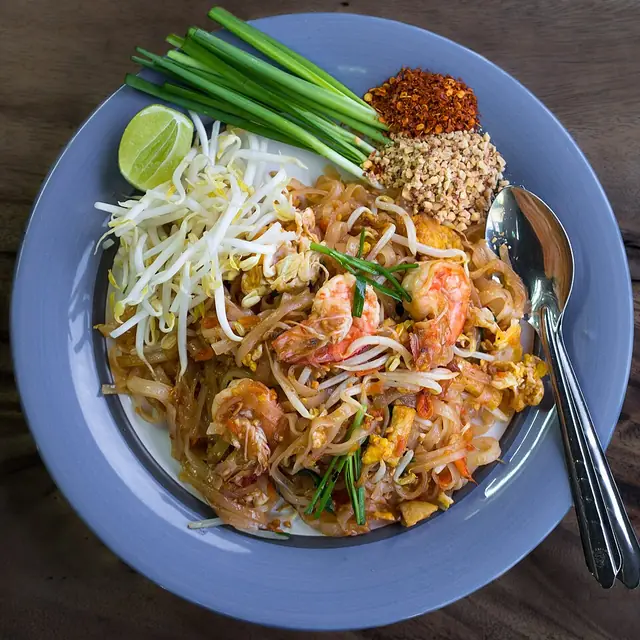
Pad Thai is the canonical Bangkok stir-fried rice-noodle dish: tamarind-sweetened, fish-sauce-savoury, tossed with shrimp, egg, beansprouts and crushed peanuts in a smoking-hot wok, garnished with lime and chilli.
Where: Thipsamai Pad Thai, Raan Jay Fai
Price: ฿80-200
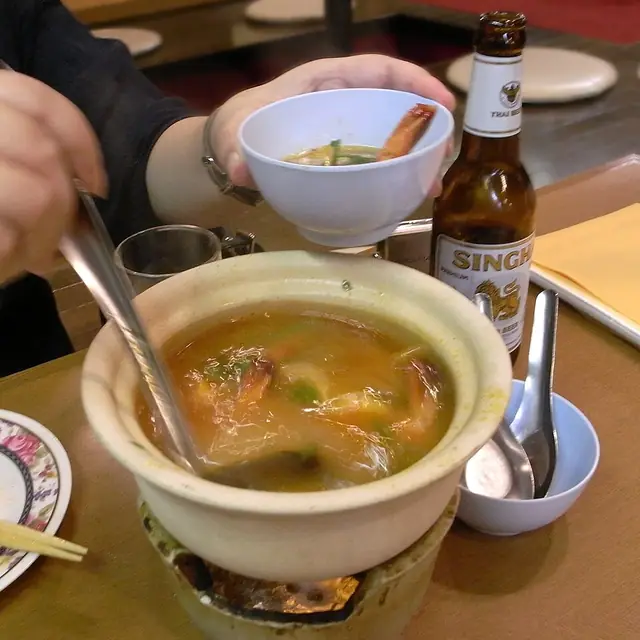
Tom yum goong is Thailand's well-known hot-and-sour river-prawn soup: lemongrass, galangal, kaffir lime leaves and Thai chillies in a clear or chilli-paste-thickened broth around a whole goong mae nam river prawn.
Where: Pa Aor Tom Yum Goong Noodles, Raan Jay Fai, Mit Ko Yuan
Price: ฿250-700
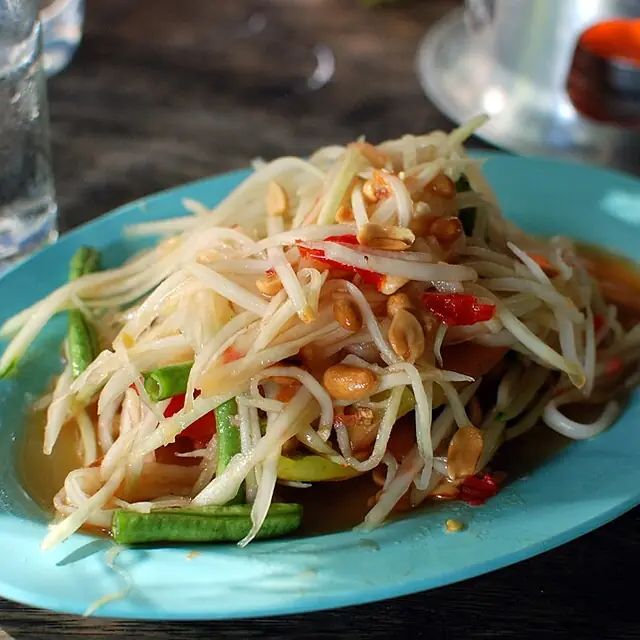
Som tam is the Isan-Lao pounded papaya salad: shredded green papaya, palm sugar, lime, fish sauce and bird's-eye chilli bashed in a clay mortar to bruise the fruit into the dressing.
Where: Som Tam Jay So, Soi Polo Fried Chicken, Or Tor Kor Market food stalls
Price: ฿50-150
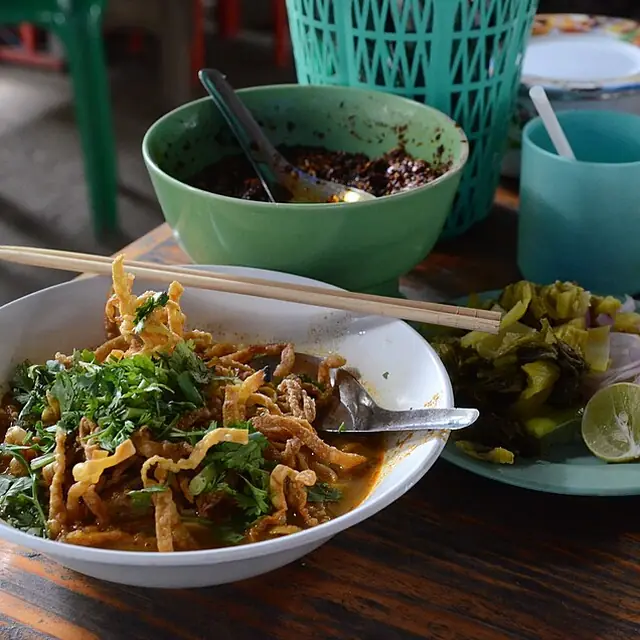
Khao soi is northern Thailand's curry-noodle bowl: silky coconut-and-yellow-curry broth ladled over egg noodles, topped with crispy fried noodles, pickled mustard greens, shallots and lime.
Where: Krua Aroy Aroy, Supanniga Eating Room Tha Tien
Price: ฿80-200
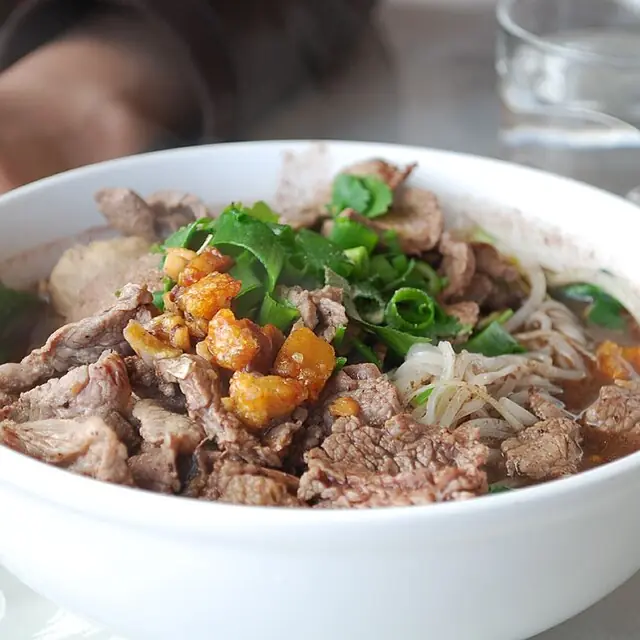
Bangkok's canal-boat 50-baht-bowl tradition: tiny rice-noodle portions in a dark beef or pork broth thickened with pig's blood, star anise and cinnamon, topped with pork balls and sprouts.
Where: Victory Monument boat noodle alley, Rung Rueang Pork Noodles, Guay Jub Mr Joe, Nai Ek Roll Noodles
Price: ฿15-40 per bowl
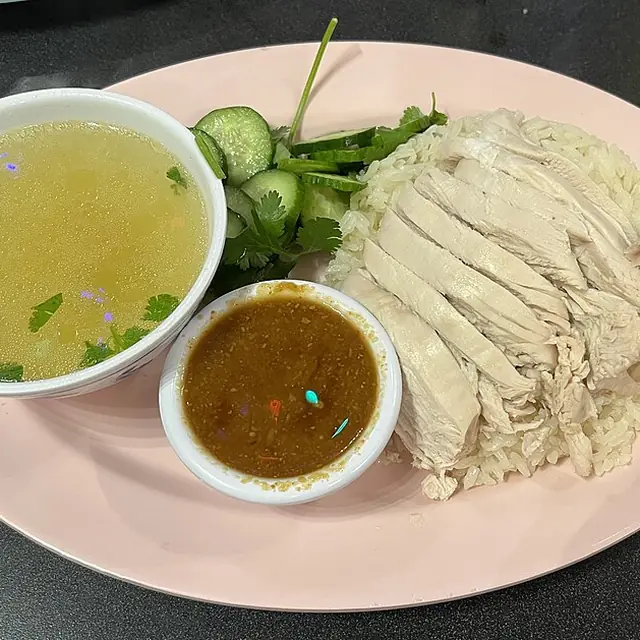
Khao man gai is Bangkok's Thai-Hainanese poached-chicken-on-fragrant-rice classic: poached chicken laid over rice cooked in chicken stock and pandan, served with a clear chicken soup and a ginger-chilli dipping sauce.
Where: Go-Ang Pratunam Chicken Rice
Price: ฿60-150
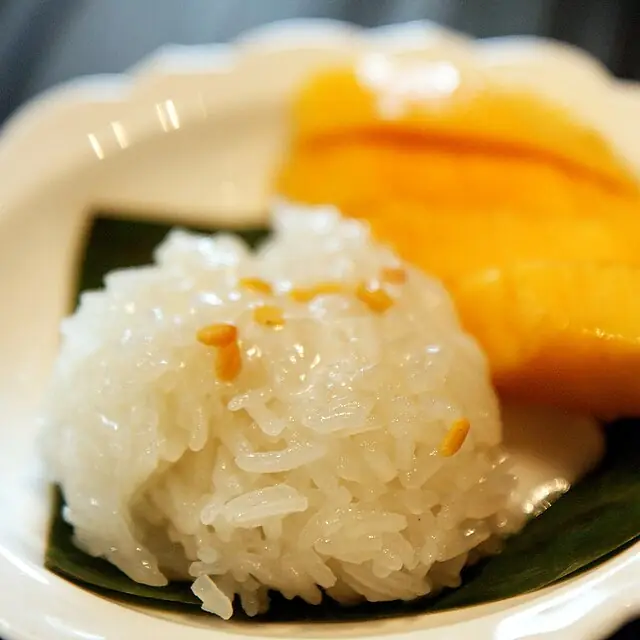
Mango sticky rice is Thailand's most exported dessert: glutinous rice steamed and coated in salted coconut cream, served alongside ripe nam dok mai mango slices and a final pour of warm coconut sauce.
Where: Or Tor Kor Market food stalls, Mont Nomsod
Price: ฿60-150
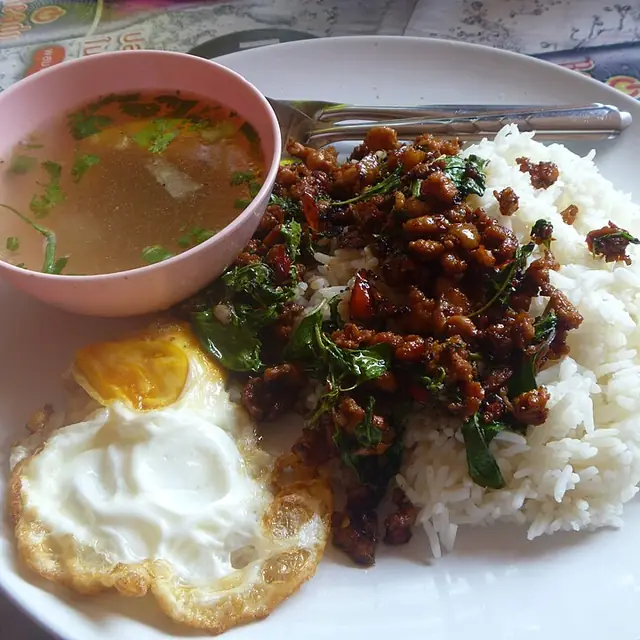
Pad krapow is Bangkok's everyday office-lunch hero: minced pork, chicken or beef stir-fried with garlic, bird's-eye chilli and holy basil over jasmine rice, topped with a sunny-side-up fried egg.
Where: Krua Apsorn Dinso, Mit Ko Yuan, Krua Aroy Aroy
Price: ฿70-180
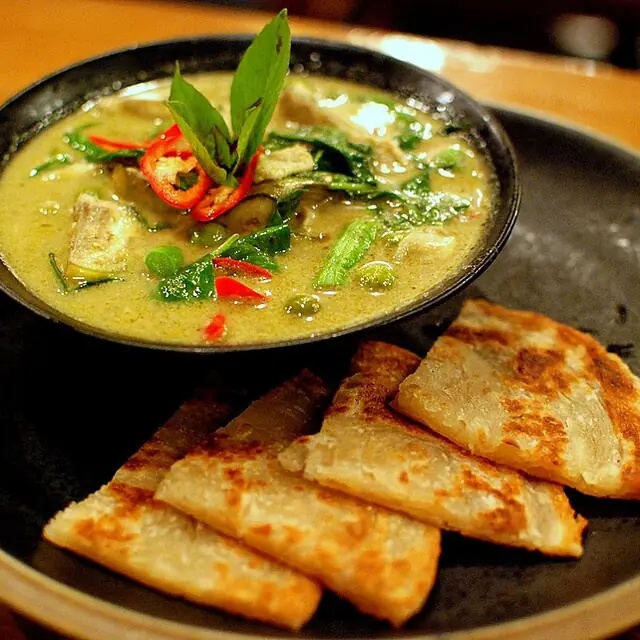
Coconut-milk curry built on a pounded paste of green bird's-eye chillies, lemongrass, galangal, shrimp paste and kaffir lime. Cooked with chicken or fish balls, Thai aubergines and bamboo; sweet, herbaceous, aromatic.
Where: Krua Apsorn Dinso, Paste Bangkok, Saneh Jaan, Saawaan
Price: ฿180-450
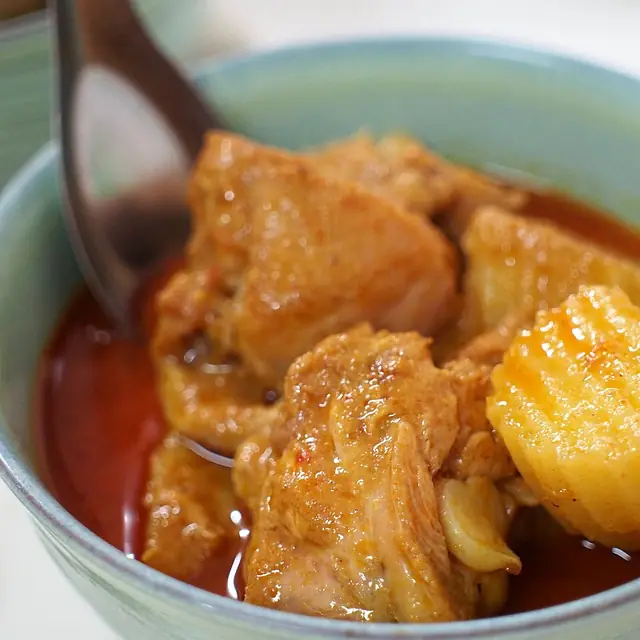
Persian-Indian-Thai fusion curry of slow-braised beef or chicken in coconut milk, peanuts, potatoes and aromatic dry spices including cinnamon, cardamom and cloves. Mild, sweet, tamarind-tart; the gentlest Thai curry.
Where: Krua Apsorn Dinso, Blue Elephant Bangkok, Issaya Siamese Club, Saneh Jaan
Price: ฿220-450
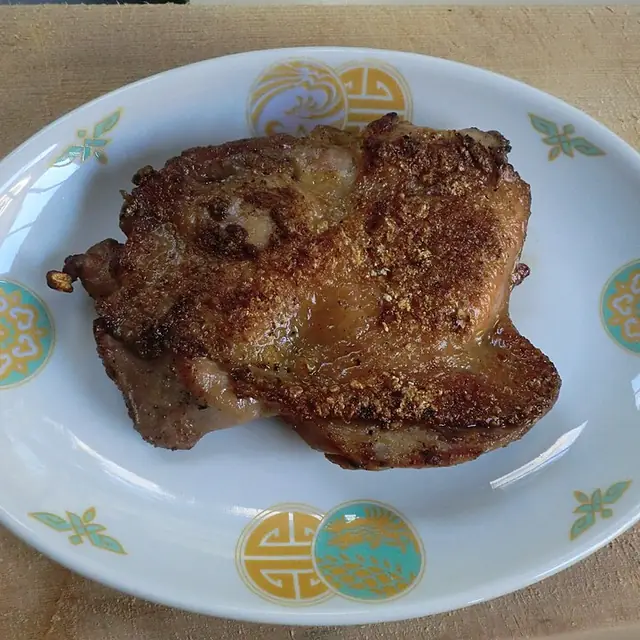
Butterflied chicken marinated in lemongrass, coriander root, garlic, fish sauce and palm sugar, slow-grilled over charcoal until the skin lacquers and the meat smokes sweet. Served with sticky rice and nam jim jaew.
Where: Soi Polo Fried Chicken, Som Tam Jay So, Krua Apsorn Dinso, Supanniga Eating Room Thonglor
Price: ฿120-280
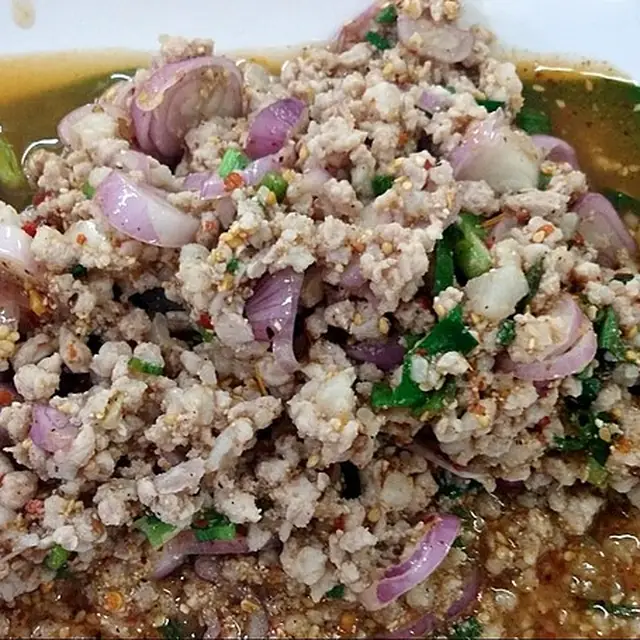
Isaan minced-meat salad of warm chicken, duck, pork or beef tossed with lime, fish sauce, toasted rice powder, chilli, mint, coriander and shallot. Sour, hot, fragrant; canonical Isaan in Bangkok.
Where: Som Tam Jay So, Supanniga Eating Room Tha Tien, Khua Kling Pak Sod, Soi Polo Fried Chicken
Price: ฿90-220
Kuay jub is Bangkok's rolled-rice-noodle soup: peppery broth thick with crispy pork belly, blood-cake, intestines and a soft-boiled egg, finished with fried garlic and white pepper.
Where: Nai Ek Roll Noodles, Guay Jub Mr Joe, Yaowarat night market street stalls
Price: ฿70-200
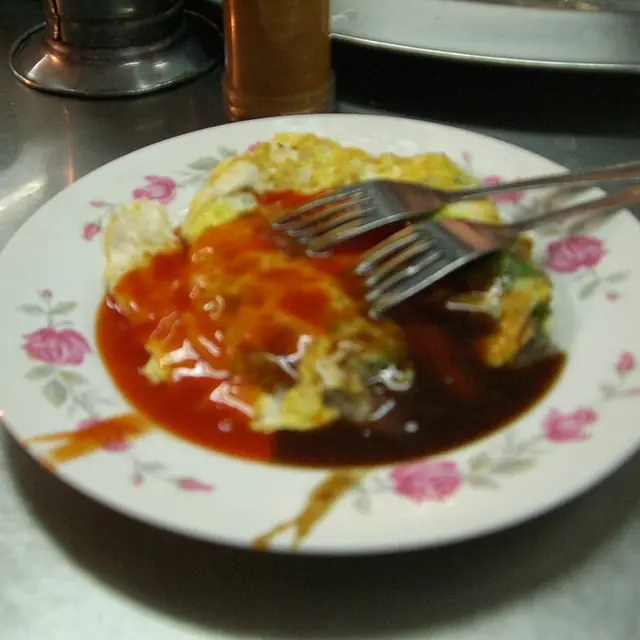
Hoi tod is Bangkok's crispy oyster omelette: rice-flour batter griddled to a lacy crust, scattered with small oysters, bean sprouts and egg, served with a sweet chilli sauce.
Where: Nai Mong Hoi Tod, Yaowarat night market street stalls, Soi Texas Phadungdao seafood stalls
Price: ฿120-350
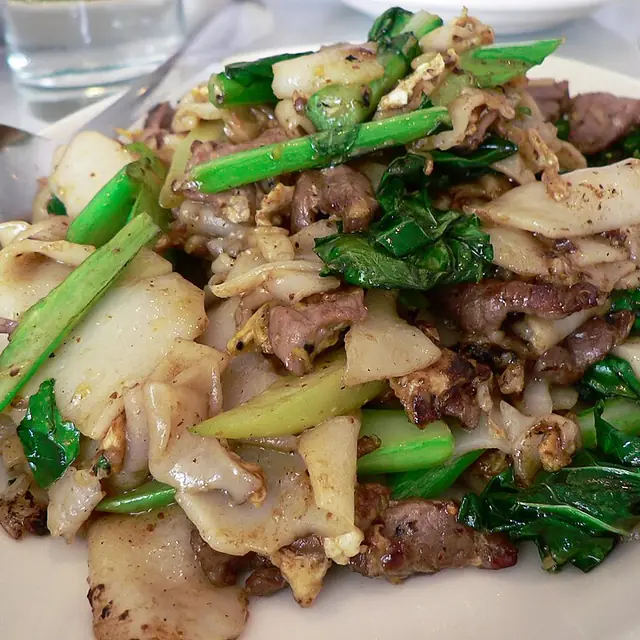
Pad see ew is Bangkok's wok-fried wide rice noodles charred in dark soy with Chinese broccoli, egg and your choice of pork, chicken or seafood. Smoky, sweet, blackened at the edges.
Where: Sukhumvit Soi 38 night noodle stalls, Yaowarat night market street stalls, Rung Rueang Pork Noodles
Price: ฿80-180
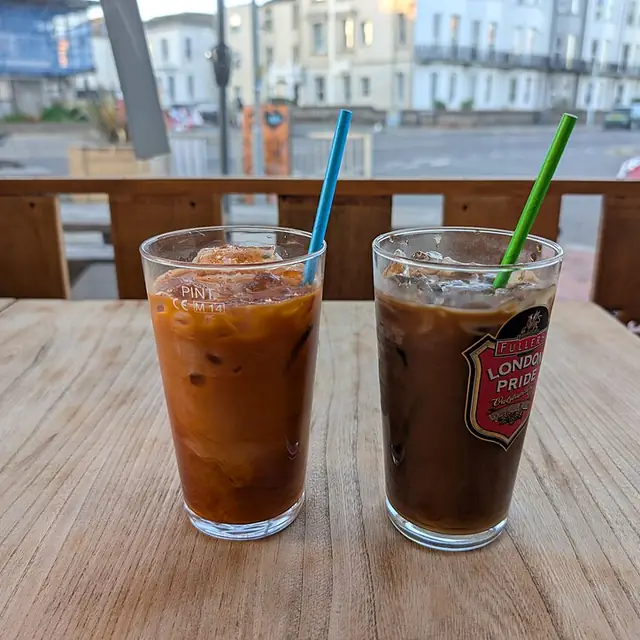
Cha yen is bright-orange black tea brewed strong with star anise and cardamom, sweetened with condensed milk and served over crushed ice with a final swirl of evaporated milk on top.
Where: Sukhumvit Soi 38 night noodle stalls, Or Tor Kor market food stalls, Yaowarat night market street stalls
Price: ฿25-80
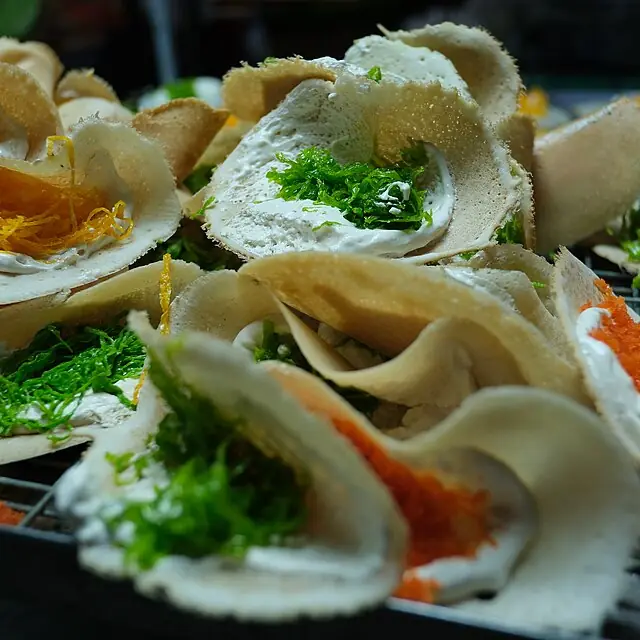
Khanom buang is a crisp rice-flour taco the size of a coin, filled with sweet meringue cream and topped with sweet shredded coconut or salty shredded shrimp and fried egg yolk.
Where: Or Tor Kor market food stalls, Chatuchak Weekend Market, Yaowarat Sampeng Lane stalls
Price: ฿10-25 per piece
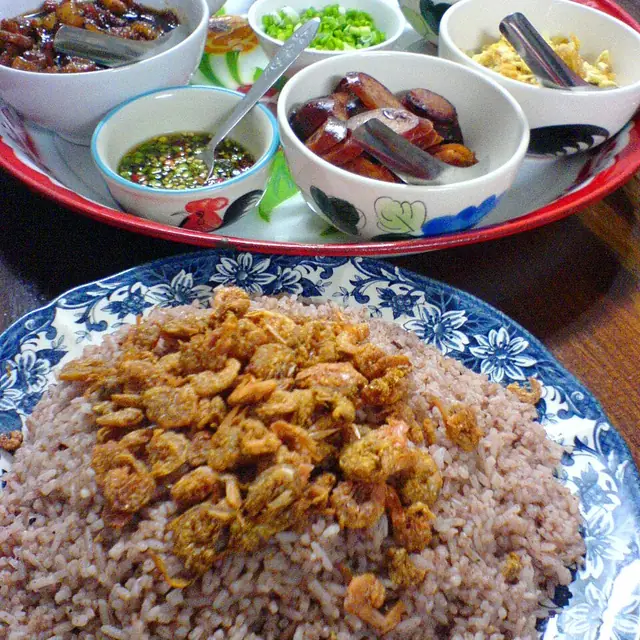
Khao khluk kapi is shrimp-paste fried rice plated with sweet shredded pork, omelette ribbons, sliced green mango, dried shrimp, chilli and lime. You build each bite to your own balance.
Where: Krua Apsorn Dinso, Supanniga Eating Room Tha Tien, Saneh Jaan
Price: ฿180-450
Pad Thai
Pad Thai is the canonical Bangkok stir-fried rice-noodle dish: tamarind-sweetened, fish-sauce-savoury, tossed with shrimp, egg, beansprouts and crushed peanuts in a smoking-hot wok, garnished with lime and chilli.
History: Pad Thai was rebranded as Thailand's national dish in 1939 by Prime Minister Plaek Phibunsongkhram, partly to reduce rice consumption during shortage and to differentiate Thai food from Chinese-Thai noodles. State-distributed recipes pushed pad Thai stalls across Bangkok by the 1940s. Thipsamai opened in 1966 as the canonical wrapped-in-egg version, earning a Bib Gourmand listing when Michelin arrived in Thailand in 2018, and remains the queue-out-the-door reference on Maha Chai Road.
Where to try it: Thipsamai Pad Thai, Raan Jay Fai
Watch out for: Shellfish (shrimp), Egg, Peanut, Fish sauce
Tom Yum Goong
Tom yum goong is Thailand's well-known hot-and-sour river-prawn soup: lemongrass, galangal, kaffir lime leaves and Thai chillies in a clear or chilli-paste-thickened broth around a whole goong mae nam river prawn.
History: Tom yum's modern Bangkok form dates to the early 20th century, when river prawns from the Chao Phraya and Mekong were ladled into spiced broths in fishing-village kitchens. The clear (nam sai) and creamy chilli-paste (nam khon) versions diverged in Bangkok by the 1960s. Pa Aor in Pom Prap Sattru Phai became the city's canonical tom yum noodle counter in the 2000s, earning a Michelin Bib Gourmand in 2018 for ladling river prawn into a hot-and-sour broth on rice noodles.
Where to try it: Pa Aor Tom Yum Goong Noodles, Raan Jay Fai, Mit Ko Yuan
Watch out for: Shellfish (prawn), Fish sauce
Som Tam
Som tam is the Isan-Lao pounded papaya salad: shredded green papaya, palm sugar, lime, fish sauce and bird's-eye chilli bashed in a clay mortar to bruise the fruit into the dressing.
History: Som tam migrated to Bangkok with Isan northeastern Thai labour migration in the mid-20th century and became the canonical Bangkok lunch dish by the 1980s. Som Tam Jay So in Sathorn was Michelin-listed with a Bib Gourmand in 2018, pounding to order in clay mortars from a sai-mok northeastern recipe lineage. Variants now include som tam Thai (Bangkok sweeter style), som tam pu pla ra (with fermented crab and fish sauce), and som tam Lao (with raw aubergine, less sugar, more pungent).
Where to try it: Som Tam Jay So, Soi Polo Fried Chicken, Or Tor Kor Market food stalls
Watch out for: Fish sauce, Peanut, Shellfish (dried shrimp)
Khao Soi
Khao soi is northern Thailand's curry-noodle bowl: silky coconut-and-yellow-curry broth ladled over egg noodles, topped with crispy fried noodles, pickled mustard greens, shallots and lime.
History: Khao soi came to Thailand via Yunnanese-Muslim traders along the Burmese border in the 19th century, taking its modern form in 1930s Chiang Mai with the addition of coconut milk. Bangkok adopted khao soi in the 1980s through northern-Thai migration and the Lanna-restaurant boom of the 1990s. Now Krua Aroy Aroy in Silom serves the Bib Gourmand canonical Bangkok version, with chicken or beef in a coconut-yellow-curry broth and a heap of crispy fried noodles on top.
Where to try it: Krua Aroy Aroy, Supanniga Eating Room Tha Tien
Watch out for: Gluten (wheat noodles), Coconut, Fish sauce, Shellfish (shrimp paste)
Boat Noodles (Kuay Teow Ruea)
Bangkok's canal-boat 50-baht-bowl tradition: tiny rice-noodle portions in a dark beef or pork broth thickened with pig's blood, star anise and cinnamon, topped with pork balls and sprouts.
History: Boat noodles emerged in the 1940s along Bangkok's khlong (canal) waterways, where vendors paddled small wooden sampans serving noodle bowls to commuters. The tiny portion size (one-third of a regular bowl) was so the broth would not spill in waves from passing boats. By the 1980s the canal vendors moved to land and clustered at Victory Monument's Soi Ranchanawi, where Boat Noodle Heaven and Boat Noodle Avenue still ladle the dark beef or pork broth at 15 to 40 baht per bowl, expecting four or five rounds.
Where to try it: Victory Monument boat noodle alley, Rung Rueang Pork Noodles, Guay Jub Mr Joe, Nai Ek Roll Noodles
Watch out for: Gluten (some toppings), Soy, Fish sauce, Pork
Khao Man Gai (Hainanese Chicken Rice)
Khao man gai is Bangkok's Thai-Hainanese poached-chicken-on-fragrant-rice classic: poached chicken laid over rice cooked in chicken stock and pandan, served with a clear chicken soup and a ginger-chilli dipping sauce.
History: Khao man gai came to Bangkok with Hainanese Chinese immigrants in the late 19th century, settling around Pratunum and Silom. Go-Ang Pratunam opened on Petchaburi Road in 1960 with pink-uniformed staff still slicing chicken behind the counter today, and earned Michelin Bib Gourmand status when the guide launched in Thailand in 2018. The dish bridges Hainanese poached-chicken technique with Thai chilli-and-ginger sauces, and now operates as the canonical office-lunch order across the entire city.
Where to try it: Go-Ang Pratunam Chicken Rice
Watch out for: Soy, Fish sauce, Ginger
Mango Sticky Rice (Khao Niao Mamuang)
Mango sticky rice is Thailand's most exported dessert: glutinous rice steamed and coated in salted coconut cream, served alongside ripe nam dok mai mango slices and a final pour of warm coconut sauce.
History: Mango sticky rice has roots in central Thai sticky-rice traditions of the 19th century, with the modern mango pairing emerging around 1950 when Bangkok's Damnoen Saduak and Khlong Khwang mango orchards reached commercial volume. The dish became a Bangkok dessert staple by the 1980s and is now sold from every Sukhumvit night-market stall during the April-July mango season. Or Tor Kor market's stalls and Mont Nomsod's heritage Dinso Road location both run canonical versions, particularly during peak mango season from April to July.
Where to try it: Or Tor Kor Market food stalls, Mont Nomsod
Watch out for: Coconut, Tree nuts (some garnishes)
Pad Krapow (Holy Basil Stir-fry)
Pad krapow is Bangkok's everyday office-lunch hero: minced pork, chicken or beef stir-fried with garlic, bird's-eye chilli and holy basil over jasmine rice, topped with a sunny-side-up fried egg.
History: Pad krapow's lineage runs through Chinese-Thai wok cookery brought from Yaowarat into Thai home kitchens by the early 20th century. The use of krapow (Thai holy basil, not Italian or sweet basil) distinguishes it as Thai rather than southern Chinese; the egg topping was added in the 1950s and the dish became the canonical Bangkok lunch by the 1970s. Pad krapow is now sold from every shophouse rice-and-curry counter in the city for under 100 baht, with chicken (gai), pork (moo) or seafood variants.
Where to try it: Krua Apsorn Dinso, Mit Ko Yuan, Krua Aroy Aroy
Watch out for: Soy, Fish sauce, Oyster sauce, Egg
Gaeng Keow Wan (Thai Green Curry)
Coconut-milk curry built on a pounded paste of green bird's-eye chillies, lemongrass, galangal, shrimp paste and kaffir lime. Cooked with chicken or fish balls, Thai aubergines and bamboo; sweet, herbaceous, aromatic.
History: Gaeng keow wan (sweet green curry) emerged in the central-plains Thai kitchens of the Rama VI era (1910s) and consolidated as the canonical green curry through Bangkok royal-cuisine restaurants by the 1950s. The green colour comes from the chillies, the sweet from coconut and palm sugar; pre-modern versions used wild boar. Krua Apsorn and Paste Bangkok run defensible versions; Saneh Jaan is the canonical fine-dining take.
Where to try it: Krua Apsorn Dinso, Paste Bangkok, Saneh Jaan, Saawaan
Watch out for: Shellfish (shrimp paste), Coconut, Fish sauce
Massaman Curry
Persian-Indian-Thai fusion curry of slow-braised beef or chicken in coconut milk, peanuts, potatoes and aromatic dry spices including cinnamon, cardamom and cloves. Mild, sweet, tamarind-tart; the gentlest Thai curry.
History: Massaman curry came to Thailand through Persian Muslim traders in 17th-century Ayutthaya. The name derives from Mussulman (Muslim). The dry-spice profile (cinnamon, star anise, clove, cardamom) is unique among Thai curries and traces directly to subcontinent influence. Often called the world's best dish in viral CNN polls; Krua Apsorn, Blue Elephant and Issaya Siamese Club run defensible Bangkok versions.
Where to try it: Krua Apsorn Dinso, Blue Elephant Bangkok, Issaya Siamese Club, Saneh Jaan
Watch out for: Shellfish (shrimp paste), Coconut, Peanut, Fish sauce
Gai Yang (Isaan Grilled Chicken)
Butterflied chicken marinated in lemongrass, coriander root, garlic, fish sauce and palm sugar, slow-grilled over charcoal until the skin lacquers and the meat smokes sweet. Served with sticky rice and nam jim jaew.
History: Gai yang is the Isaan northeastern Thai grill tradition, brought to Bangkok with the great Isaan labour migration of the mid-20th century. The roadside gai yang stall, with butterflied chickens splayed between bamboo skewers over charcoal, became a Bangkok fixture by the 1980s. Soi Polo Fried Chicken in Lumphini and Som Tam Jay So pair it with som tam and sticky rice as the canonical Bangkok lunch trio.
Where to try it: Soi Polo Fried Chicken, Som Tam Jay So, Krua Apsorn Dinso, Supanniga Eating Room Thonglor
Watch out for: Soy, Fish sauce, Oyster sauce
Larb
Isaan minced-meat salad of warm chicken, duck, pork or beef tossed with lime, fish sauce, toasted rice powder, chilli, mint, coriander and shallot. Sour, hot, fragrant; canonical Isaan in Bangkok.
History: Larb (or laap) originated in Laos and the Isaan northeast, where it is the dish of celebrations. The word means 'good fortune'. Bangkok adopted larb through the same labour migration that brought som tam and gai yang. Som Tam Jay So, Supanniga Eating Room and Khua Kling Pak Sod run defensible versions in town.
Where to try it: Som Tam Jay So, Supanniga Eating Room Tha Tien, Khua Kling Pak Sod, Soi Polo Fried Chicken
Watch out for: Fish sauce
Kuay jub
Kuay jub is Bangkok's rolled-rice-noodle soup: peppery broth thick with crispy pork belly, blood-cake, intestines and a soft-boiled egg, finished with fried garlic and white pepper.
History: Kuay jub traces to Teochew Chinese settlers in Yaowarat (Bangkok's Chinatown), where 19th-century street vendors served the pork-and-pepper broth to traders coming off the Chao Phraya. The narrow rolled-noodle form (kuay jub nam sai) became a Bangkok specialty distinct from southern Thai versions. Nai Ek Roll Noodles in Yaowarat (sold from a cart from 1960; permanent shop opened 1989) is the city's reference, with past Michelin Bib Gourmand recognition (2018 and 2019) and continued Michelin Guide listing; Guay Jub Mr Joe runs a kuay jub specialism at Soi Saphan Khu. The dish is a Yaowarat midnight-snack ritual.
Where to try it: Nai Ek Roll Noodles, Guay Jub Mr Joe, Yaowarat night market street stalls
Watch out for: Gluten, Egg, Soy
Hoi tod (oyster omelette)
Hoi tod is Bangkok's crispy oyster omelette: rice-flour batter griddled to a lacy crust, scattered with small oysters, bean sprouts and egg, served with a sweet chilli sauce.
History: Hoi tod is a Teochew Chinese street-snack adapted in 19th-century Bangkok's Yaowarat district, where Chinese-Thai vendors swapped the southern Chinese sweet-potato-starch batter for rice-flour to suit the local palate. The crispy form (hoi tod krob) is distinct from the soft southern oh luak variant. Nai Mong Hoi Tod on Phadungdao Road has run the same stall since the 1950s and is widely cited by Michelin Bib Gourmand and Thai food guides; the dish is a fixture of Yaowarat's late-night Phadungdao seafood strip.
Where to try it: Nai Mong Hoi Tod, Yaowarat night market street stalls, Soi Texas Phadungdao seafood stalls
Watch out for: Egg, Shellfish, Soy, Gluten
Pad see ew
Pad see ew is Bangkok's wok-fried wide rice noodles charred in dark soy with Chinese broccoli, egg and your choice of pork, chicken or seafood. Smoky, sweet, blackened at the edges.
History: Pad see ew (literally fried with soy sauce) is a Chinese-Thai adaptation of southern Chinese chow fun, brought into Bangkok's Yaowarat district by Teochew migrants in the 19th century. The Thai version swapped Chinese gai lan for the local Chinese broccoli (kana) and added the dark-soy-and-palm-sugar finish that gives the noodles their lacquered glaze. The dish is a workday lunch staple sold from every wok stall in the city. Bangkok's best versions are night-market style: scorching wok, blackened wide noodles, freshly cracked egg.
Where to try it: Sukhumvit Soi 38 night noodle stalls, Yaowarat night market street stalls, Rung Rueang Pork Noodles
Watch out for: Gluten, Soy, Egg, Shellfish
Cha yen (Thai iced tea)
Cha yen is bright-orange black tea brewed strong with star anise and cardamom, sweetened with condensed milk and served over crushed ice with a final swirl of evaporated milk on top.
History: Cha yen took its modern form in mid-20th-century Bangkok, when imported British black tea was blended with star anise, tamarind and yellow food colouring (the famous orange hue) and sweetened with the cheap condensed milk that arrived via American post-WWII aid. The drink became a fixture at every noodle cart and night market by the 1970s. Each Bangkok stall mixes its own ratio of condensed-to-evaporated milk; the two-tone pour (sweet white over hot orange) is the visual signature, and the drink anchors every Sukhumvit Soi 38 noodle session.
Where to try it: Sukhumvit Soi 38 night noodle stalls, Or Tor Kor market food stalls, Yaowarat night market street stalls
Watch out for: Dairy
Khanom buang
Khanom buang is a crisp rice-flour taco the size of a coin, filled with sweet meringue cream and topped with sweet shredded coconut or salty shredded shrimp and fried egg yolk.
History: Khanom buang appears in 18th-century Ayutthaya court records as a noble-household sweet, but the modern street-cart form spread through Bangkok's markets in the late 19th century. The contemporary stall divides the topping into sweet (foi thong egg threads, sweet coconut, meringue) or savoury (shredded shrimp floss, coriander). Or Tor Kor and Chatuchak markets both run dedicated khanom-buang counters where vendors press the rice-flour shell on a hot griddle and lift it crisp from the heat in 60 seconds.
Where to try it: Or Tor Kor market food stalls, Chatuchak Weekend Market, Yaowarat Sampeng Lane stalls
Watch out for: Egg, Shellfish, Dairy
Khao khluk kapi
Khao khluk kapi is shrimp-paste fried rice plated with sweet shredded pork, omelette ribbons, sliced green mango, dried shrimp, chilli and lime. You build each bite to your own balance.
History: Khao khluk kapi is central-Thai palace cooking from the late 19th century, when Bangkok's royal kitchens codified the dish as a structured assembly of contrasting components on a single plate. Shrimp paste (kapi) from Samut Sakhon and Trat provinces gave the rice its umami backbone. Krua Apsorn (a former royal chef's family-run restaurant on Dinso Road) is the canonical Bangkok address for the dish, and Saneh Jaan in Athenee Tower runs a refined modern version. Supanniga keeps the home-style preparation. The dish is meant to be tossed together at the table.
Where to try it: Krua Apsorn Dinso, Supanniga Eating Room Tha Tien, Saneh Jaan
Watch out for: Shellfish, Egg, Soy