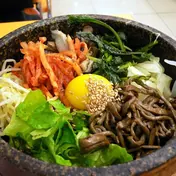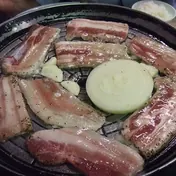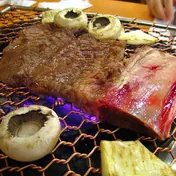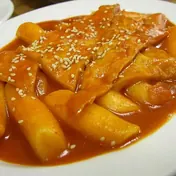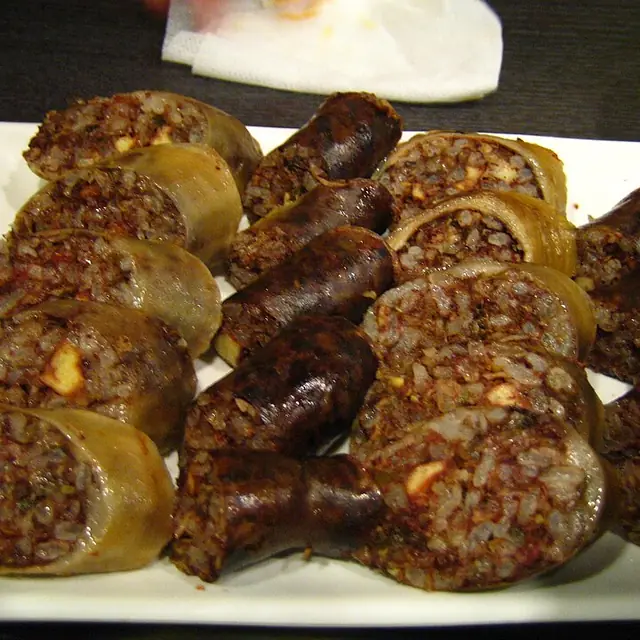
Pig intestine stuffed with pig blood, sweet potato glass noodles, glutinous rice and bean sprouts. Steamed, sliced into thick coins, dipped in spiced salt at Seoul markets.
Sundae has roots in Mongol-influenced Korean cuisine of the Goryeo dynasty (10th to 14th century), introduced through Mongol overlord rule. Originally a winter peasant dish (everything from the slaughtered pig got used), it became a street-food staple in the 20th century. Sindang-dong in Seoul, just east of Dongdaemun, is the canonical home of sundae bokkeum (sundae stir-fried with tteokbokki and gochujang); the alley dates to the 1950s. Plain steamed sundae sliced and dipped in fine salt with pepper is the older Seoul format, eaten at Gwangjang and Tongin markets.
3 editor picks for Sundae (Korean blood sausage) in Seoul, ranked by editorial score. All Seoul signature dishes · Sundae (Korean blood sausage) across every city.
Gwangjang Market ★ 4.8
Jongno and Insadong · 88 Changgyeonggung-ro, Jongno-gu, Seoul
Gwangjang Market, established in 1905, is the oldest continuous daily market in Korea and the city's most essential food destination for visitors.
Sindang Tteokbokki Town ★ 4.4
Jung-gu and Myeongdong · 7 Dasan-ro 33-gil, Jung-gu, Seoul
Sindang-dong Tteokbokki Town is the origin neighbourhood of the modern spicy tteokbokki -- Ma Bok-rim developed gochujang-seasoned rice cakes here in 1953.
Jongno 3-ga Pojangmacha Street ★ 4.2
Jongno-gu · Jongno 3-ga, Jongno-gu, Seoul
The 200-metre stretch in front of Ikseon-dong from Exit 5 to Exit 6 at Jongno 3-ga Station is Seoul's most concentrated pojangmacha (street food tent).