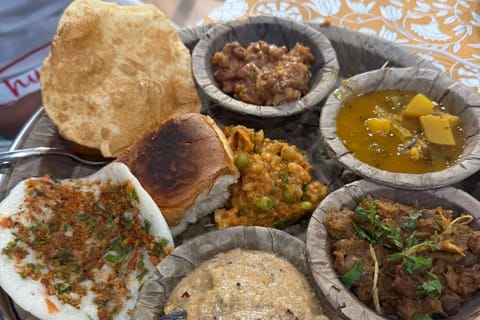
Delhi's signature dishes come from three kitchens: the Mughal court of the walled city, the Punjabi refugees of 1947 and the street stalls that feed everyone in between. This guide covers fourteen of them, each with its history, where to eat it in the city and a recipe to cook at home.
The Mughal layer is the oldest. Nihari, a slow-cooked shank stew whose name comes from the Arabic for morning, was a breakfast after the dawn prayer, and some Old Delhi shops claim a century of unbroken taar, a share of each day's pot kept back for the next. Korma came from the same court kitchens, and seekh kebabs still come off the charcoal in the lanes by Jama Masjid, where Karim's has cooked since 1913. Kulfi, from a Persian word for a covered cup, is usually traced to Mughal Delhi too.
The Punjabi layer is the one the world knows. After Partition, cooks from Peshawar opened Moti Mahal in Daryaganj and made tandoori chicken, butter chicken and dal makhani famous, and chole bhature arrived with the families who crossed the border.
The street layer runs through Chandni Chowk: stuffed parathas fried in Gali Paranthe Wali since the 1870s, dahi bhalla and aloo tikki chaat at the counters, jalebi hot from the syrup, and in winter the milk froth called daulat ki chaat. Momos came later, from the Tibetan settlement at Majnu ka Tilla, and are now sold across the city.
Signature dishes
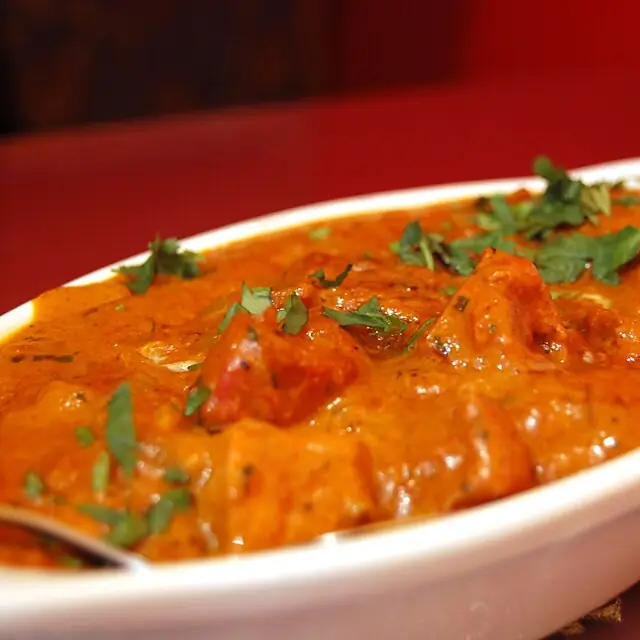
Tandoor-roasted chicken finished in a smooth tomato gravy enriched with butter and cream, the Delhi dish that became the default Indian curry worldwide.
Where: Moti Mahal, Gulati, Pindi Restaurant, Have More, Rajinder Da Dhaba, Aslam Chicken
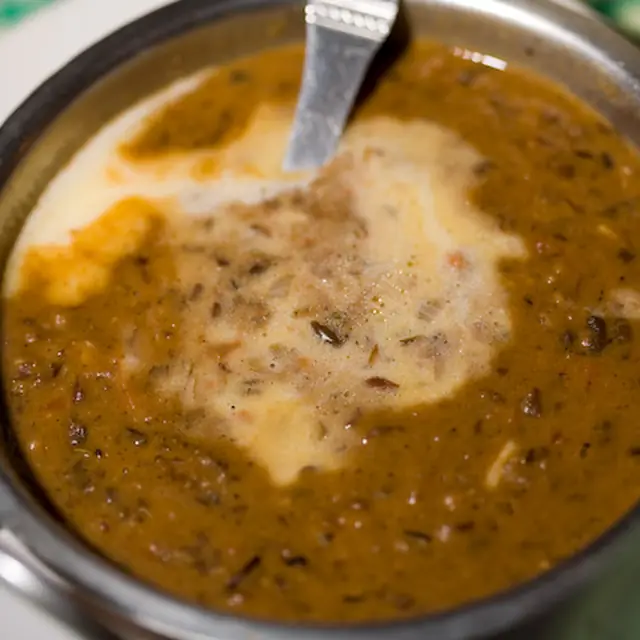
Whole black urad dal and red kidney beans cooked low and slow with butter and cream until thick and smoky, the vegetarian partner to butter chicken.
Where: Bukhara, Gulati, Kake Di Hatti, Rajinder Da Dhaba
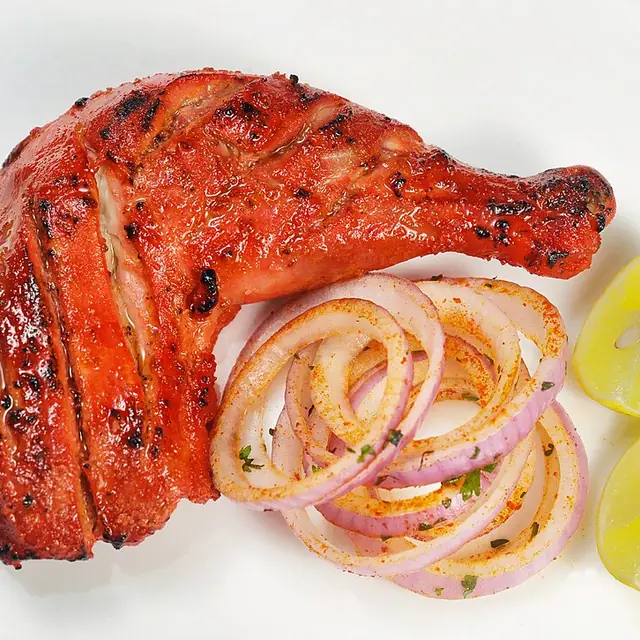
Chicken marinated in yoghurt and spices and roasted in a clay tandoor until charred and smoky, served with onion rings, lemon and green chutney.
Where: Moti Mahal
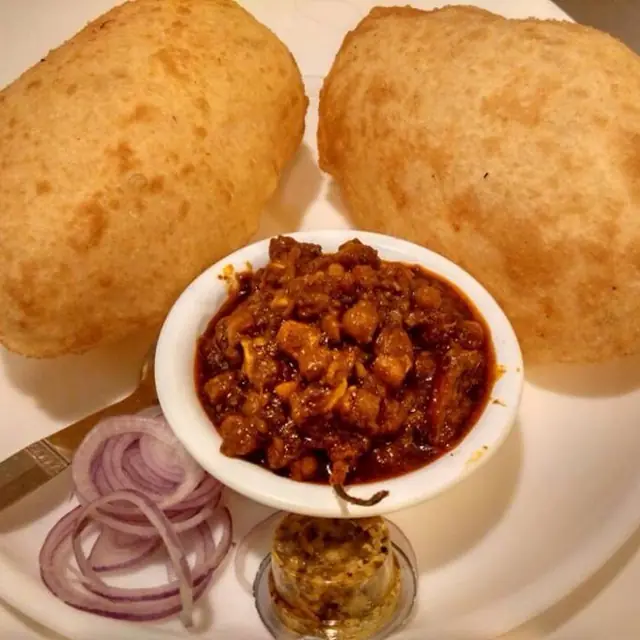
A spiced chickpea curry served with bhature, puffed deep-fried breads of refined flour, with sliced onions, pickle and green chillies on the side.
Where: Sita Ram Diwan Chand, Roshan Di Kulfi
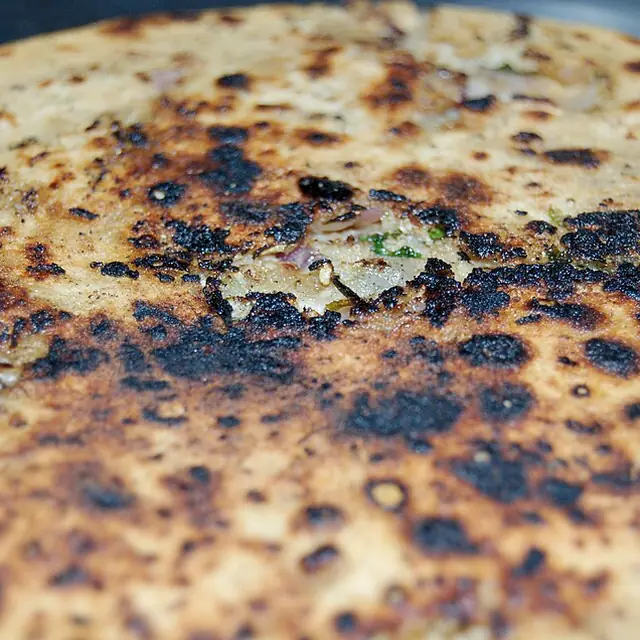
Whole wheat flatbread stuffed with spiced potato, cauliflower, paneer or radish, rolled and cooked with ghee; in Old Delhi's paratha lane it is deep fried.
Where: Pt. Gaya Prasad Shiv Charan Paranthe Wale, Moolchand Parantha
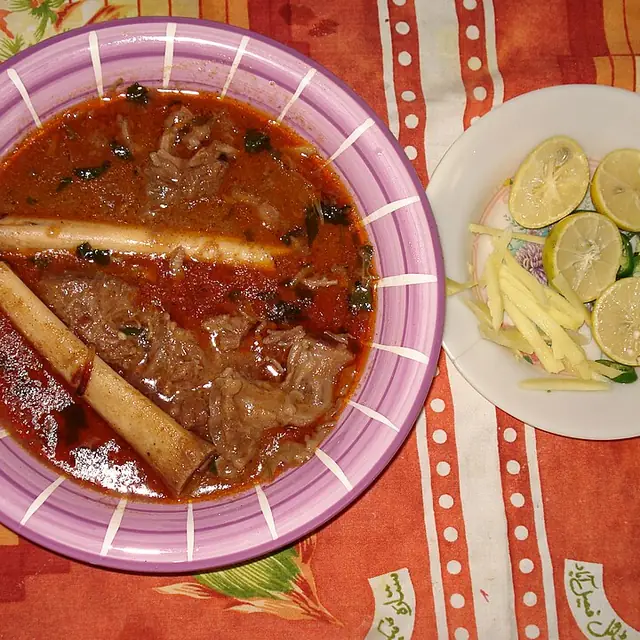
Slow-cooked shank of mutton or buffalo in a thick, spiced gravy, eaten in the early morning in Old Delhi with khamiri roti and a squeeze of lemon.
Where: Haji Shabrati Nihari Wale
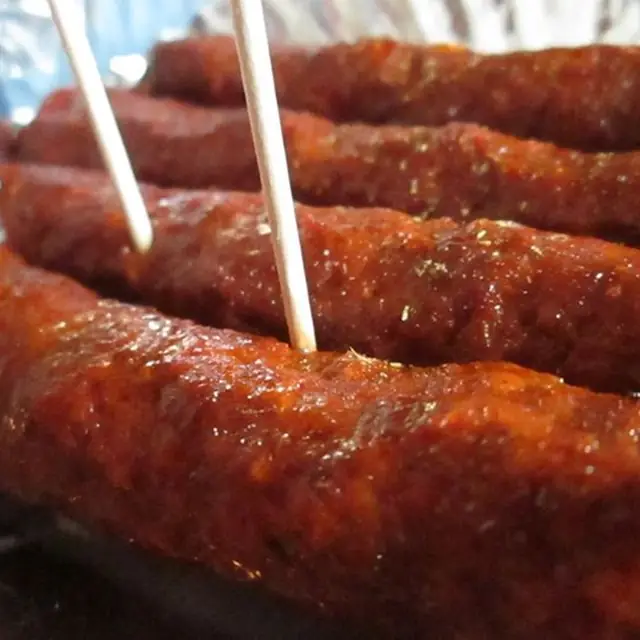
Minced mutton or chicken mixed with onion, herbs and spices, pressed around long skewers and grilled over charcoal, then eaten with onion and mint chutney.
Where: Qureshi Kabab Corner, Karim's
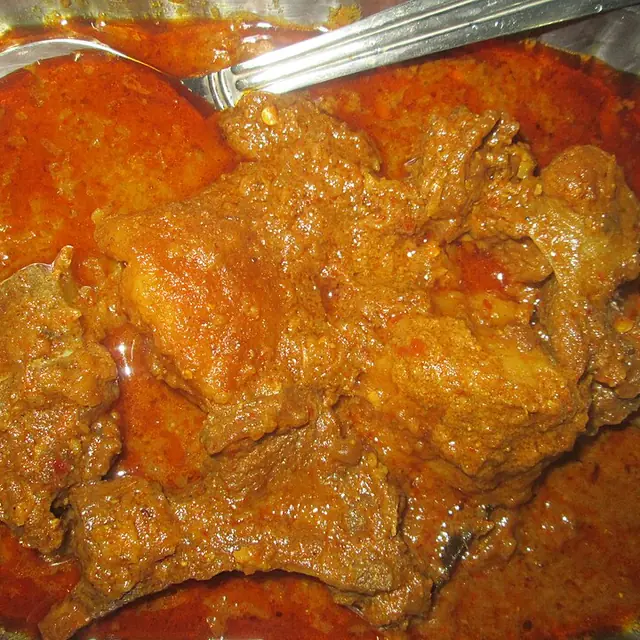
Mutton braised in a rich gravy of browned onions, yoghurt and whole spices, the Mughal court dish Old Delhi eats with sheermal or khamiri roti.
Where: Karim's, Al Jawahar
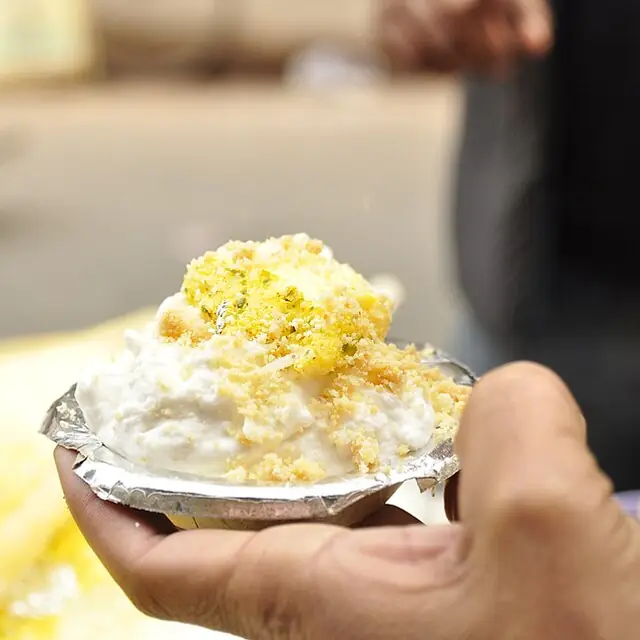
A winter-only Old Delhi sweet of milk and cream whipped to a cloud-like froth, dusted with sugar, saffron and pistachio and eaten from a leaf bowl.
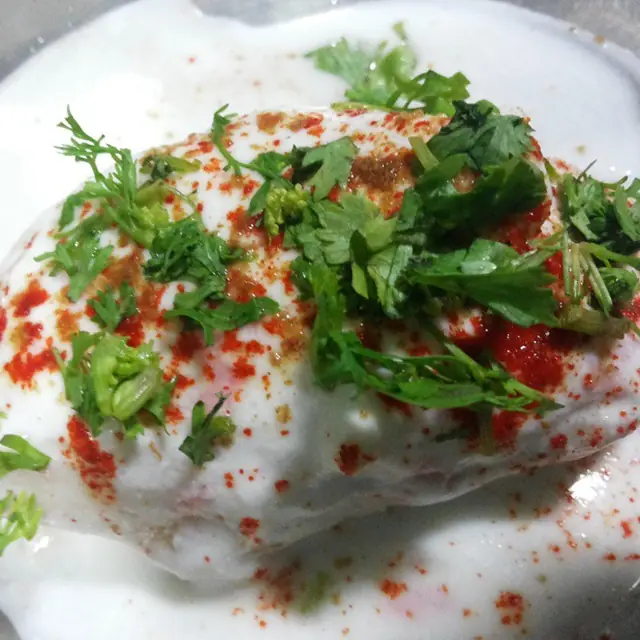
Soft lentil dumplings soaked in water, then served under chilled whipped yoghurt with sweet tamarind and green chutneys, roasted cumin and chilli.
Where: Natraj Dahi Bhalle Wala
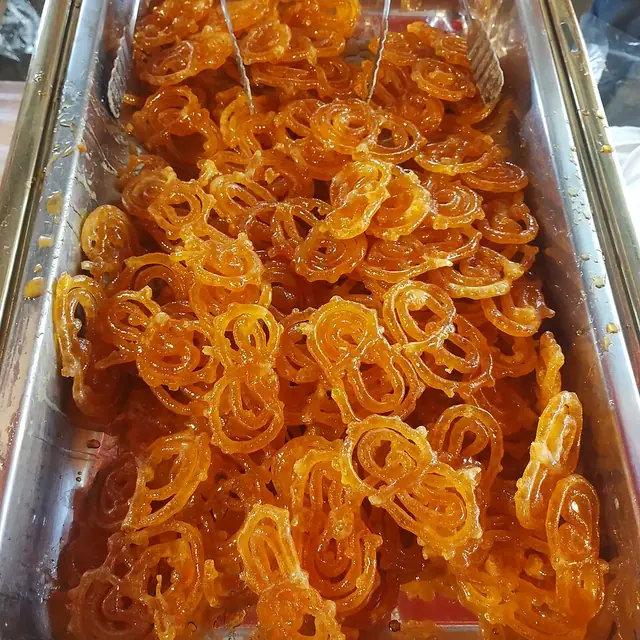
Spirals of fermented batter fried crisp in ghee and soaked in sugar syrup, eaten hot in Chandni Chowk, sometimes with rabri or a glass of milk.
Where: Old Famous Jalebi Wala
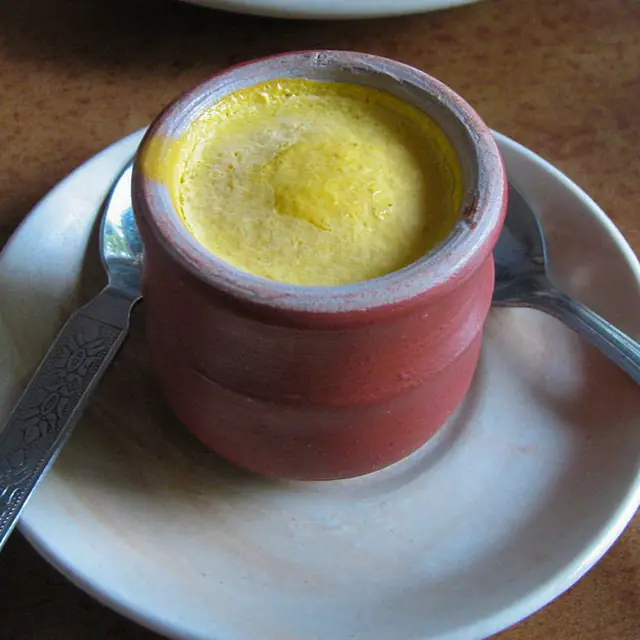
Dense frozen milk dessert set in cones or moulds, flavoured with cardamom, pistachio or saffron, and in Old Delhi also frozen inside whole fruits.
Where: Kuremal Mohan Lal Kulfi Wale, Roshan Di Kulfi, Giani's Di Hatti
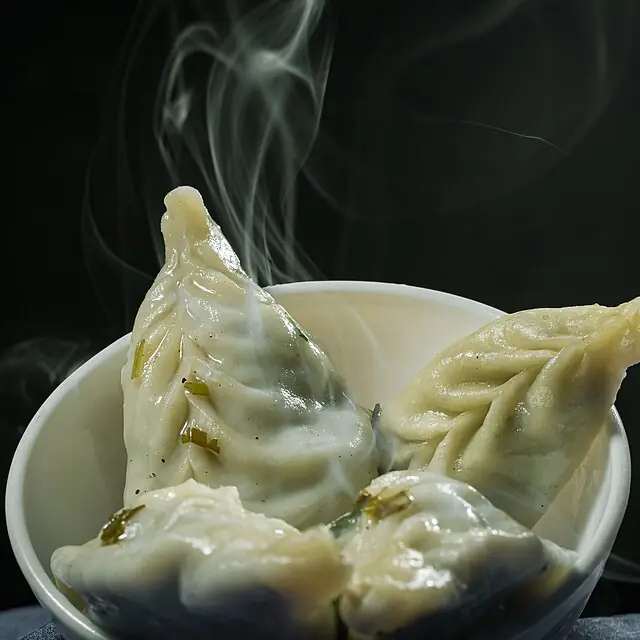
Steamed dumplings of thin wheat dough filled with chicken, pork or vegetables, served with a fiery red chilli and tomato chutney; Delhi's favourite snack.
Where: Dolma Aunty Momos, Tee Dee
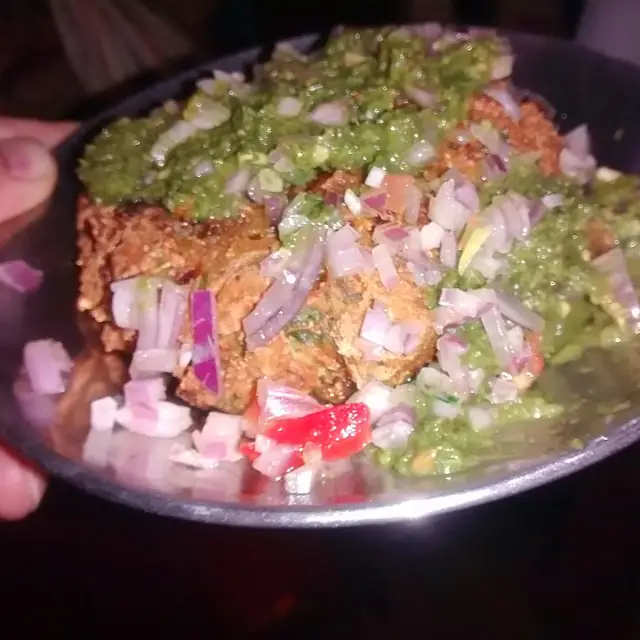
Crisp spiced potato patties topped with chickpeas, yoghurt, tamarind and green chutneys and chaat masala, the standby snack of Delhi's chaat counters.
Where: Natraj Dahi Bhalle Wala, Prabhu Chaat Bhandar
Butter chicken
Tandoor-roasted chicken finished in a smooth tomato gravy enriched with butter and cream, the Delhi dish that became the default Indian curry worldwide.
History: Butter chicken is credited to Kundan Lal Gujral and Kundan Lal Jaggi, Punjabi Hindu cooks who came to Delhi from Peshawar after the 1947 Partition. With Thakur Das Magu they opened Moti Mahal in Daryaganj, which popularised the dish in the 1950s by simmering tandoori chicken in a buttery tomato sauce. The Gujral family has since argued the recipe began in Peshawar before Partition, a claim now part of a court dispute with the Jaggi family.
Where to try it: Moti Mahal, Gulati, Pindi Restaurant, Have More, Rajinder Da Dhaba, Aslam Chicken
Watch out for: Dairy
Dal makhani
Whole black urad dal and red kidney beans cooked low and slow with butter and cream until thick and smoky, the vegetarian partner to butter chicken.
History: Dal makhani is credited to the same Moti Mahal cooks in Daryaganj who made butter chicken famous. Kundan Lal Jaggi and Kundan Lal Gujral, refugees from Peshawar, wanted a vegetarian dish to sit beside their chicken, and a regular diner suggested building one from urad dal. At Bukhara in ITC Maurya, opened in 1978, the house version is simmered for close to 24 hours.
Where to try it: Bukhara, Gulati, Kake Di Hatti, Rajinder Da Dhaba
Watch out for: Dairy
Tandoori chicken
Chicken marinated in yoghurt and spices and roasted in a clay tandoor until charred and smoky, served with onion rings, lemon and green chutney.
History: Tandoori chicken came from pre-Partition Punjab, but its modern form was popularised at Moti Mahal in Daryaganj in the late 1940s by Kundan Lal Jaggi, Kundan Lal Gujral and Thakur Das Magu, Punjabi Hindu migrants from Peshawar. The restaurant served it to Jawaharlal Nehru, India's first prime minister, and it became a standard dish at official banquets.
Where to try it: Moti Mahal
Watch out for: Dairy
Chole bhature
A spiced chickpea curry served with bhature, puffed deep-fried breads of refined flour, with sliced onions, pickle and green chillies on the side.
History: Chole bhature is associated with Punjabi cuisine and reached Delhi in the 1940s, becoming popular after the 1947 Partition brought families from West Punjab to the city. It is eaten mostly as a breakfast or brunch dish, often with lassi, and among Delhi University students it has been known as C bats since around the 1970s.
Where to try it: Sita Ram Diwan Chand, Roshan Di Kulfi
Watch out for: Gluten, Dairy
Stuffed paratha
Whole wheat flatbread stuffed with spiced potato, cauliflower, paneer or radish, rolled and cooked with ghee; in Old Delhi's paratha lane it is deep fried.
History: Parathas are eaten across north India, but Delhi has a lane named after them. Gali Paranthe Wali, off Chandni Chowk in the walled city Shah Jahan built, was known for its silverware shops until paratha shops began moving in during the 1870s. The shops there fry stuffed parathas in ghee and serve them with potato curry, pickle and chutneys.
Where to try it: Pt. Gaya Prasad Shiv Charan Paranthe Wale, Moolchand Parantha
Watch out for: Gluten, Dairy
Nihari
Slow-cooked shank of mutton or buffalo in a thick, spiced gravy, eaten in the early morning in Old Delhi with khamiri roti and a squeeze of lemon.
History: Nihari takes its name from the Arabic word for morning, and it was eaten by the Mughal nobility as a breakfast after the dawn prayer. Food historians place its origin in Delhi or Lucknow in the late Mughal era. Some nihari cooks in Old Delhi keep an unbroken cycle of taar, a portion of each day's stew added to the next, and claim it has run for more than a century.
Where to try it: Haji Shabrati Nihari Wale
Watch out for: Gluten
Seekh kebab
Minced mutton or chicken mixed with onion, herbs and spices, pressed around long skewers and grilled over charcoal, then eaten with onion and mint chutney.
History: Kebab grills line the lanes around Jama Masjid, where Karim's, open since 1913, added seekh kebabs to its menu over the years and Qureshi Kabab Corner cooks them straight off a charcoal sigri. In winter, Delhi's food writers send readers to these Old Delhi counters to eat seekh kebabs standing in the fog, and Ghalib Kabab Corner near the Nizamuddin dargah keeps a smaller grill going to the south.
Where to try it: Qureshi Kabab Corner, Karim's
Mutton korma
Mutton braised in a rich gravy of browned onions, yoghurt and whole spices, the Mughal court dish Old Delhi eats with sheermal or khamiri roti.
History: Korma comes from the Mughal court kitchens; the food historian Neha Vermani traces its first mention to cookery books from the reign of Shah Alam. It is eaten with sheermal, a saffron flatbread. In Old Delhi, Karim's, open since 1913, now counts mutton qorma among its classics, and Al Jawahar across from Jama Masjid serves it with khameeri roti.
Where to try it: Karim's, Al Jawahar
Watch out for: Dairy, Tree nuts
Daulat ki chaat
A winter-only Old Delhi sweet of milk and cream whipped to a cloud-like froth, dusted with sugar, saffron and pistachio and eaten from a leaf bowl.
History: Daulat ki chaat is made from milk cream that is set out in the open overnight so the winter dew can work on it, then whipped into froth by hand before dawn. It is sold only in the cold months, by a handful of vendors in Chawri Bazar and around Chandni Chowk, and Delhi's food writers count it among the city's defining winter sweets.
Watch out for: Dairy, Tree nuts
Dahi bhalla
Soft lentil dumplings soaked in water, then served under chilled whipped yoghurt with sweet tamarind and green chutneys, roasted cumin and chilli.
History: Dahi vada is eaten across India, and the Delhi version is known as dahi bhalla. A recipe for lentil dumplings in curd appears in the Manasollasa, a twelfth-century Sanskrit encyclopedia, and today the dish is prepared for festivals such as Holi. In Chandni Chowk it is sold at chaat counters that specialise in almost nothing else.
Where to try it: Natraj Dahi Bhalle Wala
Watch out for: Dairy
Jalebi
Spirals of fermented batter fried crisp in ghee and soaked in sugar syrup, eaten hot in Chandni Chowk, sometimes with rabri or a glass of milk.
History: Jalebi is fried and sold across South Asia, from breakfast stalls in Delhi to Nepal, where it is called jerry, a name linked to the Mughal emperor Jahangir. The batter is fermented before frying, which gives the crisp spirals a faint sourness against the sugar syrup. In Chandni Chowk it is fried to order at dedicated counters and handed over hot, straight from the syrup.
Where to try it: Old Famous Jalebi Wala
Watch out for: Gluten, Dairy
Kulfi
Dense frozen milk dessert set in cones or moulds, flavoured with cardamom, pistachio or saffron, and in Old Delhi also frozen inside whole fruits.
History: Kulfi is a frozen dairy dessert whose name comes from the Persian word for a covered cup, and many histories place its origin in Mughal Delhi in the sixteenth century. Milk was boiled down, flavoured with pistachio and saffron and frozen in sealed metal cones. The Times of India has named Kuremal Mohan Lal Kulfi Wale, founded in 1906 in Old Delhi, among the country's best-known kulfi makers.
Where to try it: Kuremal Mohan Lal Kulfi Wale, Roshan Di Kulfi, Giani's Di Hatti
Watch out for: Dairy, Tree nuts
Momos
Steamed dumplings of thin wheat dough filled with chicken, pork or vegetables, served with a fiery red chilli and tomato chutney; Delhi's favourite snack.
History: Momos are steamed dumplings from Tibetan and Nepalese cooking. In Delhi they spread from the Tibetan refugee settlement at Majnu ka Tilla, where the government allotted land by the Yamuna in 1960, to stalls across the city. Delhi's food writers now name thukpa and momos as a first winter meal and a rite of passage for newcomers to the city.
Where to try it: Dolma Aunty Momos, Tee Dee
Watch out for: Gluten, Soy
Aloo tikki chaat
Crisp spiced potato patties topped with chickpeas, yoghurt, tamarind and green chutneys and chaat masala, the standby snack of Delhi's chaat counters.
History: Chaat, from a word meaning to lick or taste, is a family of snacks from north India. One account, from the culinary anthropologist Kurush Dalal, ties chaat as an organised group of dishes to Delhi in the reign of Shah Jahan, when royal physicians told residents to eat spiced and fried snacks. In winter, Delhi's food writers also point to a bread tikki sold in Chawri Bazar.
Where to try it: Natraj Dahi Bhalle Wala, Prabhu Chaat Bhandar
Watch out for: Dairy, Gluten