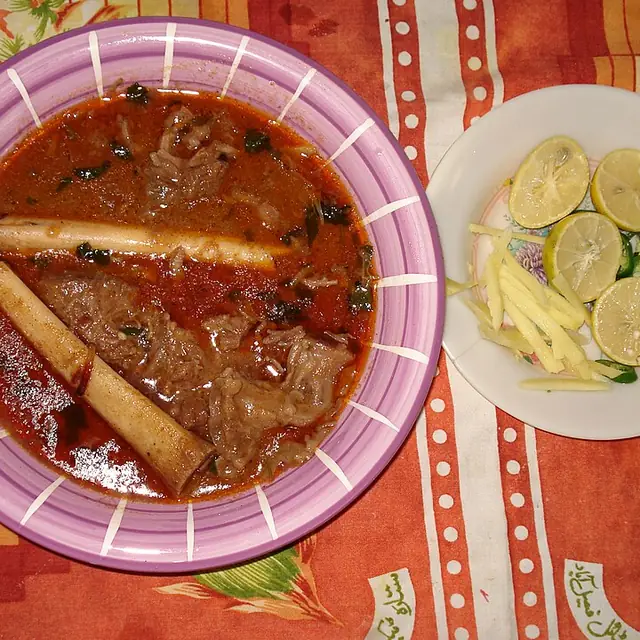

Slow-cooked shank of mutton or buffalo in a thick, spiced gravy, eaten in the early morning in Old Delhi with khamiri roti and a squeeze of lemon.
Nihari takes its name from the Arabic word for morning, and it was eaten by the Mughal nobility as a breakfast after the dawn prayer. Food historians place its origin in Delhi or Lucknow in the late Mughal era. Some nihari cooks in Old Delhi keep an unbroken cycle of taar, a portion of each day's stew added to the next, and claim it has run for more than a century.